Institute of Haematology and Transfusion Medicine, Warsaw, Poland
EBMT Paris Study Office, Paris, France.
Haematologica. 2020 Jun;105(6):1723-1730. doi: 10.3324/haematol.2019.222810. Epub 2019 Aug 22.
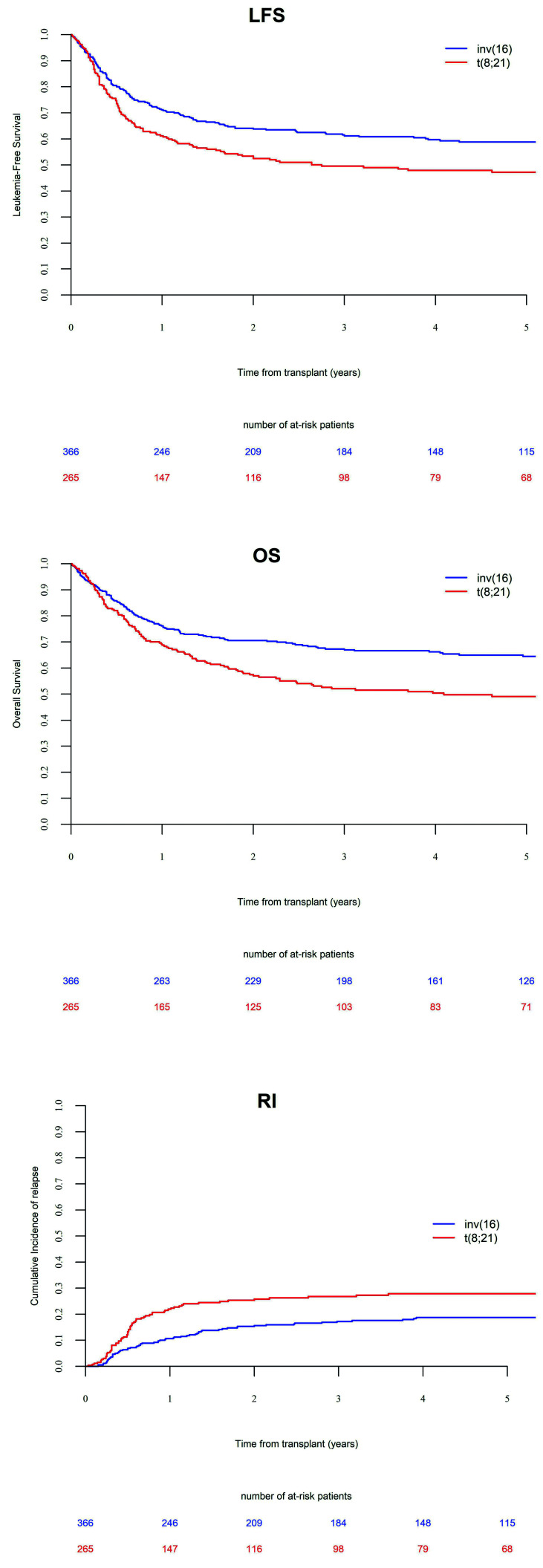
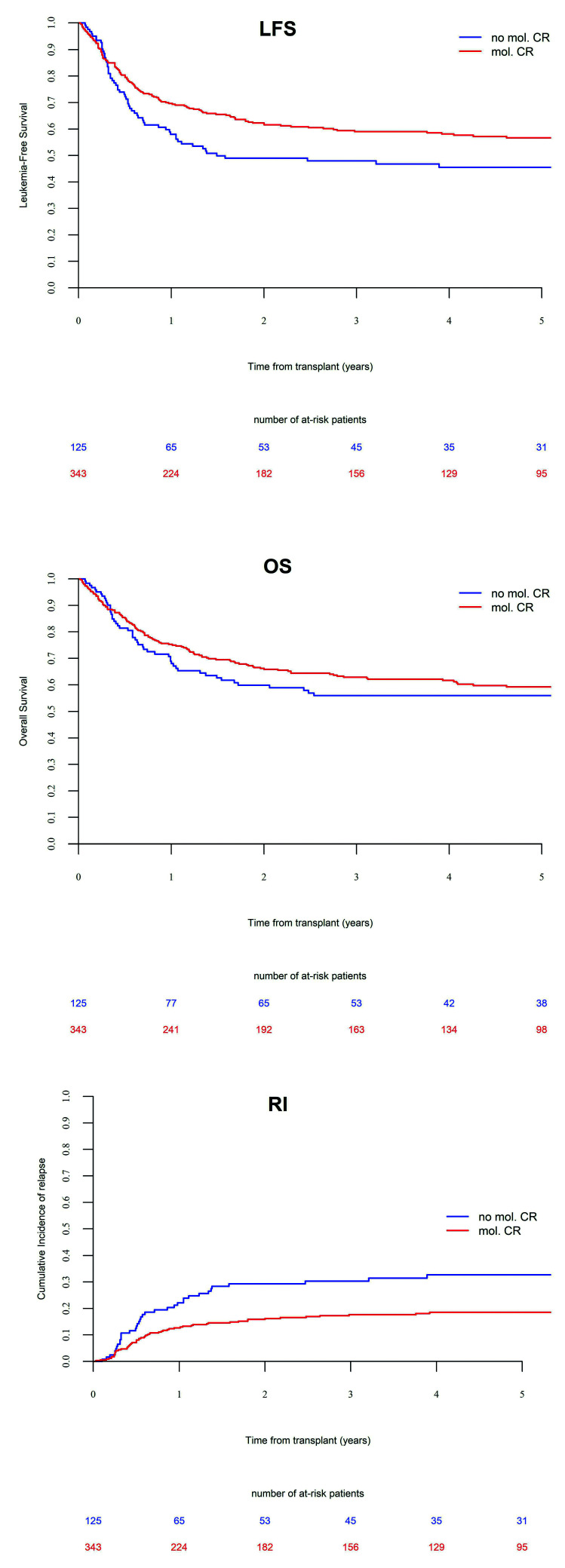
Core binding factor acute myeloid leukemia (AML) comprises two subtypes with distinct cytogenetic abnormalities of either t(8;21)(q22;q22) or inv(16)(p13q22)/t(16;16)(p13;q22). Since long-term response to chemotherapy in these leukemias is relatively good, allogeneic hematopoietic stem cell transplantation is considered in patients who relapse and achieve second complete remission. To evaluate the outcomes of allogeneic transplantation in this indication, we studied 631 patients reported to the European Society for Blood and Marrow Transplantation Registry between the years 2000 and 2014. Leukemia-free survival probabilities at two and five years were 59.1% and 54.1%, while overall survival probabilities were 65% and 58.2%, respectively. The incidence of relapse and risk of non-relapse mortality at the same time points were 19.8% and 22.5% for relapse and 20.9% and 23.3% for non-relapse mortality, respectively. The most important adverse factors influencing leukemia-free and overall survival were: leukemia with t(8;21), presence of three or more additional chromosomal abnormalities, and Karnofsky performance score <80. Relapse risk was increased in t(8;21) leukemia and associated with additional cytogenetic abnormalities as well as reduced intensity conditioning. Measurable residual disease in molecular evaluation before transplantation was associated with increased risk of relapse and inferior leukemia-free survival.
核心结合因子急性髓系白血病(AML)包括两种亚型,具有明显的细胞遗传学异常,分别为 t(8;21)(q22;q22)或 inv(16)(p13q22)/t(16;16)(p13;q22)。由于这些白血病对化疗的长期反应相对较好,因此在复发并达到第二次完全缓解的患者中,考虑进行异基因造血干细胞移植。为了评估这种适应证下异基因移植的结果,我们研究了 2000 年至 2014 年期间向欧洲血液和骨髓移植学会登记处报告的 631 例患者。两年和五年的无白血病生存率分别为 59.1%和 54.1%,而总生存率分别为 65%和 58.2%。在相同的时间点,复发的发生率和非复发死亡率的风险分别为复发的 19.8%和 22.5%,以及非复发死亡率的 20.9%和 23.3%。影响无白血病和总生存率的最重要不良因素是:伴有 t(8;21)的白血病、存在三种或更多额外染色体异常以及卡氏功能状态评分 <80。在 t(8;21)白血病中,复发风险增加,与额外的细胞遗传学异常以及强度降低的调理有关。移植前分子评估中的可测量残留疾病与复发风险增加和无白血病生存率降低相关。