Division of Psychiatry, Tohoku Medical and Pharmaceutical University, Sendai, Japan.
Department of Human Brain Science, Institute of Development, Ageing and Cancer, Tohoku University, Sendai, Japan.
Sci Rep. 2019 Aug 22;9(1):12227. doi: 10.1038/s41598-019-48654-8.
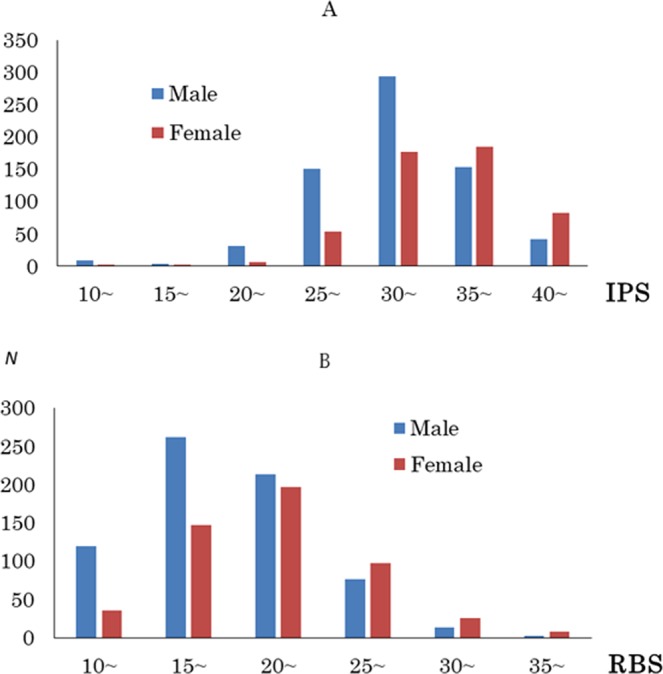
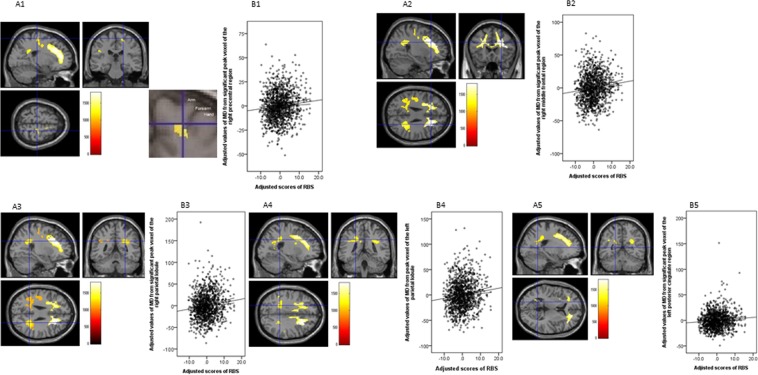
Guilt, a self-conscious emotion, includes self-focused role taking and also correlates with other-oriented role-taking. Excess guilt proneness might be relevant to obsessive compulsive disorders. The white matter (WM) neural correlates of the degree of guilt have not yet been determined. We hypothesized that the WM structures involved in feelings of guilt are associated with social and moral cognition (inferior parietal lobule [IPL], prefrontal cortex [PFC], and cingulate), and aimed to visualize this using diffusion MRI. We investigated the association between regional WM structures (WM volume, and fractional anisotropy, and mean diffusivity [MD]), and feelings of guilt in 1196 healthy, young students using MRI and the Guilty Feeling Scale, which comprises interpersonal situation (IPS; guilt from hurting friends) and rule-breaking situation (RBS; deontological guilt) scores. The primary novel finding presented here is that MD in the right somatosensory and motor cortices from arm to hand were positively correlated with RBS scores. Further, consistent with our hypothesis, RBS scores were positively correlated with MD in the same regions. These results would be predicted by the Macbeth effect, an obsession with dirt leading to hand-washing rituals resulting from guilt, made famous by the Shakespearian character Lady Macbeth. "What, will these hands ne'er be clean?" William Shakespeare (Shakespeare, 1606) Macbeth.
内疚是一种自我意识的情绪,包括自我关注的角色代入,也与他人导向的角色代入相关。过度的内疚倾向可能与强迫症有关。内疚感的白质(WM)神经相关性尚未确定。我们假设与内疚感相关的 WM 结构与社会和道德认知(顶下小叶[IPL]、前额叶皮质[PFC]和扣带)有关,并旨在使用扩散 MRI 对此进行可视化。我们使用 MRI 和内疚感量表(包括人际情境[IPS;伤害朋友的内疚感]和违反规则情境[RBS;道义内疚感]评分),研究了 1196 名健康年轻学生的区域 WM 结构(WM 体积、各向异性分数和平均弥散度[MD])与内疚感之间的关系。这里呈现的主要新发现是,右手感觉和运动皮层从手臂到手的 MD 与 RBS 评分呈正相关。此外,与我们的假设一致,RBS 评分与同一区域的 MD 呈正相关。这些结果可以通过麦克白效应来预测,麦克白效应是一种对污垢的痴迷,导致内疚感导致的洗手仪式,这一概念因莎士比亚笔下的麦克白夫人而广为人知。“这些手怎么永远洗不干净呢?”威廉·莎士比亚(莎士比亚,1606 年)麦克白。