Gelhorn Heather L, Balantac Zaneta, Ambrose Christopher S, Chung Yen N, Stone Brian
Evidera, Bethesda, MD, USA.
AstraZeneca, Gaithersburg, MD, USA.
Patient Prefer Adherence. 2019 Jul 25;13:1253-1268. doi: 10.2147/PPA.S198953. eCollection 2019.
Despite the increased availability of biologic treatments indicated for severe asthma, patient and physician preferences for these medications remains largely unknown. The purpose of this study was to understand perceptions of biologic therapies, barriers to care with biologic medications, and preferences for biologic therapy attributes.
This mixed-methods study involved quantitative surveys and qualitative telephone interviews with patients and physicians from the United States. Participants described preferences for relevant attributes, and barriers to use of biologic medications. Participants rated, ranked, and indicated importance of preferences for different levels of key attributes including: mode of administration, administration setting, dosing frequency, number of injections, and time to onset of effect. Other attributes unique to each group were also included.
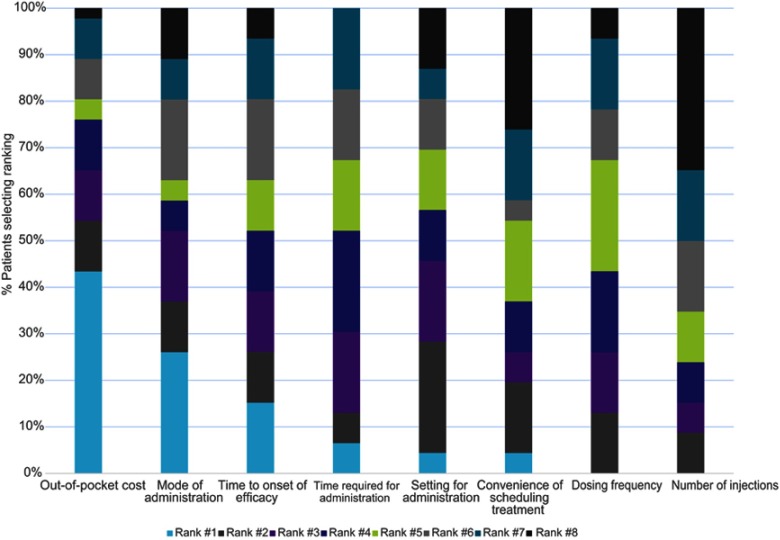
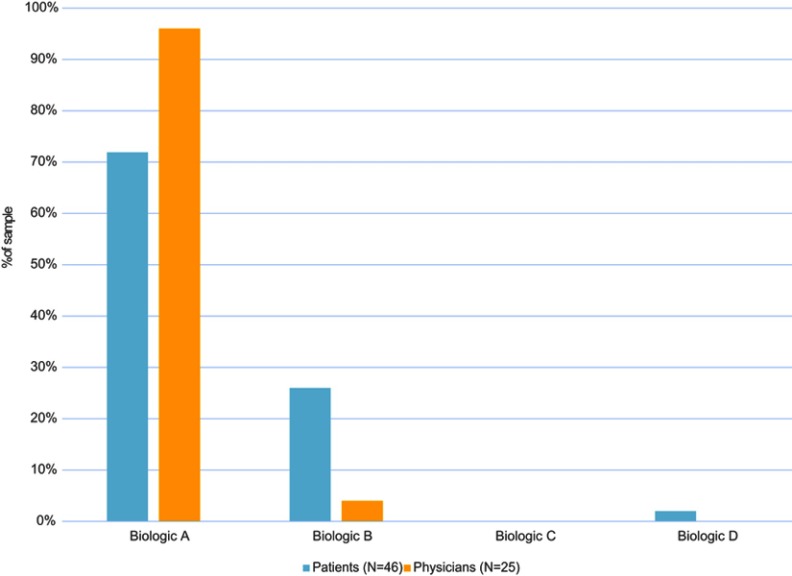
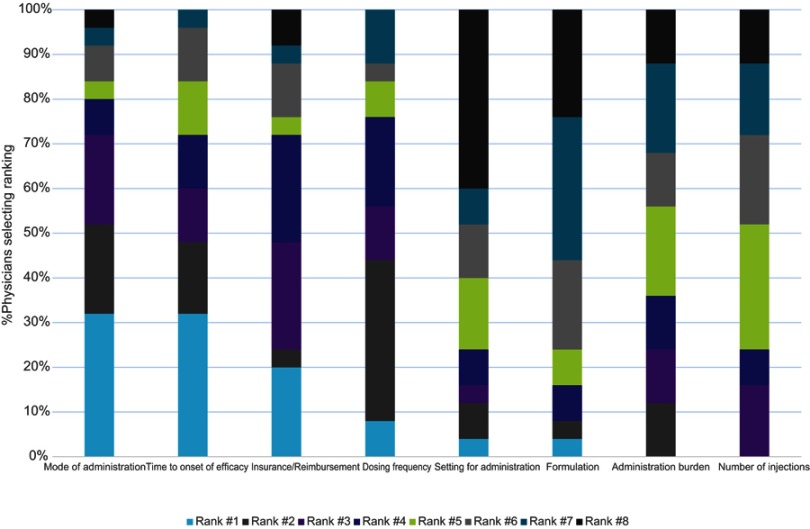
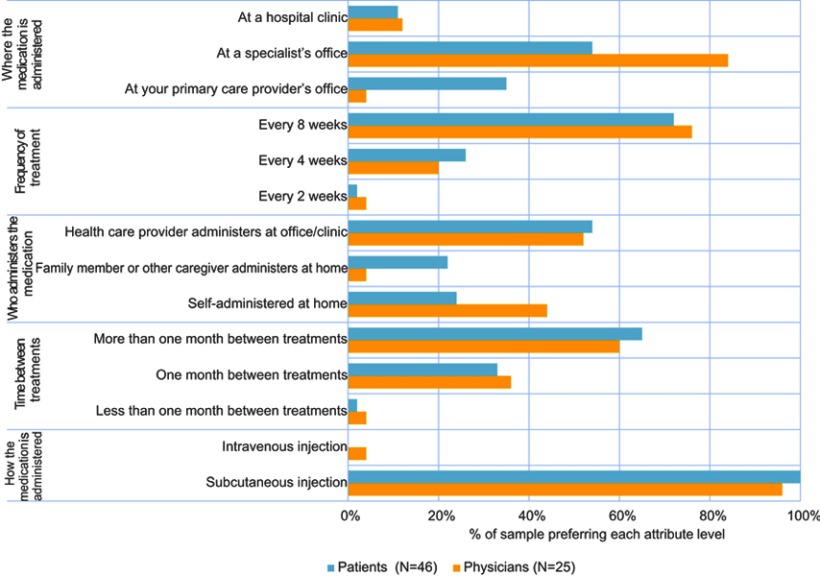
A total of 47 patients and 25 physicians participated. Patients ranked out-of-pocket costs, mode of administration, time to onset of efficacy, and administration setting as the most important attributes. Physicians ranked mode of administration, time to onset of efficacy, dosing frequency, and insurance reimbursement/access as most important. Both groups expressed preferences for less frequent administrations (Q8W over Q4W or Q2W) (all <0.01) and subcutaneous (SC) over intravenous injection (both <0.0001). Key patient barriers to biologic medications include location of treatment, administration time, scheduling, cost/insurance coverage, number of injections, and mode of administration. Physicians identified patient candidacy, convincing patients, administration setting, mode of administration, cost, and administrative burden as key barriers to initiating therapy; and efficacy, speed of onset, convenience of administration, cost, and patient compliance as barriers to staying on therapy.
Patients and physicians expressed strong preferences for less frequent dosing, SC administration, and faster onset. Cost/insurance coverage and convenience issues were key barriers to use. Increased awareness and understanding of preferences and barriers may be useful in facilitating physician-patient conversations with the goal of individualizing treatment.
尽管用于重度哮喘的生物制剂治疗方法越来越多,但患者和医生对这些药物的偏好仍 largely 未知。本研究的目的是了解对生物疗法的看法、使用生物药物治疗的障碍以及对生物疗法属性的偏好。
这项混合方法研究涉及对来自美国的患者和医生进行定量调查和定性电话访谈。参与者描述了对相关属性的偏好以及使用生物药物的障碍。参与者对不同水平的关键属性的偏好进行评分、排序并指出其重要性,这些关键属性包括:给药方式、给药地点、给药频率、注射次数和起效时间。还包括了每组特有的其他属性。
共有47名患者和25名医生参与。患者将自付费用、给药方式、起效时间和给药地点列为最重要的属性。医生将给药方式、起效时间、给药频率和保险报销/可及性列为最重要的。两组都表示更倾向于给药频率较低(每8周一次优于每4周或每2周一次)(均<0.01)以及皮下注射(SC)优于静脉注射(均<0.0001)。患者使用生物药物的主要障碍包括治疗地点、给药时间、安排、费用/保险覆盖范围、注射次数和给药方式。医生认为患者的候选资格、说服患者、给药地点、给药方式、费用和管理负担是开始治疗的关键障碍;而疗效、起效速度、给药便利性、费用和患者依从性是持续治疗的障碍。
患者和医生都强烈倾向于给药频率较低、皮下给药和起效更快。费用/保险覆盖范围和便利性问题是使用的关键障碍。提高对偏好和障碍的认识和理解可能有助于促进医患对话,以实现治疗个体化的目标。