Laboratory of Redox Biology, State Key Laboratory of Tea Plant Biology and Utilization, School of Tea & Food Science, Anhui Agricultural University, Hefei 230000, China.
Department of Chemical Biology, Ernest Mario School of Pharmacy, Rutgers, The State University of New Jersey, Piscataway, NJ 08854, USA.
Cells. 2019 Aug 15;8(8):903. doi: 10.3390/cells8080903.
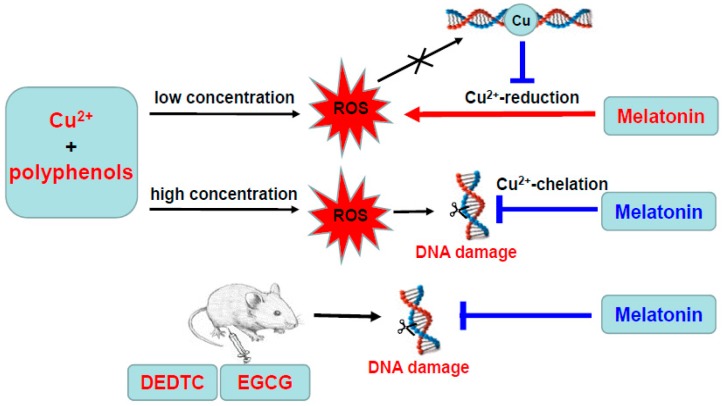
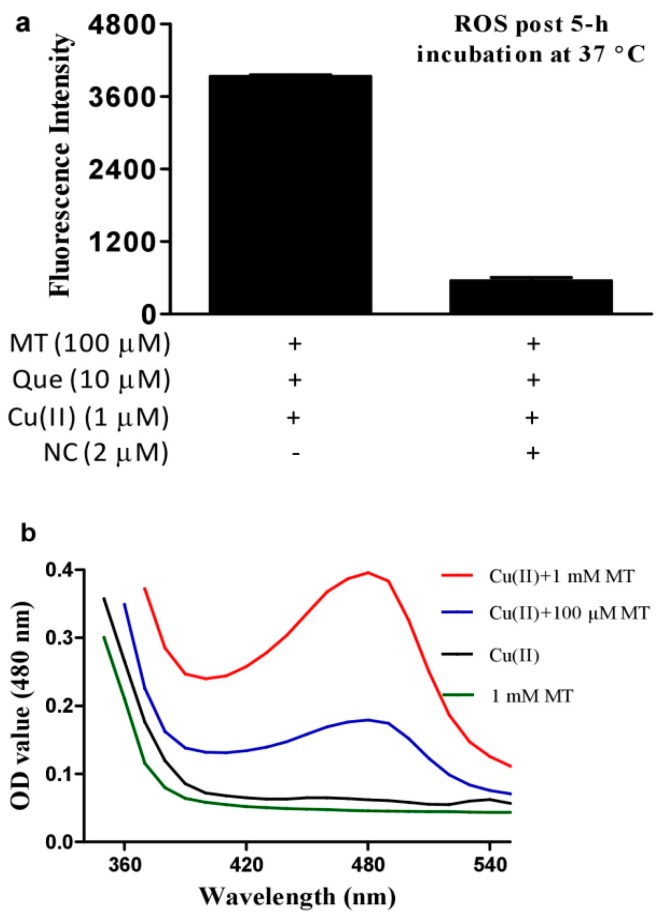
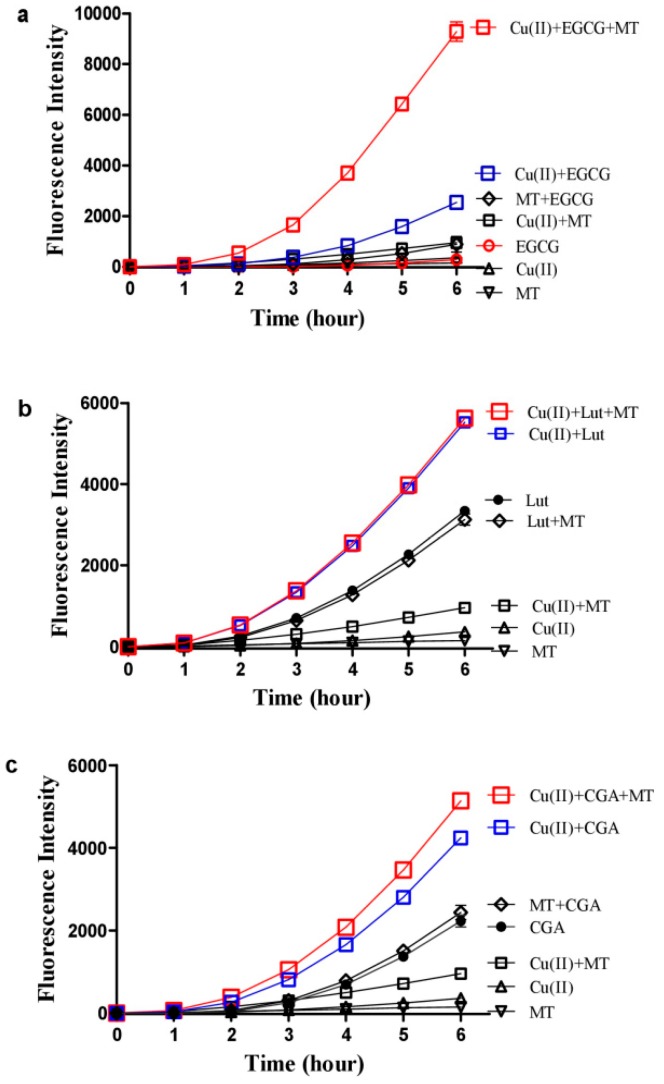
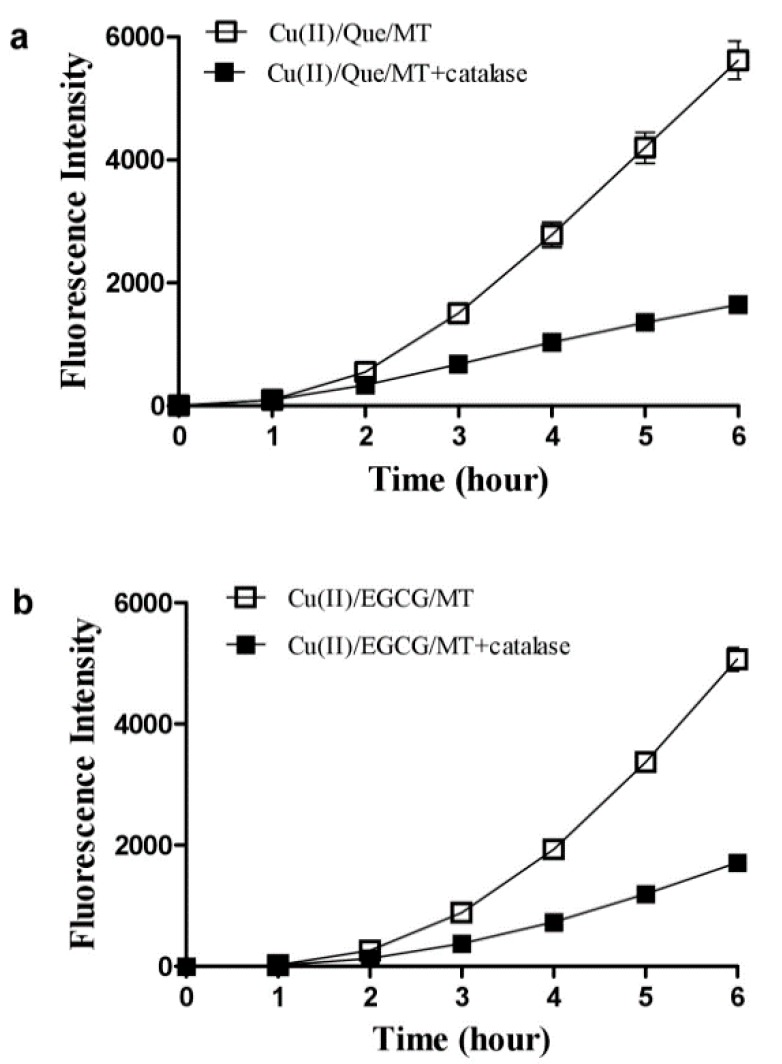
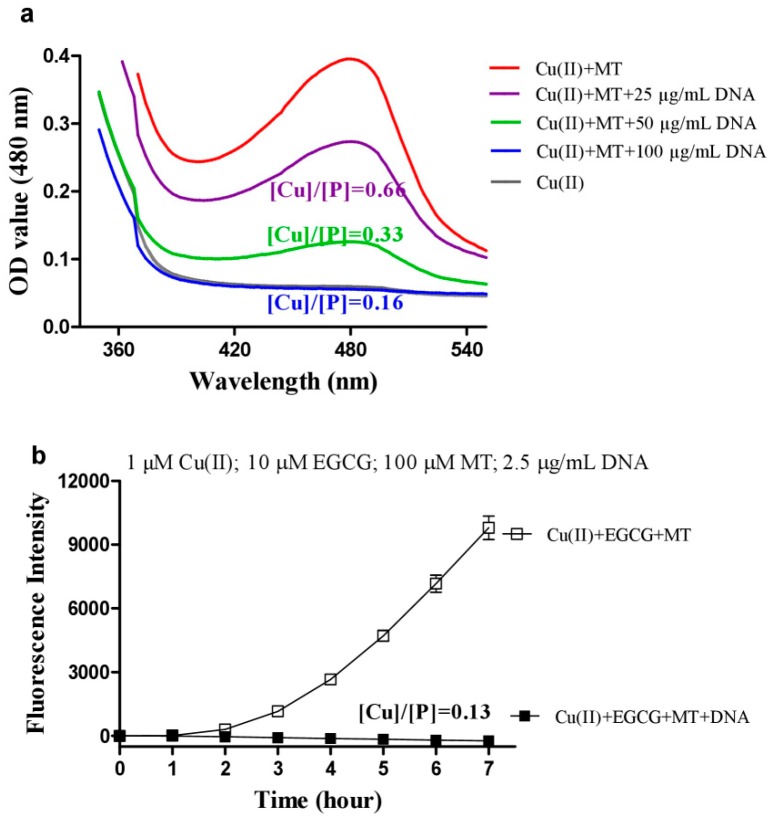
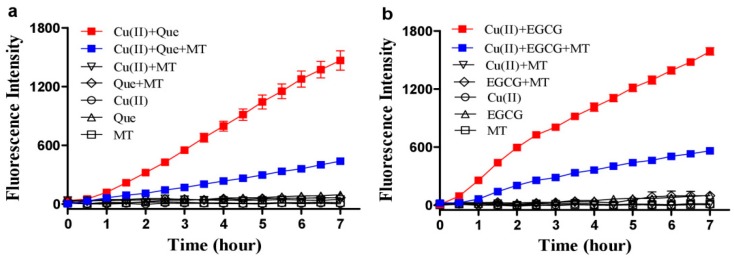
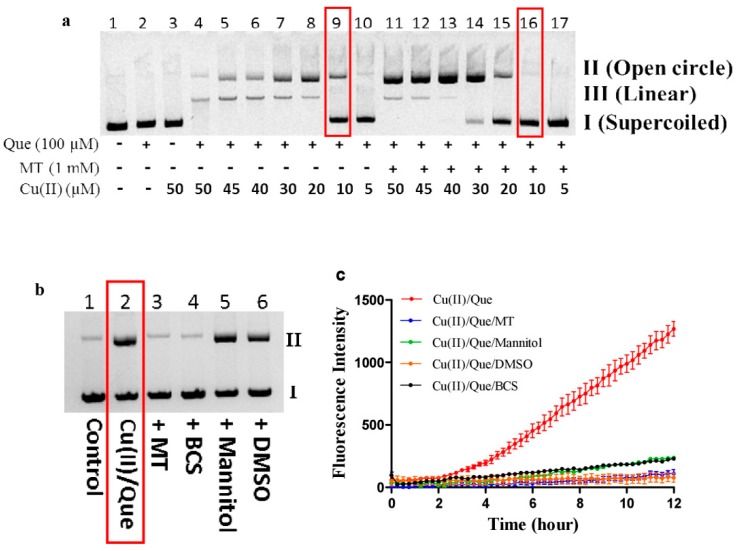
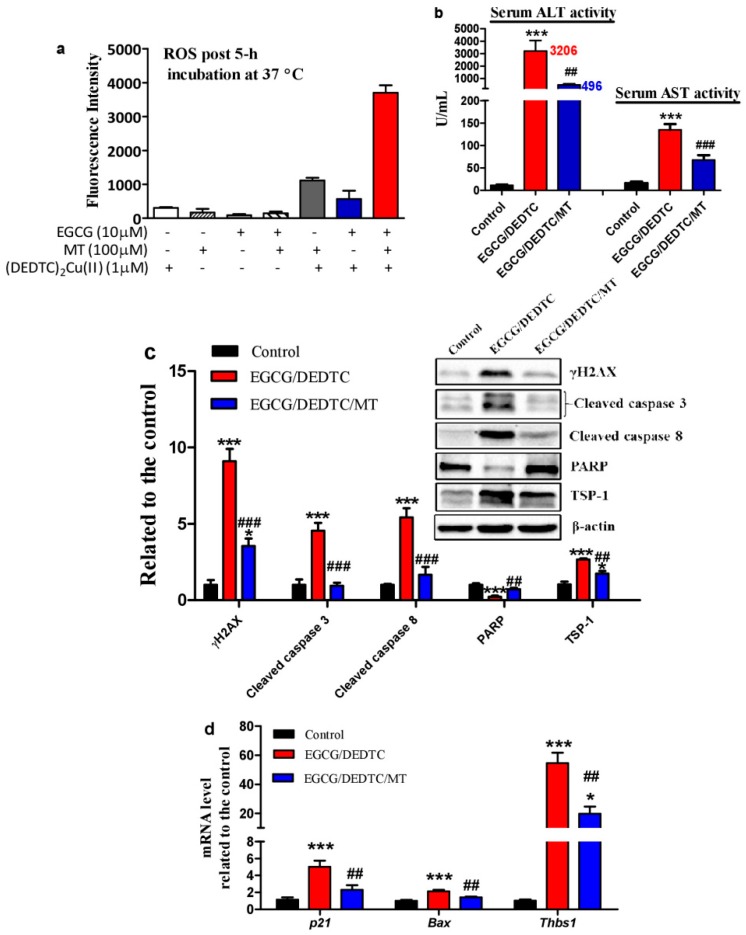
Melatonin is a well-documented antioxidant. Physicochemical analysis using the density functional theory suggests that melatonin is a copper chelating agent; however, experimental evidence is still in demand. The present study investigated the influence of melatonin on reactive oxygen species (ROS) generated from polyphenol autoxidation in the presence of copper. Surprisingly, we found that melatonin paradoxically enhanced ROS formation in a redox system containing low concentrations of copper and quercetin (Que) or (-)-epigallocatechin-3-gallate (EGCG), due to reduction of cupric to cuprous ion by melatonin. Addition of DNA to this system inhibited ROS production, because DNA bound to copper and inhibited copper reduction by melatonin. When melatonin was added to a system containing high concentrations of copper and Que or EGCG, it diminished hydroxyl radical formation as expected. Upon addition of DNA to high concentrations of copper and Que, this pro-oxidative system generated ROS and caused DNA damage. The DNA damage was not prevented by typical scavengers of hydroxyl radical DMSO or mannitol. Under these conditions, melatonin or bathocuproine disulfonate (a copper chelator) protected the DNA from damage by chelating copper. When melatonin was administered intraperitoneally to mice, it inhibited hepatotoxicity and DNA damage evoked by EGCG plus diethyldithiocarbamate (a copper ionophore). Overall, the present study demonstrates the pro-oxidant and antioxidant activities of melatonin in the redox system of copper and polyphenols. The pro-oxidant effect is inhibited by the presence of DNA, which prevents copper reduction by melatonin. Interestingly, in-vivo melatonin protects against copper/polyphenol-induced DNA damage probably via acting as a copper-chelating agent rather than a hydroxyl radical scavenger. Melatonin with a dual function of scavenging hydroxyl radical and chelating copper is a more reliable DNA guardian than antioxidants that only have a single function of scavenging hydroxyl radical.
褪黑素是一种有充分文献记录的抗氧化剂。使用密度泛函理论的物理化学分析表明,褪黑素是一种铜螯合剂;然而,仍需要实验证据。本研究调查了褪黑素对多酚自氧化在铜存在下产生的活性氧 (ROS) 的影响。令人惊讶的是,我们发现,由于褪黑素将铜离子还原为亚铜离子,褪黑素在含有低浓度铜和槲皮素 (Que) 或 (-)-表没食子儿茶素-3-没食子酸酯 (EGCG) 的氧化还原系统中反常地增强了 ROS 的形成。将 DNA 添加到该系统中会抑制 ROS 的产生,因为 DNA 与铜结合并抑制褪黑素对铜的还原。当褪黑素添加到含有高浓度铜和 Que 或 EGCG 的系统中时,它如预期的那样减少了羟基自由基的形成。当将 DNA 添加到高浓度铜和 Que 中时,该促氧化系统会产生 ROS 并导致 DNA 损伤。典型的羟基自由基清除剂 DMSO 或甘露醇不能阻止这种 DNA 损伤。在这些条件下,褪黑素或 bathocuproine disulfonate(一种铜螯合剂)通过螯合铜来保护 DNA 免受损伤。当褪黑素被腹膜内给药给小鼠时,它抑制了 EGCG 加二乙基二硫代氨基甲酸盐(一种铜离子载体)引起的肝毒性和 DNA 损伤。总的来说,本研究表明,褪黑素在铜和多酚的氧化还原系统中具有促氧化剂和抗氧化剂的活性。存在 DNA 会抑制褪黑素引起的铜还原,从而抑制促氧化剂的作用。有趣的是,体内褪黑素通过充当铜螯合剂而不是羟基自由基清除剂来防止铜/多酚引起的 DNA 损伤,这可能是一种保护。褪黑素具有清除羟基自由基和螯合铜的双重功能,比只具有清除羟基自由基单一功能的抗氧化剂更可靠地保护 DNA。