Department of Pediatrics, Clinical Sciences Lund, Lund University, Lund, Sweden.
Department of Pediatrics, Clinical Sciences Lund, Lund University, Lund, Sweden; Wallenberg Center for Molecular Medicine, Lund University, Lund, Sweden.
EBioMedicine. 2019 Sep;47:319-328. doi: 10.1016/j.ebiom.2019.08.020. Epub 2019 Aug 20.
The complement and kallikrein-kinin systems (KKS) are activated during vascular inflammation. The aim of this study was to investigate if blockade of the KKS can affect complement activation on the endothelium during inflammation.
Complement deposition on endothelial microvesicles was assayed in vasculitis patient plasma samples and controls. Plasma was perfused over glomerular endothelial cells and complement deposition assayed by flow cytometry. The effect of the kinin system was assessed using kinin receptor antagonists and C1-inhibitor. The in vivo effect was assessed in kidney sections from mice with nephrotoxic serum-induced glomerulonephritis treated with a kinin receptor antagonist.
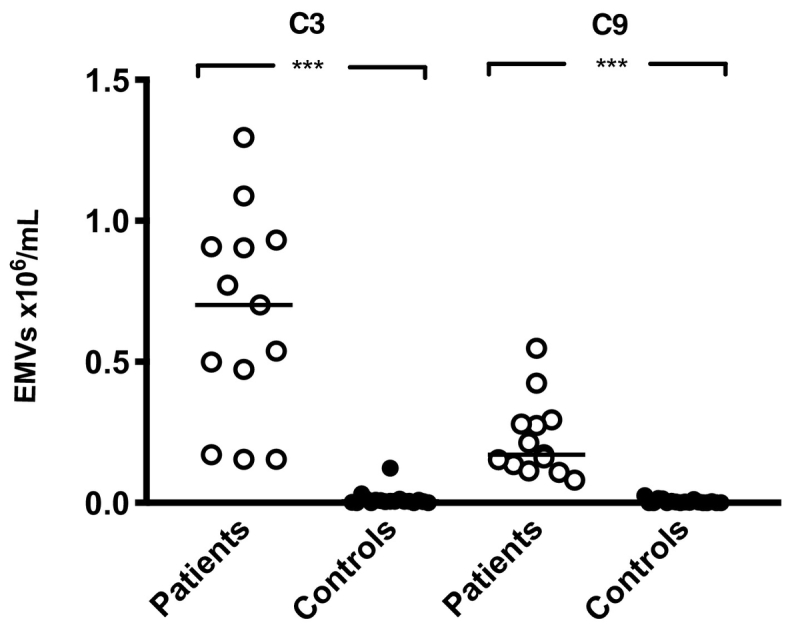
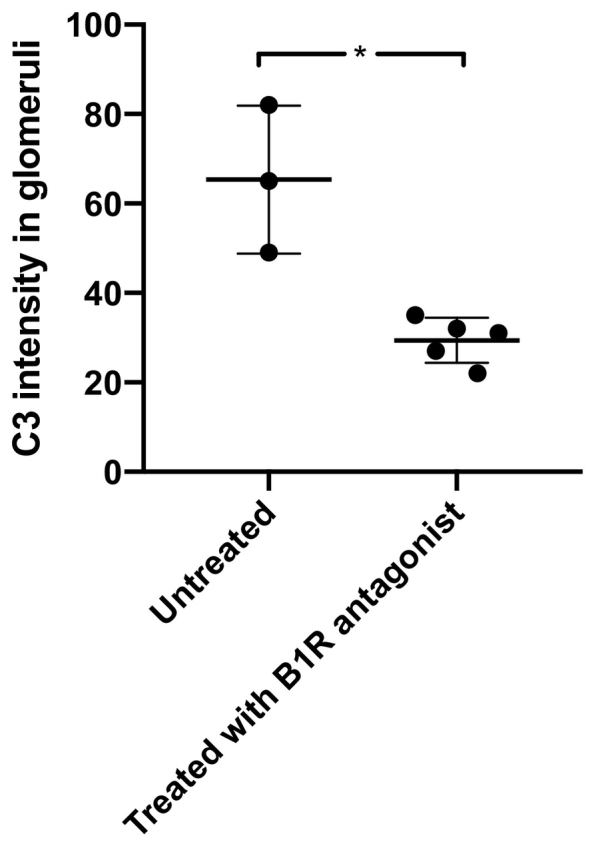
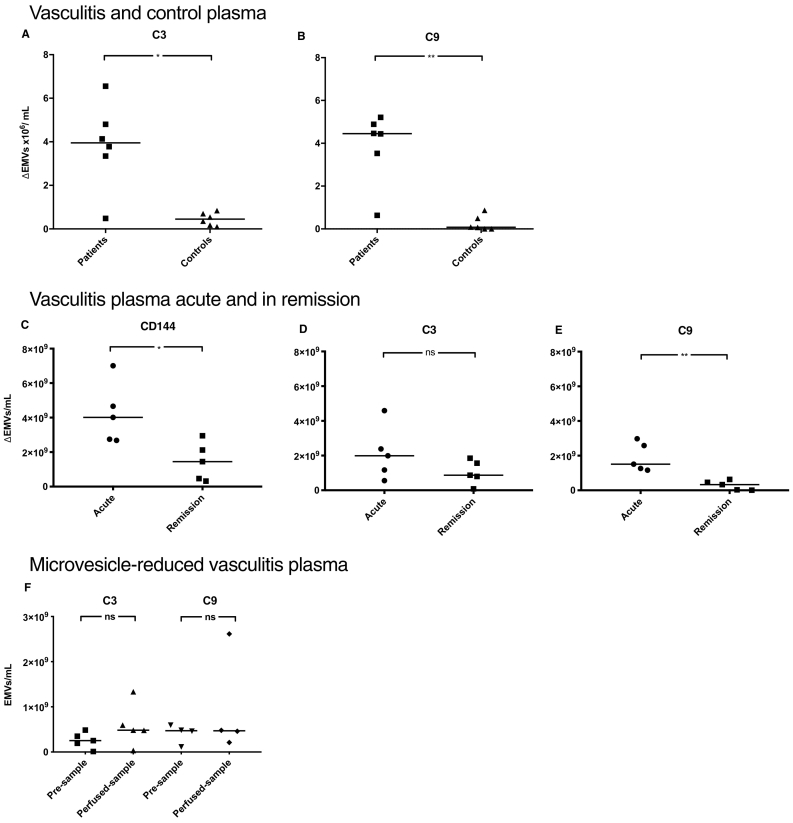
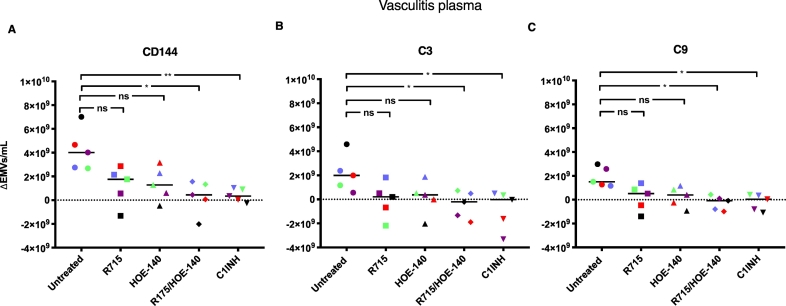
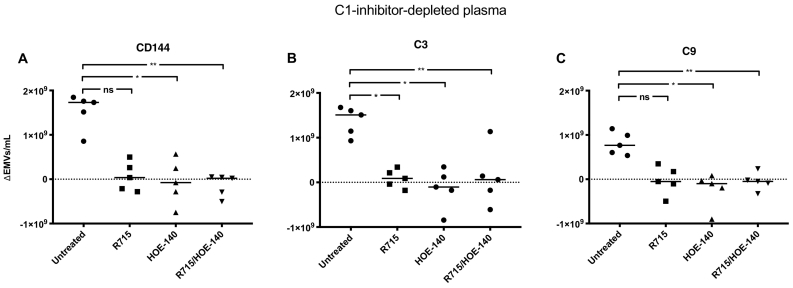
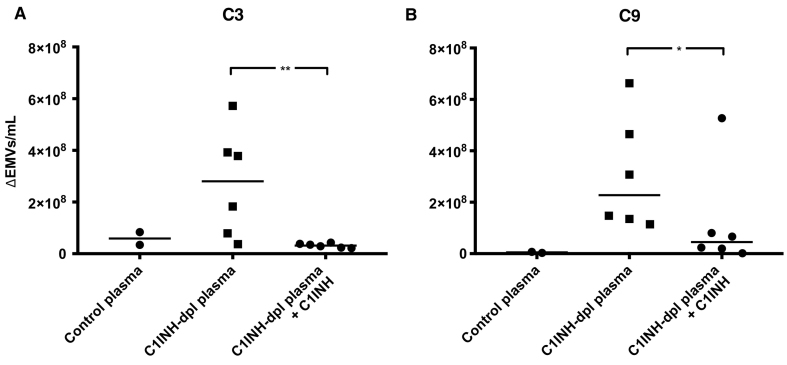
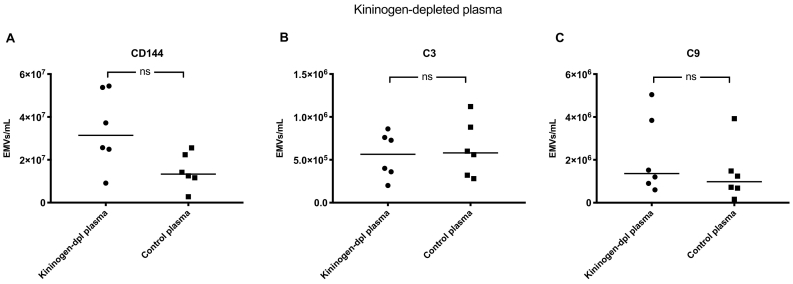
Vasculitis patient plasma had significantly more C3- and C9-positive endothelial microvesicles than controls. Perfusion of patient acute-phase plasma samples over glomerular endothelial cells induced the release of significantly more complement-positive microvesicles, in comparison to remission or control plasma. Complement activation on endothelial microvesicles was reduced by kinin B1- and B2-receptor antagonists or by C1-inhibitor (the main inhibitor of the classical pathway and the KKS). Likewise, perfusion of glomerular endothelial cells with C1-inhibitor-depleted plasma induced the release of complement-positive microvesicles, which was significantly reduced by kinin-receptor antagonists or C1-inhibitor. Mice with nephrotoxic serum-induced glomerulonephritis exhibited significantly reduced glomerular C3 deposition when treated with a B1-receptor antagonist.
Excessive complement deposition on the endothelium will promote endothelial injury and the release of endothelial microvesicles. This study demonstrates that blockade of the KKS can reduce complement activation and thereby the inflammatory response on the endothelium.
Full details are provided in the Acknowledgements/Funding section.
补体和激肽-激肽系统(KKS)在血管炎症期间被激活。本研究旨在探讨 KKS 阻断是否会影响炎症期间内皮细胞上的补体激活。
通过流式细胞术检测血管炎患者血浆样本和对照中内皮微囊泡上的补体沉积。将血浆灌注到肾小球内皮细胞上,并通过流式细胞术检测补体沉积。使用激肽受体拮抗剂和 C1 抑制剂评估激肽系统的作用。在接受肾毒性血清诱导的肾小球肾炎的小鼠的肾组织切片中评估体内作用,并用激肽受体拮抗剂进行治疗。
血管炎患者血浆中 C3 和 C9 阳性的内皮微囊泡明显多于对照。与缓解期或对照血浆相比,急性相患者血浆样本灌注到肾小球内皮细胞上诱导释放出明显更多的补体阳性微囊泡。内皮微囊泡上的补体激活被激肽 B1 和 B2 受体拮抗剂或 C1 抑制剂(经典途径和 KKS 的主要抑制剂)降低。同样,用 C1 抑制剂耗尽的血浆灌注肾小球内皮细胞,诱导释放补体阳性微囊泡,激肽受体拮抗剂或 C1 抑制剂显著减少其释放。用 B1 受体拮抗剂治疗肾毒性血清诱导的肾小球肾炎的小鼠,肾小球 C3 沉积明显减少。
内皮细胞上过多的补体沉积会促进内皮细胞损伤和内皮微囊泡的释放。本研究表明,KKS 阻断可减少补体激活,从而减轻内皮细胞的炎症反应。
全文的详细信息请在致谢/资助部分查看。