Pin Fabrizio, Bonetto Andrea, Bonewald Lynda F, Klein Gordon L
Department of Anatomy and Cell Biology, Indiana University School of Medicine, Indianapolis, IN, United States.
Indiana Center for Musculoskeletal Health, Indiana University School of Medicine, Indianapolis, IN, United States.
Front Endocrinol (Lausanne). 2019 Aug 7;10:543. doi: 10.3389/fendo.2019.00543. eCollection 2019.
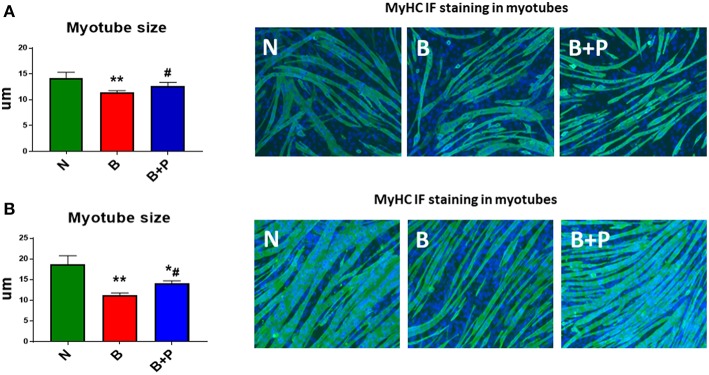
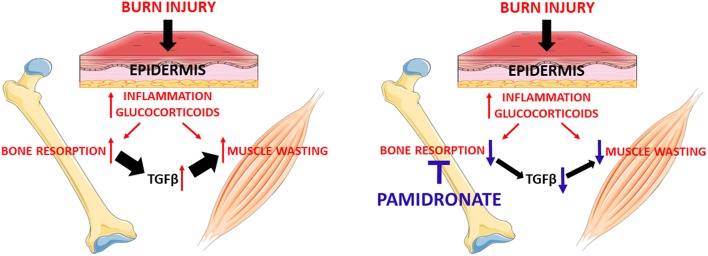
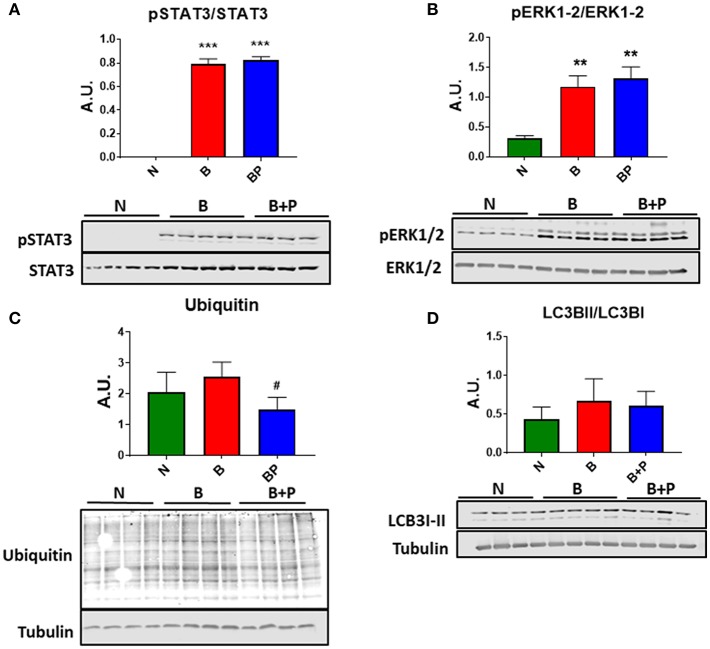
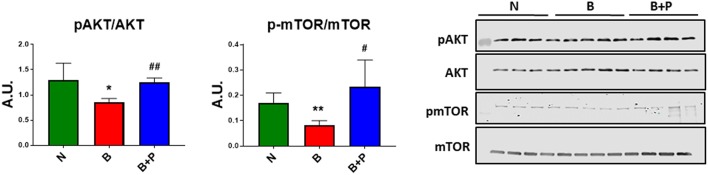
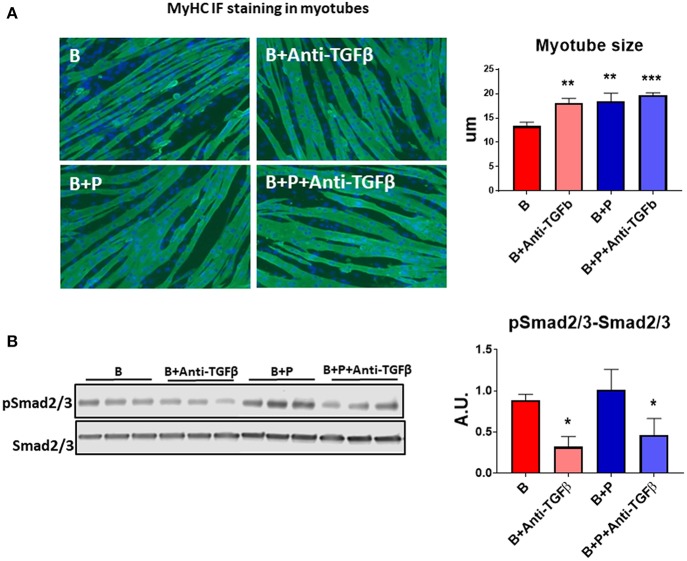
Not only has pamidronate been shown to prevent inflammation associated bone resorption following burn injury, it also reduces protein breakdown in muscle. The aim of this study was to identify the molecular mechanisms responsible for muscle mass rescue in pamidronate treated compared to placebo/standard of care-treated burn patients. Mature myotubes, generated by differentiating murine C2C12 myoblasts, were exposed for 48 h to 1 or 5% serum obtained from 3 groups of children: normal unburned, burned receiving standard of care, and burned receiving standard of care with pamidronate. Exposure to serum from burned patients caused dose-dependent myotube atrophy compared to normal serum as expected based on previous observations of muscle atrophy induced by burn injury in humans and animals. The size of C2C12 myotubes was partially protected upon exposure to the serum from patients treated with pamidronate correlating with the rescue of muscle size previously observed in these patients. At the molecular signaling level, serum from both pamidronate and non-pamidronate-treated burn patients increased pSTAT3/STAT3 and pERK1/2/ERK1/2 compared to normal serum with no significant differences between the two groups of burn patients indicating elevated production of inflammatory cytokines. However, serum from pamidronate-treated patients restored the phosphorylation of AKT and mTOR and reduced protein ubiquitination when compared to burn serum alone, suggesting a prevention of muscle catabolism and a restoration of muscle anabolism. Myotube atrophy induced by burn serum was partially rescued after exposure to a pan anti-TGFβ-1/2/3 antibody, suggesting that this signaling pathway is partially responsible for the atrophy and that bisphosphonate protection of bones from resorption during burn injury prevents the release of muscle pro-catabolic factors such as TGFβ into the circulation.
不仅已证明帕米膦酸盐可预防烧伤后与炎症相关的骨吸收,它还能减少肌肉中的蛋白质分解。本研究的目的是确定与安慰剂/标准治疗的烧伤患者相比,帕米膦酸盐治疗后挽救肌肉质量的分子机制。通过分化小鼠C2C12成肌细胞产生的成熟肌管,暴露于从3组儿童获得的1%或5%血清中48小时:正常未烧伤、接受标准治疗的烧伤患者、接受标准治疗并使用帕米膦酸盐的烧伤患者。根据之前对人类和动物烧伤诱导的肌肉萎缩的观察,与正常血清相比,暴露于烧伤患者的血清会导致剂量依赖性的肌管萎缩。暴露于帕米膦酸盐治疗患者的血清后,C2C12肌管的大小得到部分保护,这与之前在这些患者中观察到的肌肉大小的挽救相关。在分子信号水平上,与正常血清相比,帕米膦酸盐治疗和未治疗的烧伤患者的血清均增加了pSTAT3/STAT3和pERK1/2/ERK1/2,两组烧伤患者之间无显著差异,表明炎症细胞因子的产生增加。然而,与单独的烧伤血清相比,帕米膦酸盐治疗患者的血清恢复了AKT和mTOR的磷酸化并减少了蛋白质泛素化,表明预防了肌肉分解代谢并恢复了肌肉合成代谢。暴露于泛抗TGFβ-1/2/3抗体后,烧伤血清诱导的肌管萎缩得到部分挽救,这表明该信号通路部分负责萎缩,并且双膦酸盐在烧伤期间保护骨骼不被吸收可防止肌肉促分解因子如TGFβ释放到循环中。