VA Boston Healthcare System.
Transformative Training Program in Addiction Science.
Neuropsychology. 2019 Sep;33(6):795-807. doi: 10.1037/neu0000558.
Alcohol use disorder (AUD) and chronic pain are widespread conditions with extensive public health burden. This review seeks to describe neuroanatomical links and major mediating influences between AUD and chronic pain, in the service of identifying factors that predict the risk of chronic pain in precipitating or facilitating AUD.
We review the neural bases of pain and the influence of AUD on processes involved in pain perception. We propose potential mechanisms involved in the development of chronic pain in AUD, and we consider implications for pain management in recovery from AUD.
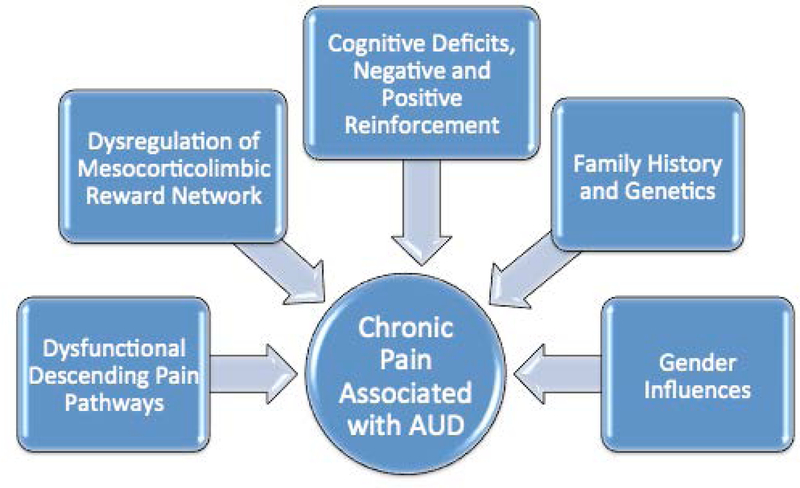
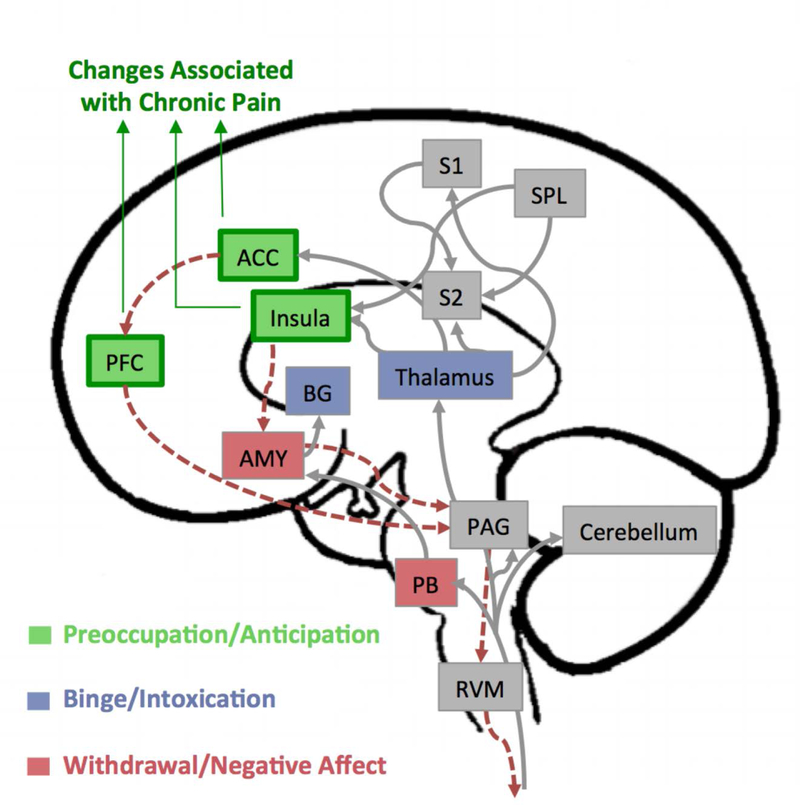
Pain is a multidimensional and subjective experience that, in its acute form, is essential for survival, but in chronic form, pain is a disorder that negatively impacts quality of life. Neural substrates involved in initiating and maintaining chronic pain include dysfunction in descending pain pathways and reward network circuitry. AUD involves preoccupation or craving, intoxication, withdrawal, and negative affect. Neural substrates of AUD involve widespread mesocorticolimbic and cerebrocerebellar networks. Both conditions involve dysfunction of extended reward and oversight circuitry, particularly prefrontal cortex.
The interrelationship between chronic pain and AUD resides in the intersection of etiological influences, mental experiences, and neurobiological processes. Characterization of the connection between brain and behavioral abnormalities in AUD's precipitation of chronic pain-and vice versa-allows for early detection and treatment of patients at risk for developing either or both of these conditions and for preemptive interventional approaches to reduce the risk of consequent vulnerabilities and harm. (PsycINFO Database Record (c) 2019 APA, all rights reserved).
酒精使用障碍(AUD)和慢性疼痛是广泛存在的疾病,对公共健康造成了巨大的负担。本综述旨在描述 AUD 和慢性疼痛之间的神经解剖学联系和主要中介影响,以确定预测慢性疼痛在引发或促进 AUD 风险的因素。
我们回顾了疼痛的神经基础以及 AUD 对疼痛感知过程的影响。我们提出了 AUD 中慢性疼痛发展的潜在机制,并考虑了 AUD 康复过程中疼痛管理的意义。
疼痛是一种多维的主观体验,在急性形式下,它是生存所必需的,但在慢性形式下,疼痛是一种会降低生活质量的疾病。参与引发和维持慢性疼痛的神经基质包括下行疼痛通路和奖励网络回路的功能障碍。AUD 涉及专注或渴望、陶醉、戒断和负面情绪。AUD 的神经基质涉及广泛的中脑边缘和脑桥小脑网络。这两种情况都涉及扩展奖励和监督回路的功能障碍,特别是前额叶皮层。
慢性疼痛和 AUD 之间的相互关系存在于病因影响、心理体验和神经生物学过程的交叉点。描述 AUD 中慢性疼痛的发生与大脑和行为异常之间的联系,以及反之亦然,可以早期发现和治疗有发生这些情况风险的患者,并采取预防性的干预措施,以降低随之而来的脆弱性和危害的风险。(PsycINFO 数据库记录(c)2019 APA,保留所有权利)。