Nemours/Alfred I. duPont Hospital for Children, 1600 Rockland Rd., Wilmington, DE 19803, USA.
Department of Pediatrics, Graduate School of Medicine, Gifu University, Gifu 501-1193, Japan.
Int J Mol Sci. 2019 Aug 24;20(17):4139. doi: 10.3390/ijms20174139.
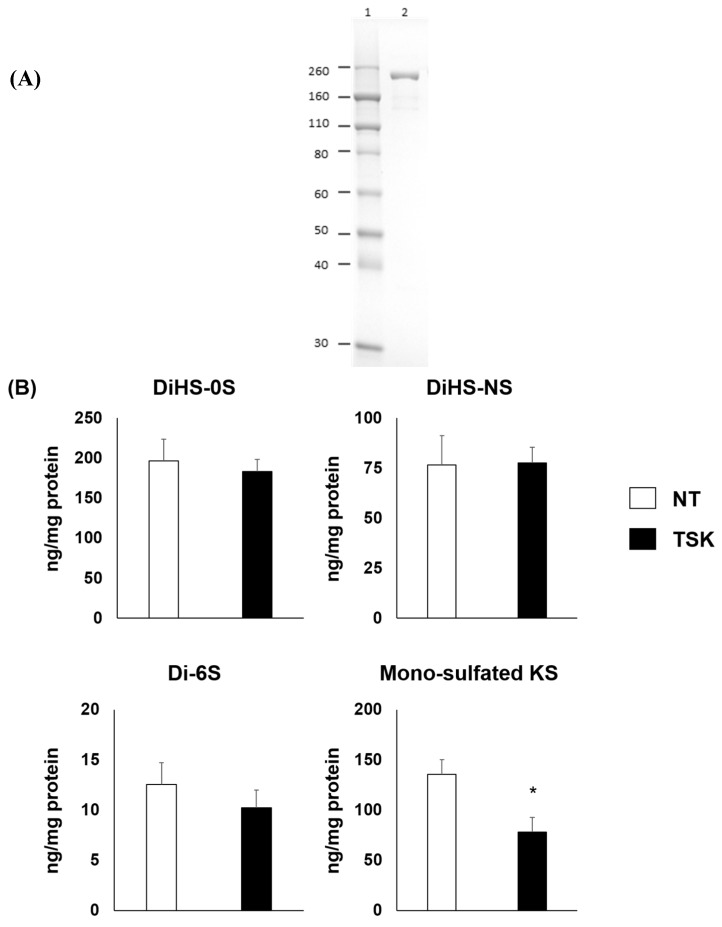
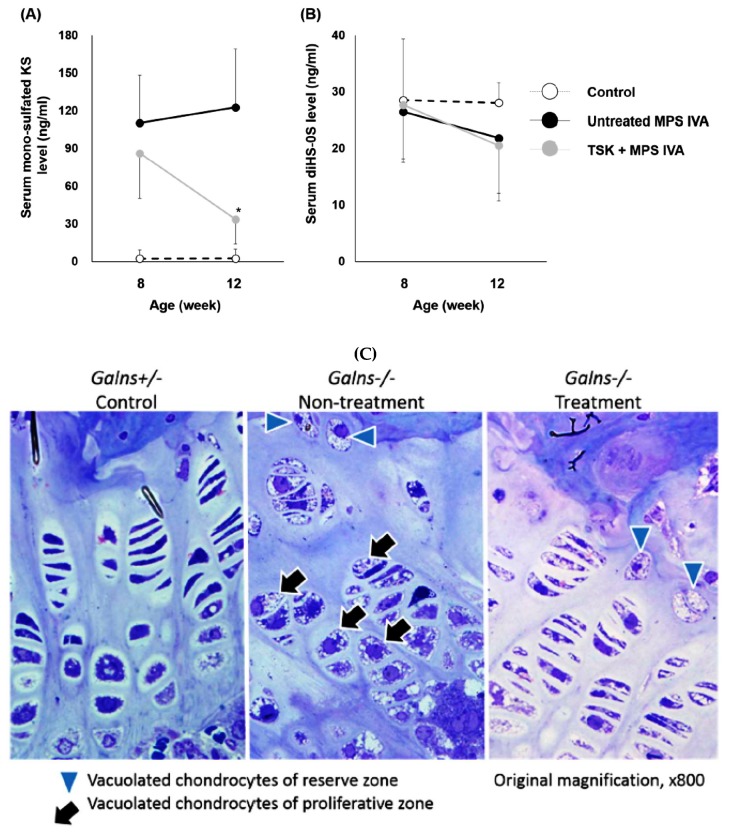
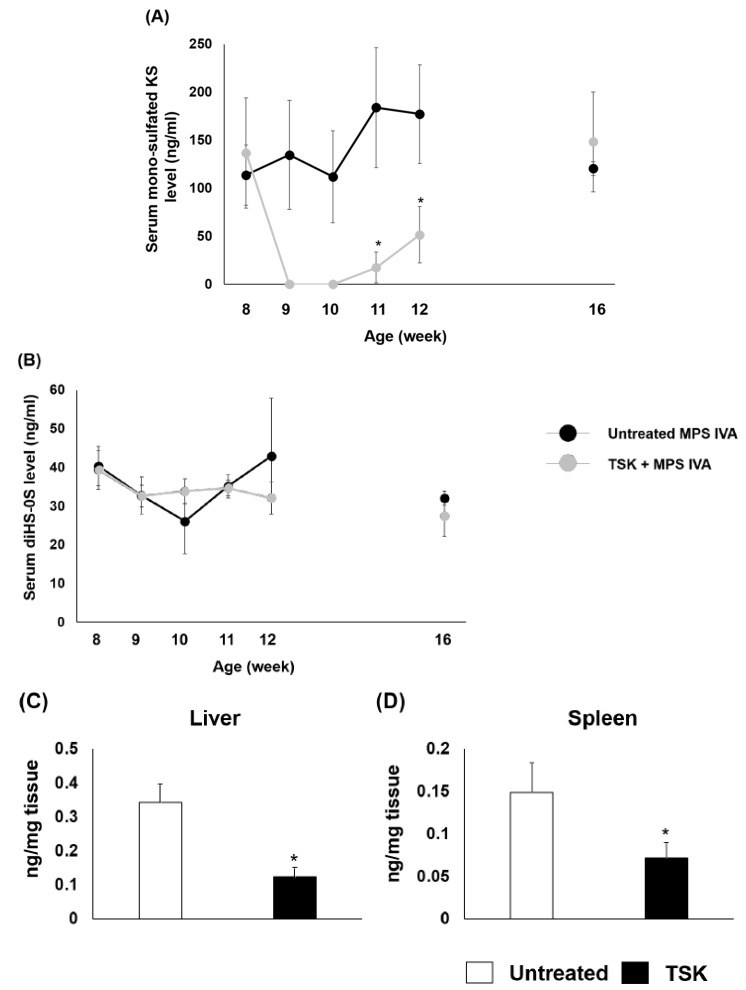
Mucopolysaccharidosis IVA (MPS IVA) is caused by a deficiency of the lysosomal enzyme N-acetylgalactosamine-6-sulfate sulfatase (GALNS). Conventional enzyme replacement therapy (ERT) is approved for MPS IVA. However, the fact that the infused enzyme cannot penetrate avascular lesions in cartilage leads to minimal impact on the bone lesion. Moreover, short half-life, high cost, instability, and narrow optimal pH range remain unmet challenges in ERT. Thermostable keratanase, endo-β--acetylglucosaminidase, has a unique character of a wide optimal pH range of pH 5.0-7.0. We hypothesized that this endoglycosidase degrades keratan sulfate (KS) polymer in circulating blood and, therefore, ameliorates the accumulation of KS in multiple tissues. We propose a novel approach, to treat bone lesion of MPS IVA. We assessed the effect of thermostable keratanase on blood KS level and bone pathology using knock-out MPS IVA mice. After a single administration of 2 U/kg (= 0.2 mg/kg) of the enzyme at 8 weeks of age via intravenous injection, the level of serum KS was significantly decreased to normal range level, and this suppression was maintained for at least 4 weeks. We administered 2 U/kg of the enzyme to MPS IVA mice every fourth week for 12 weeks (total of 3 times) at newborns or 8 weeks of age. After a third injection, serum mono-sulfated KS levels were kept low for 4 weeks, similar to that in control mice, and at 12 weeks, bone pathology was markedly improved when SDET started at newborns, compared with untreated MPS IVA mice. Overall, thermostable keratanase reduces the level of KS in blood and provides a positive impact on cartilage lesions, demonstrating that SDET is a novel therapeutic approach to MPS IVA.
黏多糖贮积症 IVA(MPS IVA)是由溶酶体酶 N-乙酰半乳糖胺-6-硫酸酯硫酸酯酶(GALNS)缺乏引起的。传统的酶替代疗法(ERT)已被批准用于 MPS IVA。然而,输注的酶不能穿透软骨中的无血管病变这一事实导致其对骨骼病变的影响极小。此外,半衰期短、成本高、不稳定以及最佳 pH 范围狭窄仍然是 ERT 面临的未满足的挑战。耐热角质酶、内切-β-N-乙酰氨基葡萄糖苷酶具有 pH5.0-7.0 宽最佳 pH 范围的独特特性。我们假设这种内切糖苷酶可降解循环血液中的硫酸角质素(KS)聚合物,从而改善 KS 在多种组织中的积累。我们提出了一种治疗 MPS IVA 骨骼病变的新方法。我们使用敲除 MPS IVA 小鼠评估了耐热角质酶对血液 KS 水平和骨骼病理学的影响。在 8 周龄时通过静脉注射给予 2U/kg(=0.2mg/kg)的酶,单次给药后,血清 KS 水平显著降低至正常范围,并且这种抑制作用至少持续 4 周。我们在新生或 8 周龄时,每 4 周给 MPS IVA 小鼠注射 2U/kg 的酶,共 3 次(12 周)。第三次注射后,单硫酸化 KS 水平在 4 周内保持较低水平,与对照组相似,并且在 12 周时,与未治疗的 MPS IVA 小鼠相比,从新生开始进行 SDET 时骨骼病变明显改善。总体而言,耐热角质酶降低了血液中 KS 的水平,并对软骨病变产生了积极影响,表明 SDET 是 MPS IVA 的一种新型治疗方法。