Department of Genetics, Stanford University School of Medicine, Stanford, CA, USA.
Catalent Biologics, Emeryville, CA, USA.
Nat Chem Biol. 2019 Oct;15(10):949-958. doi: 10.1038/s41589-019-0342-2. Epub 2019 Aug 26.
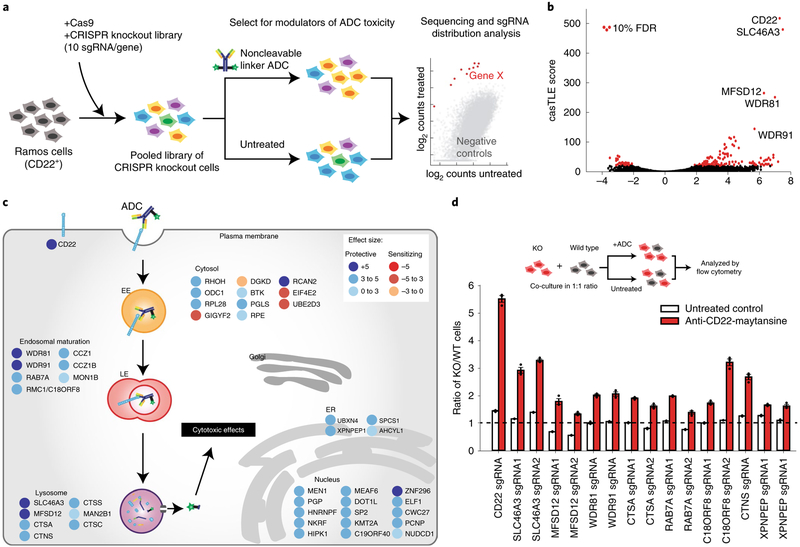
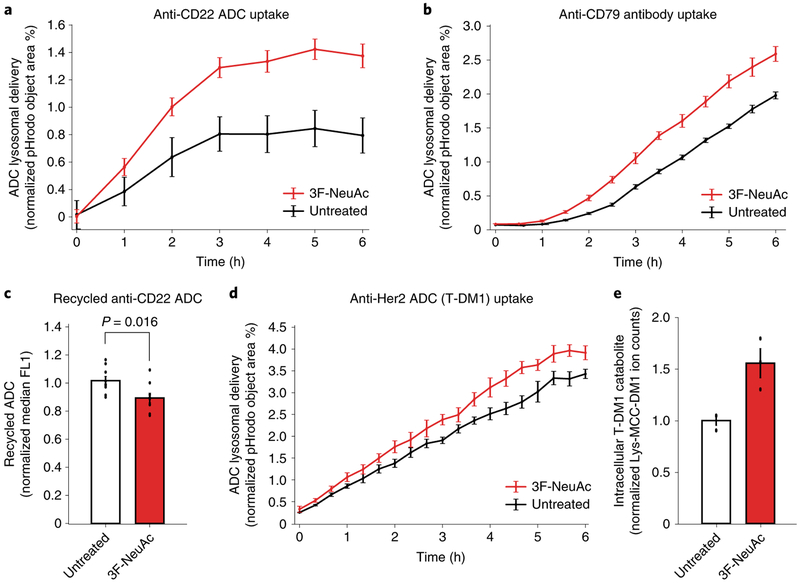
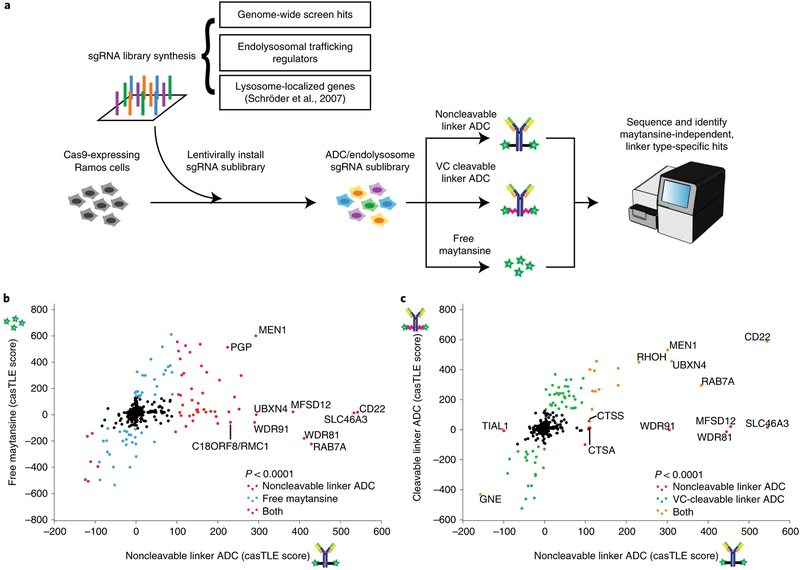
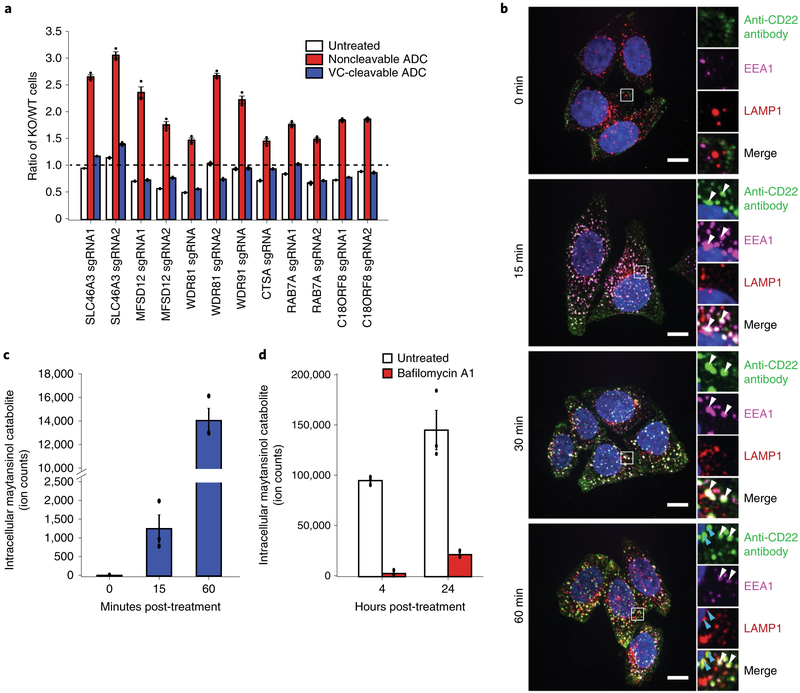
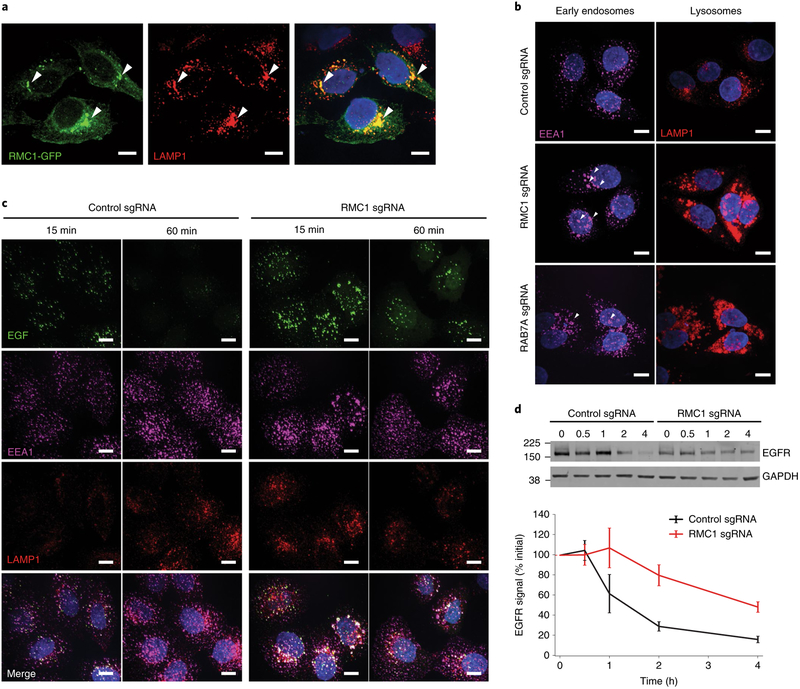
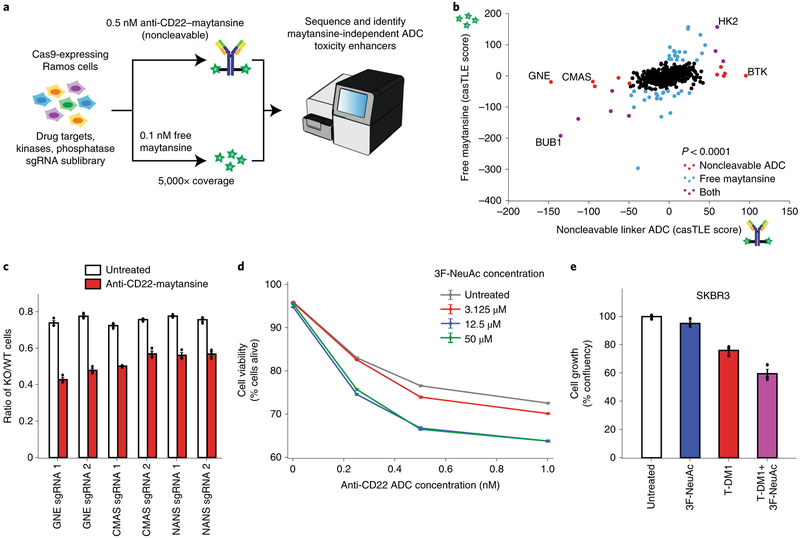
Antibody-drug conjugates (ADCs) selectively deliver chemotherapeutic agents to target cells and are important cancer therapeutics. However, the mechanisms by which ADCs are internalized and activated remain unclear. Using CRISPR-Cas9 screens, we uncover many known and novel endolysosomal regulators as modulators of ADC toxicity. We identify and characterize C18ORF8/RMC1 as a regulator of ADC toxicity through its role in endosomal maturation. Through comparative analysis of screens with ADCs bearing different linkers, we show that a subset of late endolysosomal regulators selectively influence toxicity of noncleavable linker ADCs. Surprisingly, we find cleavable valine-citrulline linkers can be processed rapidly after internalization without lysosomal delivery. Lastly, we show that sialic acid depletion enhances ADC lysosomal delivery and killing in diverse cancer cell types, including with FDA (US Food and Drug Administration)-approved trastuzumab emtansine (T-DM1) in Her2-positive breast cancer cells. Together, these results reveal new regulators of endolysosomal trafficking, provide important insights for ADC design and identify candidate combination therapy targets.
抗体药物偶联物(ADCs)选择性地将化疗药物递送至靶细胞,是重要的癌症治疗药物。然而,ADC 内化和激活的机制仍不清楚。通过使用 CRISPR-Cas9 筛选,我们发现许多已知和新的内体溶酶体调节剂作为 ADC 毒性的调节剂。我们通过其在内体成熟中的作用鉴定并表征 C18ORF8/RMC1 作为 ADC 毒性的调节剂。通过对带有不同接头的 ADC 进行筛选的比较分析,我们表明一组晚期内体溶酶体调节剂选择性地影响不可裂解接头 ADC 的毒性。令人惊讶的是,我们发现可裂解的缬氨酸-瓜氨酸接头在没有溶酶体递送至细胞内后可以快速被加工。最后,我们表明唾液酸耗竭增强了 ADC 在多种癌细胞类型中的溶酶体递药和杀伤作用,包括在 Her2 阳性乳腺癌细胞中经美国食品和药物管理局(FDA)批准的曲妥珠单抗-美坦新(T-DM1)。总之,这些结果揭示了新的内体溶酶体运输调节剂,为 ADC 设计提供了重要的见解,并确定了候选联合治疗靶点。