Lamer Stéphanie, Hébert-Davies Jonah, Dubé Vincent, Leduc Stéphane, Sandman Émilie, Ménard Jérémie, Nault Marie-Lyne
Hôpital du Sacré-Cœur de Montréal, Montréal, Quebec, Canada.
Department of Surgery, Université de Montréal, Montréal, Quebec, Canada.
Orthop J Sports Med. 2019 Aug 20;7(8):2325967119864018. doi: 10.1177/2325967119864018. eCollection 2019 Aug.
Syndesmotic injuries can lead to long-term complications; hence, they require careful management. Conservative treatment is adequate when 1 syndesmotic ligament is injured, but surgery is often necessary to achieve articular congruity when 3 syndesmotic ligaments are ruptured. However, there is some controversy over the best treatment for 2-ligament injuries.
To evaluate the effect of a controlled ankle motion (CAM) walking boot on syndesmotic instability following iatrogenic isolated anterior inferior tibiofibular ligament (AiTFL) injury and combined AiTFL/interosseous ligament (IOL) injuries in a cadaveric simulated weightbearing model.
Controlled laboratory study.
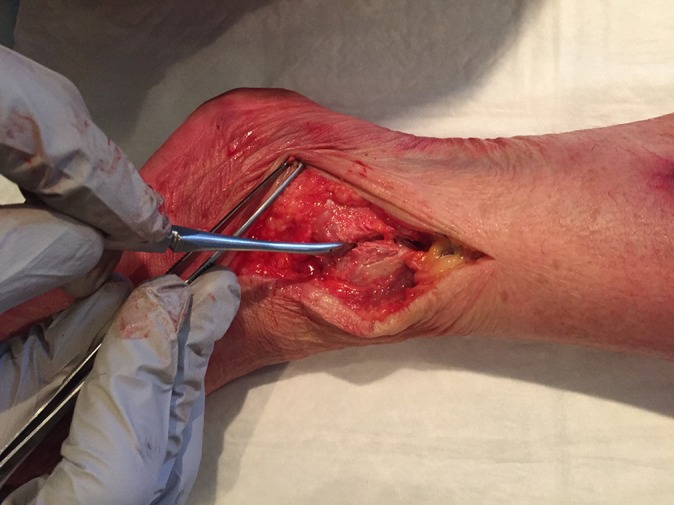
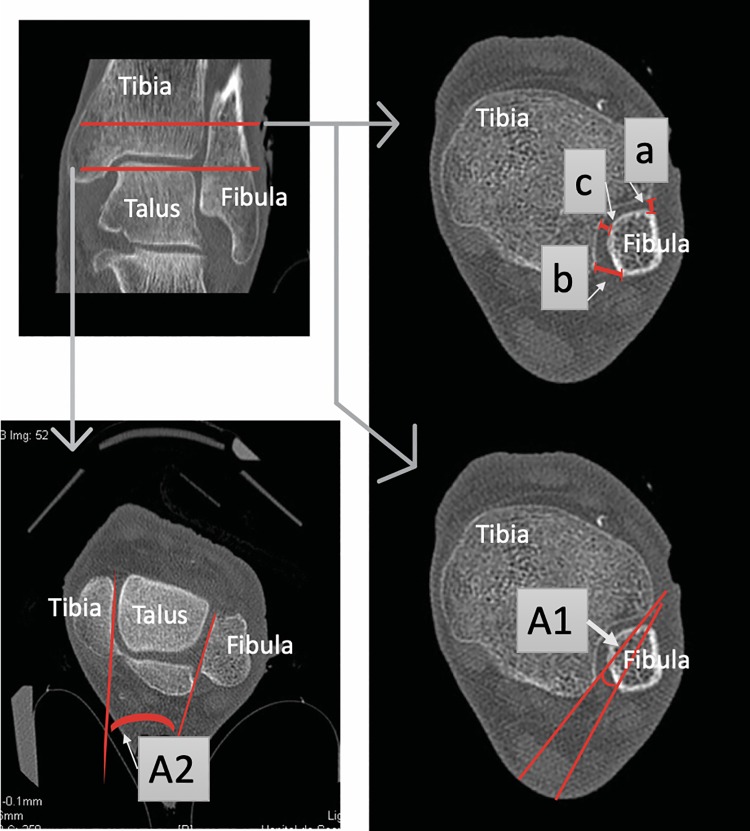
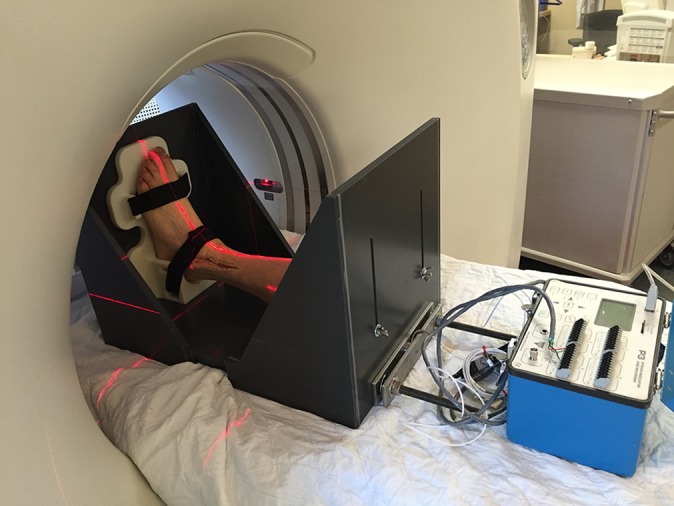
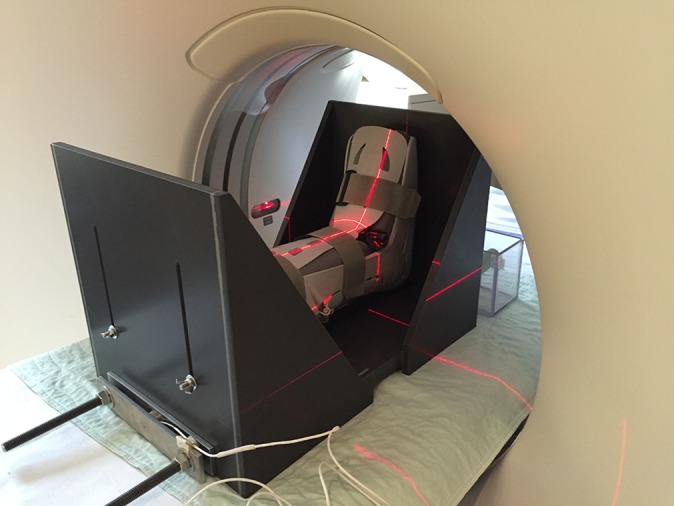
Ten cadaveric specimens were dissected to expose the tibial plateau and syndesmosis. The specimens were fitted to a custom-made device, and a reproducible axial load of 750 N was applied. Iatrogenic rupture of the syndesmotic ligaments (AiTFL + IOL) was done sequentially. Uninjured syndesmoses, isolated AiTFL rupture, and combined AiTFL/IOL rupture were compared with and without axial loading (AL) and CAM boot. The distal tibiofibular relationship was evaluated using a previously validated computed tomography scan measurement system. Wilcoxon tests for paired samples and nonparametric data were used.
The only difference noted in the distal tibiofibular relationship during AL was an increase in the external rotation of the fibula when using the CAM boot. This was observed with AiTFL rupture (8.40° vs 11.17°; = .009) and combined AiTFL/IOL rupture (8.81° vs 11.97°; = .005).
AL did not cause a significant displacement between the tibia and fibula, even when 2 ligaments were ruptured. However, the CAM boot produced a significant external rotation with 1 or 2 injured ligaments.
Further studies are needed to assess the capacity of the CAM walking boot to prevent malreduction when external rotation forces are applied to the ankle. Moreover, special care should be taken during the fitting of the CAM boot to avoid overinflation of the cushions.
下胫腓联合损伤可导致长期并发症,因此需要谨慎处理。当一条下胫腓联合韧带损伤时,保守治疗就足够了,但当三条下胫腓联合韧带断裂时,通常需要手术以实现关节面的一致性。然而,对于两条韧带损伤的最佳治疗方法存在一些争议。
在尸体模拟负重模型中,评估可控踝关节活动(CAM)步行靴对医源性孤立性胫腓前下韧带(AiTFL)损伤以及AiTFL/骨间韧带(IOL)联合损伤后下胫腓联合不稳定的影响。
对照实验室研究。
解剖10个尸体标本以暴露胫骨平台和下胫腓联合。将标本安装到定制装置上,并施加750 N的可重复轴向负荷。依次进行医源性下胫腓联合韧带(AiTFL + IOL)断裂。比较未受伤的下胫腓联合、孤立的AiTFL断裂以及联合的AiTFL/IOL断裂在有和没有轴向负荷(AL)以及使用CAM步行靴的情况下的情况。使用先前验证的计算机断层扫描测量系统评估胫腓远端关系。使用配对样本的Wilcoxon检验和非参数数据。
在轴向负荷期间,胫腓远端关系中唯一注意到的差异是使用CAM步行靴时腓骨外旋增加。在AiTFL断裂(8.40°对11.17°;P = 0.009)和联合AiTFL/IOL断裂(8.81°对11.97°;P = 0.005)时观察到这种情况。
即使两条韧带断裂,轴向负荷也不会导致胫骨和腓骨之间出现明显移位。然而,CAM步行靴在1条或2条韧带损伤时会产生明显的外旋。
需要进一步研究以评估CAM步行靴在踝关节受到外旋力时防止复位不良的能力。此外,在安装CAM步行靴时应特别小心,以避免衬垫过度充气。