Laxmayyaguddi Yesappa, Mydur Niranjana, Shankar Pawar Ashokkumar, Hebri Vijeth, Vandana M, Sanjeev Ganesh, Hundekal Devendrappa
Department of Physics, Mangalore University, Mangalagangothri, Mangaluru 574199, India.
ACS Omega. 2018 Oct 26;3(10):14188-14200. doi: 10.1021/acsomega.8b01097. eCollection 2018 Oct 31.
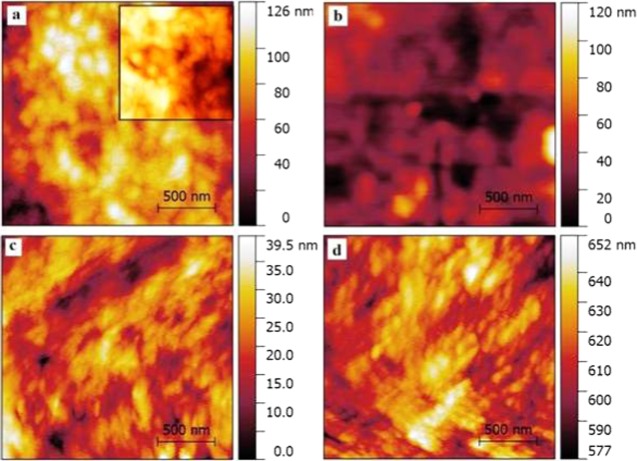
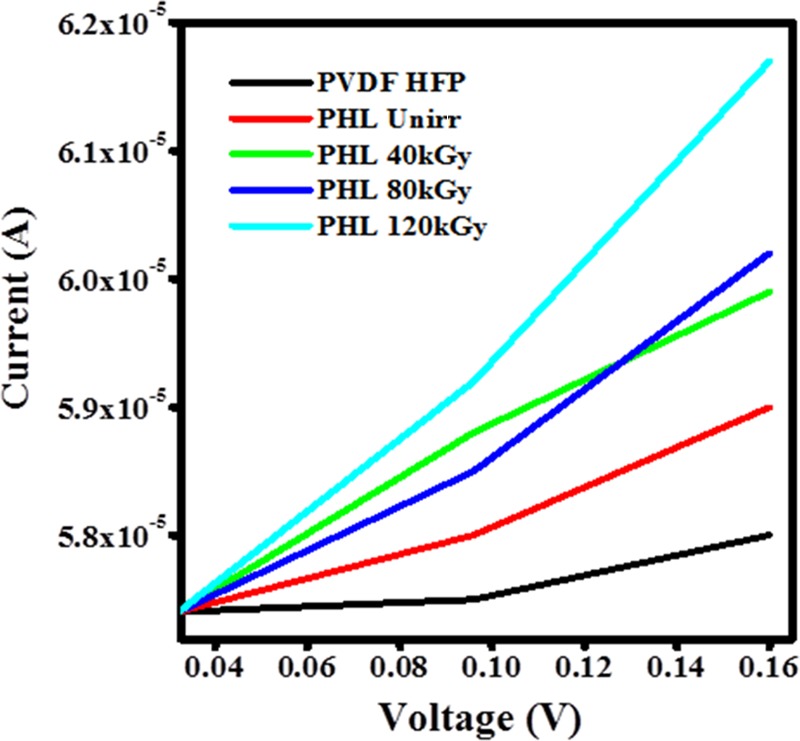
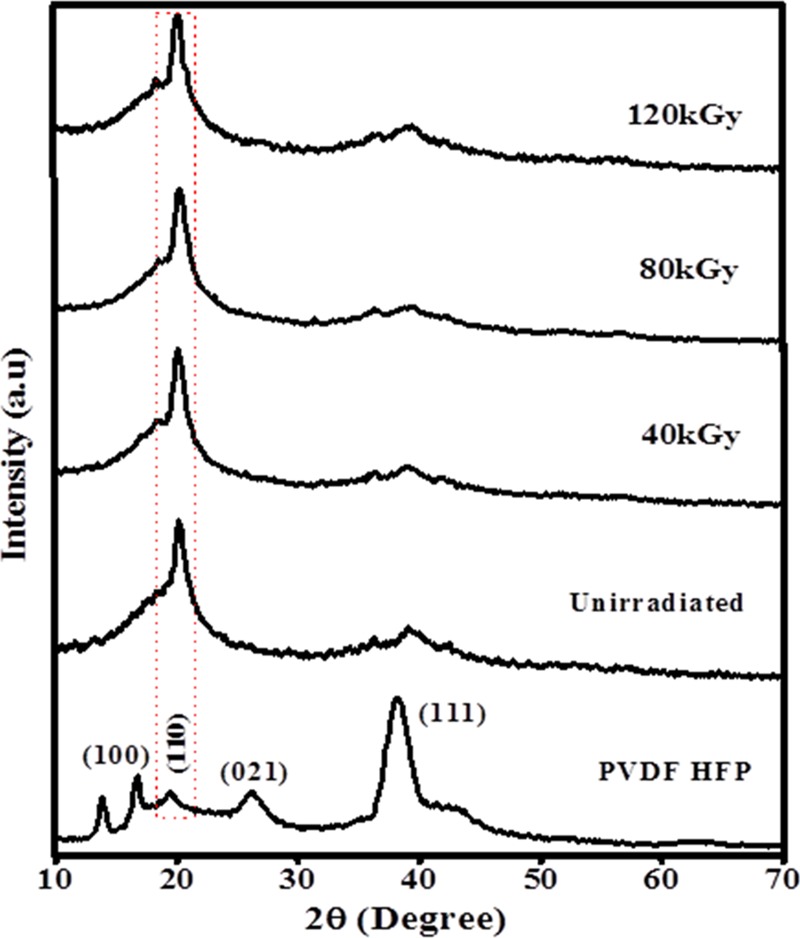
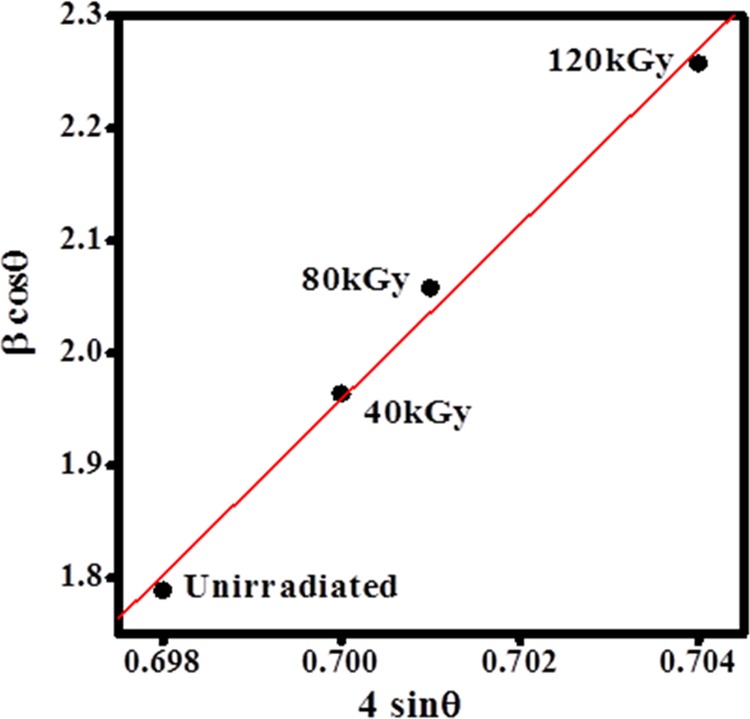
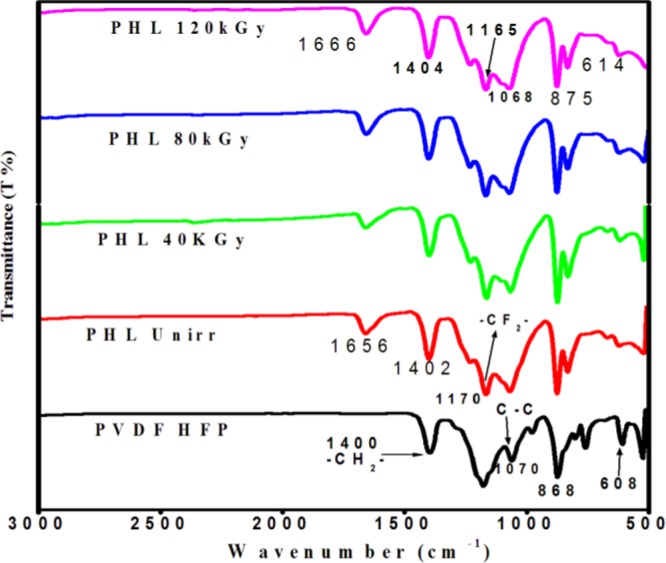
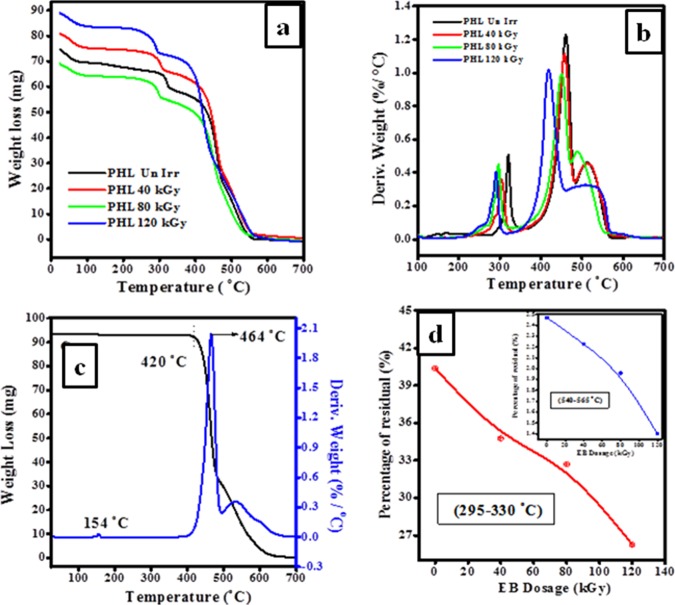
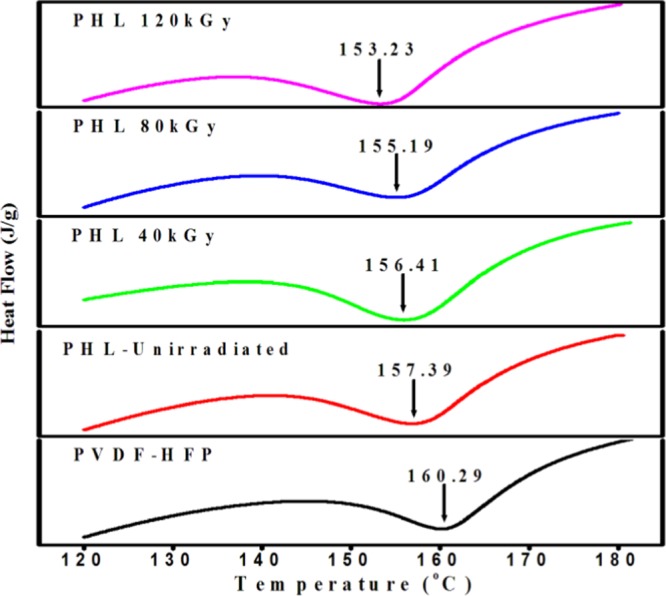
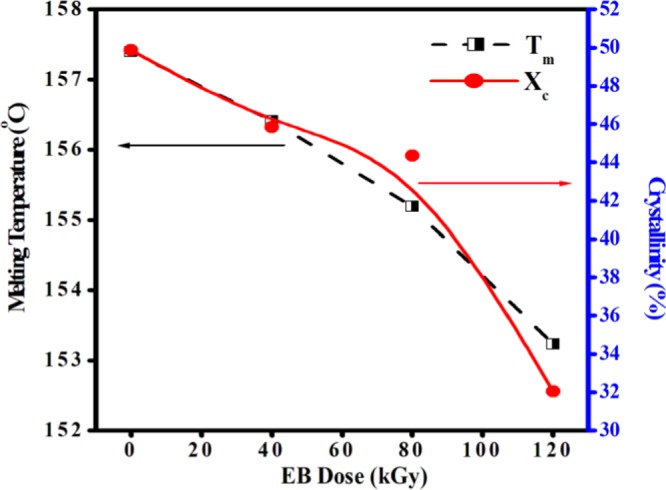
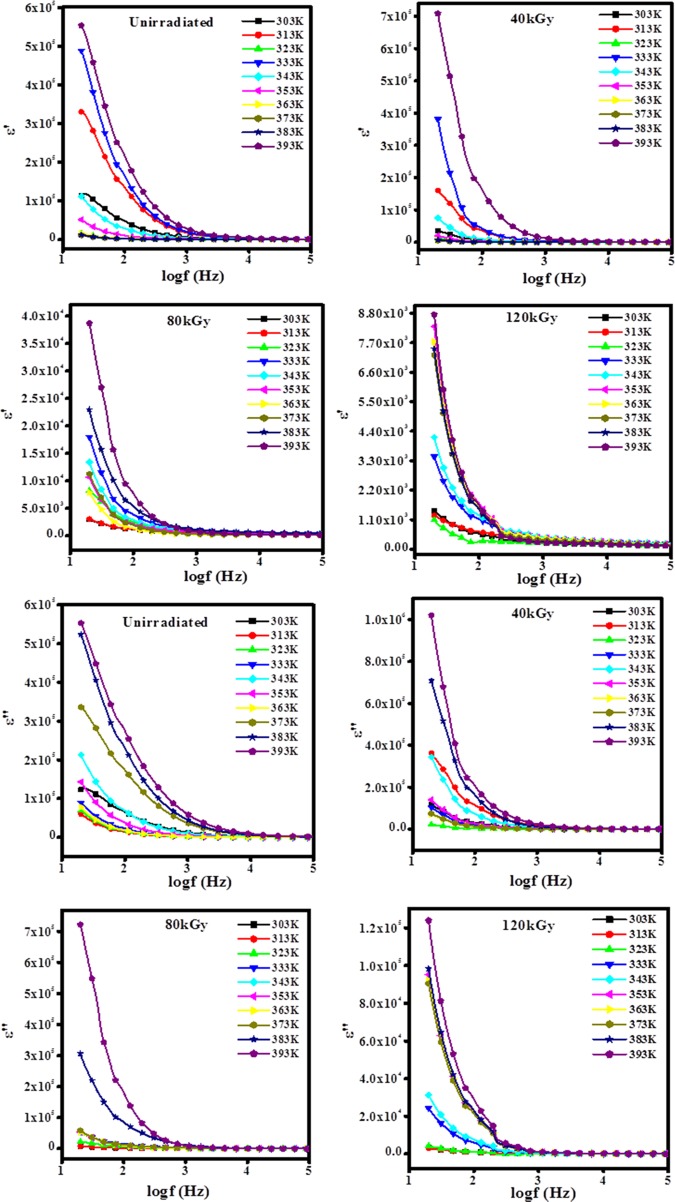
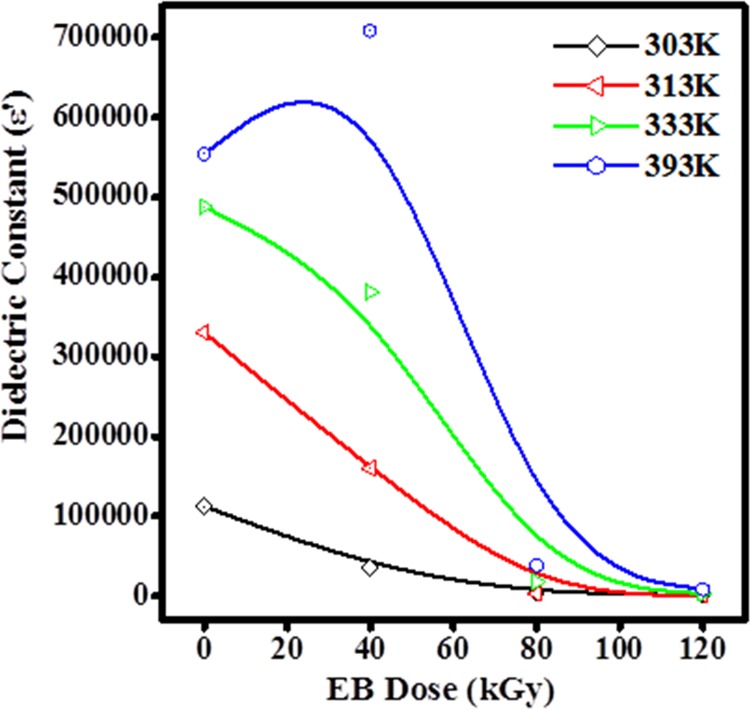
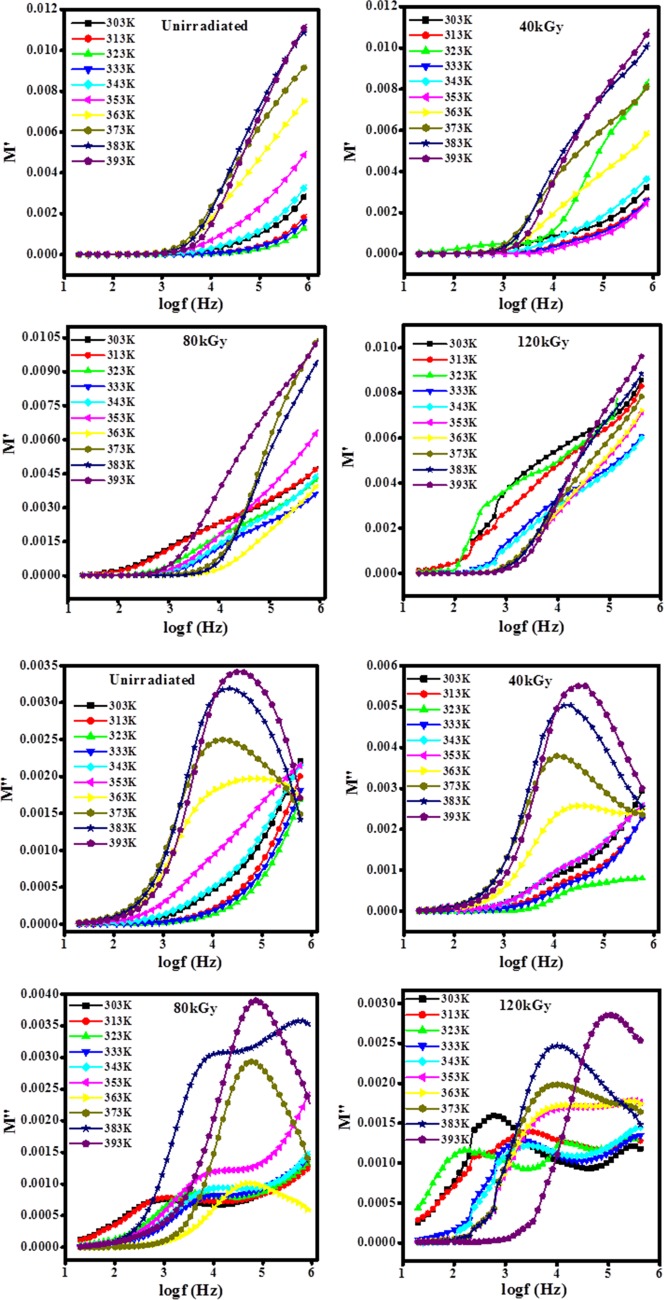
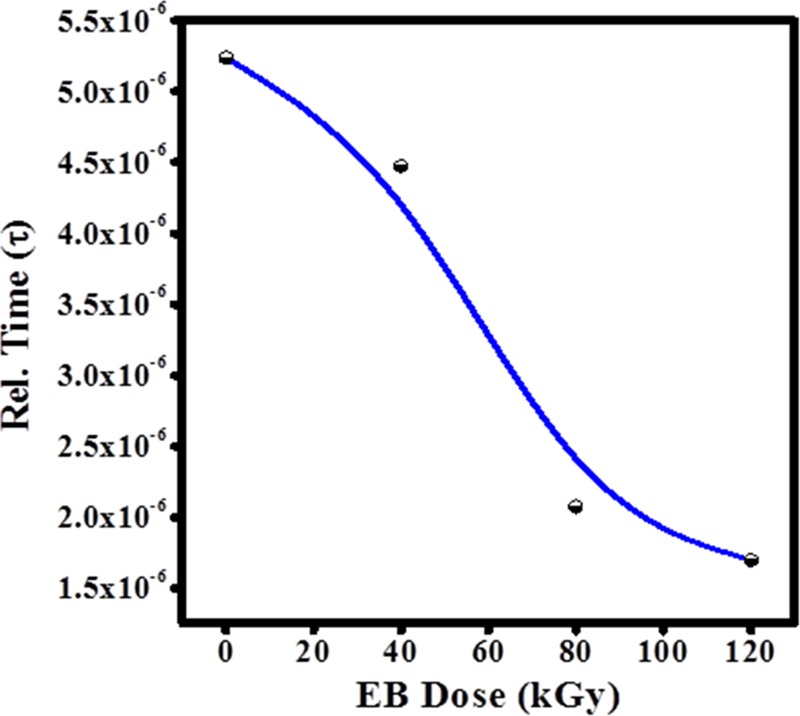
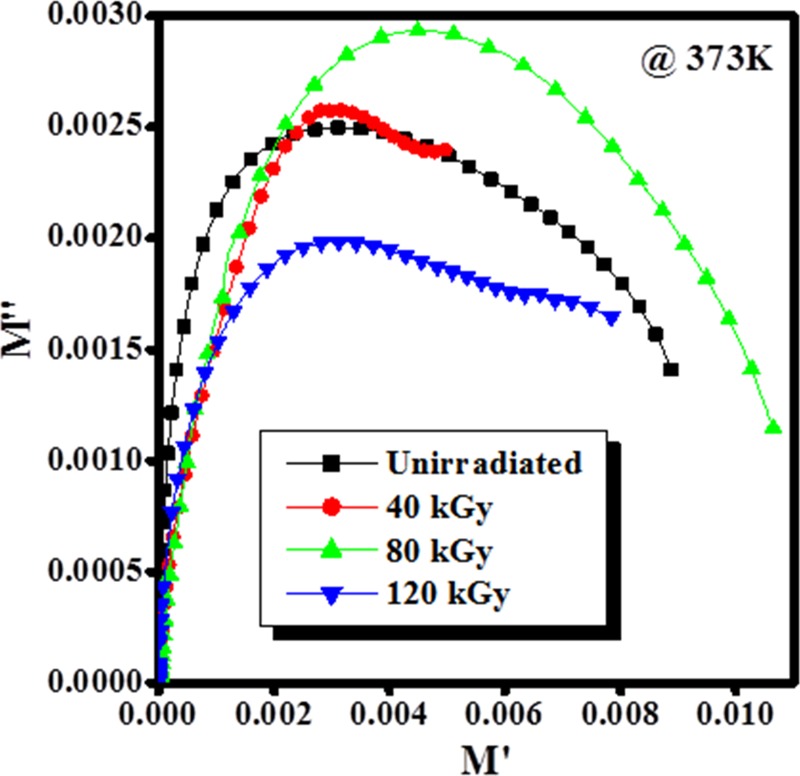
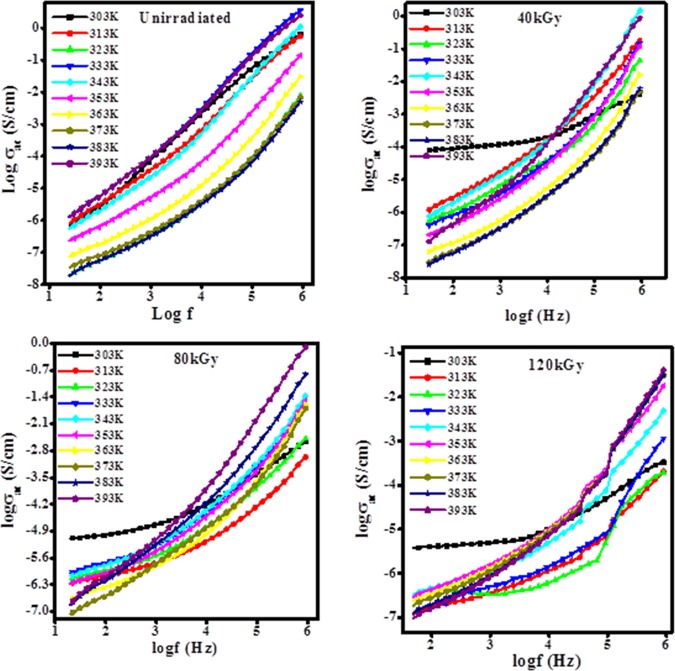
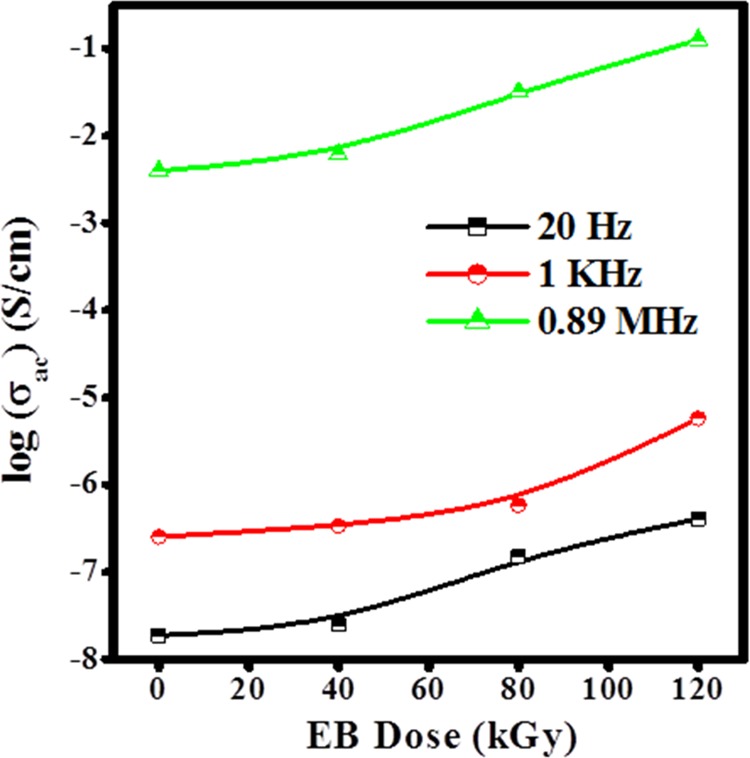
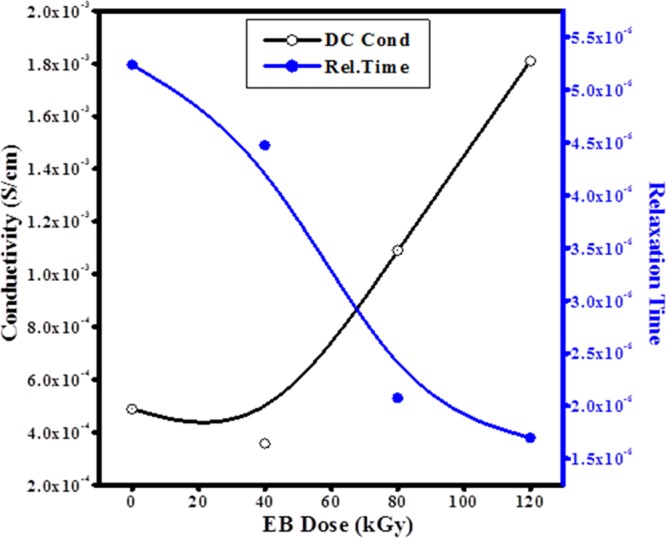
The polymer electrolyte films (poly((vinylidene fluoride)--hexafluoropropylene)/LiClO@90:10 w/w, PHL10) were prepared by solution-casting technique and the effect of various dosages of electron beam (EB) irradiation on structure, morphology, thermal, dielectric, and conductivity properties at various dosages. The atomic force microscope topography image shows substantial change in surface morphology due to irradiation and the modification of chemical bonds through chain scission process with increased EB dose was confirmed by Fourier transform infrared spectroscopy studies. NMR studies confirm the change in structural properties due to irradiation. The X-ray diffractometer confirms the decreased crystallinity from 50.10 for unirradiated film to 40.96 at 120 kGy doses; hence, increase in amorphousity due to a decrease in melting temperature from 460 to 418 °C leads to the degradation of the polymer, and the differential scanning calorimetry study reveals the decreased crystallinity with increased irradiation dose. The dielectric and modulus parameters are observed to decrease with increasing frequency as well as temperature. The conductivity increases with frequency and EB dose due to the increased segmental motion of charged ions by chain scission/cross-linking process. The high conductivity of 1.81 × 10 S/cm with the corresponding relaxation time of 1.697 × 10 at 120 kGy dose was observed. The conduction mechanism reveals an Ohmic behavior and the - plot exhibits a gradual increase in current with applied voltage as well as irradiation dose. The electrochemical performance of the irradiated polymer electrolyte was improved significantly and hence the polymer electrolytes can be used in solid-state batteries and storage applications after altering the properties by the influence of irradiation.
采用溶液浇铸技术制备了聚合物电解质薄膜(聚(偏二氟乙烯 - 六氟丙烯)/LiClO@90:10 w/w,PHL10),并研究了不同剂量电子束(EB)辐照对其结构、形态、热性能、介电性能和导电性能的影响。原子力显微镜形貌图像显示,辐照导致表面形态发生显著变化,傅里叶变换红外光谱研究证实,随着EB剂量增加,通过链断裂过程化学键发生了改性。核磁共振研究证实了辐照导致结构性能发生变化。X射线衍射仪证实,未辐照薄膜的结晶度为50.10,在120 kGy剂量下结晶度降至40.96;因此,由于熔点从460℃降至418℃导致非晶度增加,从而导致聚合物降解,差示扫描量热法研究表明,随着辐照剂量增加结晶度降低。观察到介电参数和模量参数随频率和温度升高而降低。由于链断裂/交联过程中带电离子的链段运动增加,电导率随频率和EB剂量增加而增加。在120 kGy剂量下观察到高电导率为1.81×10 S/cm,相应的弛豫时间为1.697×10。传导机制显示出欧姆行为,I - V图显示电流随施加电压以及辐照剂量逐渐增加。辐照后的聚合物电解质的电化学性能得到显著改善,因此,通过辐照影响改变性能后,聚合物电解质可用于固态电池和储能应用。