He Zikai, Ke Chunqiao, Tang Ben Zhong
School of Science, Harbin Institute of Technology Shenzhen, HIT Campus of University Town of Shenzhen, Nanshan, Shenzhen 518055, China.
Department of Chemistry, Division of Life Science, Institute for Advanced Study, Institute of Molecular Functional Materials, Division of Biomedical Engineering, and Hong Kong Branch of Chinese National Engineering Research Center for Tissue Restoration and Reconstruction, The Hong Kong University of Science and Technology, Clear Water Bay, Kowloon, Hong Kong, China.
ACS Omega. 2018 Mar 19;3(3):3267-3277. doi: 10.1021/acsomega.8b00062. eCollection 2018 Mar 31.
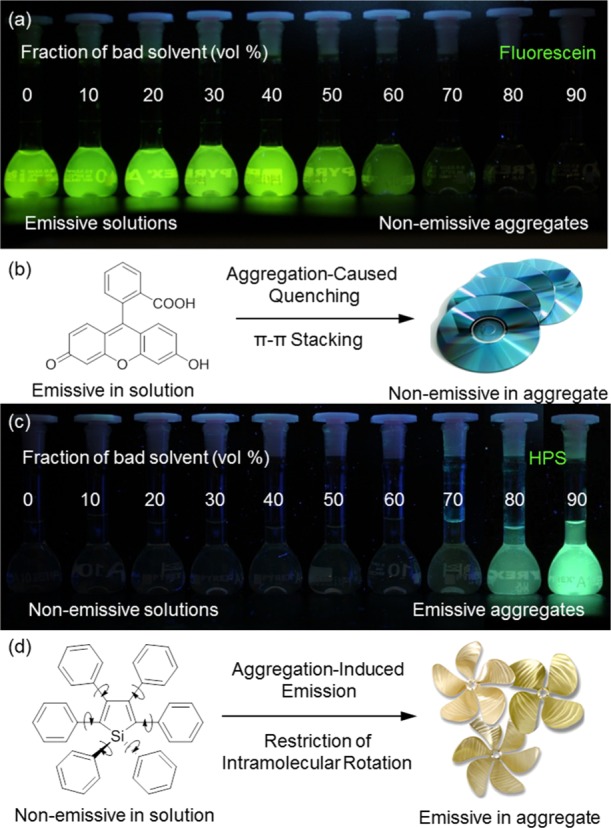
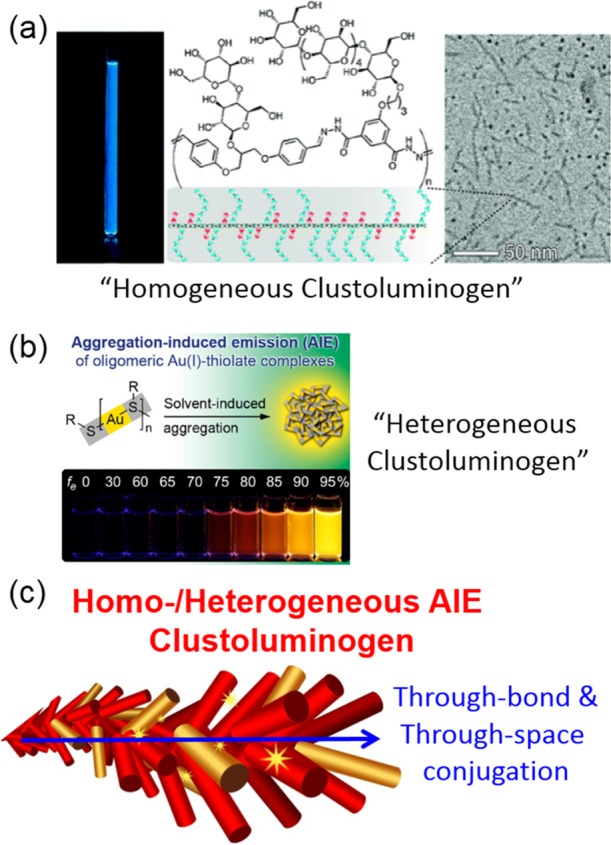
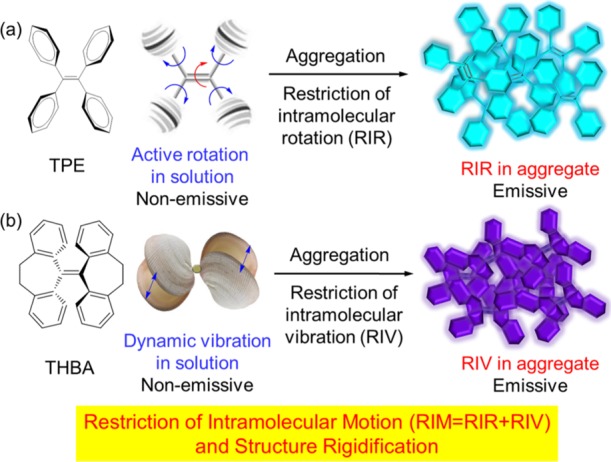
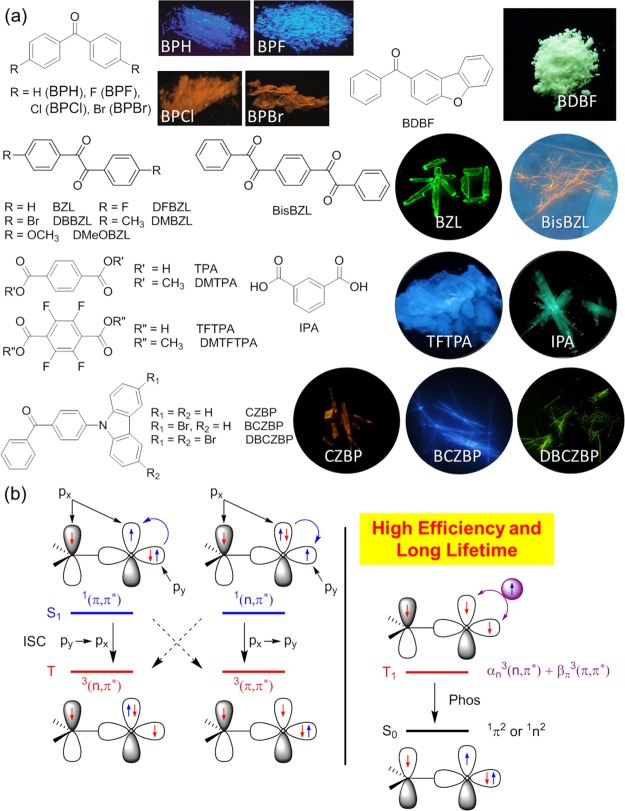
Highly efficient luminescent materials in solid states are promising candidates for the development of organic optoelectrical materials and devices and chemical and biological sensors. Aggregation-induced emission (AIE), a novel photophyscial phenomena coined in 2001 where the aggregate formation enhances the light emission, has drawn great attention because it provides a fantastic platform for the development of these useful luminescent materials. After 17 years of AIE research, diverse AIE luminogens with tunable color and high quantum yields have been explored, which finds diverse applications from optics and electronics to energy and bioscience. Most importantly, the concept of AIE has gradually changed people's thinking way about the aggregation of luminogen and put forth a revolution of luminogen research both conceptually and technically. This perspective revisits our journey of AIE research, discusses our current understanding of the AIE mechanism, debates current challenges, and looks for the potential breakthroughs in this exciting research area.
固态高效发光材料是有机光电器件以及化学和生物传感器开发的理想候选材料。聚集诱导发光(AIE)是2001年提出的一种新型光物理现象,即聚集体的形成增强了发光,它引起了极大关注,因为它为这些有用的发光材料的开发提供了一个绝佳平台。经过17年的AIE研究,已探索出了多种颜色可调且量子产率高的AIE发光体,其应用涵盖了从光学和电子学到能源和生物科学等多个领域。最重要的是,AIE概念逐渐改变了人们对发光体聚集的思维方式,并在概念和技术上引发了发光体研究的一场革命。这篇综述回顾了我们的AIE研究历程,讨论了我们目前对AIE机制的理解,探讨了当前面临的挑战,并展望了这一令人兴奋的研究领域的潜在突破点。