Li Jun, Zhang Meng, Dowell Floyd, Wang Donghai
Department of Biological and Agricultural Engineering and Department of Industrial and Manufacturing Systems Engineering, Kansas State University, Manhattan, Kansas 66506, United States.
Center for Grain and Animal Health Research, USDA, Agricultural Research Service, 1515 College Avenue, Manhattan, Kansas 66502, United States.
ACS Omega. 2018 May 18;3(5):5355-5361. doi: 10.1021/acsomega.8b00636. eCollection 2018 May 31.
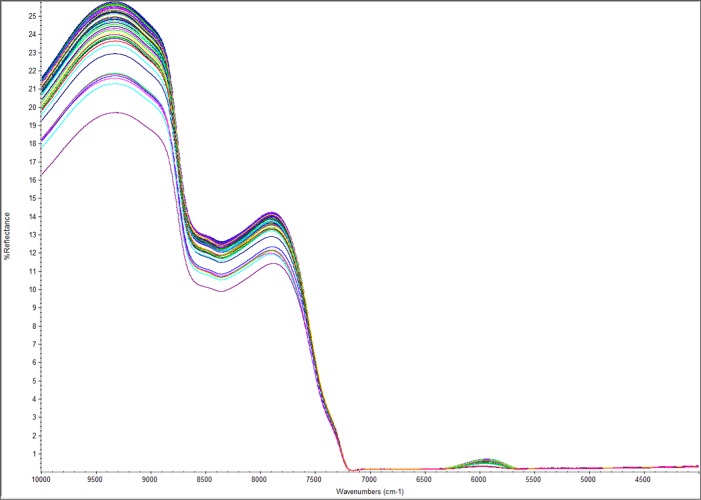
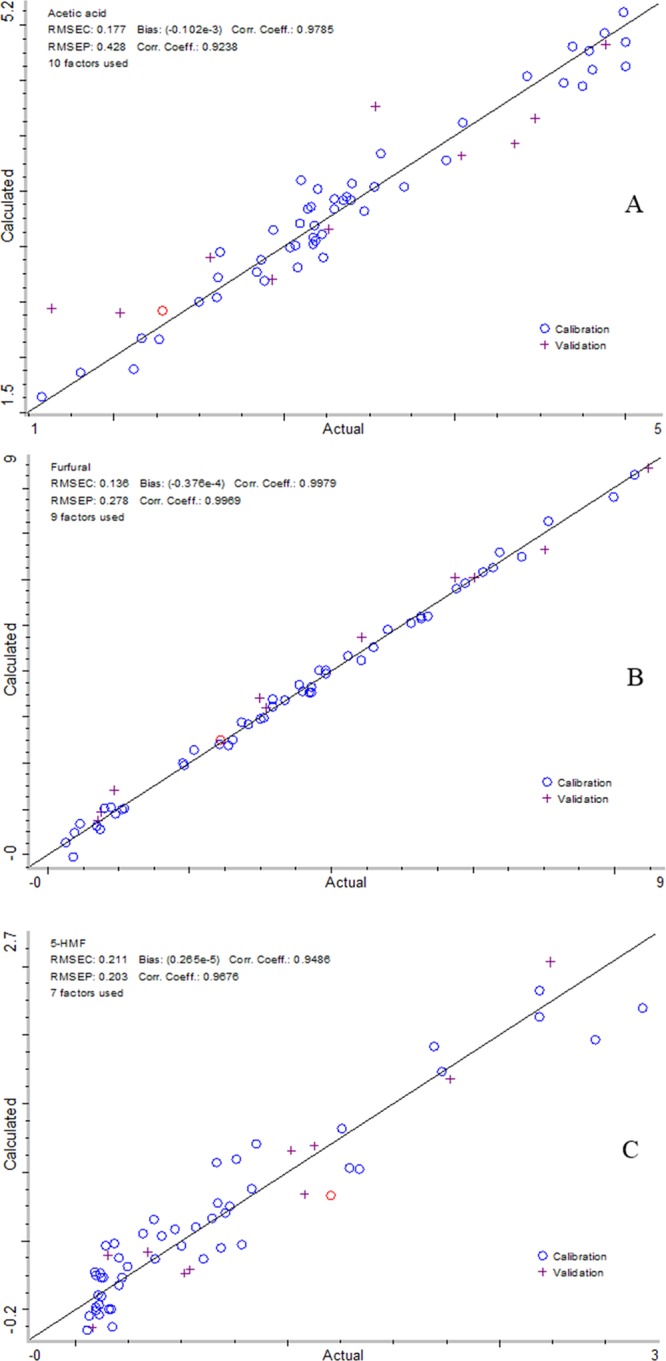
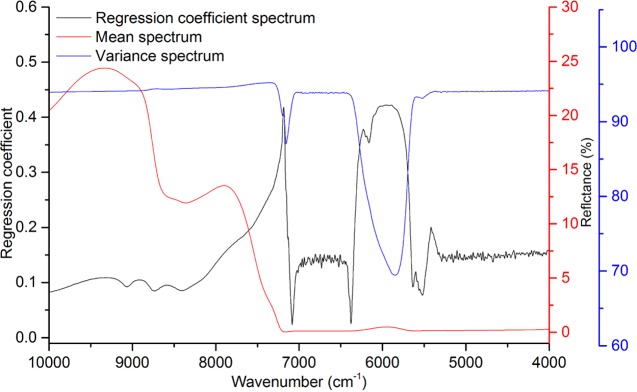
Near-infrared spectroscopy (NIRS) is a rapid detection technique that has been used to characterize biomass. The objective of this study was to develop suitable NIRS models to predict the acetic acid, furfural, and 5-hydroxymethylfurfural (HMF) contents in biomass hydrolysates. Using a uniform distribution of pretreatment conditions, 60 representative biomass hydrolysates were prepared. Partial least-squares regression was used to develop models capable of predicting acetic acid, furfural, and HMF contents. Optimal models were built using the wavenumber range of 9000-8000 and 7000-5000 cm with high for calibration and validation models, small root-mean-square error of calibration (<0.21) and root-mean-square error of prediction (RMSEP, <0.42), and a ratio of the standard deviation of the reference values to the RMSEP of >2.7. The NIRS method largely reduced the analytical time from ∼55 to <1 min and has no cost for reagents.
近红外光谱(NIRS)是一种已用于表征生物质的快速检测技术。本研究的目的是开发合适的NIRS模型,以预测生物质水解产物中的乙酸、糠醛和5-羟甲基糠醛(HMF)含量。采用均匀分布的预处理条件,制备了60种具有代表性的生物质水解产物。使用偏最小二乘回归来开发能够预测乙酸、糠醛和HMF含量的模型。利用9000 - 8000和7000 - 5000 cm的波数范围构建了最优模型,校准模型和验证模型具有较高的 ,校准的均方根误差小(<0.21)且预测均方根误差(RMSEP,<0.42),参考值的标准偏差与RMSEP的比值大于2.7。NIRS方法大大缩短了分析时间,从约55分钟减少到<1分钟,且无需试剂成本。