Kim Il Hee, Cha Byeong Jun, Choi Chang Min, Jin Jong Sung, Choi Myoung Choul, Kim Young Dok
Department of Chemistry, Sungkyunkwan University, 2066, Seobu-ro, Suwon 16419, South Korea.
Mass Spectrometry and Advanced Instrument Group, Korea Basic Science Institute, Ochang Center, 162, Yeongudanji-ro, Cheongju 28119, South Korea.
ACS Omega. 2019 Aug 5;4(8):13100-13105. doi: 10.1021/acsomega.9b00985. eCollection 2019 Aug 20.
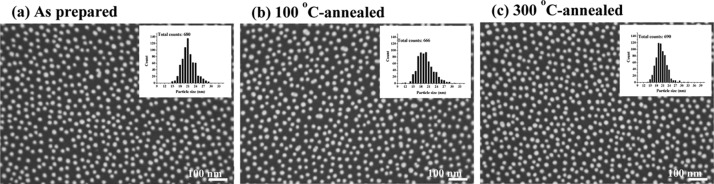
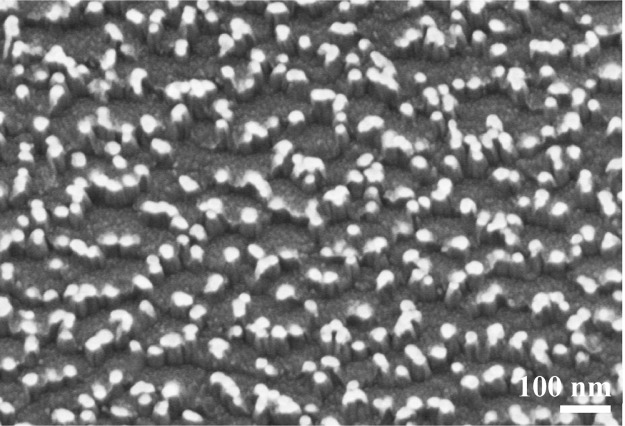
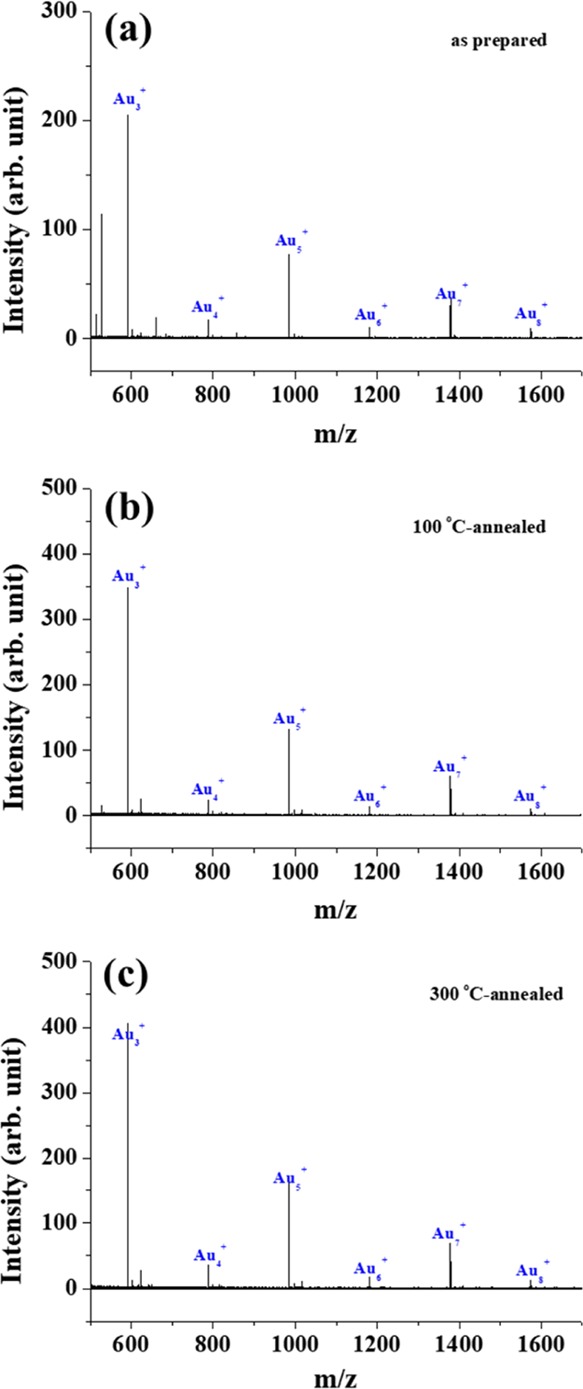
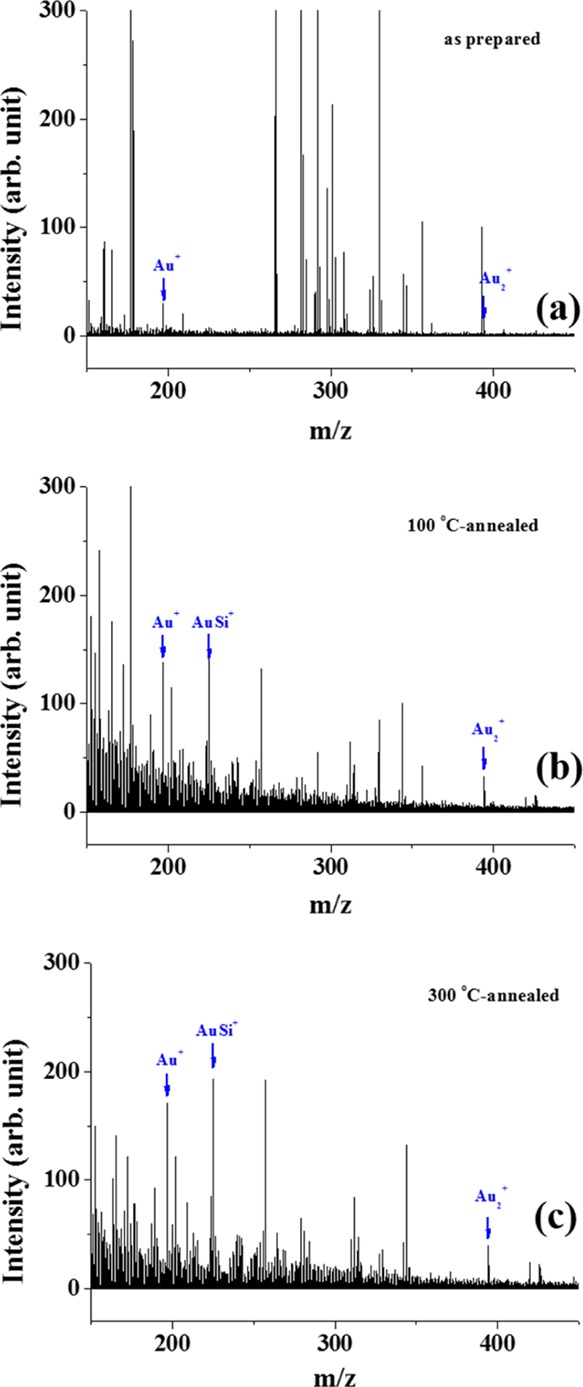
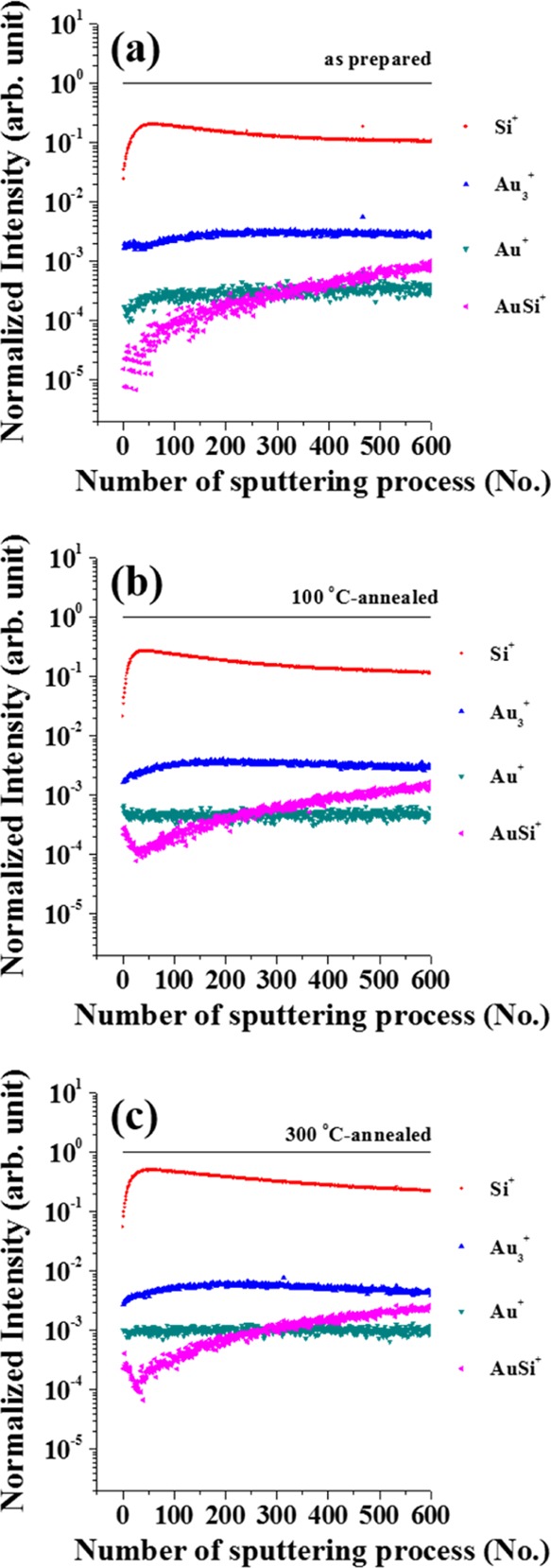
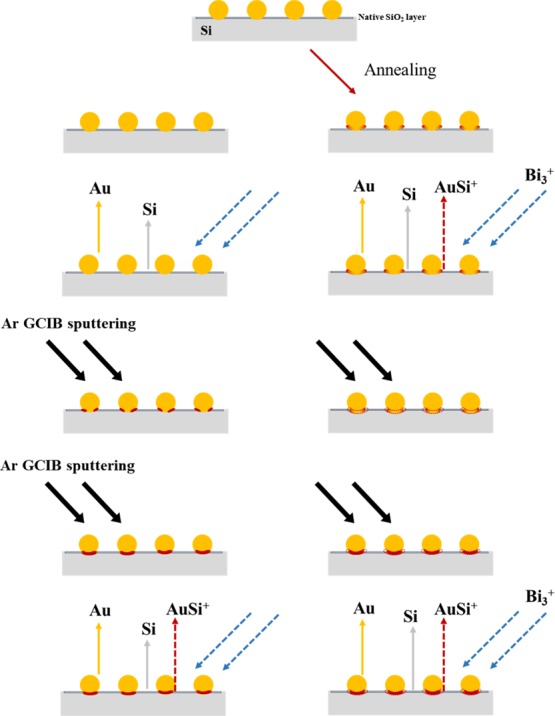
Au nanoparticles with a mean diameter of 20 nm with a coverage of ∼20% of the surface were distributed on a Si wafer surface and studied both before and after being annealed (at 100 and 300 °C). The two types of samples were analyzed using secondary ion mass spectroscopy (SIMS) with Bi clusters as the primary ions combined with surface etching using Ar clusters. We observed a substantial difference in the SIMS spectra combined with a relatively short sputtering time of Ar . In the nonannealed samples, bare Au cluster cations and Si were observed in the SIMS spectra; AuSi clusters were also observed in the annealed samples. These results indicate Au-silicide formation at a part of the periphery of the Au nanoparticles upon annealing. We suggest that SIMS experiments using cluster ions such as Bi can not only be used for surface elemental analyses but also provide information on local chemical environments of elements on the surface. This is an important issue in heterogeneous catalysis (e.g., strong metal-support interactions). We also advise that one should be careful interpreting the SIMS data combined with a longer Ar sputtering time because this can deteriorate the surfaces from their original structures.
平均直径为20纳米且表面覆盖率约为20%的金纳米颗粒分布在硅片表面,并在退火(100和300°C)前后进行了研究。这两种类型的样品使用以铋团簇作为一次离子的二次离子质谱(SIMS)结合氩团簇表面蚀刻进行分析。我们观察到SIMS光谱存在显著差异,同时氩的溅射时间相对较短。在未退火的样品中,SIMS光谱中观察到裸露的金团簇阳离子和硅;在退火的样品中也观察到了金硅团簇。这些结果表明退火后金纳米颗粒外围的一部分形成了硅化金。我们认为,使用铋等团簇离子的SIMS实验不仅可用于表面元素分析,还能提供有关表面元素局部化学环境的信息。这在多相催化(例如,强金属-载体相互作用)中是一个重要问题。我们还建议,在解释结合较长氩溅射时间的SIMS数据时应谨慎,因为这可能会使表面结构偏离其原始结构。