Laboratorios de Investigación Aplicada en Neurociencias (LIAN-CONICET), Fundación para la Lucha contra las Enfermedades Neurológicas de la Infancia (FLENI), Belén de Escobar, Provincia de Buenos Aires, Argentina.
BMC Mol Cell Biol. 2019 Aug 28;20(1):40. doi: 10.1186/s12860-019-0222-3.
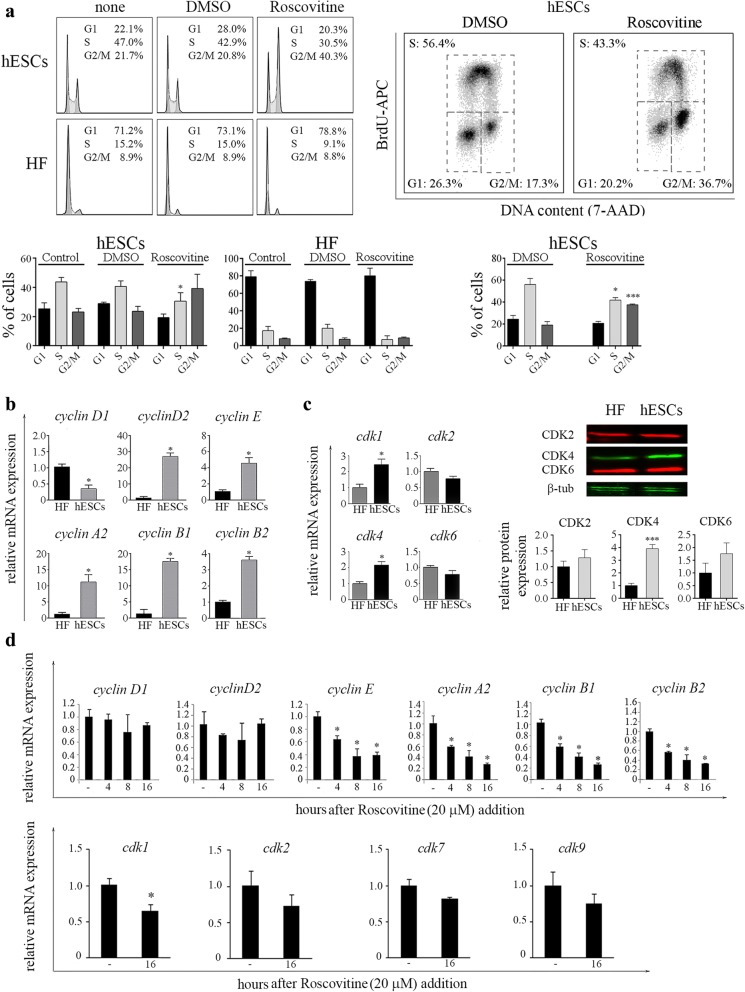
The essentially unlimited expansion potential and the pluripotency of human embryonic stem cells (hESCs) make them attractive for cell-based therapeutic purposes. Although hESCs can indefinitely proliferate in culture, unlike transformed cancer cells, they are endowed with a cell-intrinsic property termed mitochondrial priming that renders them highly sensitive to apoptotic stimuli. Thus, all attempts to broaden the insights into hESCs apoptosis may be helpful for establishing pro-survival strategies valuable for its in vitro culture and further use in clinical applications. Cyclin-dependent kinases (CDKs), a family of serine/threonine protein kinases originally identified as regulators of the eukaryotic cell cycle, can also regulate transcription and differentiation. Moreover, there are compelling data suggesting that its activities are involved in certain apoptotic programs in different cell types. Currently, it is not completely determined whether CDKs regulate apoptotic processes in rapidly proliferating and apoptosis-prone hESCs. In this study, to elucidate the effect of CDKs inhibition in hESCs we used Roscovitine (ROSC), a purine analogue that selectively inhibits the activities of these kinases.
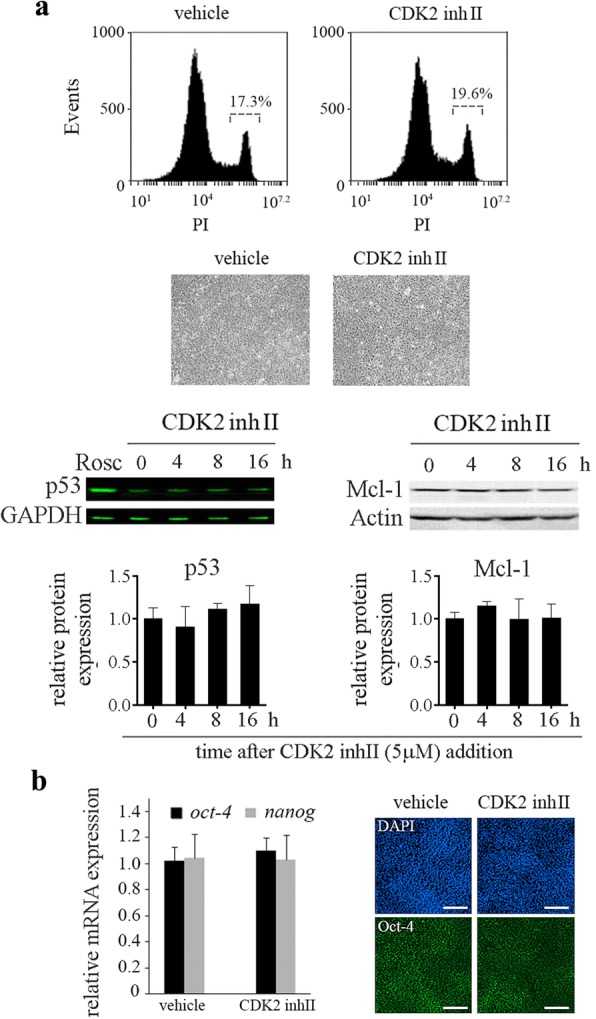
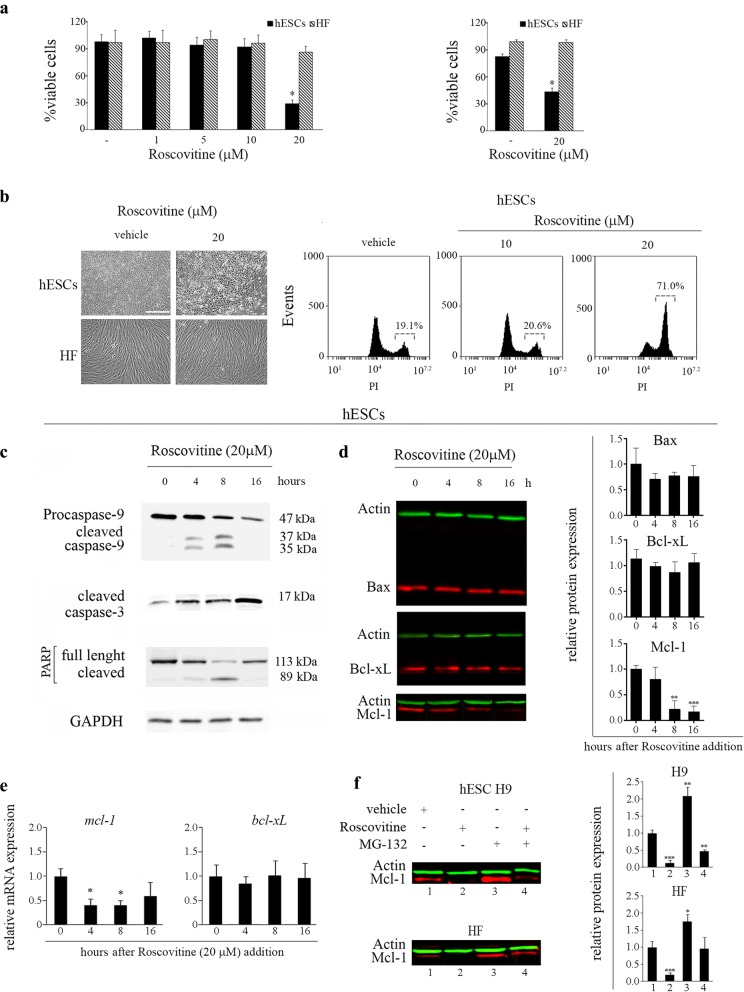
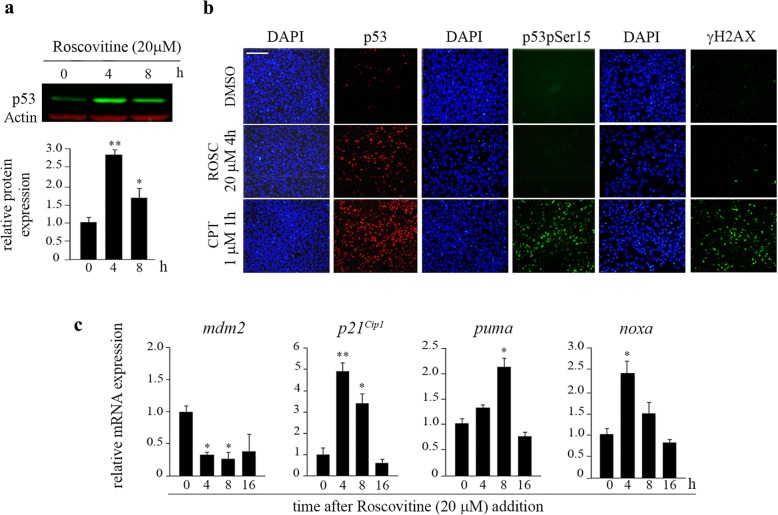
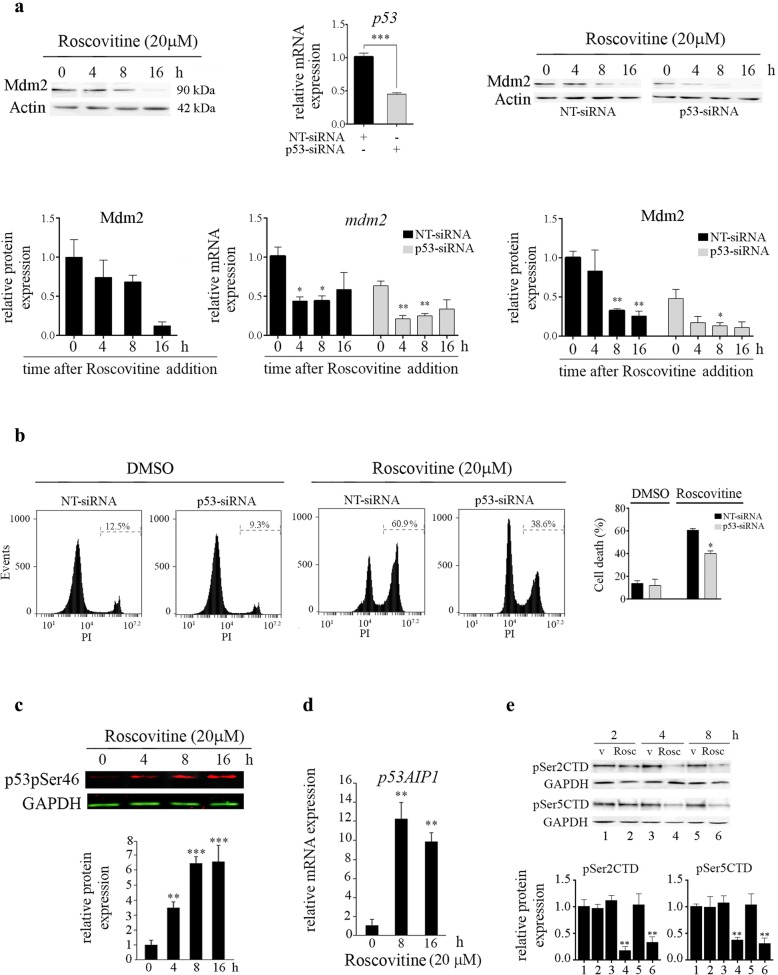
Inhibition of CDKs by ROSC triggers programmed cell death in hESCs but not in proliferating somatic cells (human fibroblasts). The apoptotic process encompasses caspase-9 and -3 activation followed by PARP cleavage. ROSC treatment also leads to p53 stabilization, which coincides with site-specific phosphorylation at serine 46 and decreased levels of Mdm2. Additionally, we observed a transcriptional induction of p53AIP1, a repression of pro-survival factor Mcl-1 and an up-regulation of pro-apoptotic BH3-only proteins NOXA and PUMA. Importantly, we found that the role of CDK2 inhibition appears to be at best accessory as an active CDK2 is not required to ensure hESCs survival.
Our experimental data reveal that hESCs, contrary to fibroblasts, exhibit a pronounced sensitivity to ROSC.
人类胚胎干细胞(hESC)具有无限的扩增潜能和多能性,使其成为细胞治疗的理想选择。尽管 hESC 可以在培养中无限增殖,但与转化的癌细胞不同,它们具有一种内在的特性,称为线粒体启动,使它们对凋亡刺激高度敏感。因此,所有试图深入了解 hESC 凋亡的尝试都可能有助于建立对其体外培养和进一步临床应用有价值的生存策略。细胞周期蛋白依赖性激酶(CDKs)是一类丝氨酸/苏氨酸蛋白激酶,最初被鉴定为真核细胞周期的调节因子,也可以调节转录和分化。此外,有强有力的证据表明,其活性参与了不同细胞类型中的某些凋亡程序。目前,尚不完全确定 CDK 是否调节快速增殖和易凋亡的 hESC 中的凋亡过程。在这项研究中,为了阐明 CDK 抑制对 hESC 的影响,我们使用了 Roscovitine(ROSC),一种嘌呤类似物,可选择性抑制这些激酶的活性。
ROSC 抑制 CDK 会触发 hESC 中的程序性细胞死亡,但不会触发增殖性体细胞(人成纤维细胞)中的细胞死亡。凋亡过程包括 caspase-9 和 -3 的激活,随后是 PARP 的切割。ROSC 处理还导致 p53 稳定,这与丝氨酸 46 位点的特异性磷酸化和 Mdm2 水平降低相一致。此外,我们观察到 p53AIP1 的转录诱导、抗凋亡因子 Mcl-1 的抑制和促凋亡 BH3-only 蛋白 NOXA 和 PUMA 的上调。重要的是,我们发现 CDK2 抑制的作用似乎只是辅助性的,因为活性 CDK2 并不需要确保 hESC 的存活。
我们的实验数据表明,与成纤维细胞相反,hESC 对 ROSC 表现出明显的敏感性。