Lineberger Comprehensive Cancer Center, University of North Carolina, Chapel Hill, NC, USA.
Laboratory of Immunotherapy of Brain Tumors, Fondazione IRCCS Istituto Neurologico Carlo Besta, Milan, Italy; Unit of Molecular Neuro-Oncology, Fondazione IRCCS Istituto Neurologico Carlo Besta, Milan, Italy.
EBioMedicine. 2019 Sep;47:33-43. doi: 10.1016/j.ebiom.2019.08.030. Epub 2019 Aug 26.
The dismal survival of glioblastoma (GBM) patients urgently calls for the development of new treatments. Chimeric antigen receptor T (CAR-T) cells are an attractive strategy, but preclinical and clinical studies in GBM have shown that heterogeneous expression of the antigens targeted so far causes tumor escape, highlighting the need for the identification of new targets. We explored if B7-H3 is a valuable target for CAR-T cells in GBM.
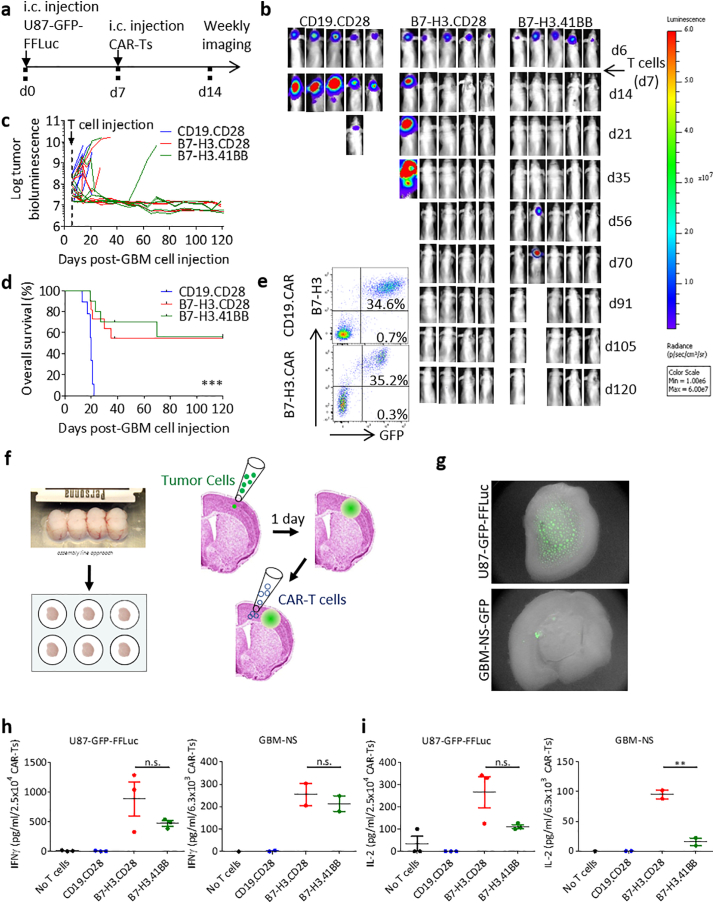
We compared mRNA expression of antigens in GBM using TCGA data, and validated B7-H3 expression by immunohistochemistry. We then tested the antitumor activity of B7-H3-redirected CAR-T cells against GBM cell lines and patient-derived GBM neurospheres in vitro and in xenograft murine models.
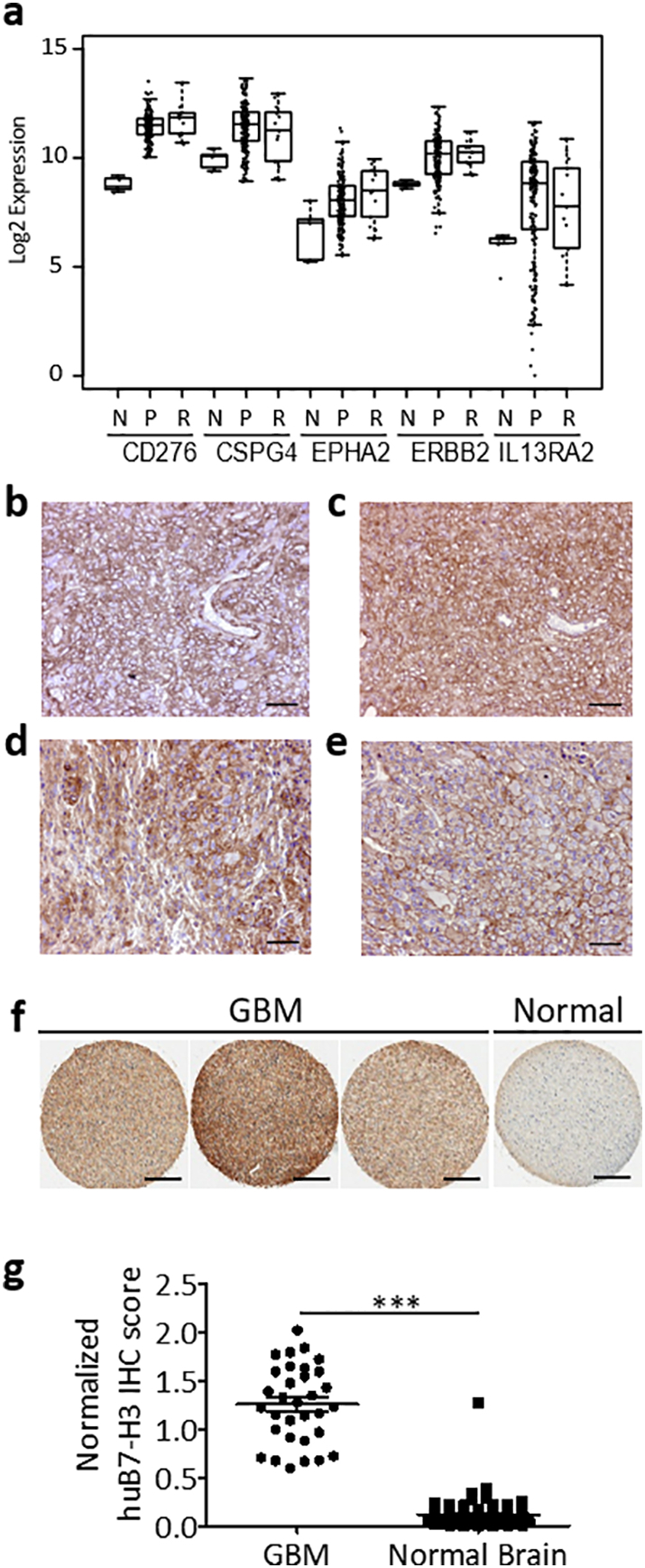
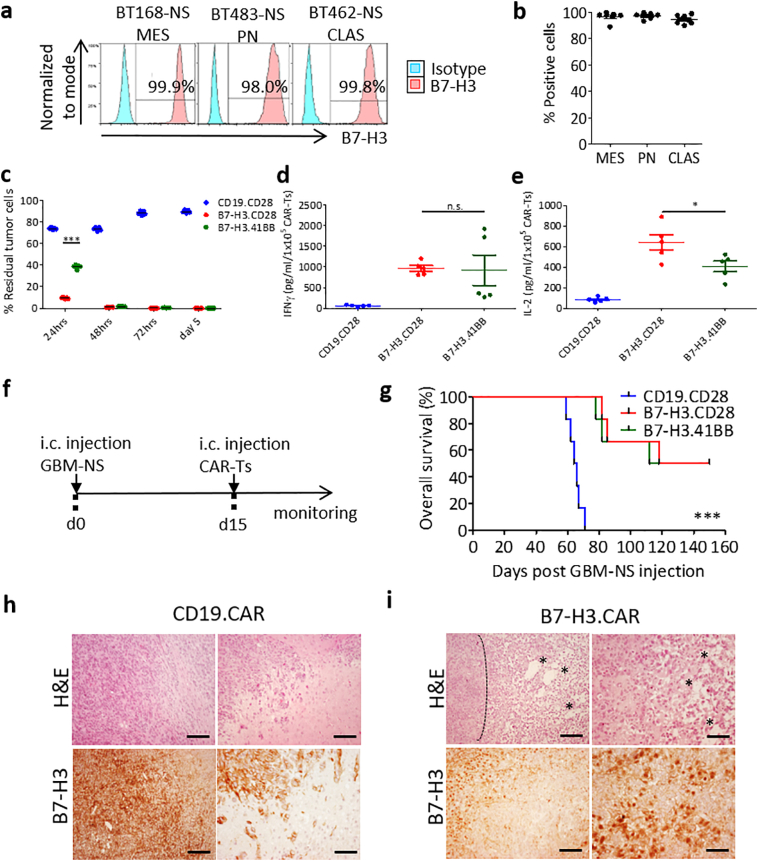
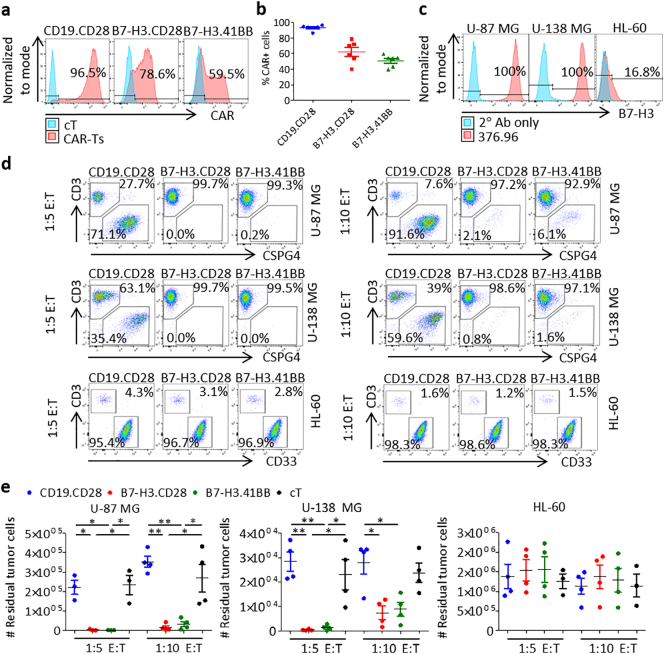
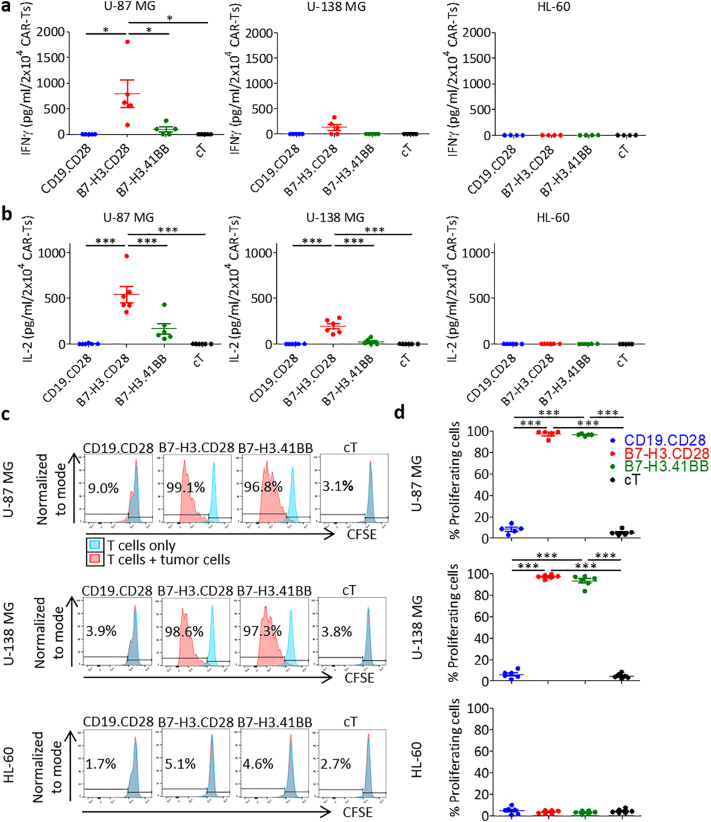
B7-H3 mRNA and protein are overexpressed in GBM relative to normal brain in all GBM subtypes. Of the 46 specimens analyzed by immunohistochemistry, 76% showed high B7-H3 expression, 22% had detectable, but low B7-H3 expression and 2% were negative, as was normal brain. All 20 patient-derived neurospheres showed ubiquitous B7-H3 expression. B7-H3-redirected CAR-T cells effectively targeted GBM cell lines and neurospheres in vitro and in vivo. No significant differences were found between CD28 and 4-1BB co-stimulation, although CD28-co-stimulated CAR-T cells released more inflammatory cytokines.
We demonstrated that B7-H3 is highly expressed in GBM specimens and neurospheres that contain putative cancer stem cells, and that B7-H3-redirected CAR-T cells can effectively control tumor growth. Therefore, B7-H3 represents a promising target in GBM. FUND: Alex's Lemonade Stand Foundation; Il Fondo di Gio Onlus; National Cancer Institute; Burroughs Wellcome Fund.
胶质母细胞瘤(GBM)患者的生存率令人沮丧,因此迫切需要开发新的治疗方法。嵌合抗原受体 T(CAR-T)细胞是一种很有吸引力的策略,但在 GBM 的临床前和临床研究表明,迄今为止靶向抗原的异质性表达导致肿瘤逃逸,这凸显了需要确定新的靶点。我们探讨了 B7-H3 是否是 GBM 中 CAR-T 细胞的一个有价值的靶点。
我们使用 TCGA 数据比较了 GBM 中抗原的 mRNA 表达,并通过免疫组织化学验证了 B7-H3 的表达。然后,我们在体外和异种移植小鼠模型中测试了 B7-H3 靶向 CAR-T 细胞对 GBM 细胞系和患者来源的 GBM 神经球的抗肿瘤活性。
在所有 GBM 亚型中,B7-H3 mRNA 和蛋白在 GBM 中相对于正常脑过度表达。在通过免疫组织化学分析的 46 个标本中,76%显示出高 B7-H3 表达,22%有可检测但低水平的 B7-H3 表达,2%为阴性,正常脑也是如此。所有 20 个患者来源的神经球均显示普遍存在的 B7-H3 表达。B7-H3 靶向 CAR-T 细胞在体外和体内均能有效靶向 GBM 细胞系和神经球。虽然 CD28 共刺激的 CAR-T 细胞释放更多的炎症细胞因子,但在 CD28 和 4-1BB 共刺激之间没有发现显著差异。
我们证明了 B7-H3 在 GBM 标本和含有肿瘤干细胞的神经球中高度表达,并且 B7-H3 靶向 CAR-T 细胞可以有效控制肿瘤生长。因此,B7-H3 是 GBM 中的一个很有前途的靶点。
Alex's Lemonade Stand 基金会;Il Fondo di Gio Onlus;美国国立卫生研究院;Burroughs Wellcome 基金。