Le Foll Christelle
Institute of Veterinary Physiology, Vetsuisse Faculty, University of Zurich, Zurich, Switzerland.
Front Physiol. 2019 Aug 14;10:1036. doi: 10.3389/fphys.2019.01036. eCollection 2019.
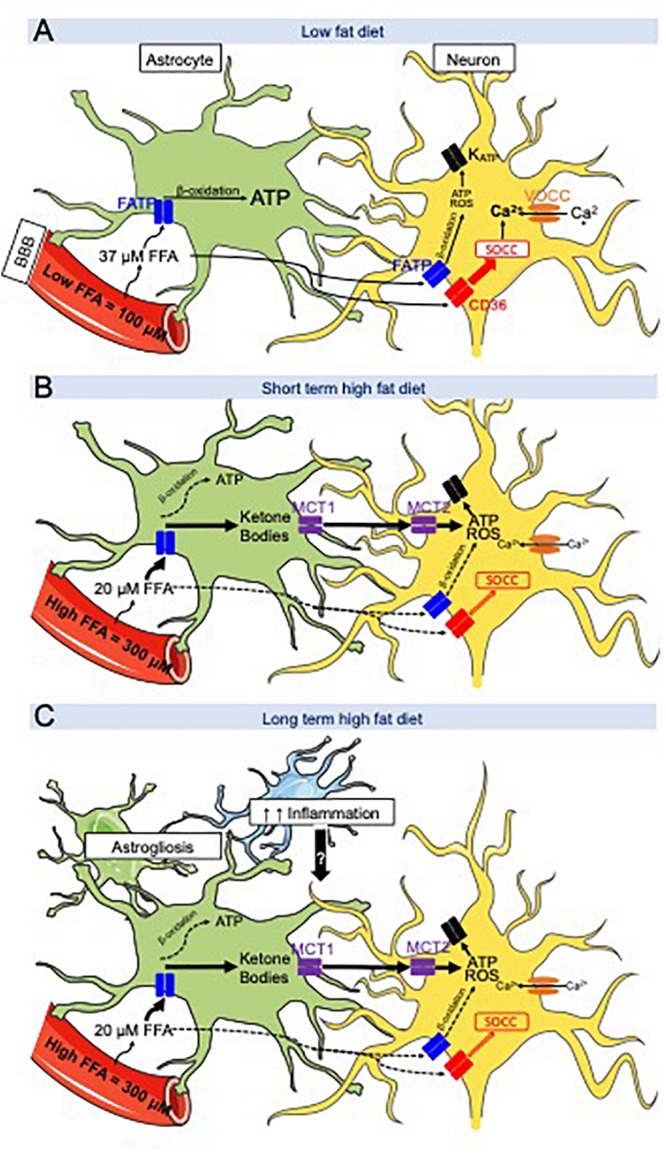
The obesity and type-2 diabetes epidemic is escalating and represents one of the costliest biomedical challenges confronting modern society. Moreover, the increasing consumption of high fat food is often correlated with an increase in body mass index. In people predisposed to be obese or already obese, the impaired ability of the brain to monitor and respond to alterations in fatty acid (FA) metabolism is increasingly recognized as playing a role in the pathophysiological development of these disorders. The brain senses and regulates metabolism using highly specialized nutrient-sensing neurons located mainly in the hypothalamus. The same neurons are able to detect variation in the extracellular levels of glucose, FA and ketone bodies as a way to monitor nutrient availability and to alter its own activity. In addition, glial cells such as astrocytes create major connections to neurons and form a tight relationship to closely regulate nutrient uptake and metabolism. This review will examine the different pathways by which neurons are able to detect free fatty acids (FFA) to alter its activity and how high fat diet (HFD)-astrocytes induced ketone bodies production interplays with neuronal FA sensing. The role of HFD-induced inflammation and how FA modulate the reward system will also be investigated here.
肥胖和2型糖尿病的流行正在加剧,是现代社会面临的代价最高昂的生物医学挑战之一。此外,高脂肪食物摄入量的增加往往与体重指数的上升相关。在易肥胖或已肥胖的人群中,大脑监测和响应脂肪酸(FA)代谢变化的能力受损,这在这些疾病的病理生理发展中所起的作用日益受到认可。大脑利用主要位于下丘脑的高度专业化的营养感知神经元来感知和调节新陈代谢。同样的神经元能够检测细胞外葡萄糖、FA和酮体水平的变化,以此来监测营养物质的可用性并改变自身活动。此外,星形胶质细胞等神经胶质细胞与神经元建立主要连接,并形成紧密关系以密切调节营养物质的摄取和代谢。本综述将探讨神经元检测游离脂肪酸(FFA)以改变其活动的不同途径,以及高脂饮食(HFD)诱导的星形胶质细胞产生酮体与神经元FA感知之间的相互作用。这里还将研究HFD诱导的炎症作用以及FA如何调节奖赏系统。