Faculté des Sciences Pharmaceutiques et Biologiques, Université de Nantes, 9 Rue Bias, BP 53508, F-44035, Nantes Cedex 1, France.
Département de Chimie Thérapeutique, Université de Nantes, Nantes Atlantique Universités, EA1155 - IICiMed, Faculté de Pharmacie, Nantes, France.
Lipids Health Dis. 2019 Sep 2;18(1):168. doi: 10.1186/s12944-019-1103-7.
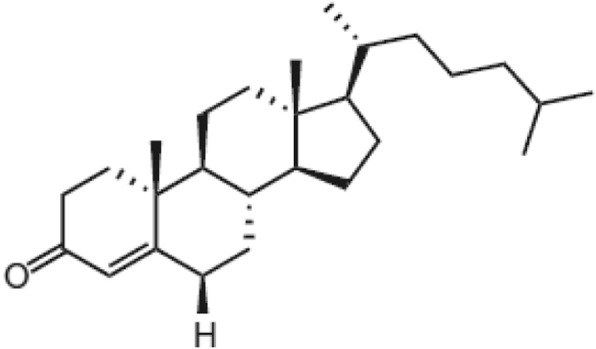
The alteration of lipid metabolism in cancer cells is recognized as one of the most important metabolic hallmarks of cancer. Membrane rafts defined as plasma membrane microdomains enriched in cholesterol and sphingolipids serve as platforms for signaling regulation in cancer. The main purpose of this study was to evaluate the effect of the cholesterol metabolite, 4-cholesten-3-one, on lipid metabolism and membrane raft integrity in two breast cancer cell lines, MCF-7 and MDA-MB-231. Its ability to reduce cell viability and migration has also been investigated.
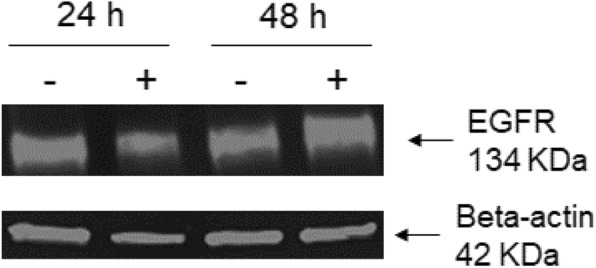
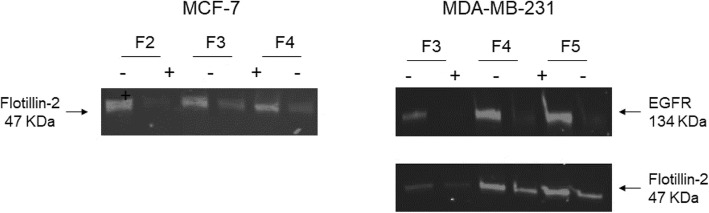
RT-qPCR was performed to evaluate the expression of enzymes involved in lipogenesis and cholesterol synthesis, and ABCG1 and ABCA1 transporters involved in cholesterol efflux. Its effect on cell viability and migration was studied using the MTT assay, the wound healing assay and the Transwell migration assay, respectively. The effect of 4-cholesten-3-one on membrane rafts integrity was investigated by studying the protein expression of flotillin-2, a membrane raft marker, and raft-enriched EGFR by western blot.
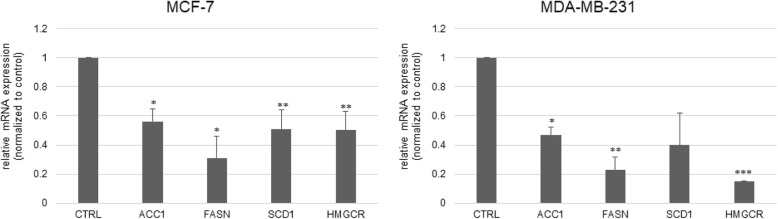
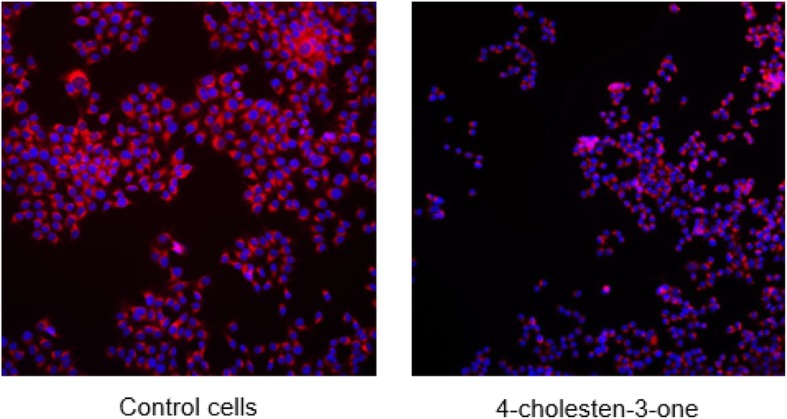
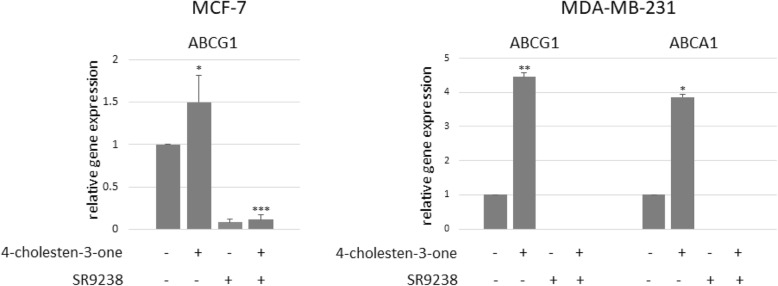
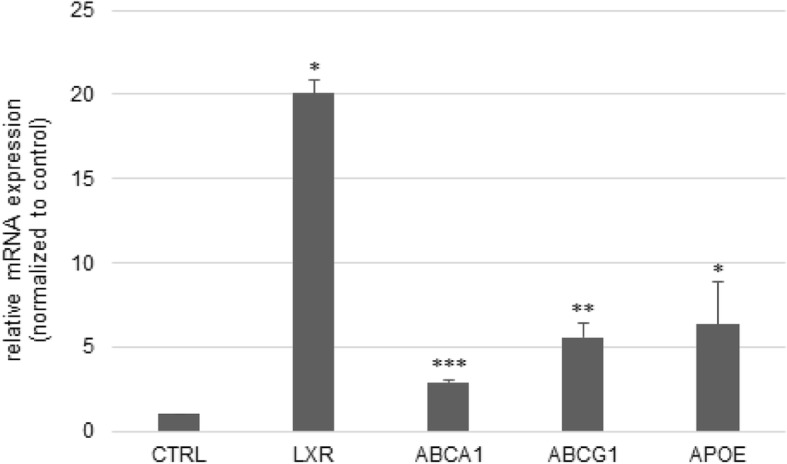
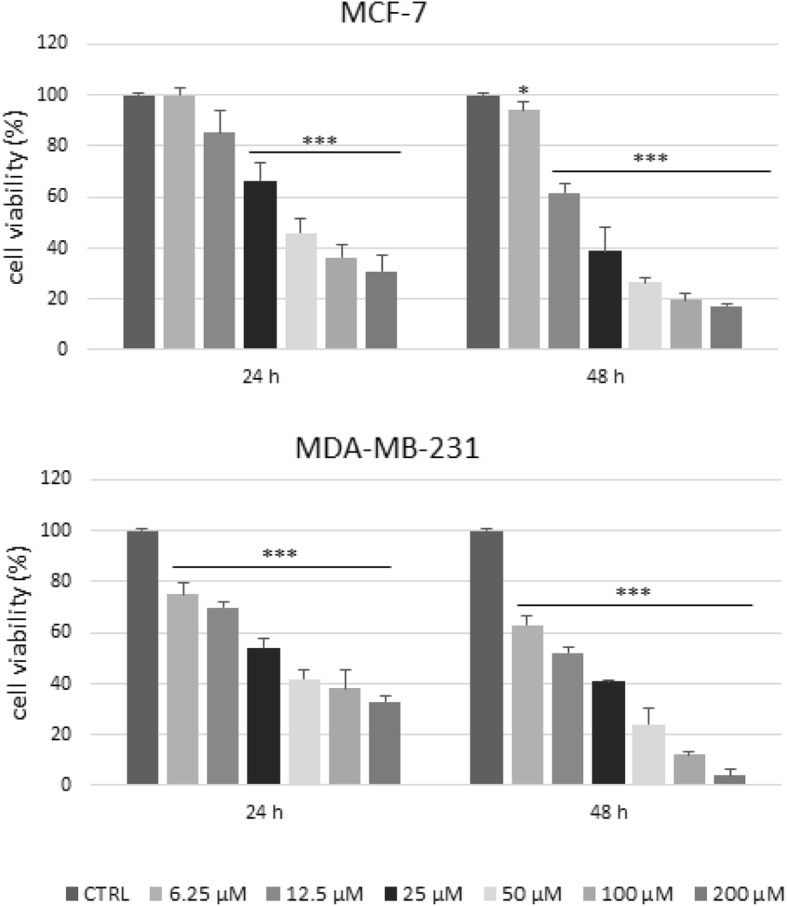
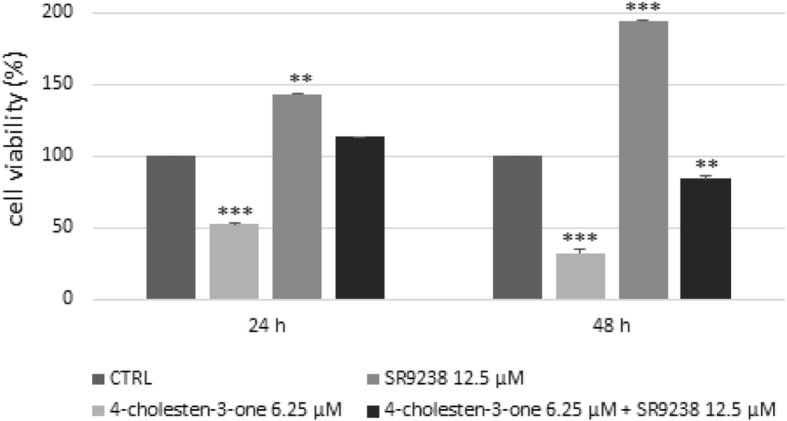
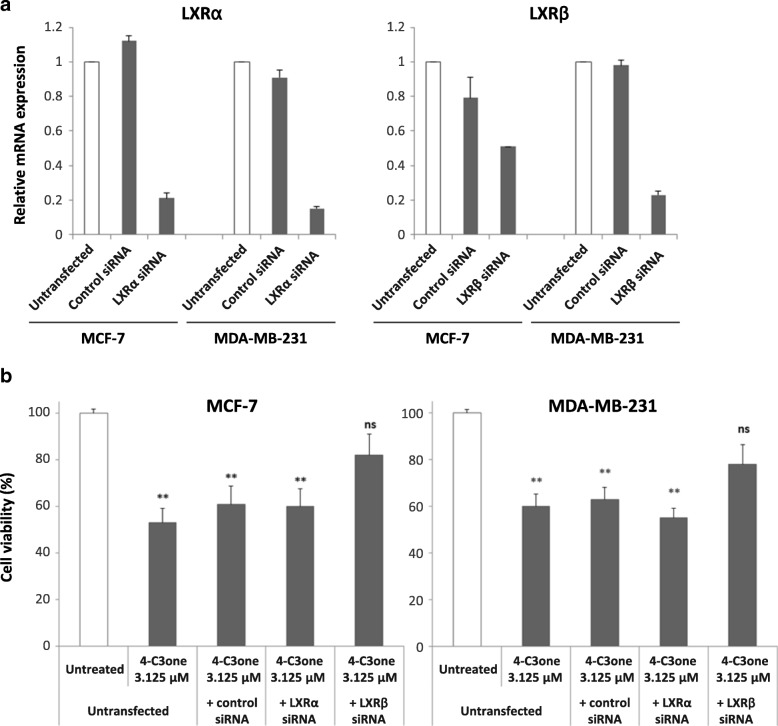
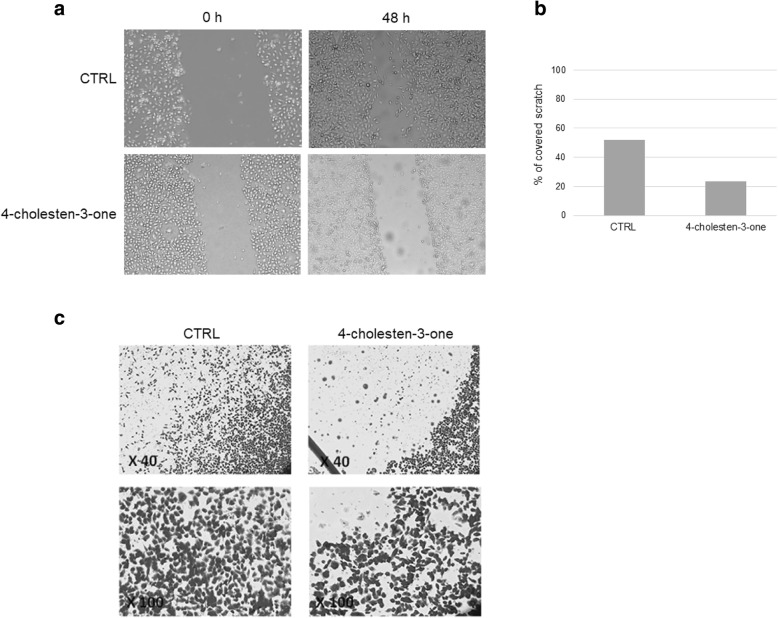
Interestingly, we found that 4-cholesten-3-one treatment decreased mRNA expression of different enzymes including ACC1, FASN, SCD1 and HMGCR. We further demonstrated that 4-cholesten-3-one increased the expression of ABCG1 and ABCA1. We also found that 4-cholesten-3-one decreased the viability of MCF-7 and MDA-MB-231 cells. This effect was neutralized after treatment with LXR inverse agonist or after LXRβ knockdown by siRNA. As a result, we also demonstrated that 4-cholesten-3-one disrupts membrane rafts and cell migration capacity.
Our results show that 4-cholesten-3-one exerts promising antitumor activity by altering LXR-dependent lipid metabolism in breast cancer cells without increasing lipogenesis.
癌细胞中脂质代谢的改变被认为是癌症最重要的代谢特征之一。膜筏被定义为富含胆固醇和鞘脂的质膜微区,作为癌症信号调节的平台。本研究的主要目的是评估胆固醇代谢产物 4-胆甾烯-3-酮对两种乳腺癌细胞系 MCF-7 和 MDA-MB-231 中脂质代谢和膜筏完整性的影响。还研究了其降低细胞活力和迁移的能力。
通过 RT-qPCR 评估参与脂肪生成和胆固醇合成的酶以及参与胆固醇外排的 ABCG1 和 ABCA1 转运体的表达。使用 MTT 测定法、划痕愈合测定法和 Transwell 迁移测定法分别研究其对细胞活力和迁移的影响。通过研究膜筏标志物 flotillin-2 和富含筏的 EGFR 的蛋白质表达,研究 4-胆甾烯-3-酮对膜筏完整性的影响。
有趣的是,我们发现 4-胆甾烯-3-酮处理降低了包括 ACC1、FASN、SCD1 和 HMGCR 在内的不同酶的 mRNA 表达。我们进一步证明 4-胆甾烯-3-酮增加了 ABCG1 和 ABCA1 的表达。我们还发现 4-胆甾烯-3-酮降低了 MCF-7 和 MDA-MB-231 细胞的活力。在用 LXR 反向激动剂或用 siRNA 敲低 LXRβ 后,这种作用被中和。结果,我们还证明 4-胆甾烯-3-酮破坏了膜筏和细胞迁移能力。
我们的结果表明,4-胆甾烯-3-酮通过改变乳腺癌细胞中 LXR 依赖性脂质代谢来发挥有希望的抗肿瘤活性,而不会增加脂肪生成。