Ahn Sung-Hoon, Heo Tae-Hwe, Jun Hyun-Sik, Choi Yongseok
College of Pharmacy, Kangwon National University, Chuncheon 24341, Korea.
Laboratory of Pharmacoimmunology, Integrated Research Institute of Pharmaceutical Sciences, and BK21 PLUS Team for Creative Leader Program for Pharmacomics-based Future Pharmacy, College of Pharmacy, The Catholic University of Korea, Bucheon 14662, Korea.
Asian-Australas J Anim Sci. 2020 Apr;33(4):670-677. doi: 10.5713/ajas.19.0463. Epub 2019 Aug 3.
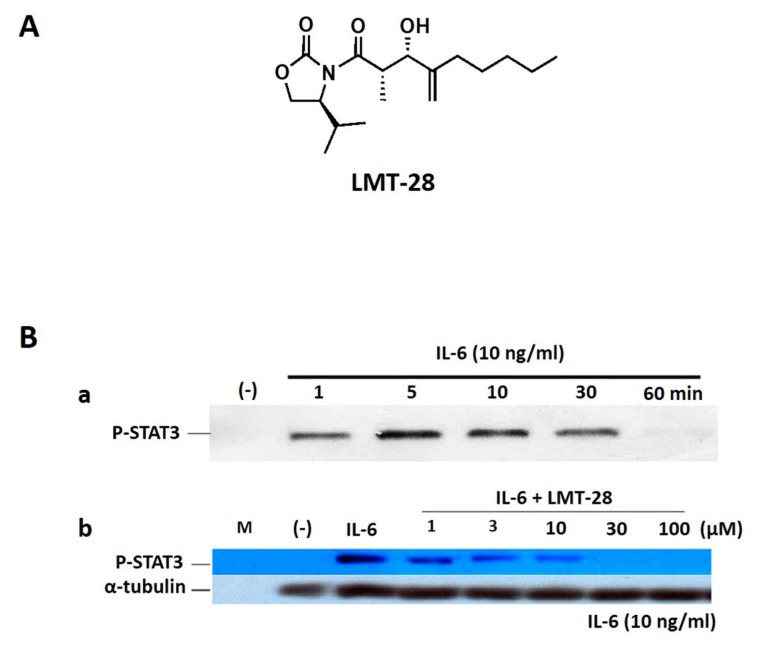
Interleukin-6 (IL-6) is a T cell-derived B cell stimulating factor which plays an important role in inflammatory diseases. In this study, the pharmacokinetic properties of LMT-28 including physicochemical property, in vitro liver microsomal stability and an in vivo pharmacokinetic study using BALB/c mice were characterized.
LMT-28 has been synthesized and is being developed as a novel therapeutic IL-6 inhibitor. The physicochemical properties and in vitro pharmacokinetic profiles such as liver microsomal stability and Madin-Darby canine kidney (MDCK) cell permeability assay were examined. For in vivo pharmacokinetic studies, pharmacokinetic parameters using BALB/c mice were calculated.
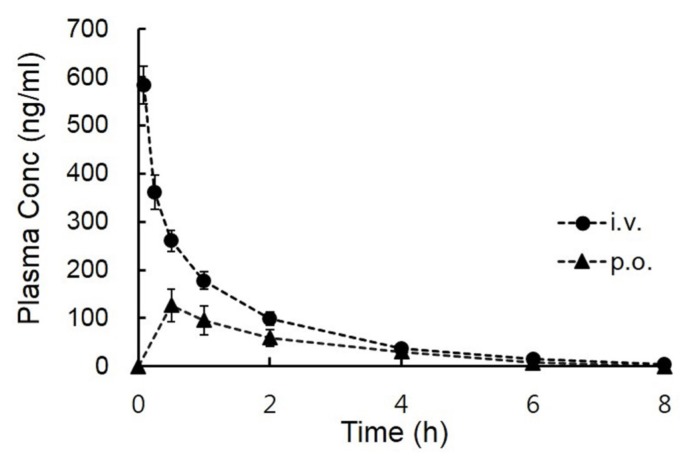
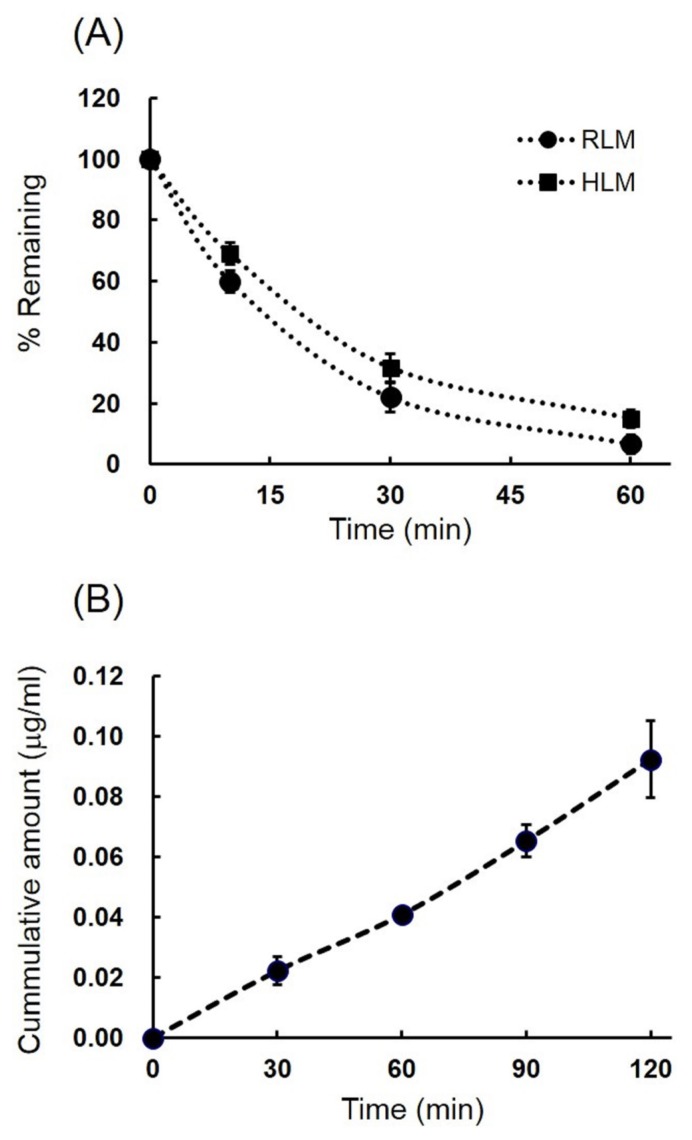
The logarithm of the partition coefficient value (LogP; 3.65) and the apparent permeability coefficient values (Papp; 9.7×10⁻⁶ cm/s) showed that LMT-28 possesses a moderate-high cell permeability property across MDCK cell monolayers. The plasma protein binding rate of LMT-28 was 92.4% and mostly bound to serum albumin. The metabolic half-life (t1/2) values of LMT-28 were 15.3 min for rat and 21.9 min for human at the concentration 1 μM. The area under the plasma drug concentration-time curve and Cmax after oral administration (5 mg/kg) of LMT-28 were 302±209 h∙ng/mL and 137±100 ng/mL, respectively.
These data suggest that LMT-28 may have good physicochemical and pharmacokinetic properties and may be a novel oral drug candidate as the first synthetic IL-6 inhibitor to ameliorate mammalian inflammation.
白细胞介素-6(IL-6)是一种由T细胞衍生的B细胞刺激因子,在炎症性疾病中起重要作用。在本研究中,对LMT-28的药代动力学特性进行了表征,包括理化性质、体外肝微粒体稳定性以及使用BALB/c小鼠进行的体内药代动力学研究。
LMT-28已合成,并作为一种新型治疗性IL-6抑制剂进行研发。研究了其理化性质和体外药代动力学特征,如肝微粒体稳定性和Madin-Darby犬肾(MDCK)细胞通透性测定。对于体内药代动力学研究,计算了使用BALB/c小鼠的药代动力学参数。
分配系数值的对数(LogP;3.65)和表观渗透系数值(Papp;9.7×10⁻⁶ cm/s)表明,LMT-28在MDCK细胞单层上具有中高细胞通透性。LMT-28的血浆蛋白结合率为92.4%,主要与血清白蛋白结合。在浓度为1 μM时,LMT-28在大鼠中的代谢半衰期(t1/2)值为15.3分钟,在人中为21.9分钟。口服给予LMT-28(5 mg/kg)后的血浆药物浓度-时间曲线下面积和Cmax分别为302±209 h∙ng/mL和137±100 ng/mL。
这些数据表明,LMT-28可能具有良好的理化和药代动力学性质,可能作为第一种用于改善哺乳动物炎症的合成IL-6抑制剂成为一种新型口服药物候选物。