CRUK/MRC Oxford Institute for Radiation Oncology, Department of Oncology, University of Oxford, Oxford, United Kingdom.
Department of Radiation Oncology, Cancer Hospital of Shantou University Medical College, Shantou, China.
J Clin Invest. 2019 Oct 1;129(10):4224-4238. doi: 10.1172/JCI127458.
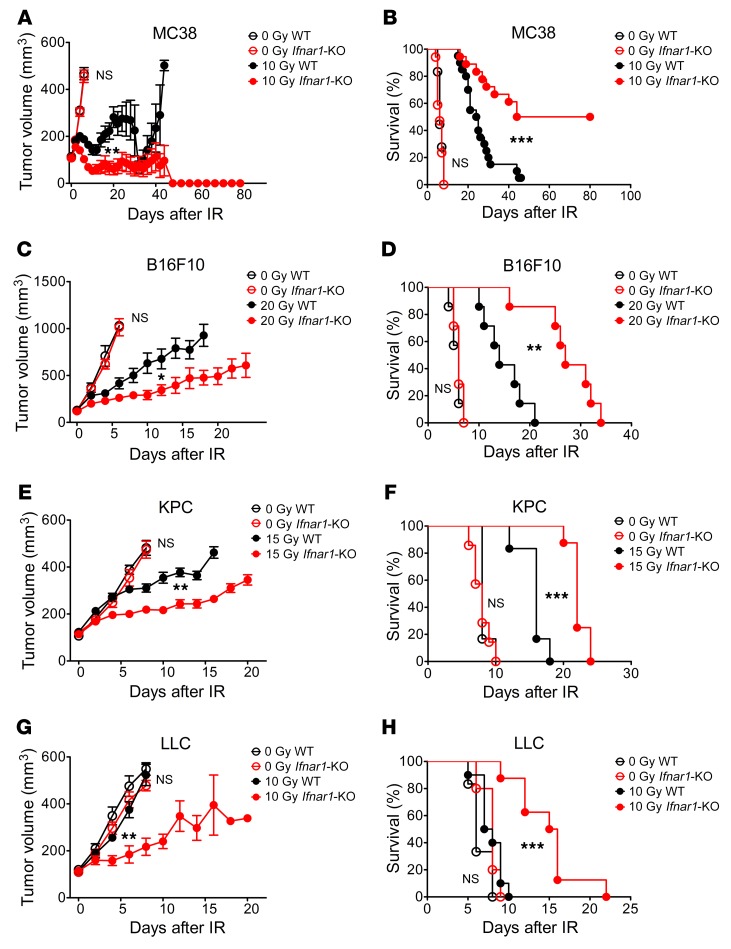
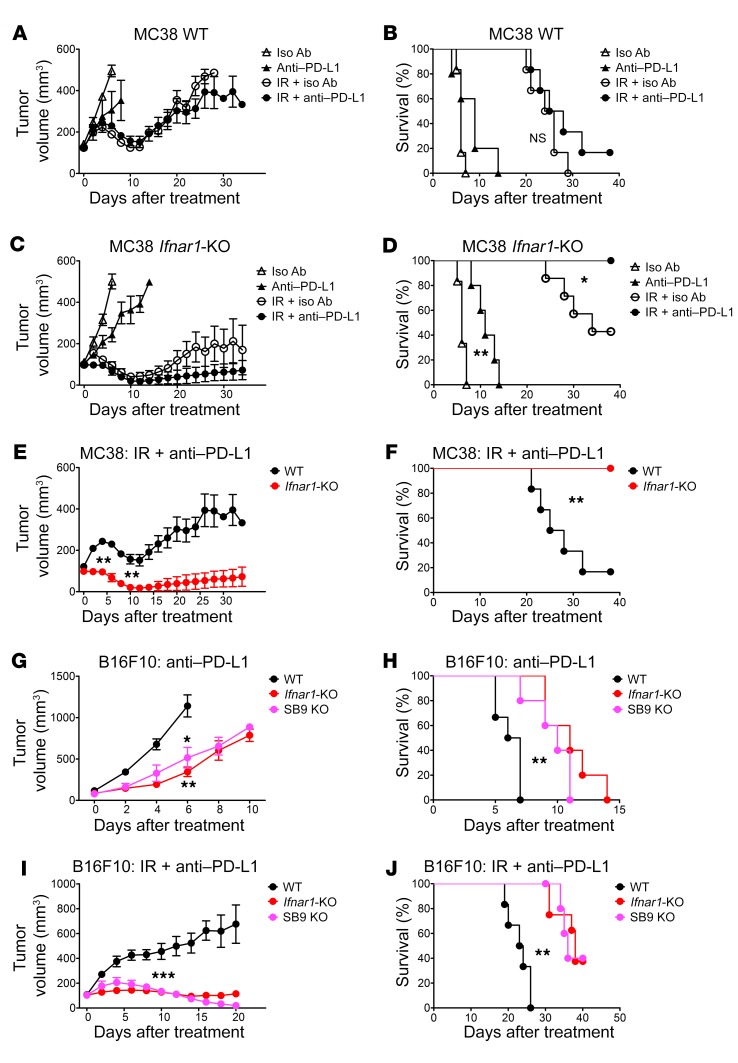
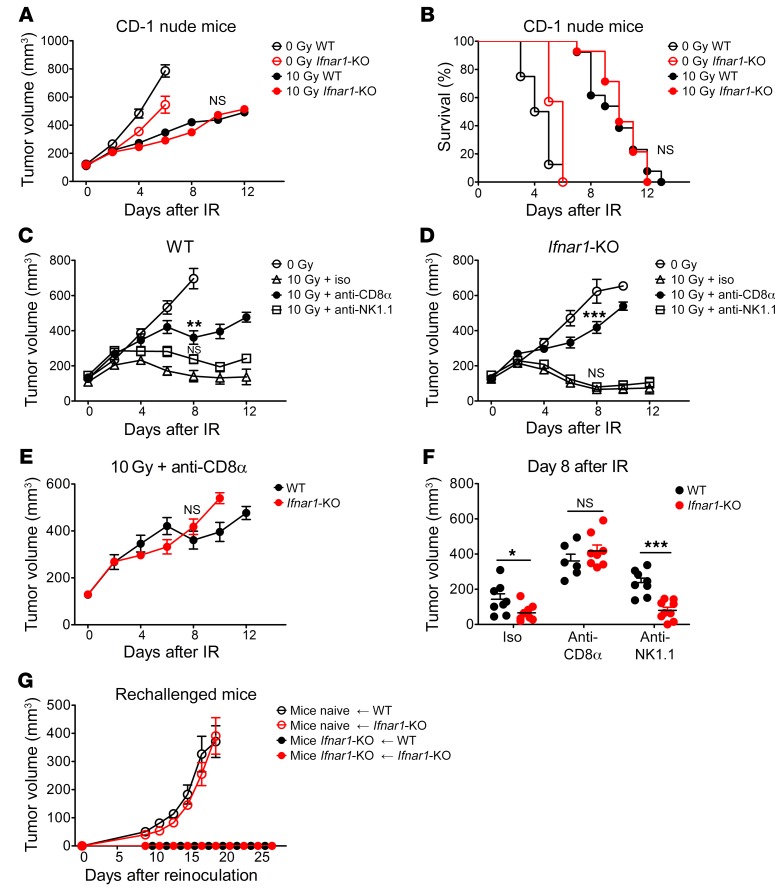
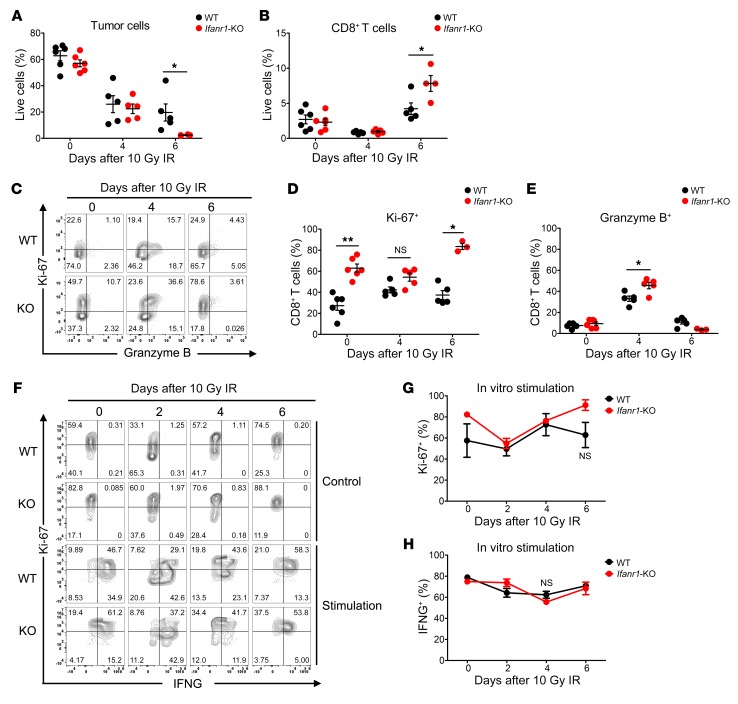
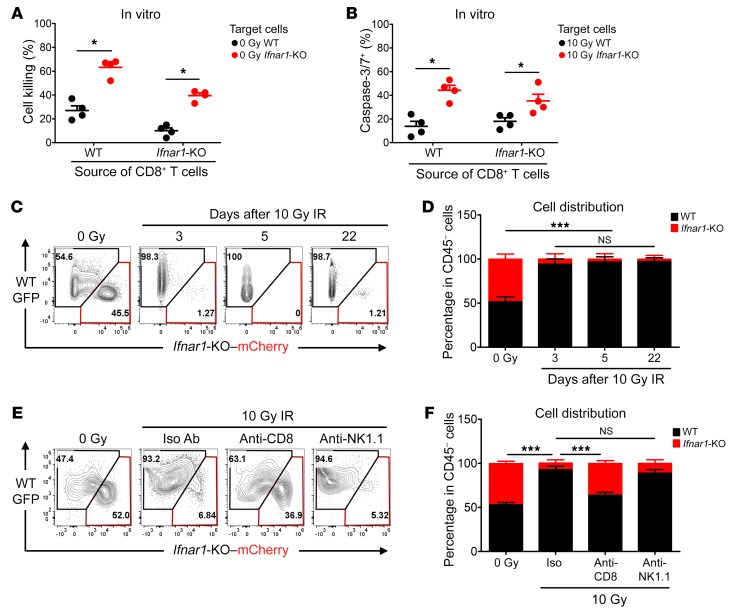
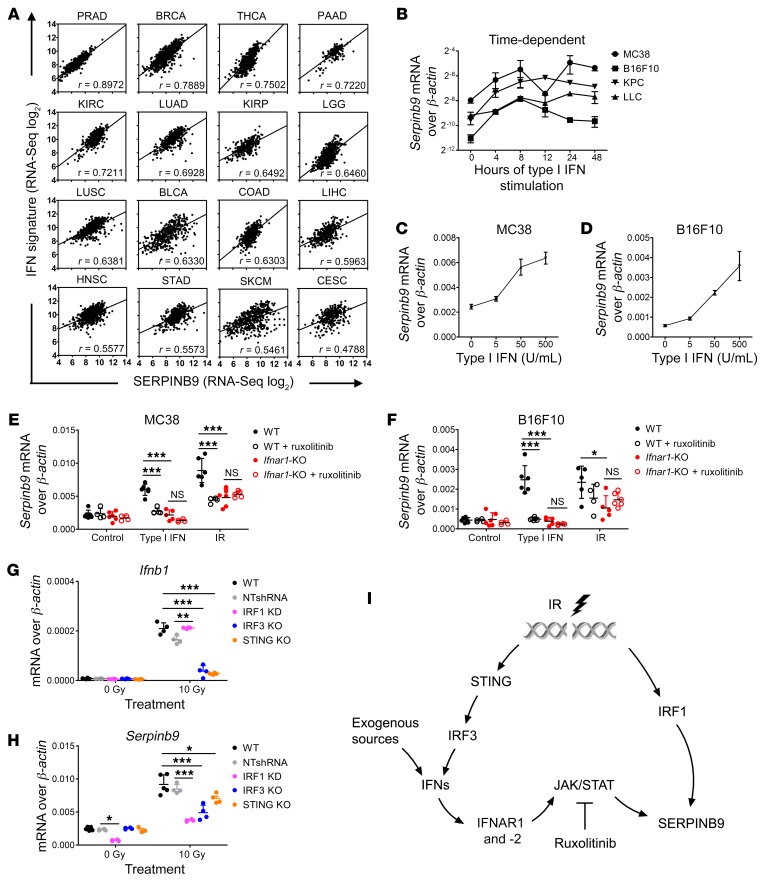
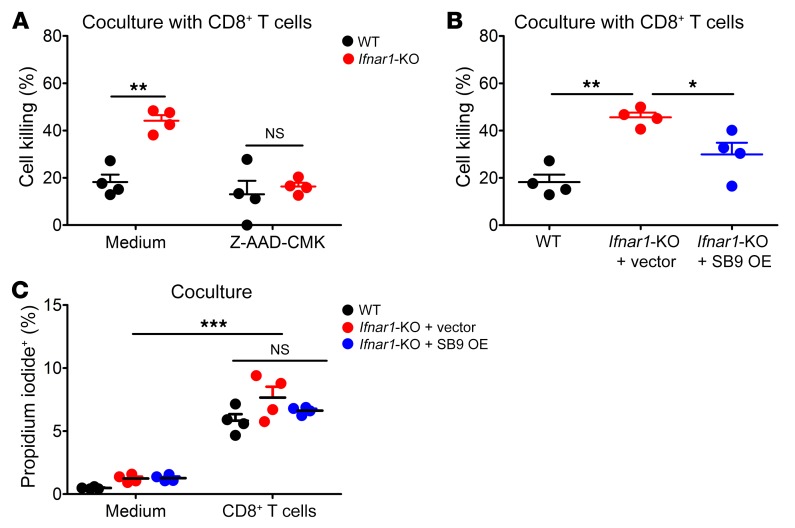
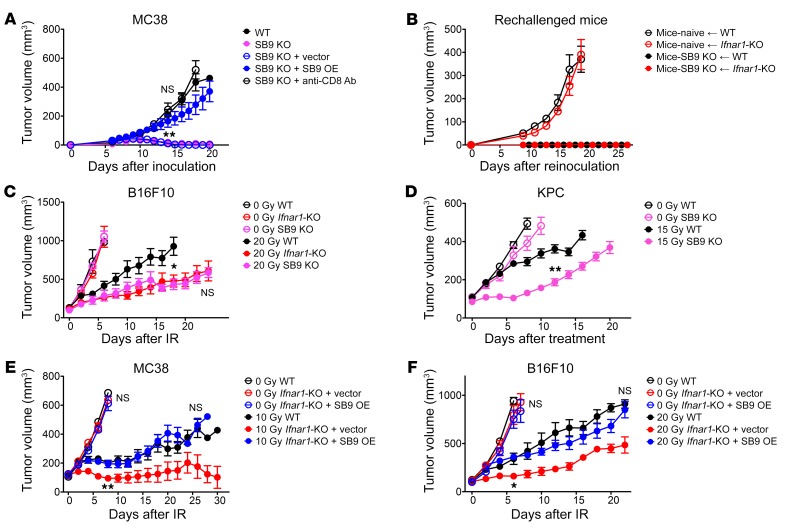
Treatment of tumors with ionizing radiation stimulates an antitumor immune response partly dependent on induction of IFNs. These IFNs directly enhance dendritic cell and CD8+ T cell activity. Here we show that resistance to an effective antitumor immune response is also a result of IFN signaling in a different cellular compartment of the tumor, the cancer cells themselves. We abolished type I IFN signaling in cancer cells by genetic elimination of its receptor, IFNAR1. Pronounced immune responses were provoked after ionizing radiation of tumors from 4 mouse cancer cell lines with Ifnar1 knockout. This enhanced response depended on CD8+ T cells and was mediated by enhanced susceptibility to T cell-mediated killing. Induction of Serpinb9 proved to be the mechanism underlying control of susceptibility to T cell killing after radiation. Ifnar1-deficient tumors had an augmented response to anti-PD-L1 immunotherapy with or without radiation. We conclude that type I IFN can protect cancer cells from T cell-mediated cytotoxicity through regulation of Serpinb9. This result helps explain why radiation of tumors can stimulate antitumor immunity yet also result in resistance. It further suggests potential targets for intervention to improve therapy and to predict responses.
用电离辐射治疗肿瘤会刺激抗肿瘤免疫反应,部分依赖于干扰素的诱导。这些干扰素直接增强树突状细胞和 CD8+T 细胞的活性。在这里,我们表明,对有效抗肿瘤免疫反应的抵抗也是肿瘤内不同细胞区室(癌细胞本身)中 IFN 信号的结果。我们通过遗传消除其受体 IFNAR1 来消除癌细胞中的 I 型 IFN 信号。在来自 4 种小鼠癌细胞系的肿瘤进行电离辐射后,IFNAR1 敲除小鼠中引发了明显的免疫反应。这种增强的反应依赖于 CD8+T 细胞,并且是通过增强对 T 细胞介导的杀伤的敏感性来介导的。Serpinb9 的诱导被证明是控制放射后 T 细胞杀伤敏感性的机制。Ifnar1 缺陷型肿瘤对 PD-L1 免疫疗法具有增强的反应,无论是否进行放射治疗。我们得出结论,I 型 IFN 可以通过调节 Serpinb9 来保护癌细胞免受 T 细胞介导的细胞毒性。这一结果有助于解释为什么肿瘤放射治疗可以刺激抗肿瘤免疫反应,但也会导致耐药性。它进一步表明了干预的潜在靶点,以改善治疗效果并预测反应。