Latvian Centre of Cardiology, Pauls Stradins Clinical University Hospital, Riga LV-1002, Latvia.
Faculty of Medicine, Riga Stradins University, Riga LV-1007, Latvia.
Medicina (Kaunas). 2019 Sep 3;55(9):566. doi: 10.3390/medicina55090566.
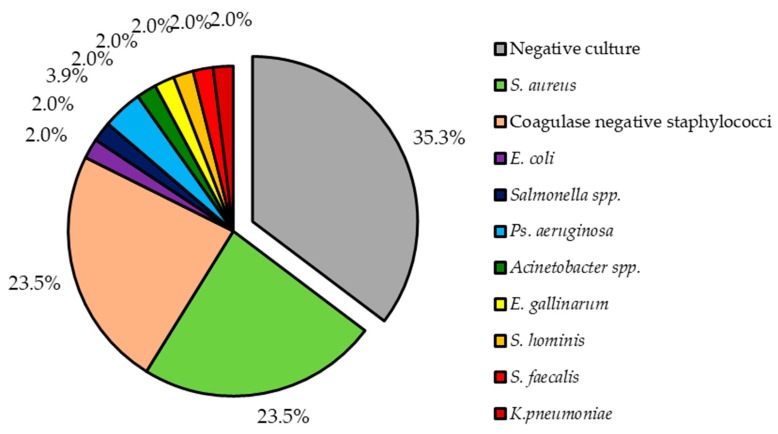
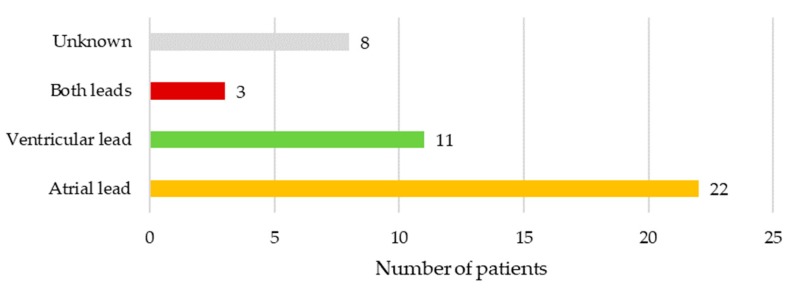
: Over the last five decades cardiac implantable electronic devices (CIED) have become established as the mainstay for the treatment of permanent bradycardias, chronic heart failure and dangerous heart rhythm disturbances. These devices improve survival and quality of life in many patients. However, infections associated with CIED implantation, particularly lead-related infective endocarditis (LRIE), can offset all benefits and make more harm than good for the patient. To date, there are no other studies in Latvia, addressing patients with lead-related infective endocarditis. The objective of this study was to identify the most common pathogens associated with LRIE and their antimicrobial resistance and to identify possible risk factors of patients who present with LRIE. The study was performed retrospectively at Pauls Stradins Clinical University Hospital (PSCUH). The study included patients who were referred to PSCUH due to LRIE for lead extraction. Patients were identified from procedural journals. Information about isolated microorganisms, patient comorbidities and visual diagnostics data was taken from patient records. Forty-nine patients with CIED related infective endocarditis were included in the study, 34 (69.4%) were male, median age of all patients was 65.0 (50.5-73.0) years, median hospital stay was 15.5 (22.0-30.5) days. Successful and complete lead extraction was achieved in all patients. Thirty-two (65.3%) had received antibiotics prior to blood sample. Only in 31 (63.3%) positive culture results were seen. The most common isolated pathogens were (23.5%) and coagulase negative staphylococci (23.5%). Other bacteria were isolated considerably less often. The atrial lead was most common location for lead vegetations, seen in 50.0% of cases. Five (10.2%) patients have died due to the disease. Lead-related infective endocarditis is a major complication of cardiac implantable electronic devices with considerable morbidity and mortality, which in our study was as high as 10.2%.
在过去的五十年中,心脏植入式电子设备(CIED)已成为治疗永久性心动过缓、慢性心力衰竭和危险心律紊乱的主要手段。这些设备改善了许多患者的生存率和生活质量。然而,与 CIED 植入相关的感染,特别是与导线相关的感染性心内膜炎(LRIE),可能会抵消所有益处,并对患者造成弊大于利的影响。迄今为止,拉脱维亚尚无其他研究针对与导线相关的感染性心内膜炎患者。本研究的目的是确定与 LRIE 相关的最常见病原体及其抗菌药物耐药性,并确定出现 LRIE 的患者的可能危险因素。该研究在保拉斯·斯特拉津斯临床大学医院(PSCUH)进行回顾性研究。该研究纳入了因 LRIE 而转诊至 PSCUH 进行导线拔除的患者。患者从程序杂志中被识别。从患者记录中获取有关分离微生物、患者合并症和影像学诊断数据的信息。本研究共纳入 49 例 CIED 相关感染性心内膜炎患者,其中 34 例(69.4%)为男性,所有患者的中位年龄为 65.0(50.5-73.0)岁,中位住院时间为 15.5(22.0-30.5)天。所有患者均成功完成了完全的导线拔除。32 例(65.3%)在采血前接受了抗生素治疗。仅在 31 例(63.3%)中观察到阳性培养结果。最常见的分离病原体是 (23.5%)和凝固酶阴性葡萄球菌(23.5%)。其他细菌的分离率要低得多。心房导线是导线赘生物最常见的部位,见于 50.0%的病例。5 例(10.2%)患者因该疾病死亡。与心脏植入式电子设备相关的感染性心内膜炎是一种严重的并发症,具有相当高的发病率和死亡率,在我们的研究中高达 10.2%。