Department of Hepatobiliary Surgery, First Affiliated Hospital, Wenzhou Medical University, Wenzhou, Zhejiang 325000, P.R. China.
Department of Neurosurgery, First Affiliated Hospital, Wenzhou Medical University, Wenzhou, Zhejiang 325000, P.R. China.
Oncol Rep. 2019 Nov;42(5):1781-1792. doi: 10.3892/or.2019.7293. Epub 2019 Aug 23.
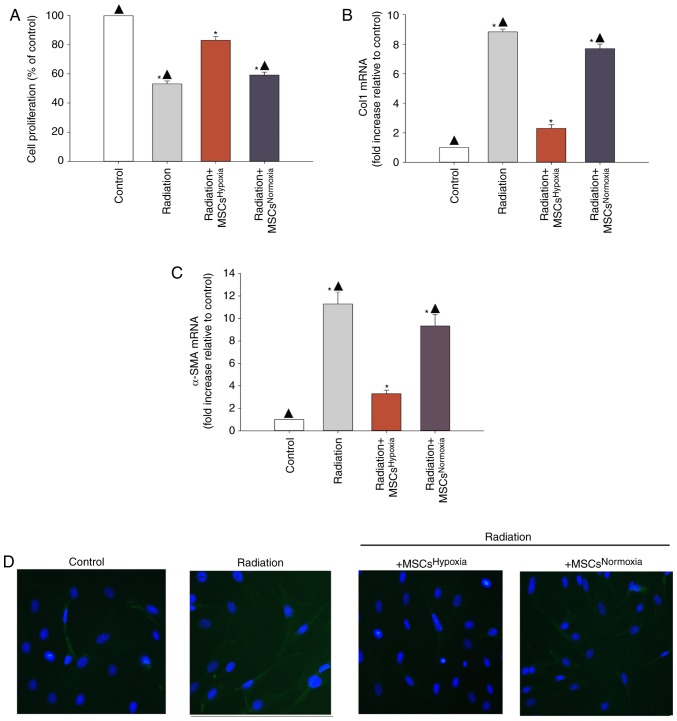
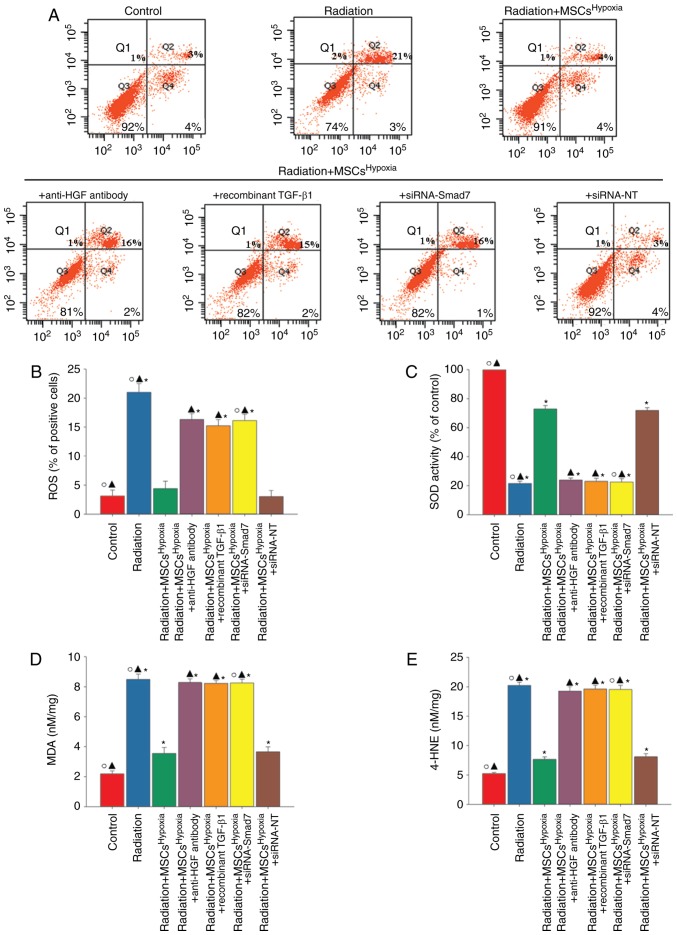
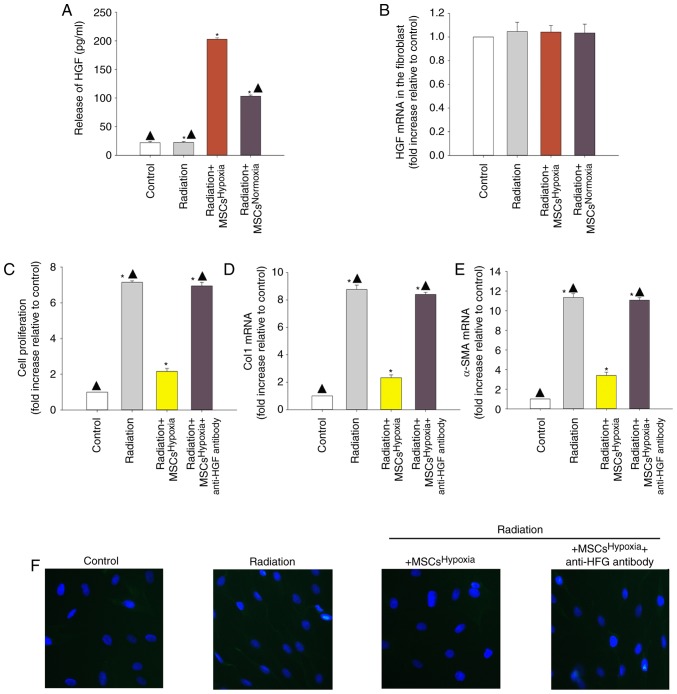
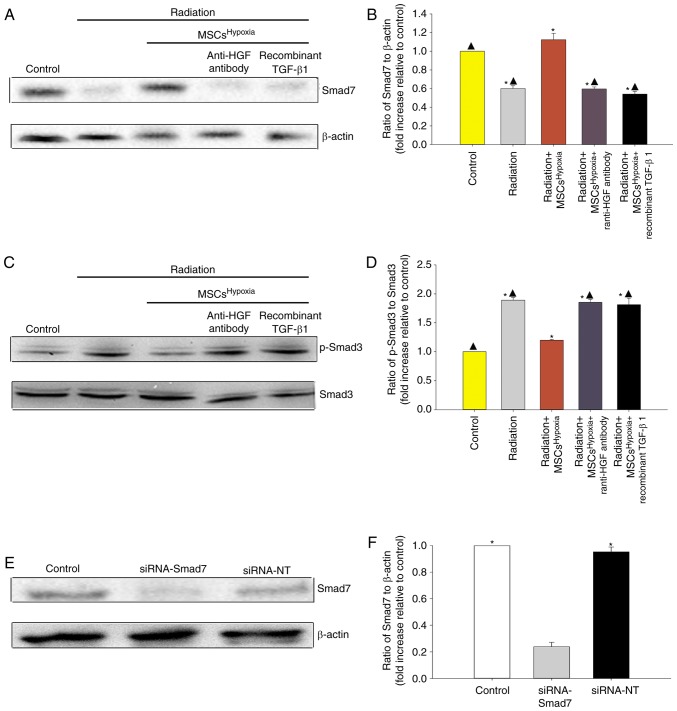
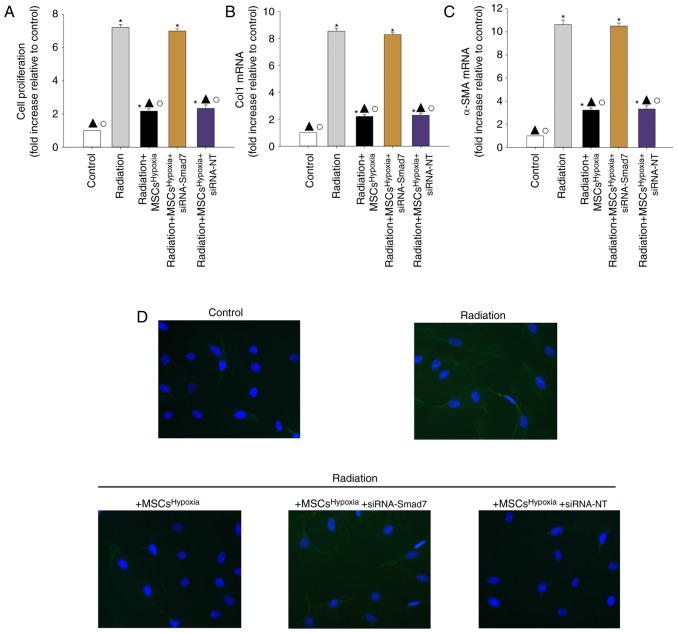
Cardiac fibrosis is a pathological consequence of radiation‑induced fibroblast proliferation and fibroblast‑to‑myofibroblast transition (FMT). Mesenchymal stem cell (MSC) transplantation has been revealed to be an effective treatment strategy to inhibit cardiac fibrosis. We identified a novel MSC‑driven mechanism that inhibited cardiac fibrosis, via the regulation of multiple fibrogenic pathways. Hypoxia pre‑conditioned MSCs (MSCsHypoxia) were co‑cultured with fibroblasts using a Transwell system. Radiation‑induced fibroblast proliferation was assessed using an MTT assay, and FMT was confirmed by assessing the mRNA levels of various markers of fibrosis, including type I collagen (Col1) and alpha smooth muscle actin (α‑SMA). α‑SMA expression was also confirmed via immunocytochemistry. The expression levels of Smad7 and Smad3 were detected by western blotting, and Smad7 was silenced using small interfering RNAs. The levels of oxidative stress following radiation were assessed by the detection of reactive oxygen species (ROS) and the activity of superoxide dismutase (SOD), malondialdehyde (MDA), and 4‑hydroxynonenal (HNE). It was revealed that co‑culturing with MSCsHypoxia could inhibit fibroblast proliferation and FMT. In addition, the present results indicated that MSCs are necessary and sufficient for the inhibition of fibroblast proliferation and FMT by functionally targeting TGF‑β1/Smad7/Smad3 signaling via the release of hepatocyte growth factor (HGF). Furthermore, it was observed that MSCs inhibited fibrosis by modulating oxidative stress. Co‑culturing with MSCsHypoxia alleviated fibroblast proliferation and FMT via the TGF‑β1/Smad7/Smad3 pathway. MSCs may represent a novel therapeutic approach for the treatment of radiation‑related cardiac fibrosis.
心脏纤维化是辐射诱导成纤维细胞增殖和成纤维细胞向肌成纤维细胞转化(FMT)的病理性后果。间充质干细胞(MSC)移植已被证明是抑制心脏纤维化的有效治疗策略。我们发现了一种新的 MSC 驱动机制,通过调节多种纤维化途径来抑制心脏纤维化。将缺氧预处理的 MSC(MSCsHypoxia)与成纤维细胞在 Transwell 系统中共培养。使用 MTT 测定法评估辐射诱导的成纤维细胞增殖,通过评估纤维化的各种标志物(包括 I 型胶原(Col1)和α平滑肌肌动蛋白(α-SMA))的 mRNA 水平来确认 FMT。通过免疫细胞化学也证实了 α-SMA 表达。通过 Western blot 检测 Smad7 和 Smad3 的表达水平,并使用小干扰 RNA 沉默 Smad7。通过检测活性氧(ROS)和超氧化物歧化酶(SOD)、丙二醛(MDA)和 4-羟基壬烯醛(HNE)的活性来评估辐射后的氧化应激水平。结果表明,与 MSCsHypoxia 共培养可以抑制成纤维细胞增殖和 FMT。此外,本研究结果表明,MSC 通过释放肝细胞生长因子(HGF),通过功能靶向 TGF-β1/Smad7/Smad3 信号通路,对成纤维细胞增殖和 FMT 的抑制是必需和充分的。此外,还观察到 MSC 通过调节氧化应激抑制纤维化。与 MSCsHypoxia 共培养通过 TGF-β1/Smad7/Smad3 通路缓解成纤维细胞增殖和 FMT。MSC 可能代表一种治疗辐射相关心脏纤维化的新治疗方法。