Knowledge Integration and Translational Platform (KnIT) at the Centre for Health Research and Development, Society for Applied Studies, 45, Kalu Sarai, New Delhi, 110016, India.
Department of Maternal, New-born, Child and Adolescent Health, World Health Organisation, Geneva, Switzerland.
BMC Pregnancy Childbirth. 2019 Sep 5;19(1):327. doi: 10.1186/s12884-019-2473-6.
We examined the utilisation, equity and determinants of full antenatal care (ANC), defined as 4 or more antenatal visits, at least one tetanus toxoid (TT) injection and consumption of iron folic acid (IFA) for a minimum of 100 days, in India.
We analysed a sample of 190,898 women from India's National Family Health Survey 4. Concentration curves and concentration index were used to assess equity in full ANC utilisation. Multivariable logistic regression model was used to examine the factors associated with full ANC utilisation.
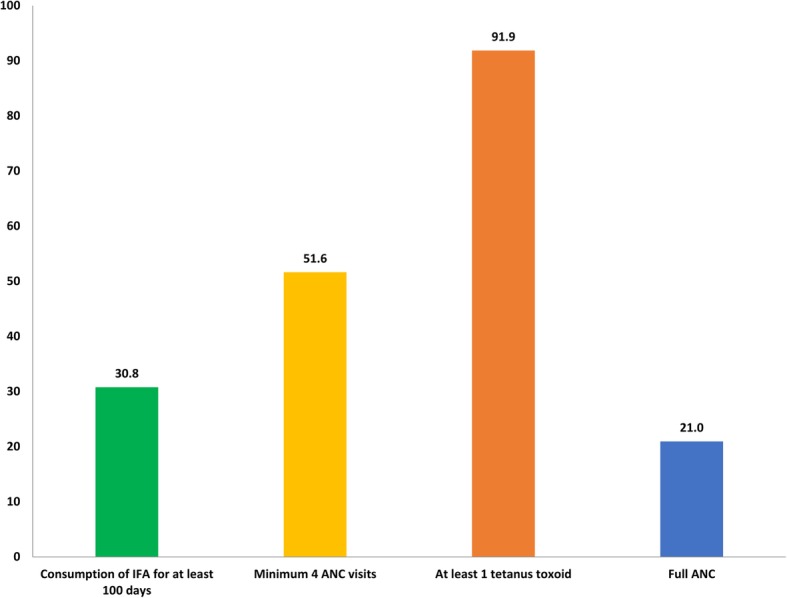
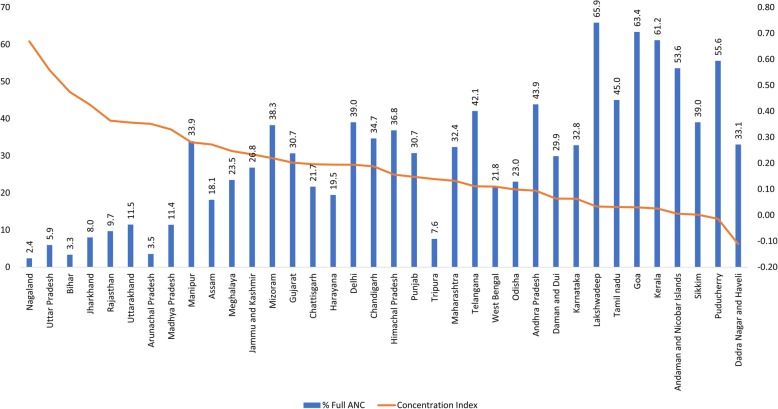
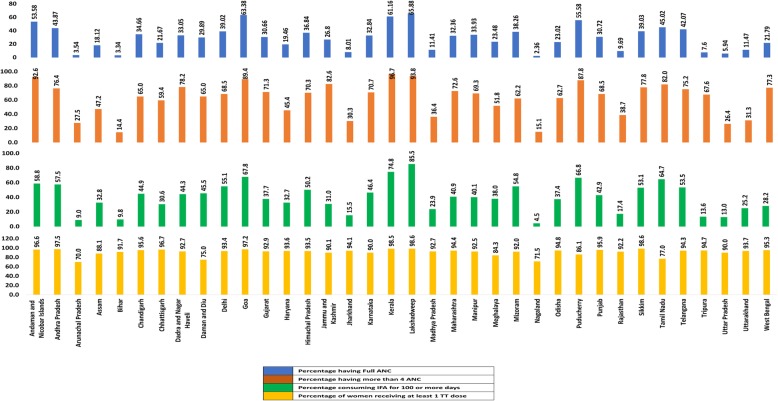
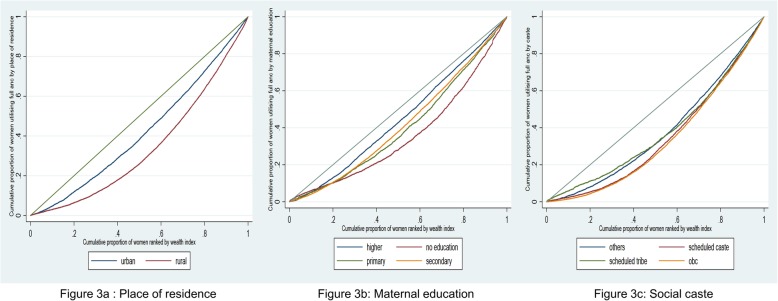
In India, 21% of pregnant women utilised full ANC, ranging from 2.3-65.9% across states. Overall, 51.6% had 4 or more ANC visits, 30.8% consumed IFA for atleast 100 days, and 91.1% had one or more doses of tetanus toxoid. Full ANC utilisation was inequitable across place of residence, caste and maternal education. Registration of pregnancy, utilisation of government's Integrated Child Development Services (ICDS) and health insurance coverage were associated with higher odds of full ANC utilisation. Lower maternal education, lower wealth quintile(s), lack of father's participation during antenatal visits, higher birth order, teenage and unintended pregnancy were associated with lower odds of full ANC utilisation.
Full ANC utilisation in India was inadequate and inequitable. Although half of the women did not receive the minimum recommended ANC visits, the utilisation of TT immunisation was almost universal. The positive association of full ANC with ICDS utilisation and child's father involvement may be leveraged for increasing the uptake of full ANC. Strategies to address the socio-demographic factors associated with low and inequitable utilisation of full ANC are imperative for strengthening India's maternal health program.
我们研究了印度充分产前护理(ANC)的利用情况、公平性及其决定因素,充分 ANC 定义为至少接受 4 次产前检查、至少 1 次破伤风类毒素(TT)注射和至少 100 天服用铁叶酸(IFA)。
我们分析了来自印度国家家庭健康调查 4 的 190898 名妇女的样本。使用集中曲线和集中指数评估充分 ANC 利用的公平性。使用多变量逻辑回归模型检查与充分 ANC 利用相关的因素。
在印度,有 21%的孕妇利用了充分 ANC,各州的利用率范围为 2.3%至 65.9%。总体而言,51.6%的孕妇接受了 4 次或更多次 ANC 检查,30.8%的孕妇至少服用 IFA 100 天,91.1%的孕妇接受了 1 次或更多次破伤风类毒素注射。充分 ANC 的利用在居住地、种姓和产妇教育方面存在不公平现象。妊娠登记、利用政府综合儿童发展服务(ICDS)和医疗保险覆盖与充分 ANC 利用率较高相关。母亲教育程度较低、财富五分位数较低、父亲在产前检查期间参与度较低、较高的出生顺序、青少年和意外怀孕与充分 ANC 利用率较低相关。
印度充分 ANC 的利用率不足且不公平。尽管有一半的妇女没有接受最低推荐的 ANC 检查,但 TT 免疫接种的利用率几乎是普遍的。充分 ANC 与 ICDS 利用率和孩子父亲参与的积极关联可以用来提高充分 ANC 的利用率。解决与充分 ANC 低利用率和不公平利用相关的社会人口因素的策略,对于加强印度的孕产妇健康计划至关重要。