Institute for Organic Chemistry and Biochemistry, Technische Universität Darmstadt, Darmstadt, Germany.
PLoS One. 2019 Sep 6;14(9):e0221926. doi: 10.1371/journal.pone.0221926. eCollection 2019.
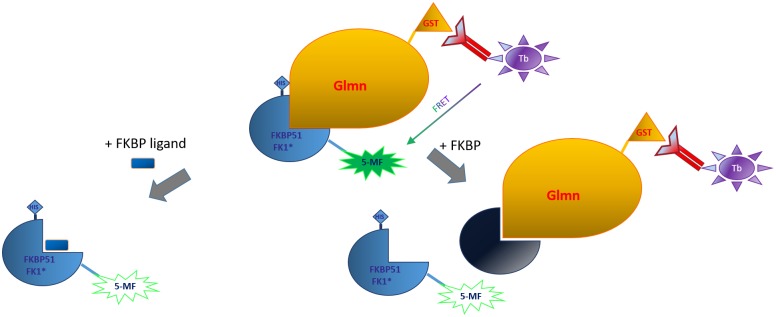
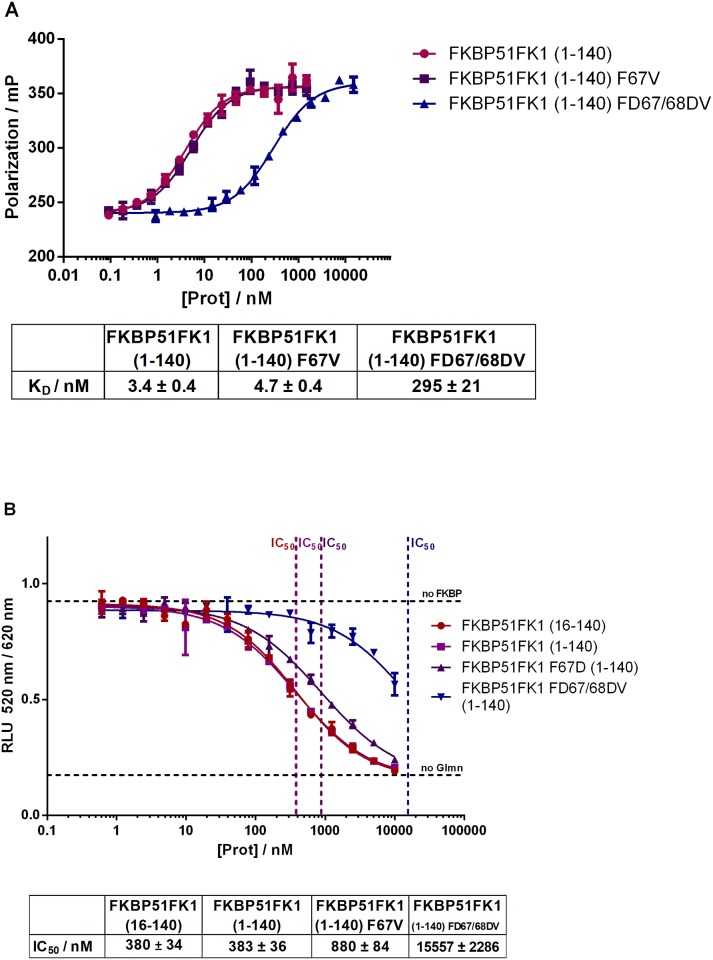
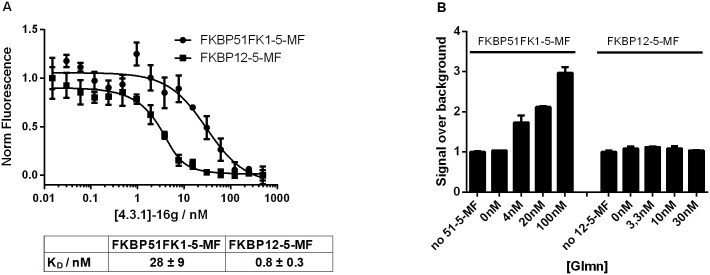
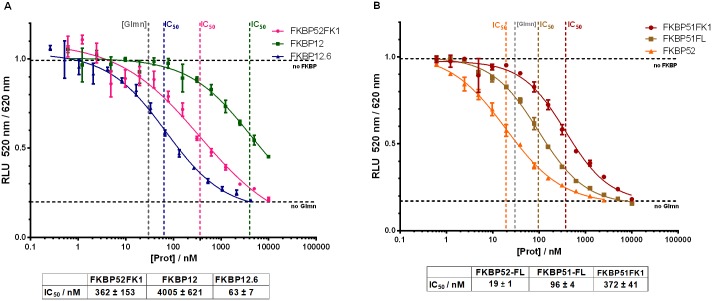
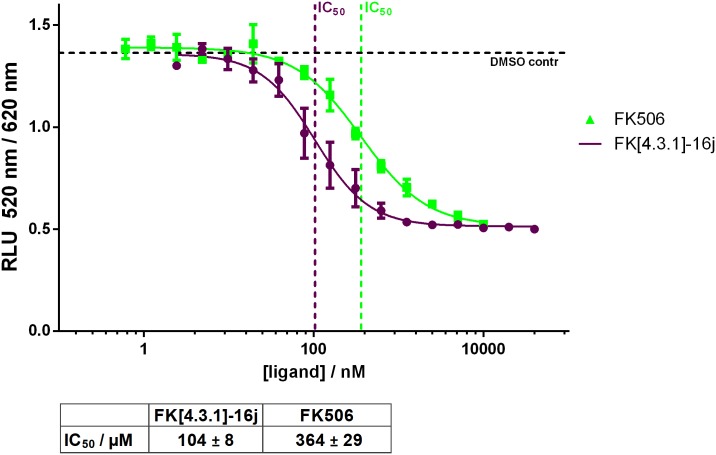
The protein factor Glomulin (Glmn) is a regulator of the SCF (Skp1-CUL1-F-box protein) E3 ubiquitin-protein ligase complex. Mutations of Glmn lead to glomuvenous malformations. Glmn has been reported to be associated with FK506-binding proteins (FKBP). Here we present in vitro binding analyses of the FKBP-Glmn interaction. Interestingly, the previously described interaction of Glmn and FKBP12 was found to be comparatively weak. Instead, the closely related FKBP12.6 and FKBP51 emerged as novel binding partners. We show different binding affinities of full length and truncated FKBP51 and FKBP52 mutants. Using FKBP51 as a model system, we show that two amino acids lining the FK506-binding site are essential for binding Glmn and that the FKBP51-Glmn interaction is blocked by FKBP ligands. This data suggest FKBP inhibition as a pharmacological approach to regulate Glmn and Glmn-controlled processes.
蛋白因子 Glomulin(Glmn)是 SCF(Skp1-CUL1-F-box 蛋白)E3 泛素连接酶复合物的调节剂。Glmn 的突变导致 Glomuvenous 畸形。Glmn 已被报道与 FK506 结合蛋白(FKBP)有关。在这里,我们提出了 FKBP-Glmn 相互作用的体外结合分析。有趣的是,先前描述的 Glmn 和 FKBP12 的相互作用被发现相对较弱。相反,密切相关的 FKBP12.6 和 FKBP51 成为新的结合伙伴。我们展示了全长和截断的 FKBP51 和 FKBP52 突变体的不同结合亲和力。使用 FKBP51 作为模型系统,我们表明,位于 FK506 结合位点两侧的两个氨基酸对于结合 Glmn 是必需的,并且 FKBP51-Glmn 相互作用被 FKBP 配体阻断。这些数据表明 FKBP 抑制可能是一种调节 Glmn 和 Glmn 控制的过程的药理学方法。