Al-Hajri Sameer, Mahmood Syed M, Abdulrahman Ahmed, Abdulelah Hesham, Akbari Saeed, Saraih Nabil
Department of Petroleum Engineering, Universiti Teknologi PETRONAS, Seri Iskandar, Perak 32610, Malaysia.
College of Petroleum and Geoscience, King Fahd University of Petroleum and Minerals, Dhahran 34463, Saudi Arabia.
Polymers (Basel). 2019 Sep 5;11(9):1453. doi: 10.3390/polym11091453.
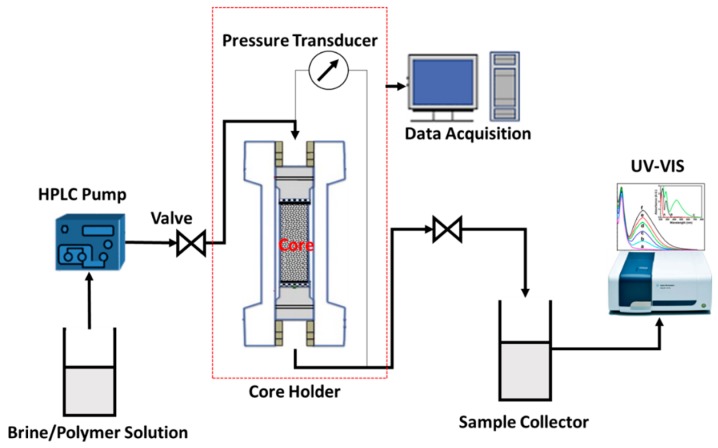
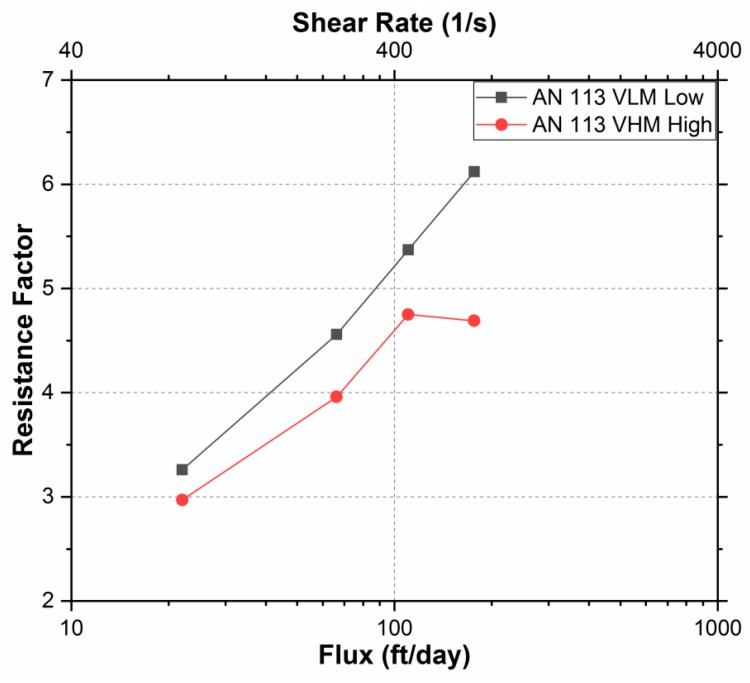
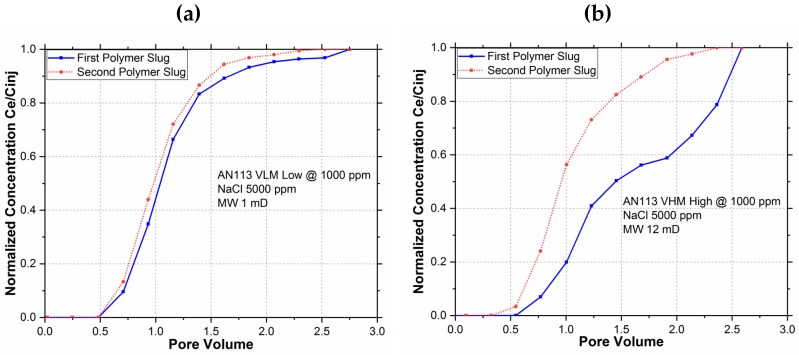
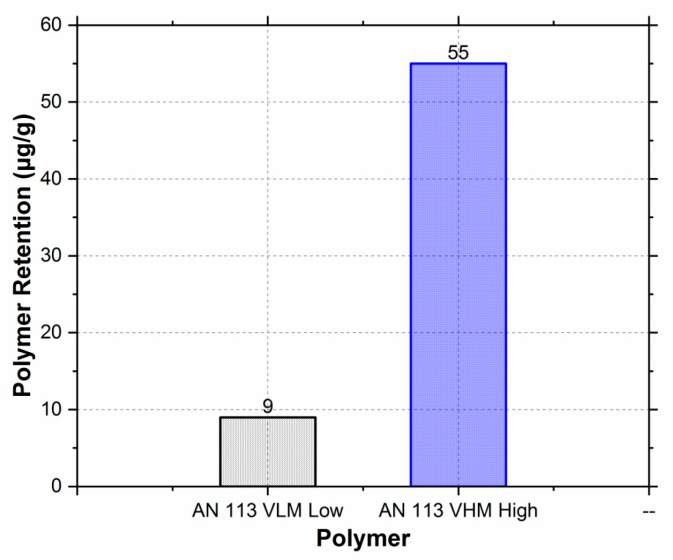
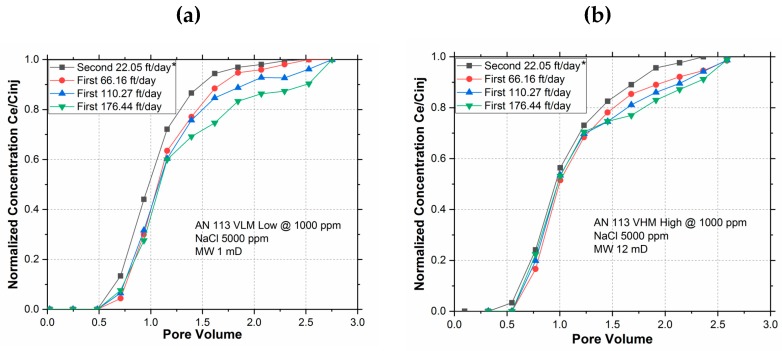
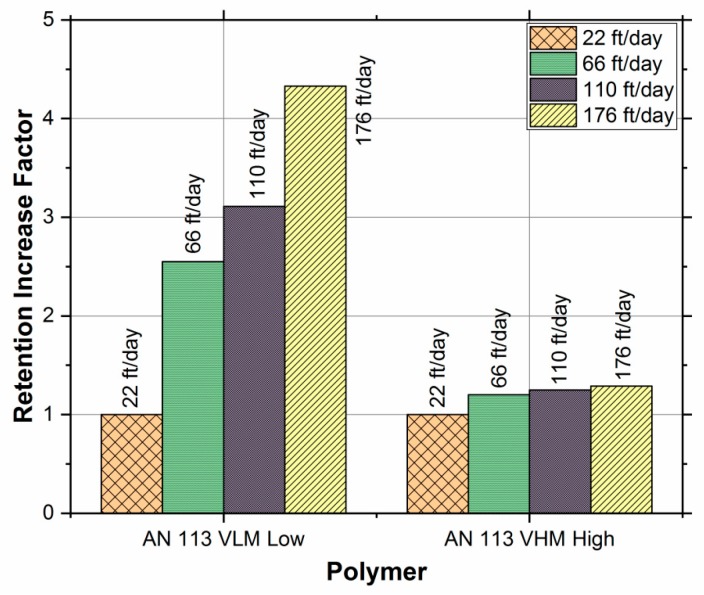
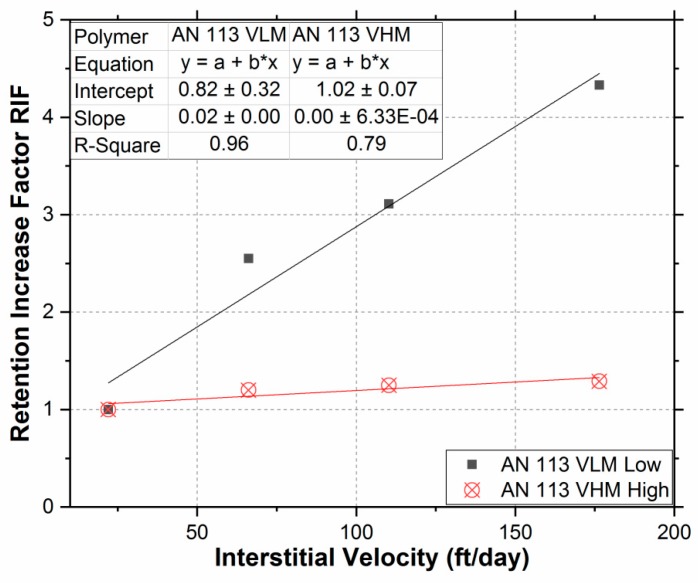
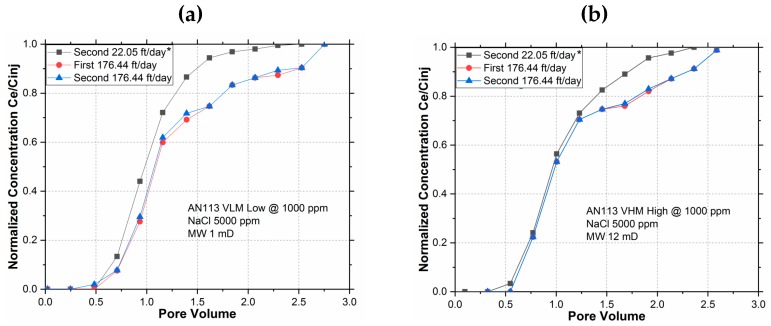
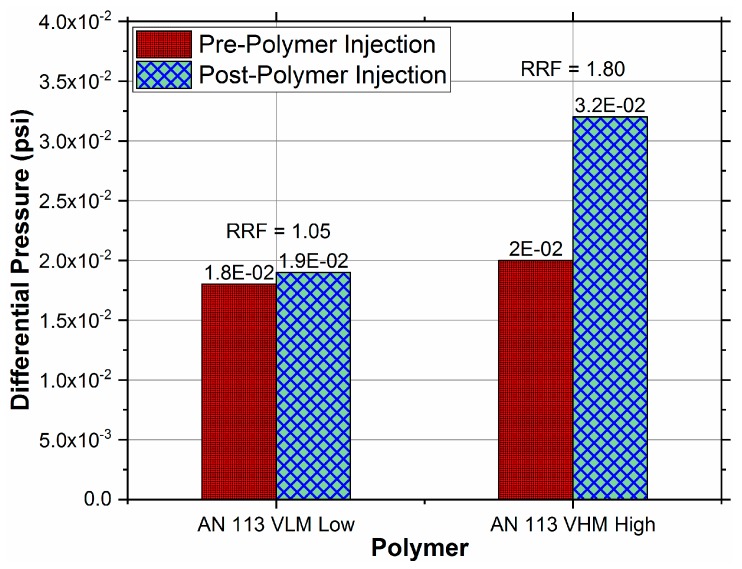
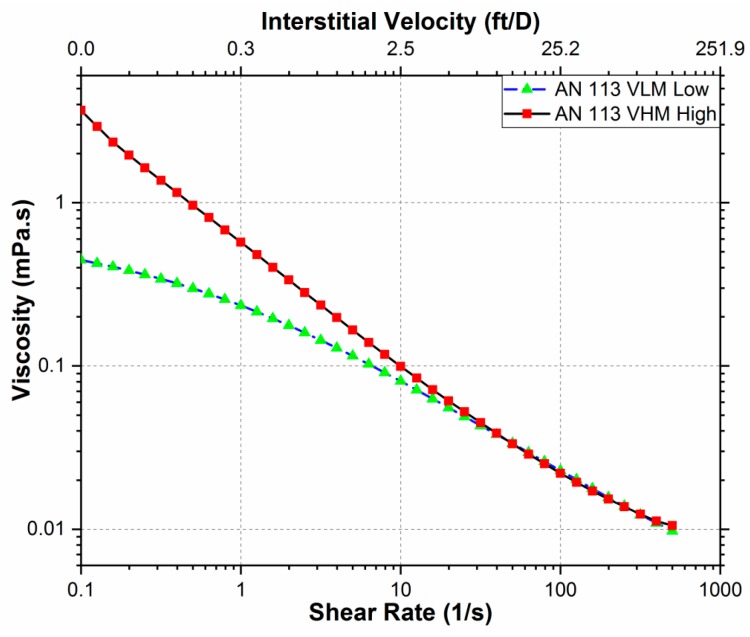
Polymers are often added with water as a viscosifier to improve oil recovery from hydrocarbon reservoirs. Polymer might be lost wholly or partially from the injected polymer solution by adsorption on the grain surfaces, mechanical entrapment in pores, and hydrodynamic retention in stagnant zones. Therefore, having a clear picture of polymer losses (and retention) is very important for designing a technically and economically successful polymer flood project. The polymer adsorption and mechanical entrapment are discussed more in depth in the literature, though the effect of hydrodynamic retention can be just as significant. This research investigates the effect of the hydrodynamic retention for low and high molecular weight (AN 113 VLM and AN 113 VHM) sulfonated polyacrylamide polymer. Two high permeability Bentheimer core plugs from outcrops were used to perform polymer corefloods. Polymer retention was first determined by injecting 1 cm/min, followed by polymer core floods at 3, 5, and 8 cm/min to determine the hydrodynamic retention (incremental retention). A higher molecular weight polymer (AN 113 VHM) showed higher polymer retention. In contrast, hydrodynamic retention for lower molecular weight (AN 113 VLM) was significantly higher than that of the higher molecular weight polymer. Other important observations were the reversibility of the hydrodynamic retention, no permanent permeability reduction, the shear thinning behavior in a rheometer, and shear thickening behavior in core floods.
聚合物通常作为增稠剂与水混合添加,以提高从油气藏中采油的效率。聚合物可能会因吸附在颗粒表面、机械截留于孔隙中以及在停滞区的流体动力学滞留而全部或部分地从注入的聚合物溶液中损失。因此,清楚了解聚合物的损失(和滞留)情况对于设计一个在技术和经济上都成功的聚合物驱油项目非常重要。聚合物的吸附和机械截留已在文献中有更深入的讨论,尽管流体动力学滞留的影响可能同样显著。本研究调查了低分子量和高分子量(AN 113 VLM和AN 113 VHM)磺化聚丙烯酰胺聚合物的流体动力学滞留效应。使用了两个露头的高渗透率本特海默岩心柱塞进行聚合物岩心驱替实验。首先以1厘米/分钟的流速注入聚合物来测定聚合物滞留,然后分别以3厘米/分钟、5厘米/分钟和8厘米/分钟的流速进行聚合物岩心驱替,以确定流体动力学滞留(增量滞留)。较高分子量的聚合物(AN 113 VHM)显示出更高的聚合物滞留。相比之下,较低分子量(AN 113 VLM)的流体动力学滞留明显高于较高分子量的聚合物。其他重要的观察结果包括流体动力学滞留的可逆性、渗透率无永久性降低、流变仪中的剪切变稀行为以及岩心驱替中的剪切增稠行为。