Cabello-Alvarado C, Andrade-Guel M, Pérez-Alvarez M, Cadenas-Pliego G, Cortés-Hernández Dora A, Bartolo-Pérez P, Ávila-Orta C A, Cruz-Delgado V J, Zepeda-Pedreguera A
CONACYT Research Fellow-Research and Innovation Consortium of the State of Tlaxcala, C.P. 90000 Tlaxcala, Mexico.
Center for Research in Applied Chemistry (CIQA), Saltillo, 25315 Coahuila, México.
Nanomaterials (Basel). 2019 Sep 5;9(9):1261. doi: 10.3390/nano9091261.
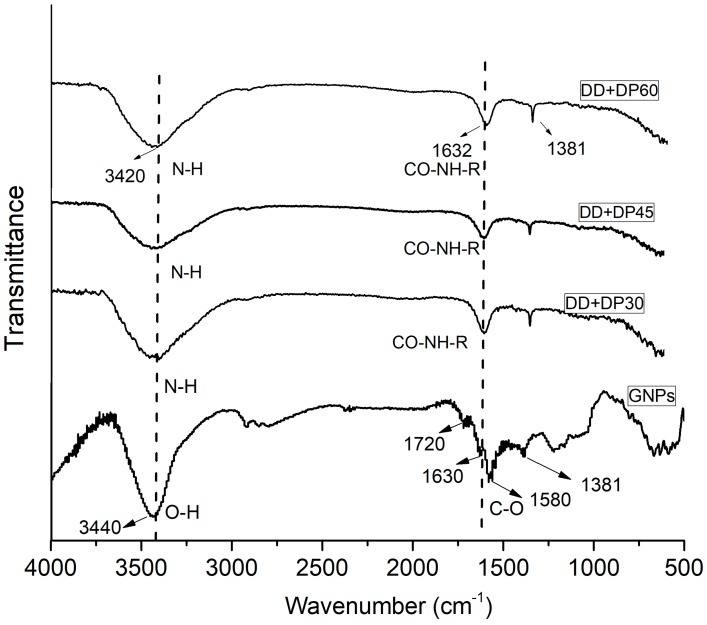
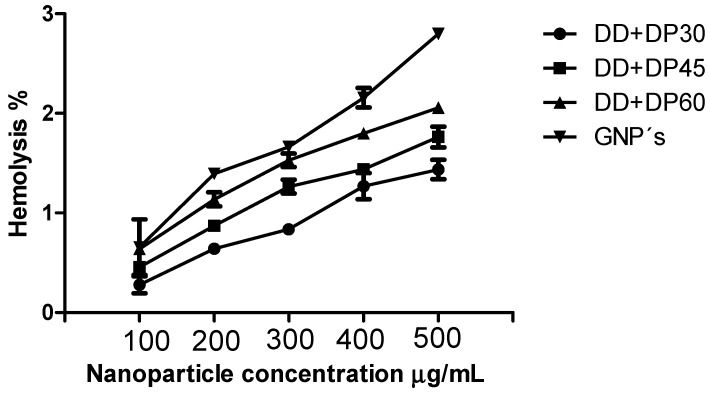
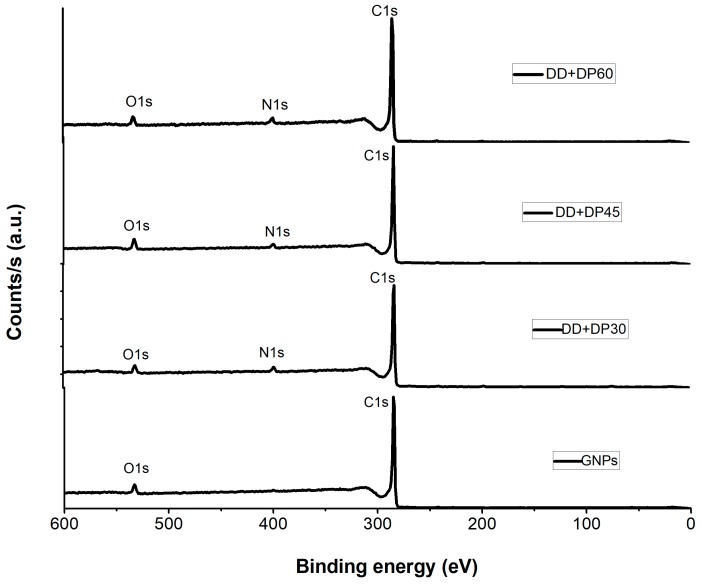
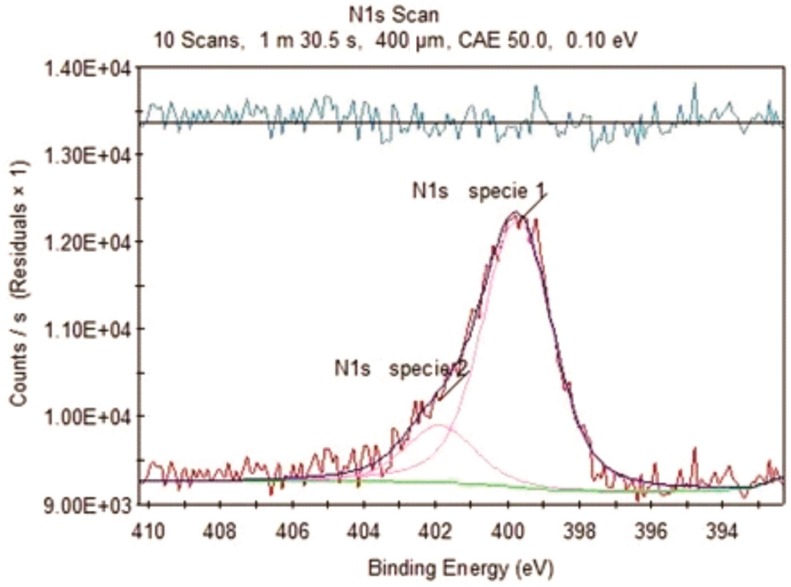
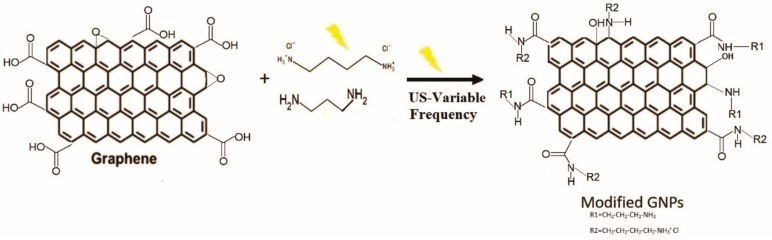
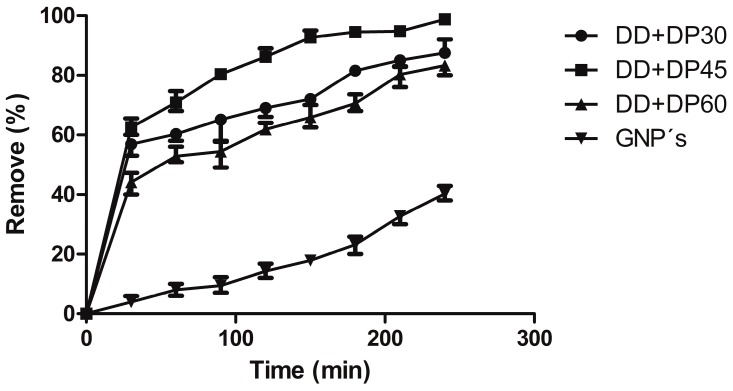
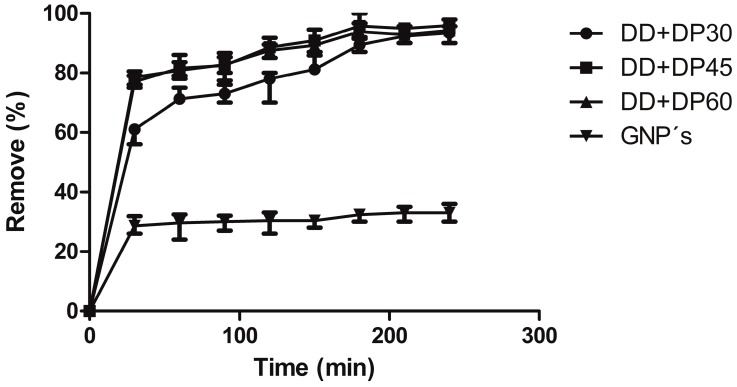
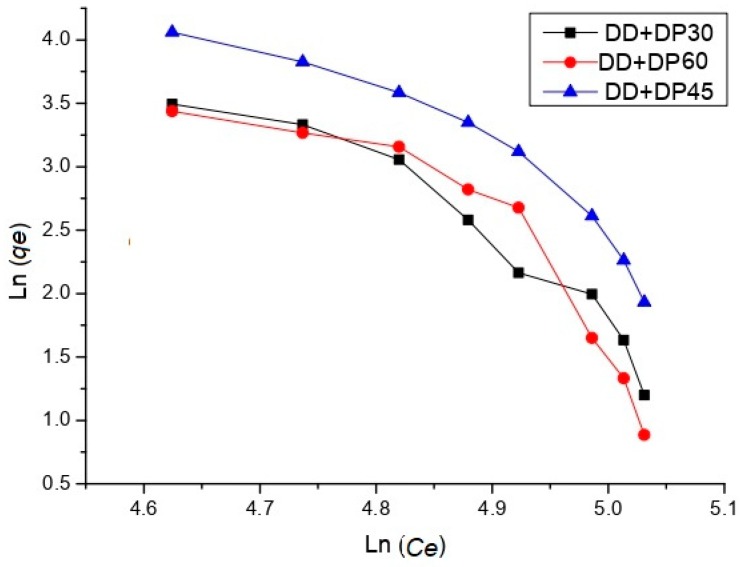
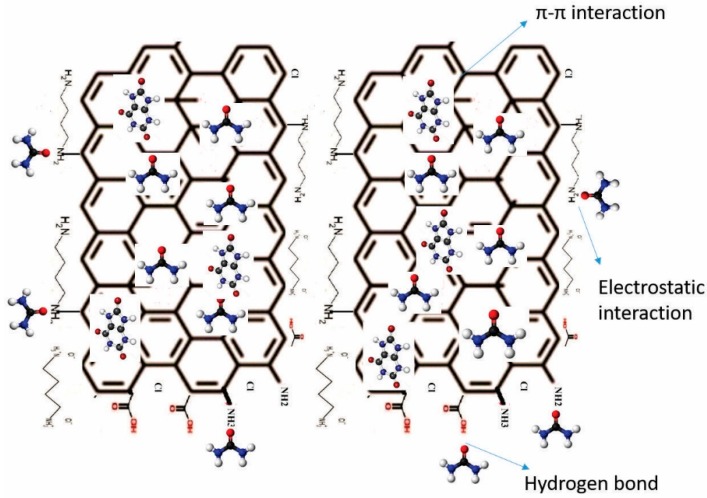
Chronic kidney disease (CKD) is a worldwide public health problem. In stages III and IV of CKD, uremic toxins must be removed from the patient by absorption, through a treatment commonly called hemodialysis. Aiming to improve the absorption of uremic toxins, we have studied its absorption in chemically modified graphene nanoplatelets (GNPs). This study involved the reaction between GNPs and diamines with reaction times of 30, 45 and 60 min using ultrasound waves of different amplitudes and frequencies. Functionalized GNPs were analyzed by Fourier Fourier-transform infrared spectroscopy (FTIR), X-ray photoelectron spectroscopy (XPS), Scanning electron microscopy and energy dispersitive spectroscopy (SEM-EDS), and Thermogravimetric analysis (TGA). The analysis of the functional groups confirmed the presence of amide and hydroxyl groups on the surface of the GNPs by reactions of diamines with carboxylic acids and epoxides. Adsorption of uremic toxins was determined using equilibrium isotherms, where the maximum percentage of removal of uremic toxins was 97%. Dispersion of modified graphene nanoplatelets was evaluated in water, ethanol and hexane, as a result of this treatment was achieved a good and effective dispersion of diamines-modified graphene nanoplatelets in ethanol and hexane. Finally, the results of hemolysis assays of the modified graphene with amine demonstrated that it was not cytotoxic when using 500 mg/mL. The samples of modified graphene demonstrated low degree of hemolysis (<2%), so this material can be used for in vivo applications such as hemodialysis.
慢性肾脏病(CKD)是一个全球性的公共卫生问题。在CKD的III期和IV期,必须通过一种通常称为血液透析的治疗方法,通过吸附从患者体内清除尿毒症毒素。为了提高尿毒症毒素的吸附效果,我们研究了其在化学修饰的石墨烯纳米片(GNPs)中的吸附情况。本研究涉及GNPs与二胺之间的反应,反应时间分别为30、45和60分钟,使用不同振幅和频率的超声波。通过傅里叶变换红外光谱(FTIR)、X射线光电子能谱(XPS)、扫描电子显微镜和能量色散光谱(SEM-EDS)以及热重分析(TGA)对功能化的GNPs进行了分析。官能团分析通过二胺与羧酸和环氧化物的反应证实了GNPs表面存在酰胺基和羟基。使用平衡等温线测定尿毒症毒素的吸附情况,其中尿毒症毒素的最大去除率为97%。评估了改性石墨烯纳米片在水、乙醇和己烷中的分散情况,经过这种处理,二胺改性的石墨烯纳米片在乙醇和己烷中实现了良好且有效的分散。最后,胺改性石墨烯的溶血试验结果表明,当使用500 mg/mL时它没有细胞毒性。改性石墨烯样品的溶血程度较低(<2%),因此这种材料可用于血液透析等体内应用。