UMR 5235 CNRS, Université de Montpellier, 34095, Montpellier, France.
Department of Biochemistry and Microbiology, University of Victoria, Victoria, British Columbia, V8W 3P6, Canada.
Nat Commun. 2019 Sep 6;10(1):4041. doi: 10.1038/s41467-019-11979-z.
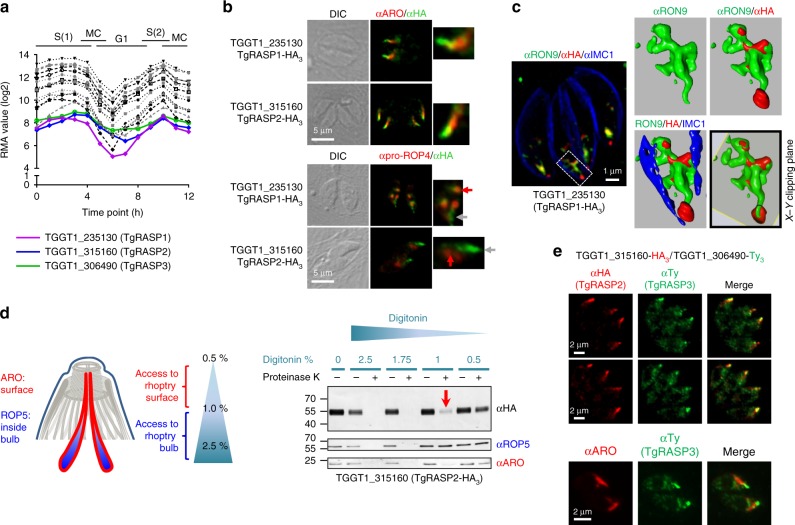
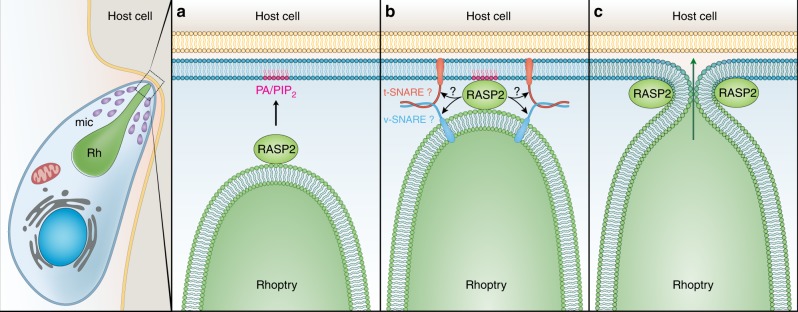
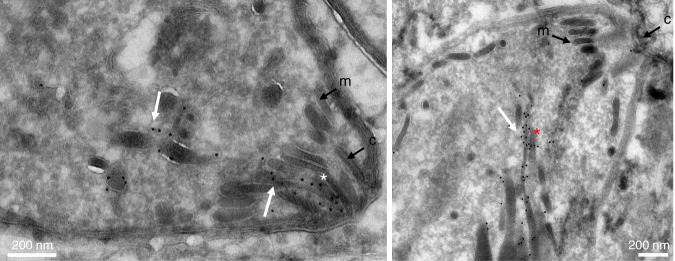
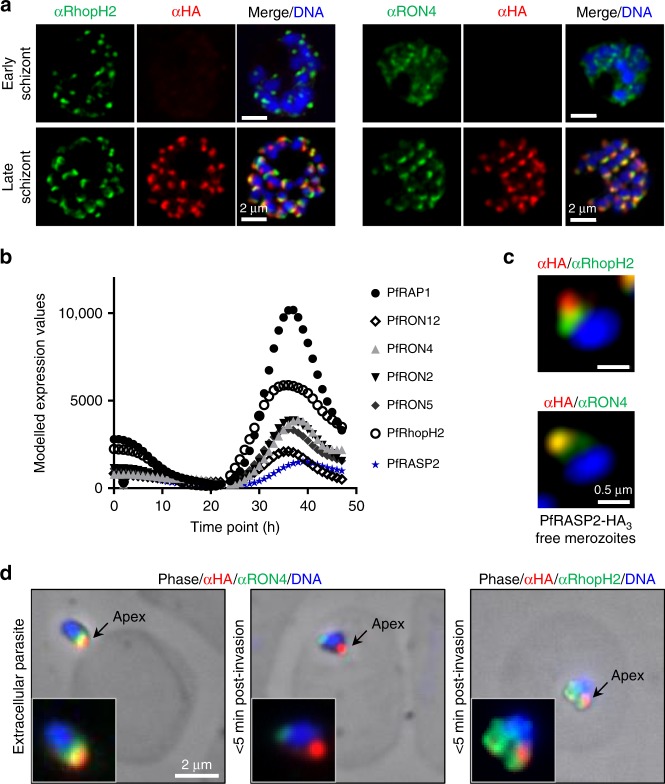
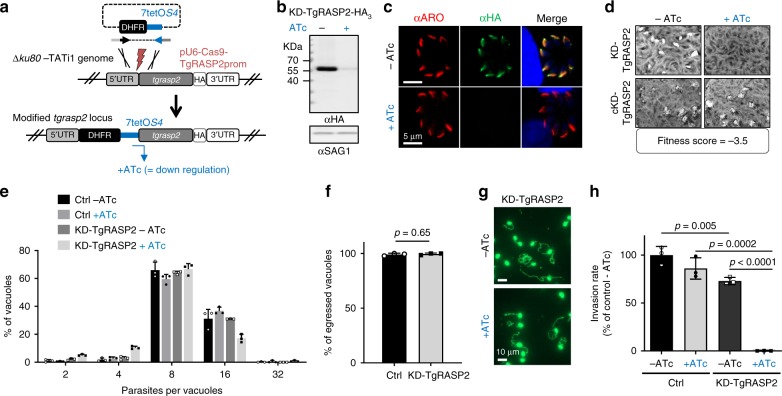
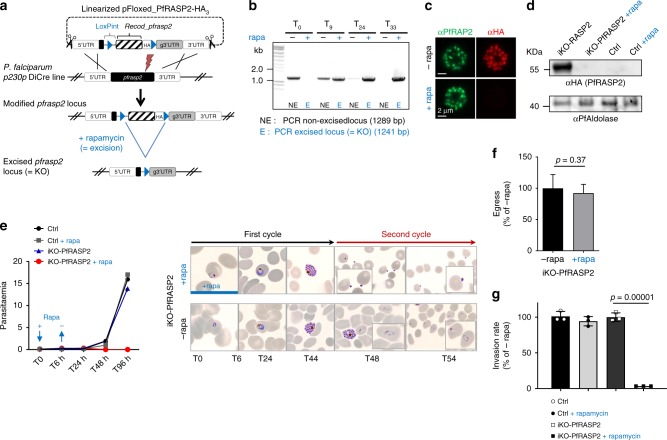
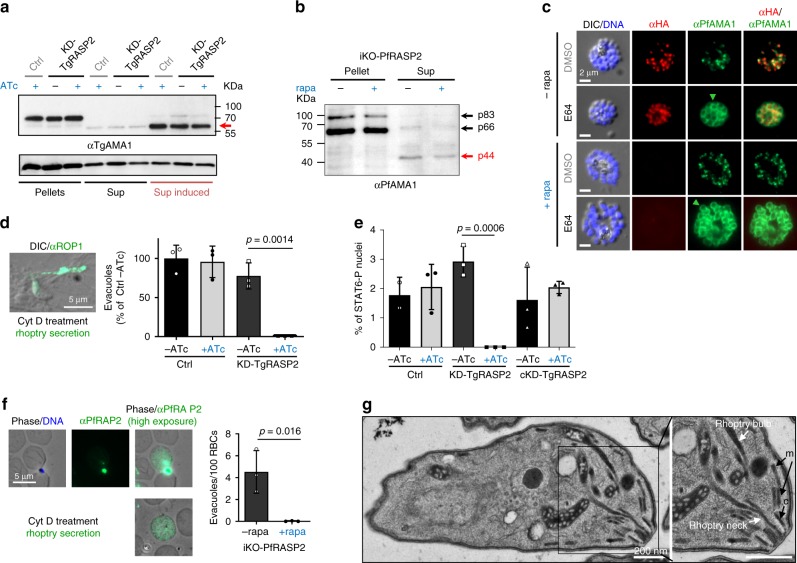
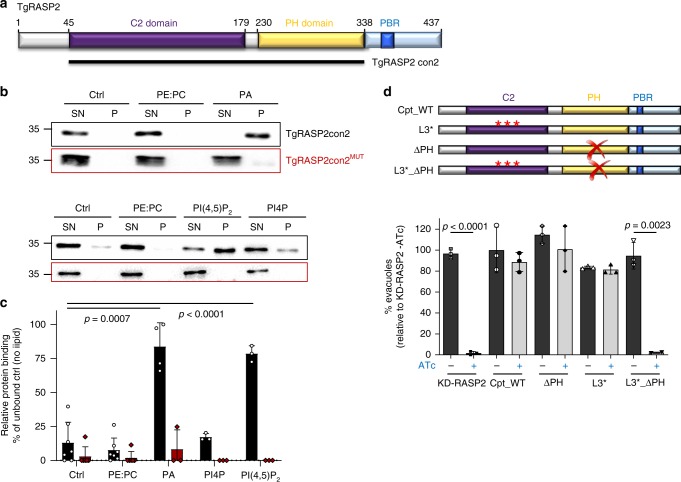
Members of the Apicomplexa phylum, including Plasmodium and Toxoplasma, have two types of secretory organelles (micronemes and rhoptries) whose sequential release is essential for invasion and the intracellular lifestyle of these eukaryotes. During invasion, rhoptries inject an array of invasion and virulence factors into the cytoplasm of the host cell, but the molecular mechanism mediating rhoptry exocytosis is unknown. Here we identify a set of parasite specific proteins, termed rhoptry apical surface proteins (RASP) that cap the extremity of the rhoptry. Depletion of RASP2 results in loss of rhoptry secretion and completely blocks parasite invasion and therefore parasite proliferation in both Toxoplasma and Plasmodium. Recombinant RASP2 binds charged lipids and likely contributes to assembling the machinery that docks/primes the rhoptry to the plasma membrane prior to fusion. This study provides important mechanistic insight into a parasite specific exocytic pathway, essential for the establishment of infection.
顶复门的成员,包括疟原虫和刚地弓形虫,具有两种类型的分泌细胞器(微线体和棒状体),其顺序释放对于这些真核生物的入侵和细胞内生活方式是必不可少的。在入侵过程中,棒状体将一系列入侵和毒力因子注入宿主细胞质,但介导棒状体胞吐的分子机制尚不清楚。在这里,我们鉴定了一组寄生虫特异性蛋白,称为棒状体顶表面蛋白(RASP),它们覆盖棒状体的末端。RASP2 的耗竭导致棒状体分泌的丧失,并完全阻止寄生虫入侵,因此寄生虫在刚地弓形虫和疟原虫中的增殖也被完全阻断。重组 RASP2 结合带电荷的脂质,可能有助于组装在融合之前将棒状体停靠/启动到质膜的机器。这项研究为寄生虫特有的胞吐途径提供了重要的机制见解,对于感染的建立是必不可少的。