Department of Obstetrics and Gynecology, PEDEGO Research Unit, Medical Research Center, Oulu University Hospital, University of Oulu, Oulu, Finland.
Department of Bioorganic Chemistry, Institute of Chemistry, University of Tartu, Tartu, Estonia.
Biol Reprod. 2020 Feb 14;102(2):306-315. doi: 10.1093/biolre/ioz180.
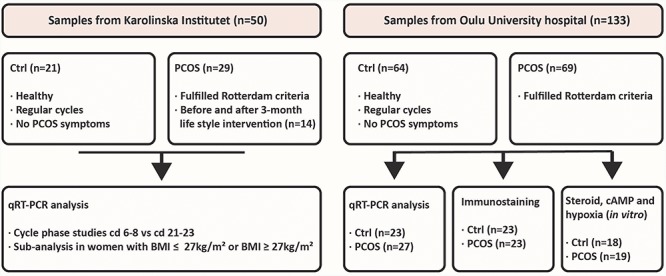
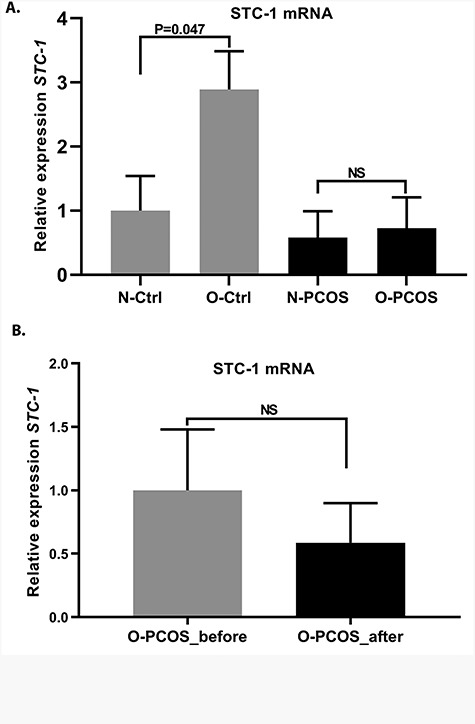
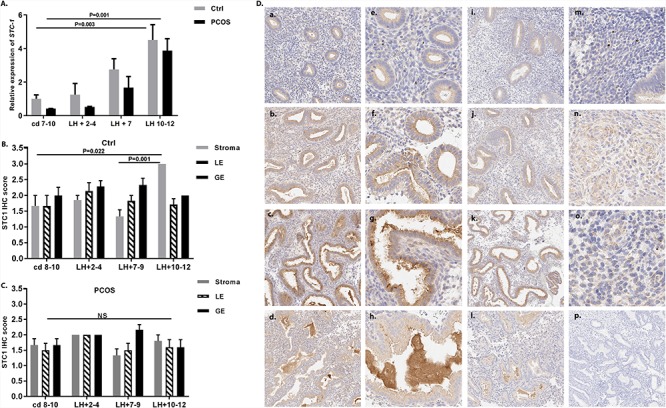
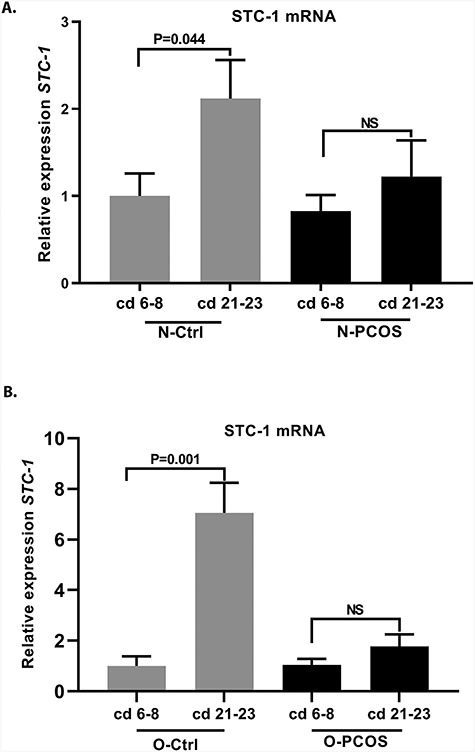
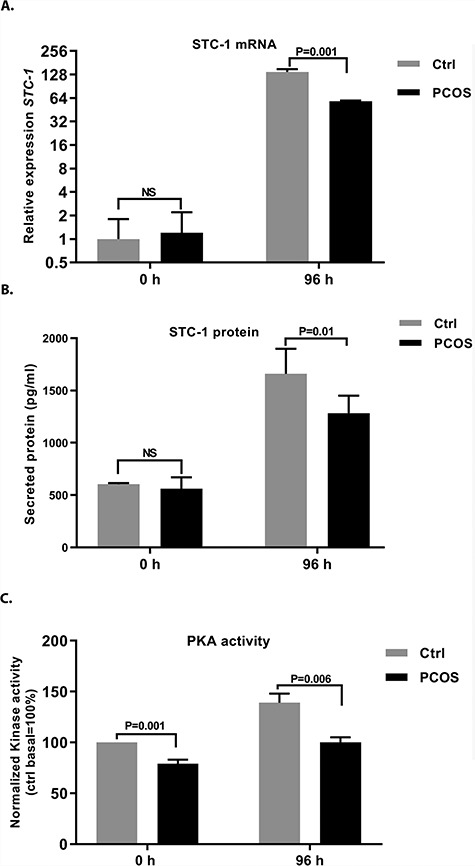
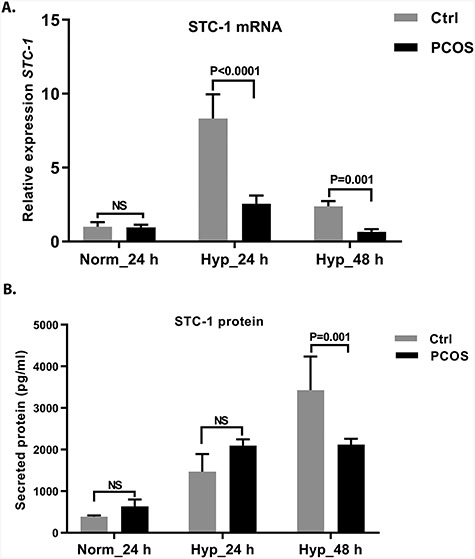
Stanniocalcin-1 (STC-1) is a pro-survival factor that protects tissues against stressors, such as hypoxia and inflammation. STC-1 is co-expressed with the endometrial receptivity markers, and recently endometrial STC-1 was reported to be dysregulated in endometriosis, a condition linked with endometrial progesterone resistance and inflammation. These features are also common in the endometrium in women with polycystic ovary syndrome (PCOS), the most common endocrine disorder in women. Given that women with PCOS present with subfertility, pregnancy complications, and increased risk for endometrial cancer, we investigated endometrial STC-1 expression in affected women. Endometrial biopsy samples were obtained from women with PCOS and controls, including samples from overweight/obese women with PCOS before and after a 3-month lifestyle intervention. A total of 98 PCOS and 85 control samples were used in immunohistochemistry, reverse-transcription polymerase chain reaction, or in vitro cell culture. STC-1 expression was analyzed at different cycle phases and in endometrial stromal cells (eSCs) after steroid hormone exposure. The eSCs were also challenged with 8-bromo-cAMP and hypoxia for STC-1 expression. The findings indicate that STC-1 expression is not steroid hormone mediated although secretory-phase STC-1 expression was blunted in PCOS. Lower expression seems to be related to attenuated STC-1 response to stressors in PCOS eSCs, shown as downregulation of protein kinase A activity. The 3-month lifestyle intervention did not restore STC-1 expression in PCOS endometrium. More studies are warranted to further elucidate the mechanisms behind the altered endometrial STC-1 expression and rescue mechanism in the PCOS endometrium.
钙结合蛋白 1(STC-1)是一种抗应激因子,可保护组织免受缺氧和炎症等应激源的伤害。STC-1 与子宫内膜容受性标志物共同表达,最近有研究报道子宫内膜 STC-1 在子宫内膜异位症中失调,子宫内膜异位症与子宫内膜孕激素抵抗和炎症有关。这些特征在多囊卵巢综合征(PCOS)妇女的子宫内膜中也很常见,PCOS 是女性最常见的内分泌疾病。鉴于患有 PCOS 的女性存在生育能力下降、妊娠并发症和子宫内膜癌风险增加的情况,我们研究了受影响女性的子宫内膜 STC-1 表达情况。从患有 PCOS 和对照组的女性中获取子宫内膜活检样本,包括超重/肥胖的 PCOS 女性在 3 个月生活方式干预前后的样本。共使用了 98 例 PCOS 和 85 例对照样本进行免疫组织化学、逆转录聚合酶链反应或体外细胞培养。在不同的周期阶段和类固醇激素暴露后分析子宫内膜基质细胞(eSCs)中的 STC-1 表达。还通过 8-溴-cAMP 和缺氧刺激 eSCs 表达 STC-1。研究结果表明,尽管 PCOS 中分泌期 STC-1 表达减弱,但 STC-1 表达不受类固醇激素调节。较低的表达似乎与 PCOS eSCs 中 STC-1 对应激源的反应减弱有关,表现为蛋白激酶 A 活性下调。3 个月的生活方式干预并不能恢复 PCOS 子宫内膜中的 STC-1 表达。需要进行更多的研究来进一步阐明 PCOS 子宫内膜中改变的 STC-1 表达背后的机制和挽救机制。