Song Kang Moon, Chung Doo Yong, Choi Min Ji, Ghatak Kalyan, Minh Nguyen Nhat, Limanjaya Anita, Kwon Mi Hye, Ock Jiyeon, Yin Guo Nan, Kim Dae Kee, Ryu Ji Kan, Suh Jun Kyu
National Research Center for Sexual Medicine and Department of Urology, Inha University School of Medicine, Incheon, Korea.
Graduate School of Pharmaceutical Sciences, College of Pharmacy, Ewah Womans University, Seoul, Korea.
World J Mens Health. 2020 Oct;38(4):552-563. doi: 10.5534/wjmh.190071. Epub 2019 Aug 27.
To examine the therapeutic effect of Vactosertib, a small molecule inhibitor of transforming growth factor-β (TGF-β) type I receptor (activin receptor-like kinase-5, ALK5), in an experimental model of Peyronie's disease (PD) and determining anti-fibrotic mechanisms of Vactosertib in primary fibroblasts derived from human PD plaques.
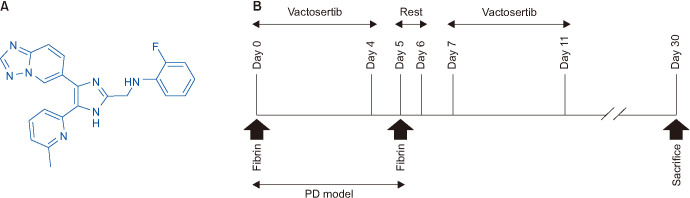
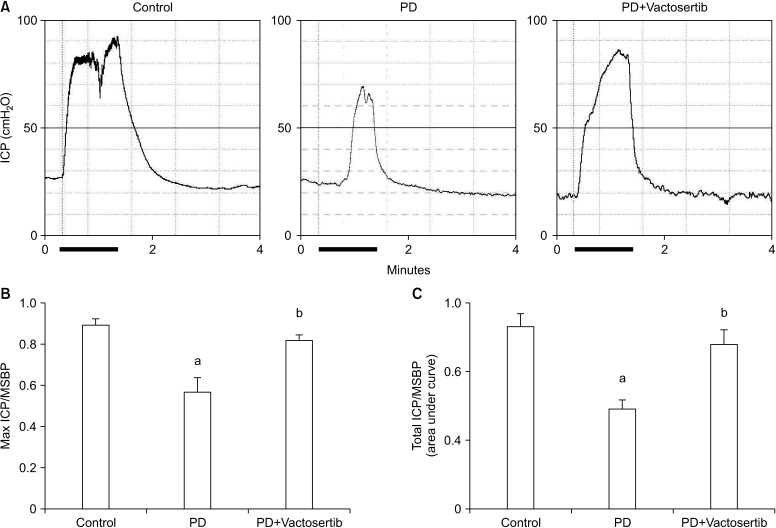
Male rats were randomly divided into three groups (n=6 per group); control rats without treatment; PD rats receiving vehicle; and PD rats receiving Vactosertib (10 mg/kg). PD-like plaques were induced by administering 100 μL of each of human fibrin and thrombin solutions into the tunica albuginea on days 0 and 5. Vactosertib was given orally five times a week for 2 weeks. On day 30, we performed electrical stimulation of the cavernous nerve to measure erectile function, and the penis was obtained for histological examination. Fibroblasts isolated from human PD plaques were used to determine the anti-fibrotic effects of Vactosertib .
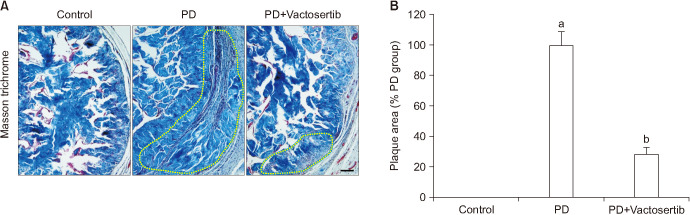
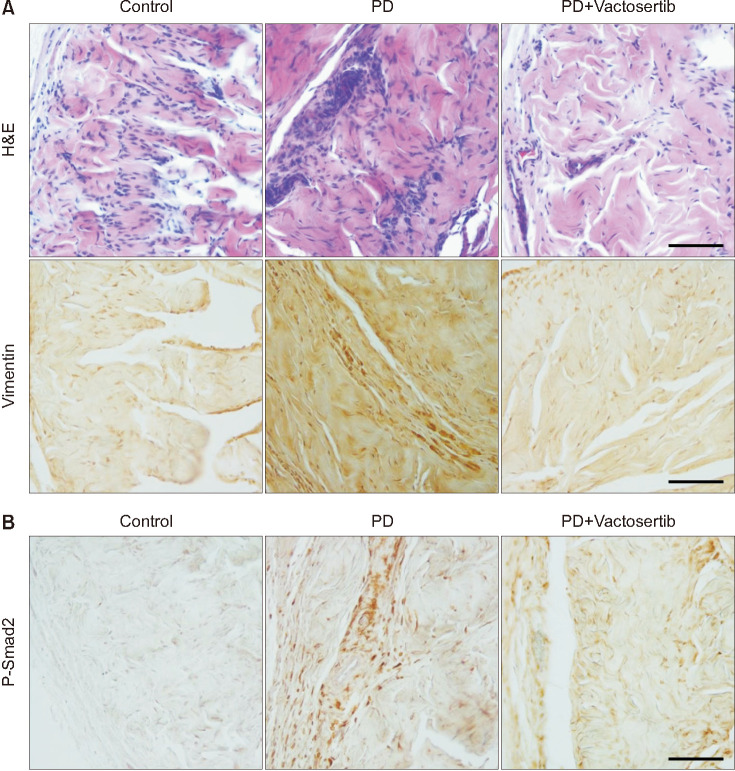
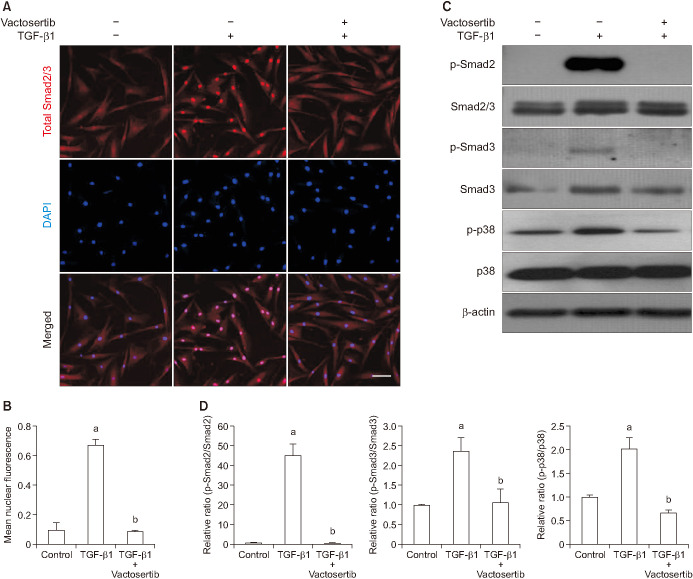
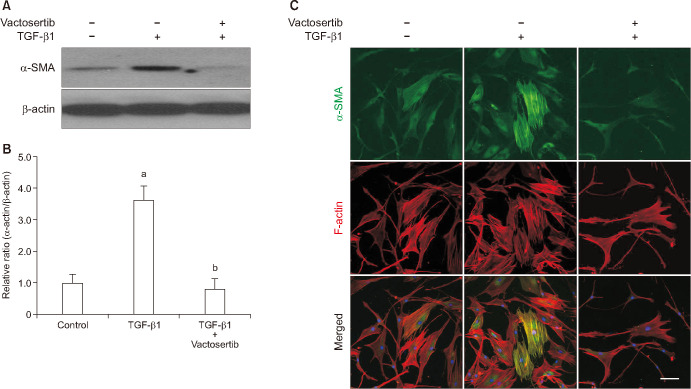
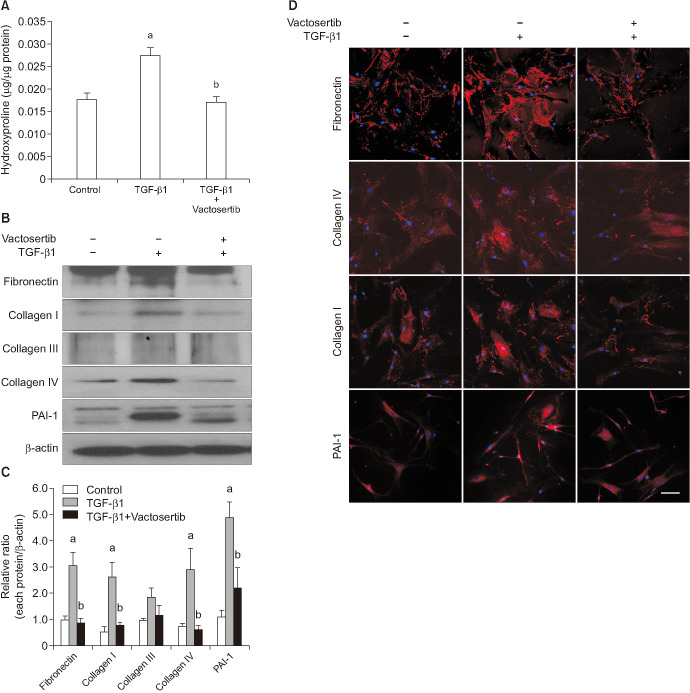
Vactosertib induced significant regression of fibrotic plaques in PD rats through reduced infiltration of inflammatory cells and reduced expression of phospho-Smad2, which recovered erectile function. Vactosertib also abrogated TGF-β1-induced enhancement of extracellular matrix protein production and hydroxyproline content in PD fibroblasts by hindering the TGF-β1-induced Smad2/3 phosphorylation and nuclear translocation, and fibroblast-to-myofibroblast transdifferentiation.
In view of the critical role of TGF-β and the Smad pathway in the pathogenesis of PD, inhibition of this pathway with an ALK5 inhibitor may represent a novel, targeted therapy for PD.
研究转化生长因子-β(TGF-β)I型受体(激活素受体样激酶-5,ALK5)小分子抑制剂维托西替尼在佩罗尼氏病(PD)实验模型中的治疗效果,并确定维托西替尼在源自人PD斑块的原代成纤维细胞中的抗纤维化机制。
雄性大鼠随机分为三组(每组n = 6);未治疗的对照大鼠;接受赋形剂的PD大鼠;以及接受维托西替尼(10 mg/kg)的PD大鼠。在第0天和第5天,通过向白膜内注射100 μL人纤维蛋白和凝血酶溶液诱导形成类似PD的斑块。维托西替尼每周口服5次,持续2周。在第30天,我们对海绵体神经进行电刺激以测量勃起功能,并获取阴茎进行组织学检查。从人PD斑块中分离出的成纤维细胞用于确定维托西替尼的抗纤维化作用。
维托西替尼通过减少炎症细胞浸润和降低磷酸化Smad2的表达,使PD大鼠的纤维化斑块显著消退,恢复了勃起功能。维托西替尼还通过阻碍TGF-β1诱导的Smad2/3磷酸化和核转位以及成纤维细胞向肌成纤维细胞的转分化,消除了TGF-β1诱导的PD成纤维细胞中细胞外基质蛋白产生和羟脯氨酸含量的增加。
鉴于TGF-β和Smad通路在PD发病机制中的关键作用,用ALK5抑制剂抑制该通路可能代表一种针对PD的新型靶向治疗方法。