Clinical Pharmacology, Global Product Development, Pfizer Inc, New York, NY, USA.
Jack F. Bukowski, LLC, Everglades City, FL, USA.
BioDrugs. 2019 Oct;33(5):571-579. doi: 10.1007/s40259-019-00375-0.
Anti-drug antibodies (ADAs) to bococizumab were detected in > 40% of subjects in the SPIRE lipid-lowering trials. The risk of cross-reactivity between anti-bococizumab antibodies and other approved anti-proprotein convertase subtilisin/kexin type-9 (PCSK9) monoclonal antibodies (mAbs) was investigated using a single-assay approach.
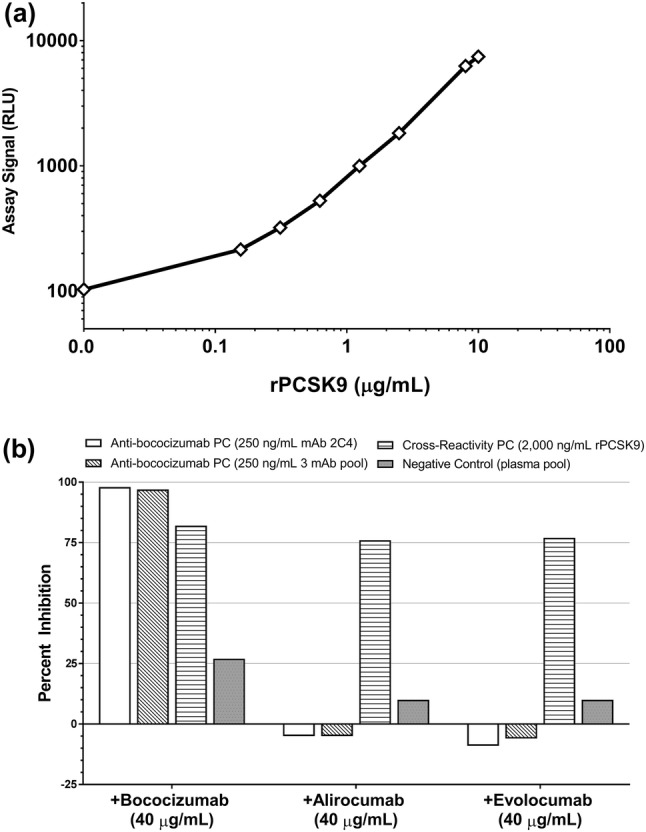
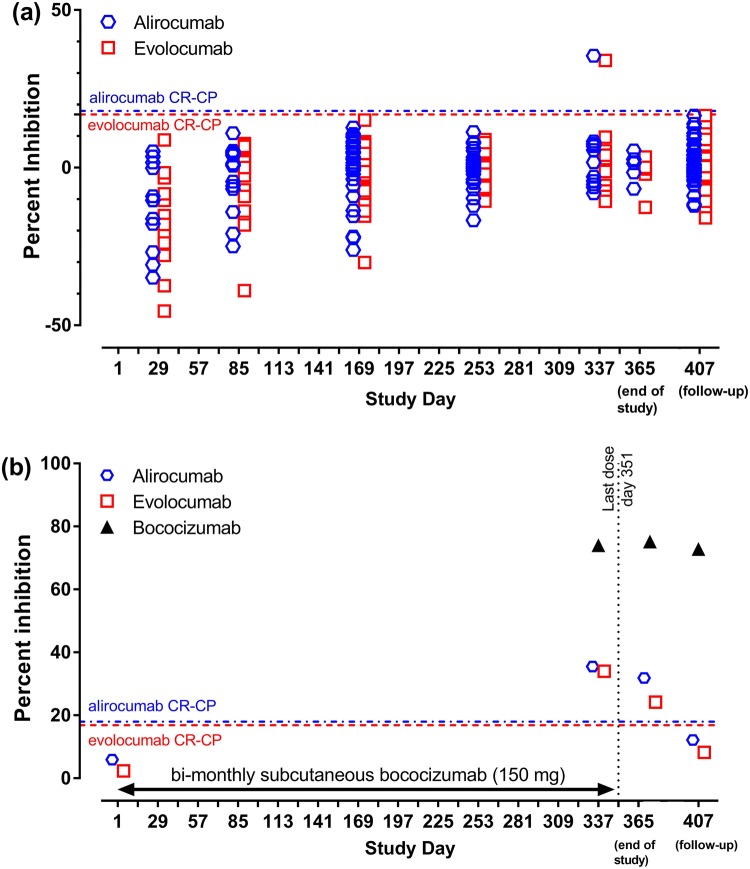
Bococizumab immunogenicity was assessed in SPIRE-HR, a 52-week study. The highest ADA titer sample from each ADA-positive subject (n = 155) was tested in vitro for cross-reactivity to alirocumab and evolocumab using a novel ADA assay approach. Additional specificity tiers within the bococizumab ADA assay against each drug were validated using recombinant PCSK9 as a surrogate cross-reactive positive control. If the highest ADA titer sample showed cross-reactivity, additional samples from that subject were analyzed. Cross-reactivity was determined by the ability of alirocumab or evolocumab to inhibit the sample signal greater than or equal to the cross-reactivity cut-points.
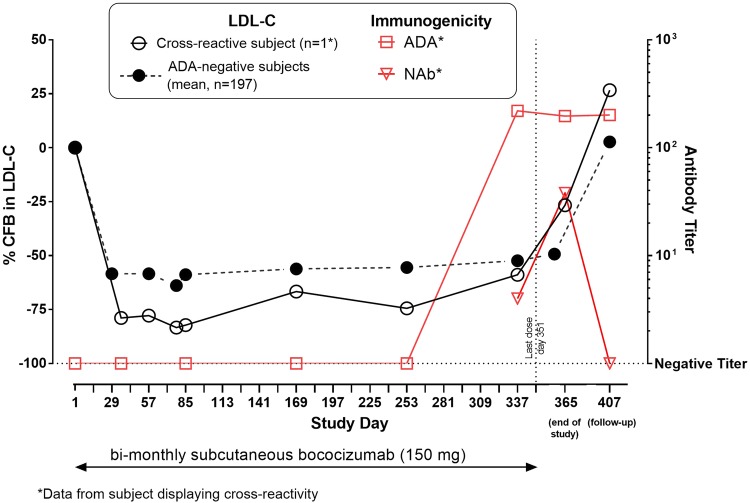
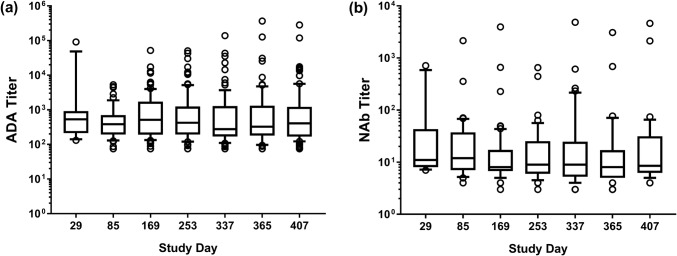
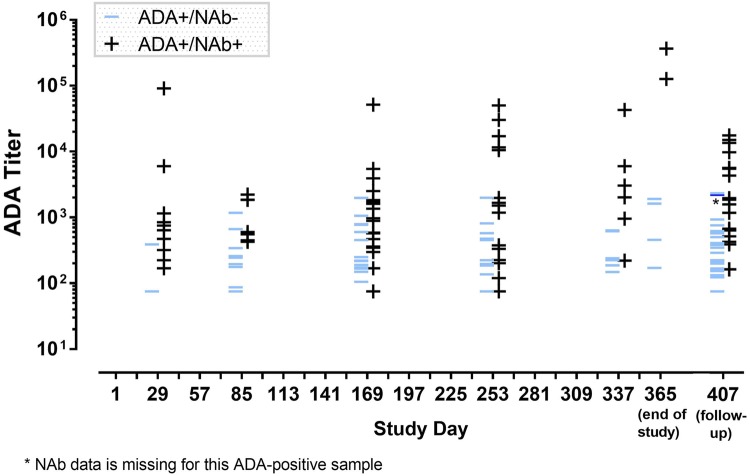
ADAs were detected in 44.0% (155/352) of bococizumab-treated subjects, and 27.0% also developed neutralizing antibodies (NAbs). Median ADA and NAb titers ranged from 276 to 526 and 8 to 12 over the course of the study, respectively. From 155 ADA-positive subjects tested for cross-reactivity, one (0.6%) subject showed weak cross-reactivity to both alirocumab and evolocumab. This cross-reactivity signal was transient (from Days 337 to 373) and undetectable at the last ADA-positive timepoint (Day 407).
A novel, single-assay approach was validated to assess the potential cross-reactivity of anti-bococizumab antibodies to alirocumab and evolocumab. In subjects who developed ADAs to bococizumab, the likelihood of clinically relevant cross-reactivity to marketed anti-PCSK9 mAbs is remote, based on the low frequency of cross-reactivity observed, which was weak in signal inhibition and transient in nature.
The SPIRE-HR study is registered on ClinicalTrials.gov under the identifier NCT01968954.
在 SPIRE 降脂试验中,超过 40%的受试者体内检测到了针对 bococizumab 的抗药物抗体(ADA)。使用单一检测方法,研究了抗 bococizumab 抗体与其他已批准的抗前蛋白转化酶枯草溶菌素/柯萨奇蛋白酶 9(PCSK9)单克隆抗体(mAb)之间发生交叉反应的风险。
在为期 52 周的 SPIRE-HR 研究中评估了 bococizumab 的免疫原性。对来自 155 名 ADA 阳性受试者的每个 ADA 阳性最高滴度样本(n=155)进行了体外检测,以评估其对阿利西尤单抗和依洛尤单抗的交叉反应性,使用了一种新型 ADA 检测方法。使用重组 PCSK9 作为替代的交叉反应性阳性对照,对 bococizumab ADA 检测中的每个药物的其他特异性分层进行了验证。如果最高 ADA 滴度样本显示出交叉反应性,则对该受试者的其他样本进行分析。通过阿利西尤单抗或依洛尤单抗抑制样本信号的能力大于或等于交叉反应性临界点来确定交叉反应性。
在接受 bococizumab 治疗的 352 名受试者中,有 44.0%(155/352)检测到 ADA,27.0%的受试者还产生了中和抗体(NAb)。在研究过程中,ADA 和 NAb 的中位数滴度分别为 276 至 526 和 8 至 12。在对 155 名接受交叉反应性检测的 ADA 阳性受试者中,有 1 名(0.6%)受试者对阿利西尤单抗和依洛尤单抗表现出弱交叉反应性。这种交叉反应信号是短暂的(从第 337 天到第 373 天),并且在最后一个 ADA 阳性时间点(第 407 天)无法检测到。
使用一种新型的单一检测方法,对抗 bococizumab 抗体与阿利西尤单抗和依洛尤单抗的潜在交叉反应性进行了评估。在对 bococizumab 产生 ADA 的受试者中,基于观察到的低频率交叉反应性,对已上市的抗 PCSK9 mAb 发生临床相关交叉反应的可能性较小,因为信号抑制的交叉反应性较弱,且性质短暂。
SPIRE-HR 研究在 ClinicalTrials.gov 上注册,标识符为 NCT01968954。