Department of Medical Oncology, University Medical Center Groningen, University of Groningen, The Netherlands.
European Institute for the Biology of Ageing (ERIBA), University Medical Center Groningen, University of Groningen, The Netherlands.
Mol Oncol. 2019 Nov;13(11):2422-2440. doi: 10.1002/1878-0261.12573. Epub 2019 Oct 21.
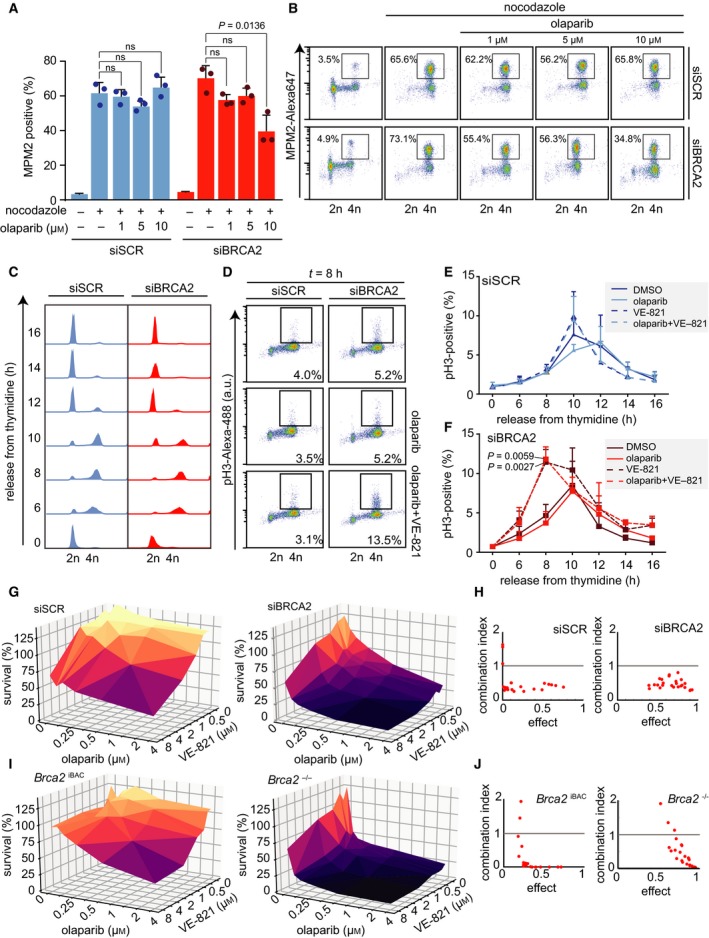
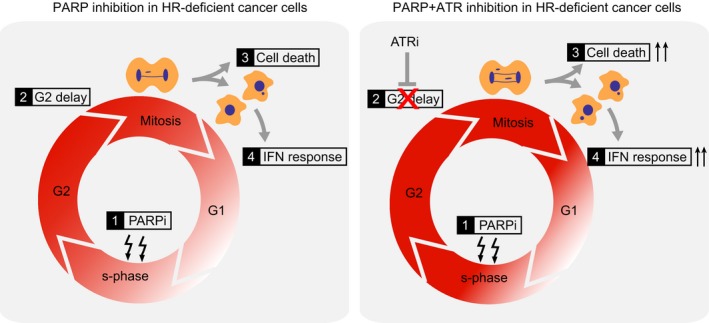
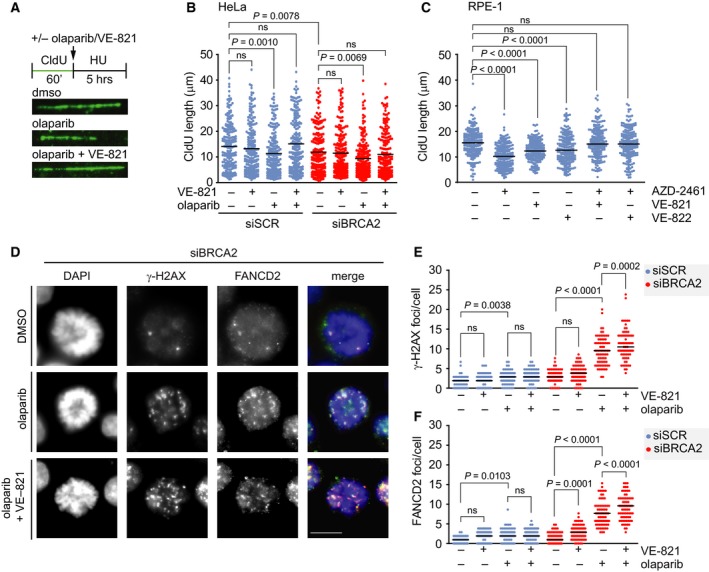
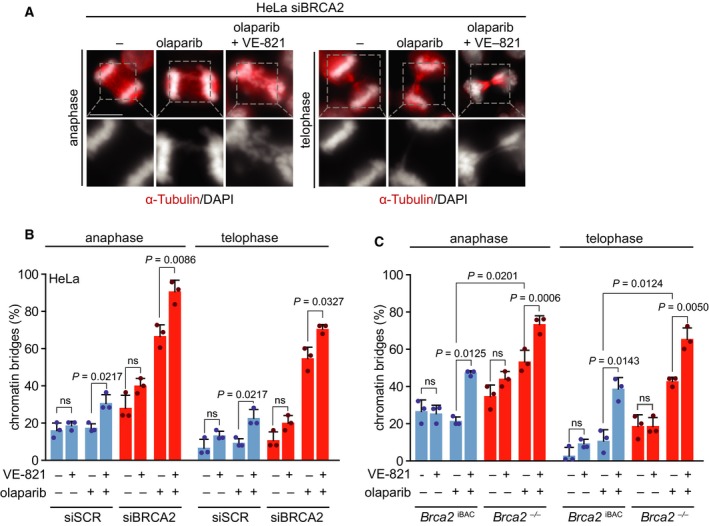
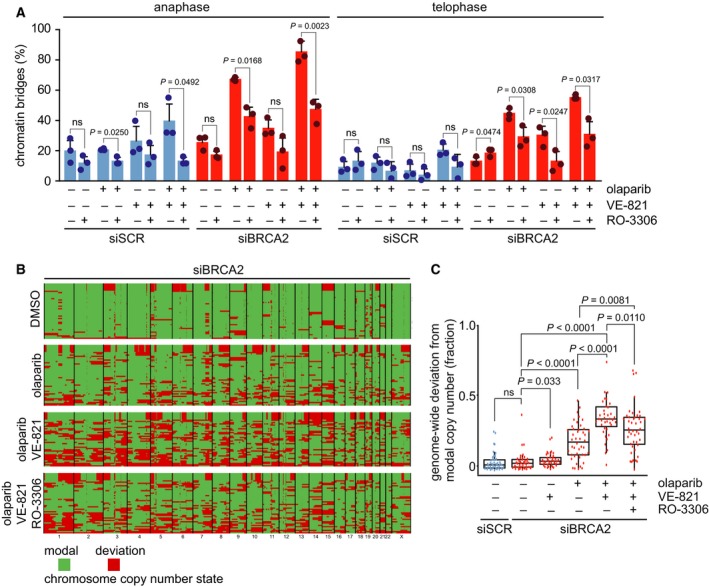
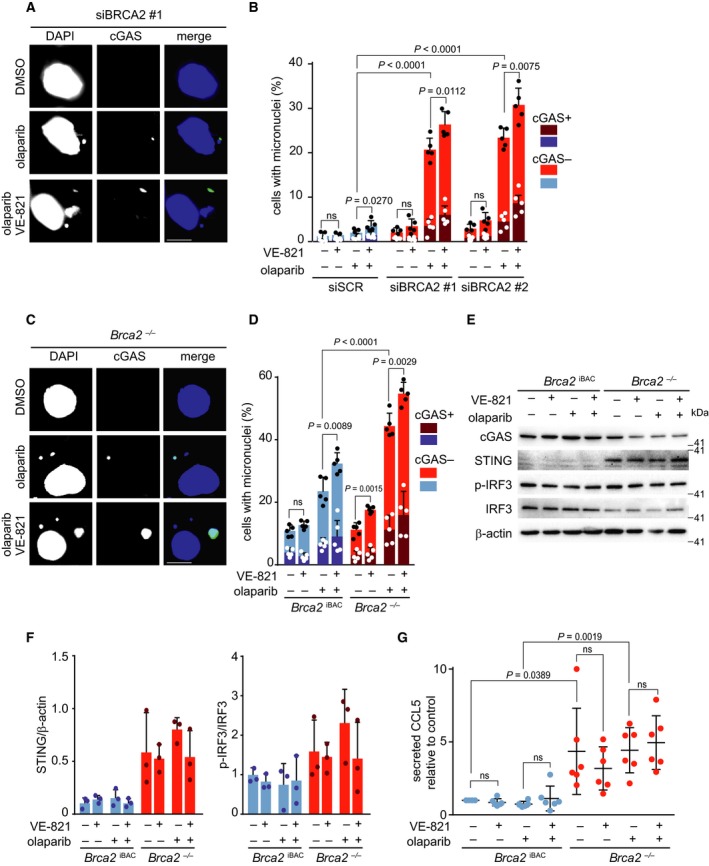
Poly(ADP-ribose) polymerase (PARP) inhibitors are selectively cytotoxic in cancer cells with defects in homologous recombination (HR) (e.g., due to BRCA1/2 mutations). However, not all HR-deficient tumors efficiently respond to PARP inhibition and often acquire resistance. It is therefore important to uncover how PARP inhibitors induce cytotoxicity and develop combination strategies to potentiate PARP inhibitor efficacy in HR-deficient tumors. In this study, we found that forced mitotic entry upon ATR inhibition potentiates cytotoxic effects of PARP inhibition using olaparib in BRCA2-depleted and Brca2 knockout cancer cell line models. Single DNA fiber analysis showed that ATR inhibition does not exacerbate replication fork degradation. Instead, we find ATR inhibitors accelerate mitotic entry, resulting in the formation of chromatin bridges and lagging chromosomes. Furthermore, using genome-wide single-cell sequencing, we show that ATR inhibition enhances genomic instability of olaparib-treated BRCA2-depleted cells. Inhibition of CDK1 to delay mitotic entry mitigated mitotic aberrancies and genomic instability upon ATR inhibition, underscoring the role of ATR in coordinating proper cell cycle timing in situations of DNA damage. Additionally, we show that olaparib treatment leads to increased numbers of micronuclei, which is accompanied by a cGAS/STING-associated inflammatory response in BRCA2-deficient cells. ATR inhibition further increased the numbers of cGAS-positive micronuclei and the extent of cytokine production in olaparib-treated BRCA2-deficient cancer cells. Altogether, we show that ATR inhibition induces premature mitotic entry and mediates synergistic cytotoxicity with PARP inhibition in HR-deficient cancer cells, which involves enhanced genomic instability and inflammatory signaling.
聚(ADP-核糖)聚合酶(PARP)抑制剂在同源重组(HR)缺陷的癌细胞中具有选择性细胞毒性(例如,由于 BRCA1/2 突变)。然而,并非所有 HR 缺陷的肿瘤都能有效地对 PARP 抑制产生反应,并且常常会产生耐药性。因此,揭示 PARP 抑制剂如何诱导细胞毒性并开发联合策略以增强 HR 缺陷肿瘤中 PARP 抑制剂的疗效非常重要。在这项研究中,我们发现,ATR 抑制后强制有丝分裂进入会增强 BRCA2 耗尽和 Brca2 敲除癌细胞系模型中奥拉帕利的 PARP 抑制的细胞毒性作用。单 DNA 纤维分析表明,ATR 抑制不会加剧复制叉降解。相反,我们发现 ATR 抑制剂会加速有丝分裂进入,导致染色质桥和滞后染色体的形成。此外,使用全基因组单细胞测序,我们表明 ATR 抑制增强了奥拉帕利处理的 BRCA2 耗尽细胞的基因组不稳定性。抑制 CDK1 以延迟有丝分裂进入可减轻 ATR 抑制后的有丝分裂异常和基因组不稳定性,突出了 ATR 在协调 DNA 损伤情况下细胞周期时间的适当性中的作用。此外,我们表明奥拉帕利治疗会导致微核数量增加,这伴随着 BRCA2 缺陷细胞中 cGAS/STING 相关的炎症反应。ATR 抑制进一步增加了奥拉帕利处理的 BRCA2 缺陷癌细胞中 cGAS 阳性微核的数量和细胞因子产生的程度。总之,我们表明 ATR 抑制诱导过早的有丝分裂进入,并在 HR 缺陷的癌细胞中与 PARP 抑制协同产生细胞毒性,这涉及增强的基因组不稳定性和炎症信号。