Integrative Research Laboratory of Breast Cancer, The Research Centre of Integrative Medicine, Discipline of Integrated Chinese and Western Medicine & The Second Affiliated Hospital of Guangzhou University of Chinese Medicine, Guangzhou, 510006 Guangdong, China.
Guangdong Provincial Key Laboratory of Clinical Research on Traditional Chinese Medicine Syndrome, Guangdong Provincial Academy of Chinese Medical Sciences, Guangdong Provincial Hospital of Chinese Medicine, Guangzhou, 510006 Guangdong, China.
Oxid Med Cell Longev. 2019 Aug 19;2019:8781690. doi: 10.1155/2019/8781690. eCollection 2019.
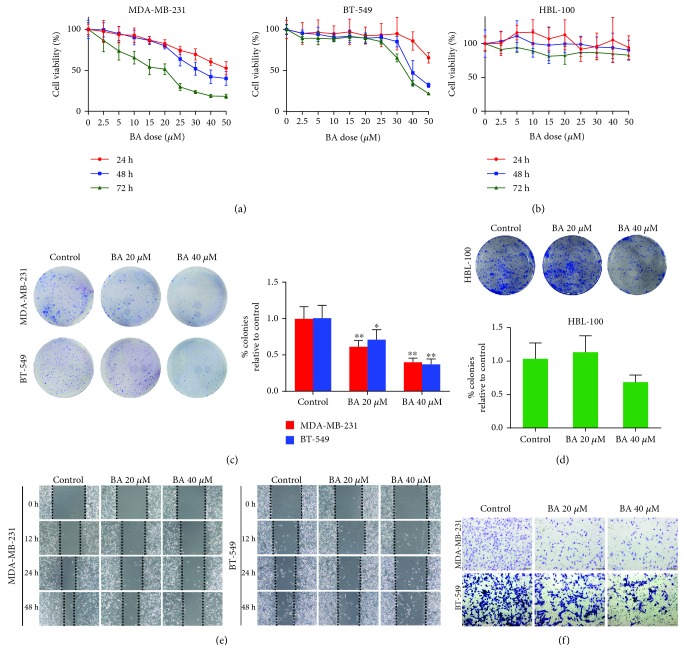
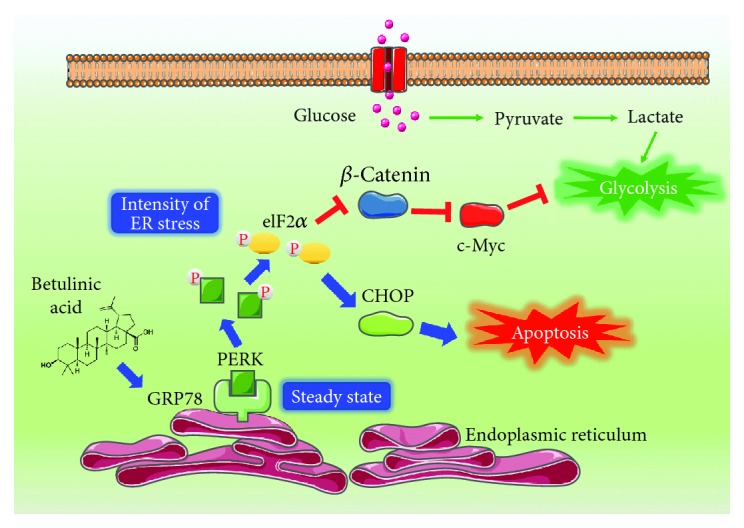
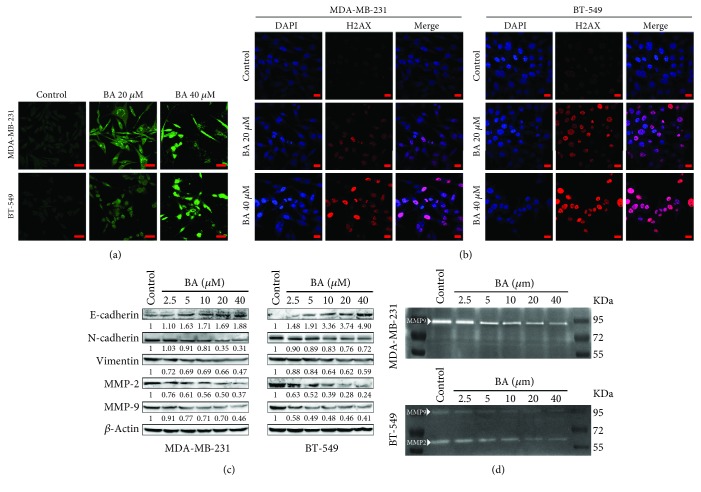
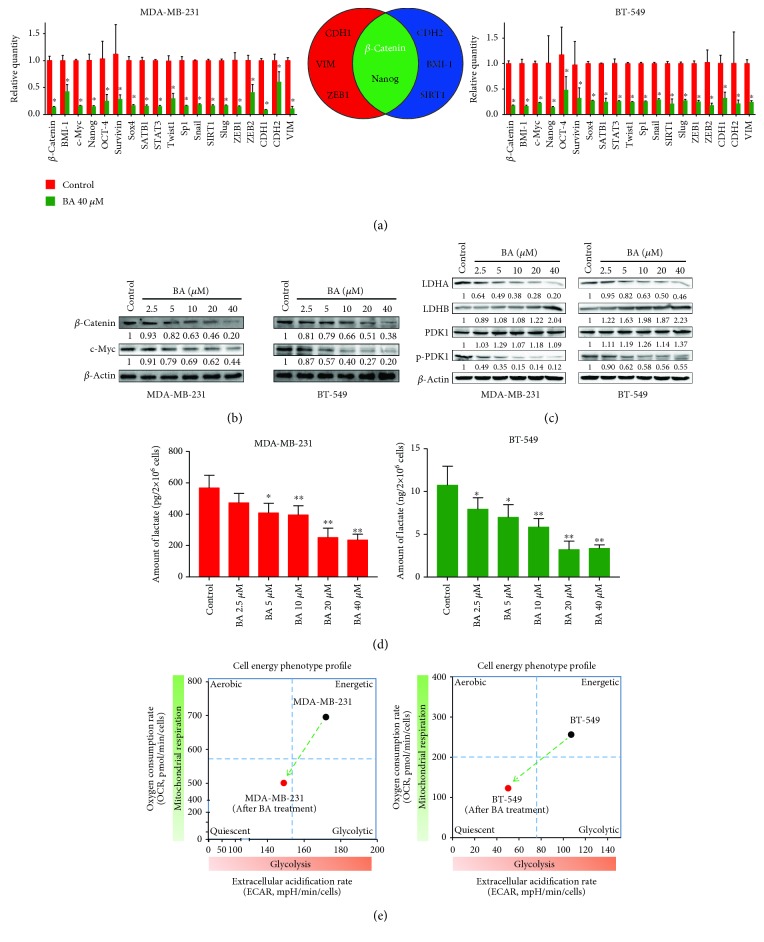
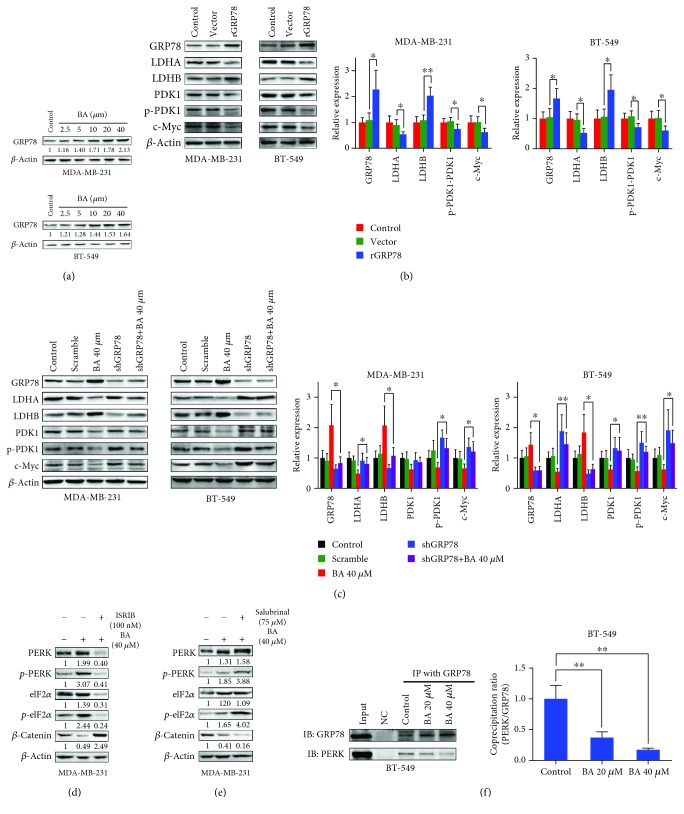
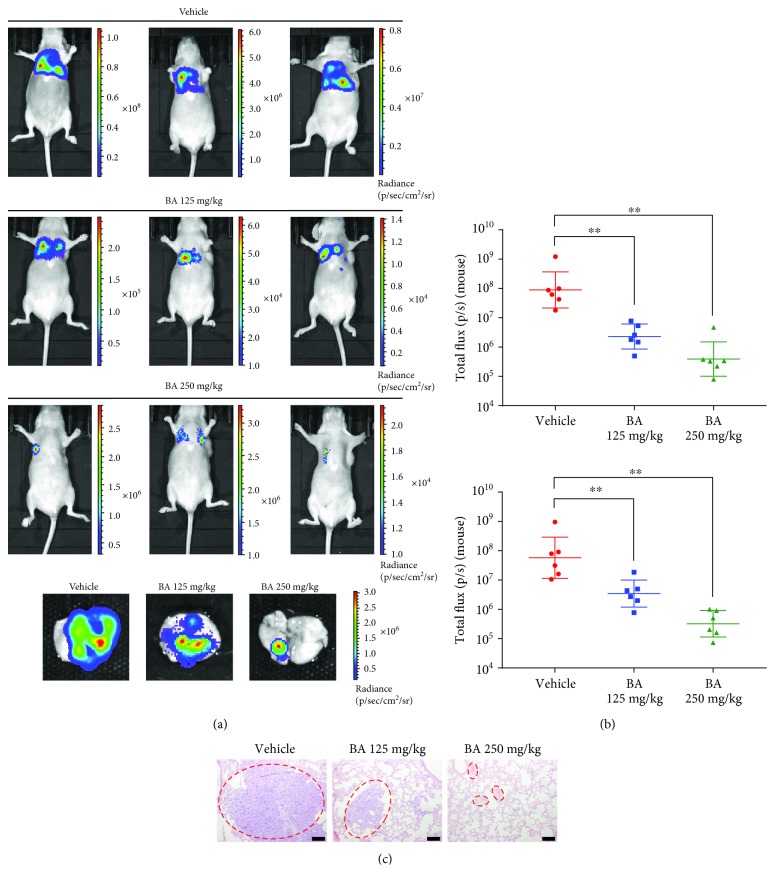
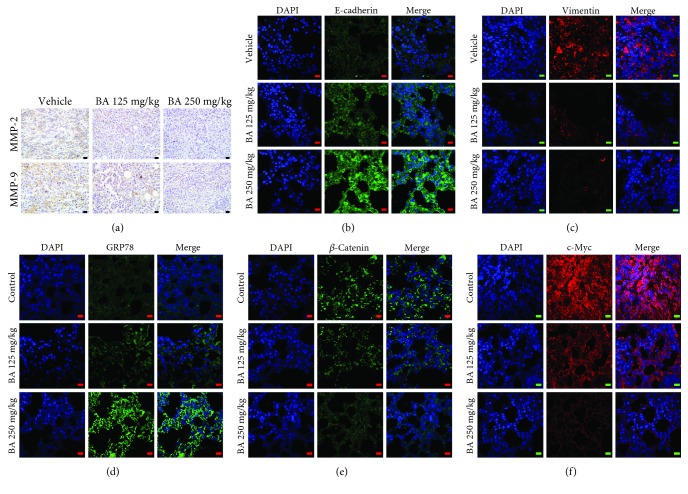
Targeting aberrant metabolism is a promising strategy for inhibiting cancer growth and metastasis. Research is now geared towards investigating the inhibition of glycolysis for anticancer drug development. Betulinic acid (BA) has demonstrated potent anticancer activities in multiple malignancies. However, its regulatory effects on glycolysis and the underlying molecular mechanisms are still unclear. BA inhibited invasion and migration of highly aggressive breast cancer cells. Moreover, BA could suppress aerobic glycolysis of breast cancer cells presenting as a reduction of lactate production, quiescent energy phenotype transition, and downregulation of aerobic glycolysis-related proteins. In this study, glucose-regulated protein 78 (GRP78) was also identified as the molecular target of BA in inhibiting aerobic glycolysis. BA treatment led to GRP78 overexpression, and GRP78 knockdown abrogated the inhibitory effect of BA on glycolysis. Further studies demonstrated that overexpressed GRP78 activated the endoplasmic reticulum (ER) stress sensor PERK. Subsequent phosphorylation of eIF2 led to the inhibition of -catenin expression, which resulted in the inhibition of c-Myc-mediated glycolysis. Coimmunoprecipitation assay revealed that BA interrupted the binding between GRP78 and PERK, thereby initiating the glycolysis inhibition cascade. Finally, the lung colonization model validated that BA inhibited breast cancer metastasis , as well as suppressed the expression of aerobic glycolysis-related proteins. In conclusion, our study not only provided a promising drug for aerobic glycolysis inhibition but also revealed that GRP78 is a novel molecular link between glycolytic metabolism and ER stress during tumor metastasis.
靶向异常代谢是抑制癌症生长和转移的一种有前途的策略。目前的研究方向是研究抑制糖酵解以开发抗癌药物。白桦酸(BA)在多种恶性肿瘤中表现出很强的抗癌活性。然而,其对糖酵解的调节作用及其潜在的分子机制尚不清楚。BA 抑制了高侵袭性乳腺癌细胞的侵袭和迁移。此外,BA 可以抑制乳腺癌细胞的有氧糖酵解,表现为乳酸生成减少、静止能量表型转变和有氧糖酵解相关蛋白下调。在这项研究中,葡萄糖调节蛋白 78(GRP78)也被确定为 BA 抑制有氧糖酵解的分子靶点。BA 处理导致 GRP78 过表达,而 GRP78 敲低则消除了 BA 对糖酵解的抑制作用。进一步的研究表明,过表达的 GRP78 激活内质网(ER)应激传感器 PERK。随后 eIF2 的磷酸化导致 -连环蛋白表达抑制,从而抑制 c-Myc 介导的糖酵解。免疫共沉淀实验表明,BA 打断了 GRP78 和 PERK 之间的结合,从而启动了糖酵解抑制级联反应。最后,肺定植模型验证了 BA 抑制乳腺癌转移,同时抑制了有氧糖酵解相关蛋白的表达。总之,我们的研究不仅为抑制有氧糖酵解提供了一种有前途的药物,还揭示了 GRP78 是肿瘤转移过程中糖酵解代谢和 ER 应激之间的一个新的分子联系。