Sajesh Babu V, On Ngoc H, Omar Refaat, Alrushaid Samaa, Kopec Brian M, Wang Wei-Guang, Sun Han-Dong, Lillico Ryan, Lakowski Ted M, Siahaan Teruna J, Davies Neal M, Puno Pema-Tenzin, Vanan Magimairajan Issai, Miller Donald W
Research Institute in Oncology and Hematology, University of Manitoba, Winnipeg, MB R3E 0V9, Canada.
Department of Pharmacology and Therapeutics, University of Manitoba, Winnipeg, MB R3E 0T6, Canada.
Pharmaceutics. 2019 Sep 17;11(9):481. doi: 10.3390/pharmaceutics11090481.
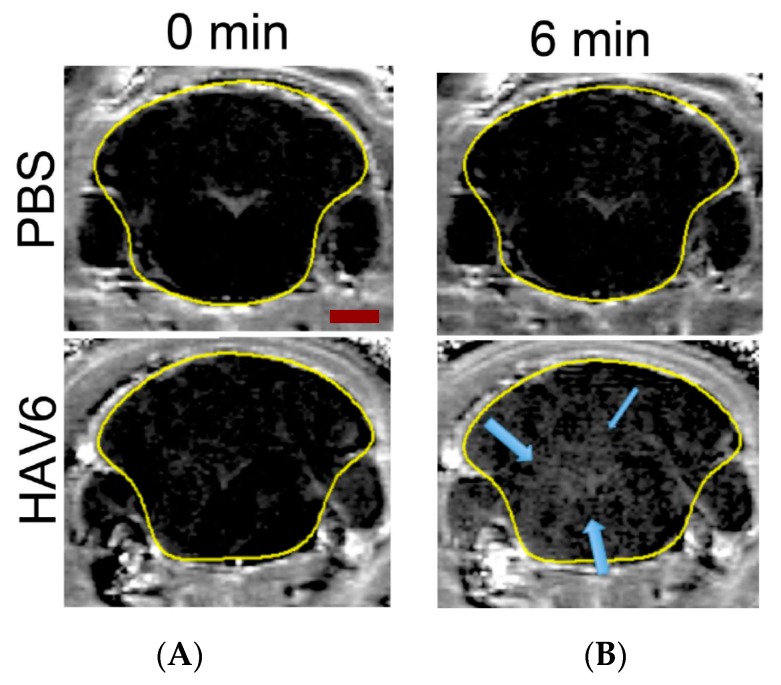
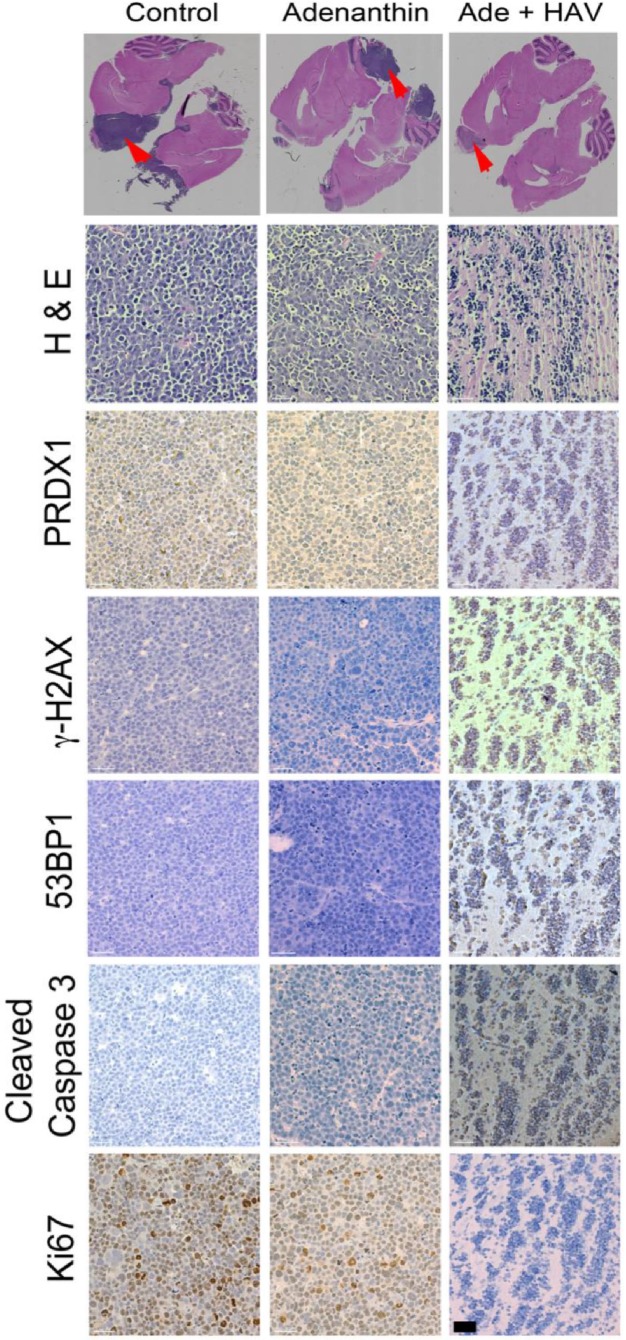
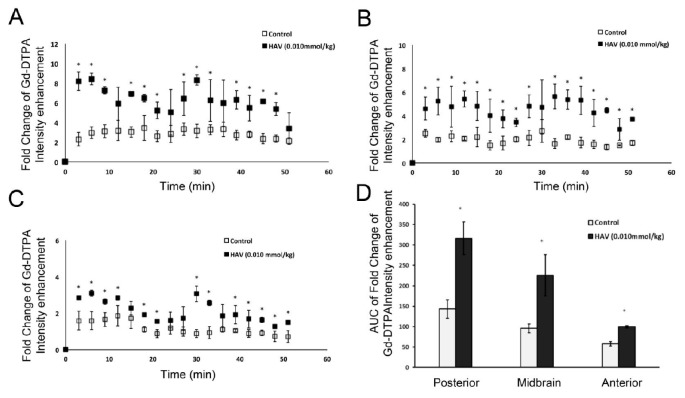
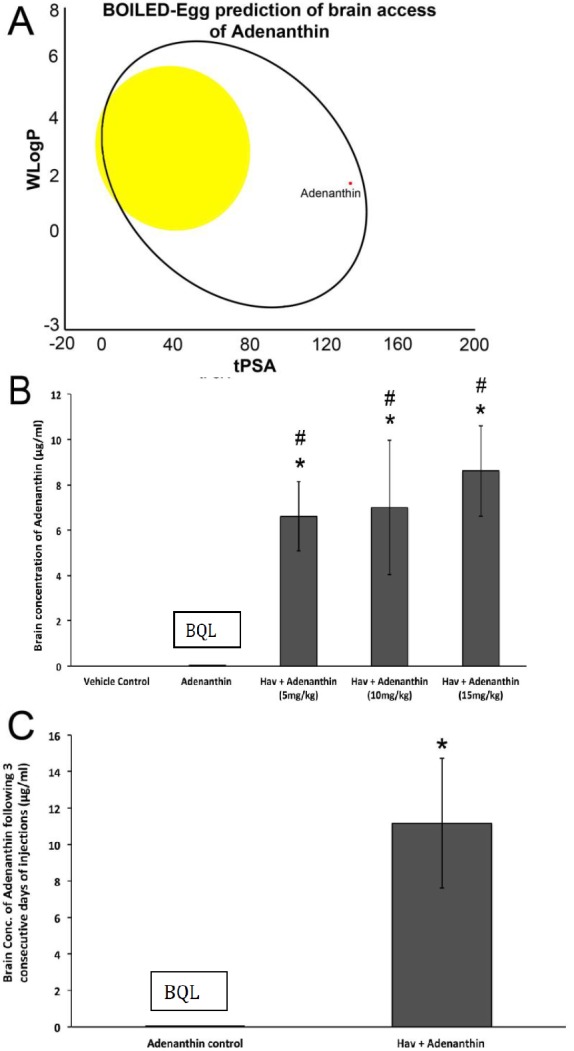
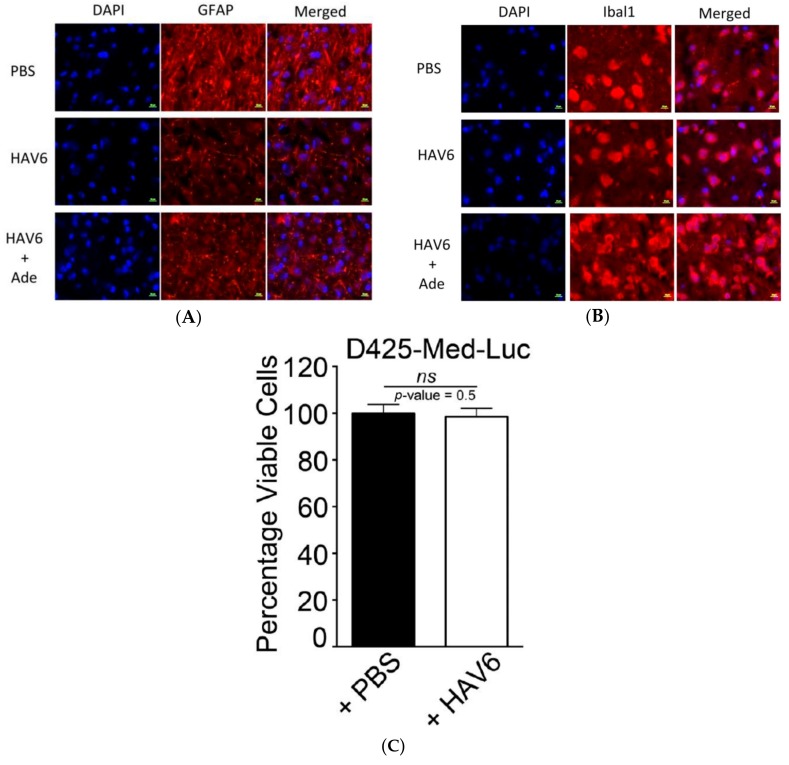
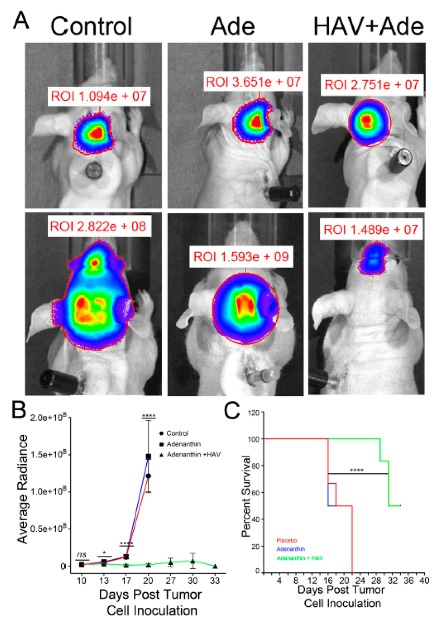
The blood-brain barrier (BBB) poses a major obstacle by preventing potential therapeutic agents from reaching their intended brain targets at sufficient concentrations. While transient disruption of the BBB has been used to enhance chemotherapeutic efficacy in treating brain tumors, limitations in terms of magnitude and duration of BBB disruption exist. In the present study, the preliminary safety and efficacy profile of HAV6, a peptide that binds to the external domains of cadherin, to transiently open the BBB and improve the delivery of a therapeutic agent, was evaluated in a murine brain tumor model. Transient opening of the BBB in response to HAV6 peptide administration was quantitatively characterized using both a gadolinium magnetic resonance imaging (MRI) contrast agent and adenanthin (Ade), the intended therapeutic agent. The effects of HAV6 peptide on BBB integrity and the efficacy of concurrent administration of HAV6 peptide and the small molecule inhibitor, Ade, in the growth and progression of an orthotopic medulloblastoma mouse model using human D425 tumor cells was examined. Systemic administration of HAV6 peptide caused transient, reversible disruption of BBB in mice. Increases in BBB permeability produced by HAV6 were rapid in onset and observed in all regions of the brain examined. Concurrent administration of HAV6 peptide with Ade, a BBB impermeable inhibitor of Peroxiredoxin-1, caused reduced tumor growth and increased survival in mice bearing medulloblastoma. The rapid onset and transient nature of the BBB modulation produced with the HAV6 peptide along with its uniform disruption and biocompatibility is well-suited for CNS drug delivery applications, especially in the treatment of brain tumors.
血脑屏障(BBB)是一个主要障碍,它会阻止潜在治疗药物以足够的浓度到达其预期的脑靶点。虽然血脑屏障的短暂破坏已被用于提高治疗脑肿瘤的化疗疗效,但在血脑屏障破坏的程度和持续时间方面存在局限性。在本研究中,在小鼠脑肿瘤模型中评估了HAV6(一种与钙黏蛋白外部结构域结合的肽)的初步安全性和有效性,HAV6可短暂打开血脑屏障并改善治疗药物的递送。使用钆磁共振成像(MRI)造影剂和预期的治疗药物腺嘌呤(Ade)对给予HAV6肽后血脑屏障的短暂开放进行了定量表征。研究了HAV6肽对血脑屏障完整性的影响,以及在使用人D425肿瘤细胞的原位髓母细胞瘤小鼠模型中,同时给予HAV6肽和小分子抑制剂Ade对肿瘤生长和进展的疗效。全身给予HAV6肽会导致小鼠血脑屏障短暂、可逆的破坏。HAV6引起的血脑屏障通透性增加起效迅速,在所检查的脑的所有区域均有观察到。将HAV6肽与Ade(一种血脑屏障不透性的过氧化物还原酶-1抑制剂)同时给药,可使患有髓母细胞瘤的小鼠肿瘤生长减缓并延长生存期。HAV6肽产生的血脑屏障调节起效迅速且具有短暂性,同时具有均匀的破坏作用和生物相容性,非常适合中枢神经系统药物递送应用,尤其是在脑肿瘤治疗中。