Department of Hepatology, Qilu Hospital of Shandong University, Wenhuaxi Road 107#, Jinan, 250012, China.
Institute of Hepatology, Shandong University, Wenhuaxi Road 107#, Jinan, 250012, China.
Virol J. 2019 Sep 18;16(1):115. doi: 10.1186/s12985-019-1219-4.
Hepatitis B virus-related decompensated cirrhosis is difficult to cure but has a high readmission rate due to multiple complications. Our aim was to investigate the diagnostic potential value of plasma diamine oxidase (DAO) for 6-month readmission of patients with HBV-related decompensated cirrhosis.
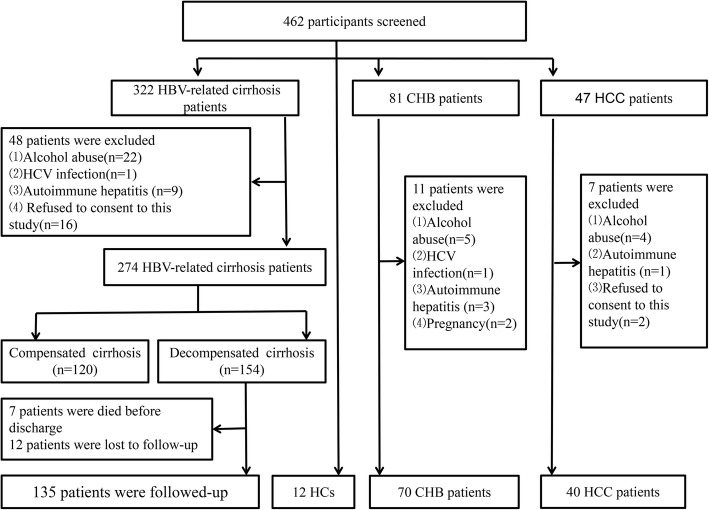
A total of 135 patients with HBV-related decompensated cirrhosis were prospectively collected at the onset of discharge of hospital, and then were followed up for at least 6 months with the readmission as the primary outcome. The plasma DAO level was measured using enzyme linked immunosorbent assay. In addition, 120 age and sex matched patients with HBV-related compensated cirrhosis were included as controls.
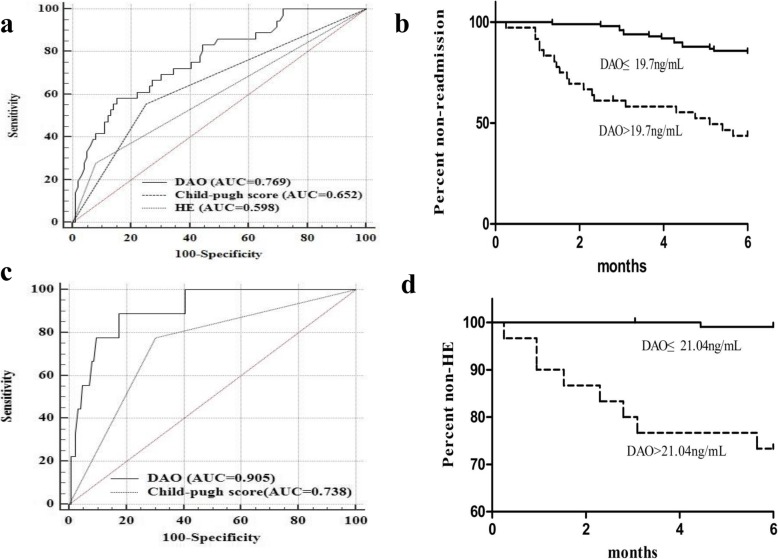
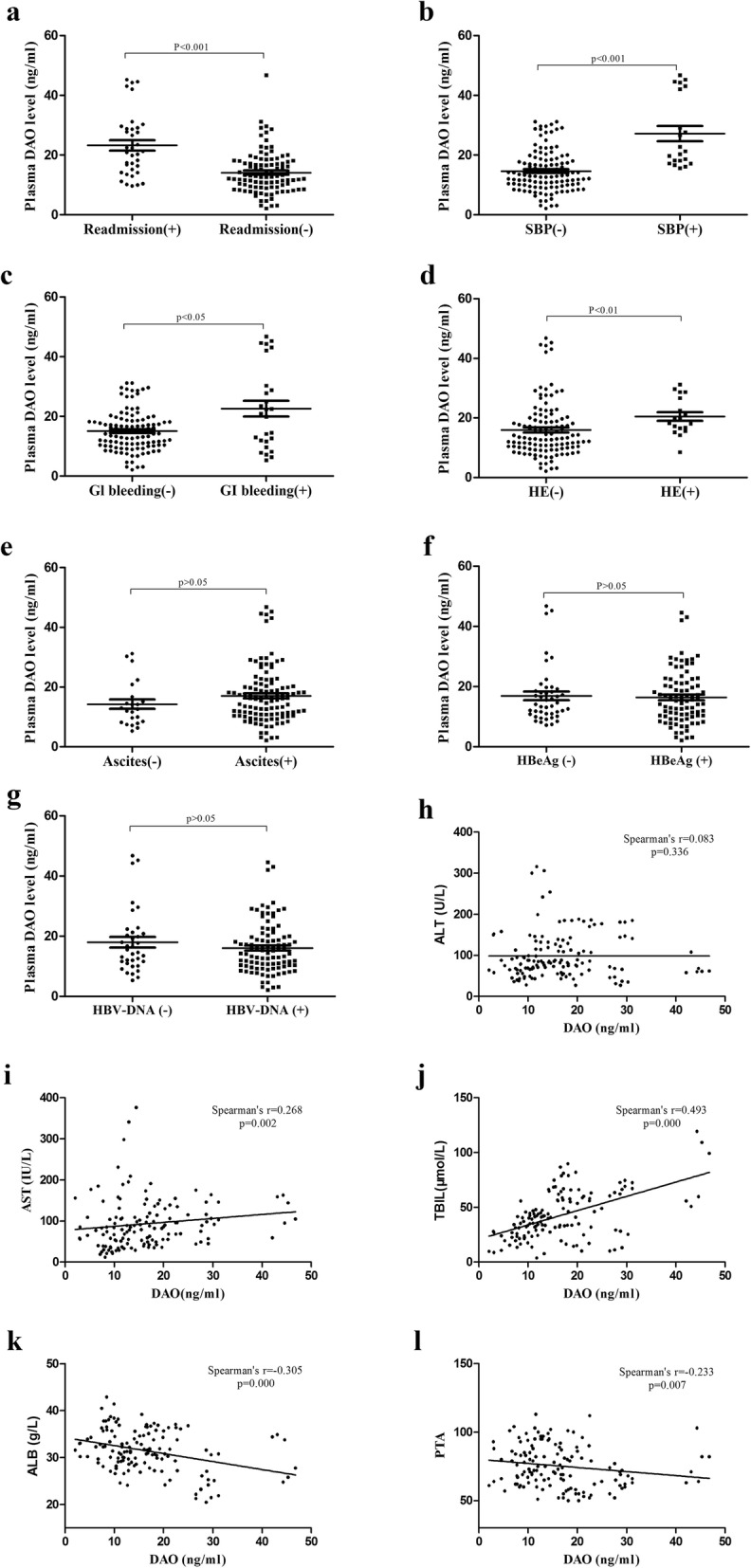
A total of 36 patients (36.7%) with decompensated cirrhosis admitted to hospital during the 6-month follow up. The plasma DAO level of readmission group [21.1 (14.5; 29.0) ng/ml] was significantly higher than that in the non-readmission group [12.7 (9.3; 18.0) ng/mL, P < 0.001]. Multivariate analysis showed that the plasma DAO level (HR = 1.102, P < 0.05) and hepatic encephalopathy (HE) (HR = 5.018, P < 0.05) were independent factors for 6-month readmission of decompensated cirrhosis. DAO level showed higher area under the curve of receiver operating characteristic (AUROC) than HE (0.769 vs. 0.598, P < 0.05) and Child-Pugh-Turcotte (CPT) score (0.769 vs. 0.652, P < 0.05) for predicting 6-month readmission rate, with the best cut-off value as 19.7 ng/mL. Furthermore, plasma DAO level (HR = 1.184, P < 0.05) was an independent factor and has the higher AUROC than CPT score for the onset of recurrent HE (0.905 vs. 0.738, P < 0.05) during the 6-month follow up.
Plasma DAO level > 19.7 ng/mL predicts high rate of 6-month readmission in patients with HBV-related decompensated cirrhosis.
乙型肝炎病毒(HBV)相关失代偿性肝硬化难以治愈,但由于多种并发症,其再入院率较高。本研究旨在探讨血浆二胺氧化酶(DAO)对 HBV 相关失代偿性肝硬化患者 6 个月再入院的诊断价值。
前瞻性收集 135 例 HBV 相关失代偿性肝硬化患者,在出院时采集其血浆样本,然后进行至少 6 个月的随访,以再入院为主要结局。采用酶联免疫吸附法检测血浆 DAO 水平。此外,还纳入了 120 例年龄和性别相匹配的 HBV 相关代偿性肝硬化患者作为对照组。
在 6 个月的随访期间,共有 36 例(36.7%)失代偿性肝硬化患者再次入院。再入院组患者的血浆 DAO 水平[21.1(14.5;29.0)ng/ml]明显高于未再入院组[12.7(9.3;18.0)ng/ml,P<0.001]。多因素分析显示,血浆 DAO 水平(HR=1.102,P<0.05)和肝性脑病(HE)(HR=5.018,P<0.05)是失代偿性肝硬化 6 个月再入院的独立因素。DAO 水平预测 6 个月再入院率的受试者工作特征(ROC)曲线下面积(AUC)高于 HE(0.769 比 0.598,P<0.05)和 Child-Pugh-Turcotte(CPT)评分(0.769 比 0.652,P<0.05),最佳截断值为 19.7ng/ml。此外,血浆 DAO 水平(HR=1.184,P<0.05)是独立因素,其预测 6 个月内复发性 HE 发作的 AUC 高于 CPT 评分(0.905 比 0.738,P<0.05)。
血浆 DAO 水平>19.7ng/ml 可预测 HBV 相关失代偿性肝硬化患者 6 个月内再入院率较高。