Graduate Institute of Clinical Medicine, College of Medicine, Kaohsiung Medical University, Kaohsiung 807, Taiwan.
School of Medicine, College of Medicine, Kaohsiung Medical University, Kaohsiung 807, Taiwan.
Medicina (Kaunas). 2019 Sep 13;55(9):589. doi: 10.3390/medicina55090589.
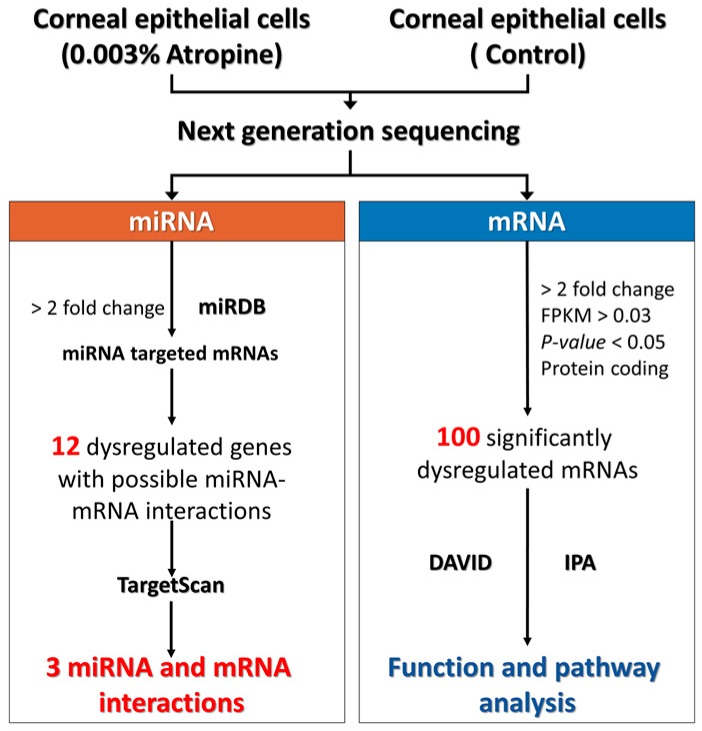
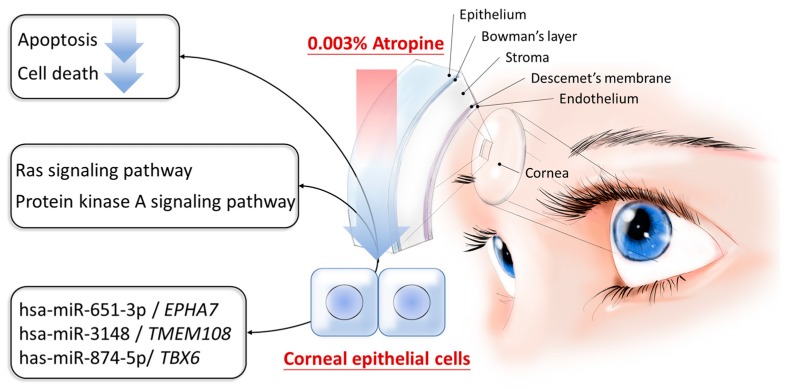
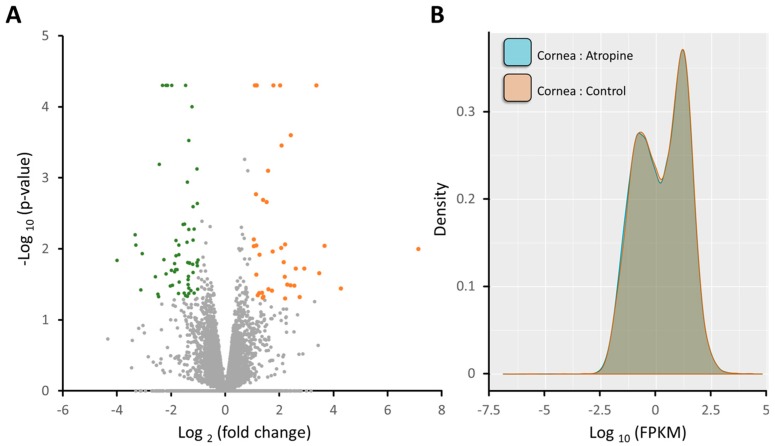
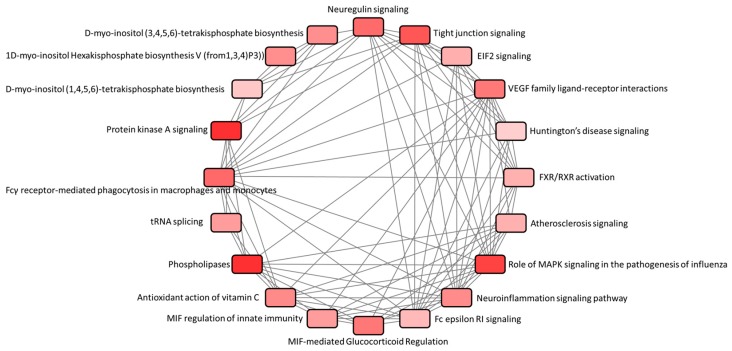
Atropine is a nonselective muscarinic antagonist which has been used to prevent worsening of myopia in children. Different concentrations of atropine were used for myopia, ranging from 0.01% to 1.0%. However, there are still potential toxicity of different doses of atropine to the cornea. Here, we present a study of investigating novel genes potentially involved in the effects of very low dose atropine treatment (0.003%) on corneal epithelial cells using next-generation sequencing (NGS) and bioinformatics approaches. Human corneal epithelial cells were treated with 0.003% atropine, cultured until confluence, and RNA extracted for differential expression profiling of mRNA and microRNA (miRNA) between control and atropine-treated corneal epithelial cells. The functional enrichment analysis for differentially expressed genes was performed using two bioinformatics databases, including Database for Annotation, Visualization and Integrated Discovery (DAVID) and Ingenuity Pathway Analysis (IPA). In addition, potential miRNA-mRNA interactions involved in atropine-treated corneal epithelial cells were predicted and validated using different miRNA target prediction databases. Our results showed 0.003% atropine might suppress the apoptosis of corneal epithelial cells, potentially through Ras and protein kinase A signaling pathways. We also validated the possible miRNA regulations by using TargetScan and miRDB databases. Hsa-miR-651-3p-, hsa-miR-3148- and hsa-miR-874-5p- were validated as possible miRNA regulations involved in corneal epithelial cells treated with 0.003% atropine. These findings may contribute novel insights into therapeutic strategies for treating cornea with 0.003% atropine.
阿托品是一种非选择性毒蕈碱拮抗剂,已被用于预防儿童近视的恶化。不同浓度的阿托品被用于近视治疗,范围从 0.01%到 1.0%。然而,不同剂量的阿托品对角膜仍存在潜在的毒性。在这里,我们使用下一代测序(NGS)和生物信息学方法,研究了一种新型基因,这些基因可能参与非常低剂量阿托品(0.003%)治疗对角膜上皮细胞的作用。用人角膜上皮细胞用 0.003%阿托品处理,培养至汇合,提取 RNA,用于对照和阿托品处理的角膜上皮细胞之间的 mRNA 和 microRNA(miRNA)的差异表达谱分析。使用两个生物信息学数据库,包括数据库注释、可视化和综合发现(DAVID)和Ingenuity 通路分析(IPA),对差异表达基因进行功能富集分析。此外,使用不同的 miRNA 靶预测数据库预测和验证了参与阿托品处理的角膜上皮细胞的潜在 miRNA-mRNA 相互作用。我们的结果表明,0.003%的阿托品可能通过 Ras 和蛋白激酶 A 信号通路抑制角膜上皮细胞的凋亡。我们还使用 TargetScan 和 miRDB 数据库验证了可能的 miRNA 调节作用。hsa-miR-651-3p、hsa-miR-3148-和 hsa-miR-874-5p 被验证为可能参与 0.003%阿托品处理的角膜上皮细胞的 miRNA 调节作用。这些发现可能为用 0.003%阿托品治疗角膜提供新的治疗策略。