Institute of Experimental Immunology, University of Zürich, Zürich, Switzerland.
Institute of Pharmacology, University of Bern, Bern, Switzerland.
Cell Death Dis. 2019 Sep 20;10(10):700. doi: 10.1038/s41419-019-1938-x.
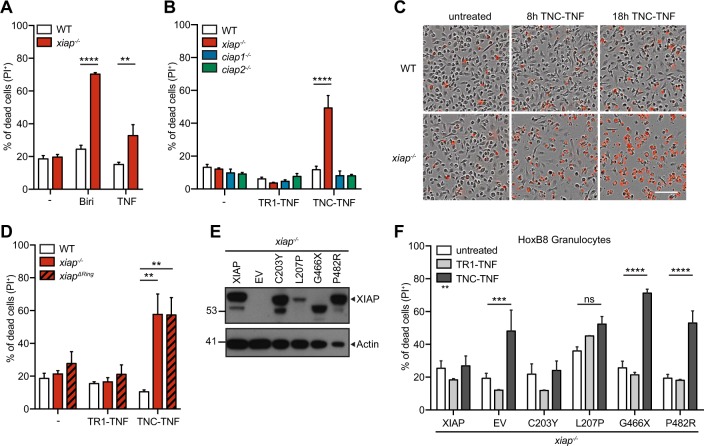
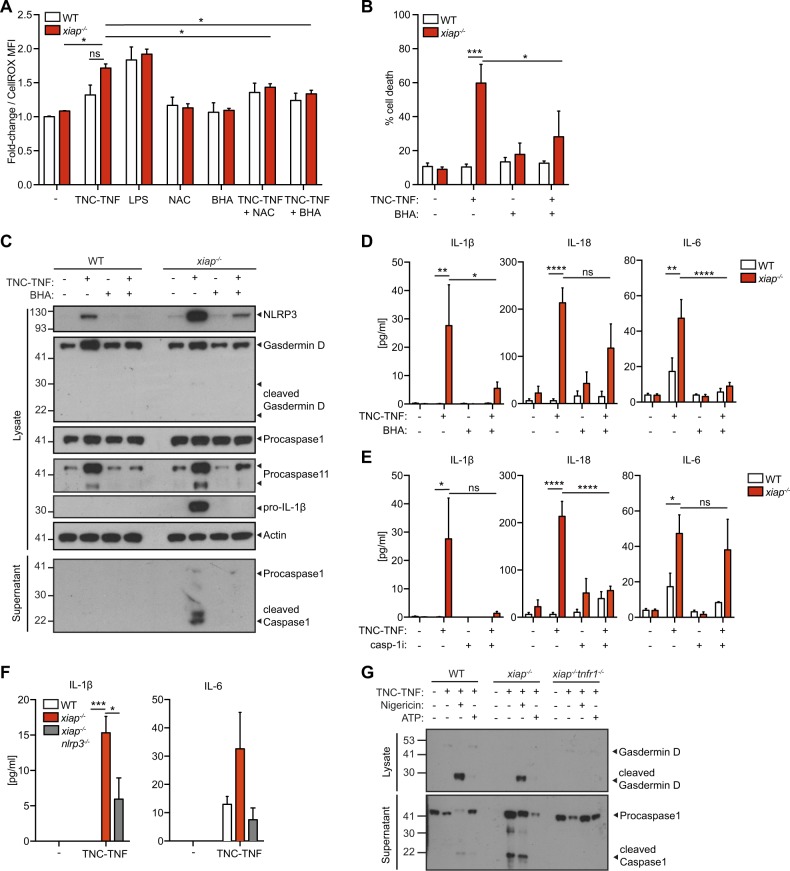
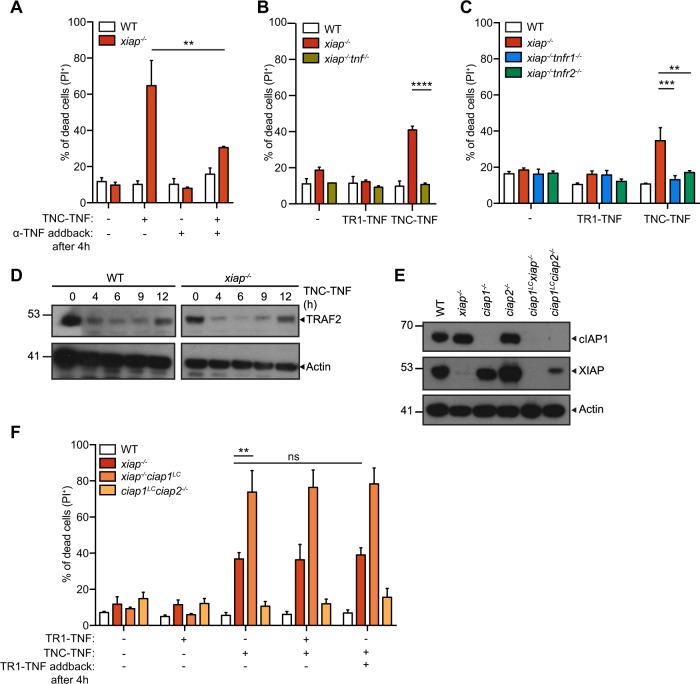
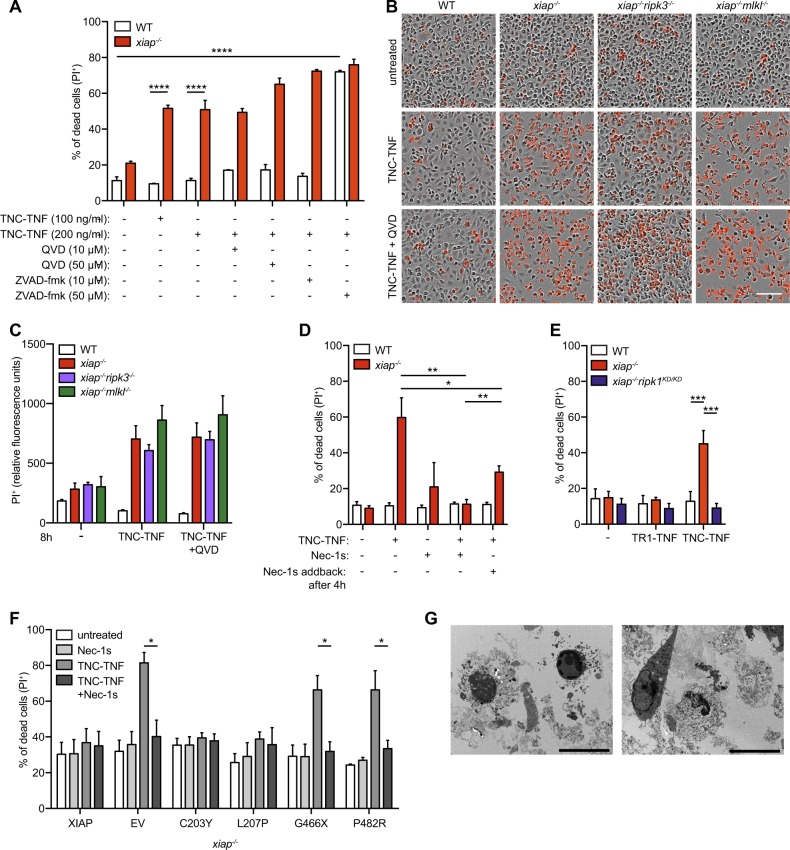
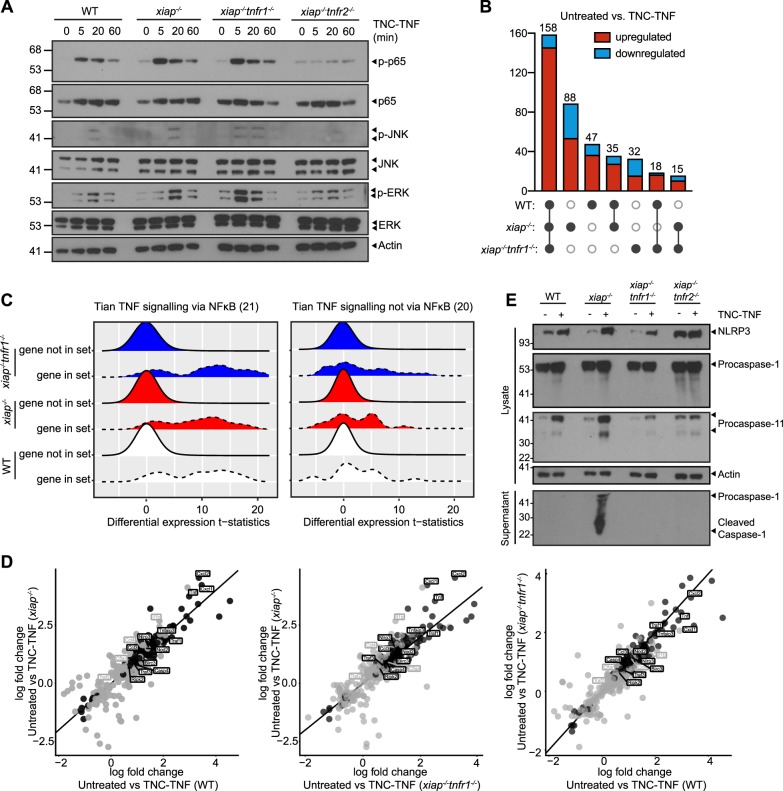
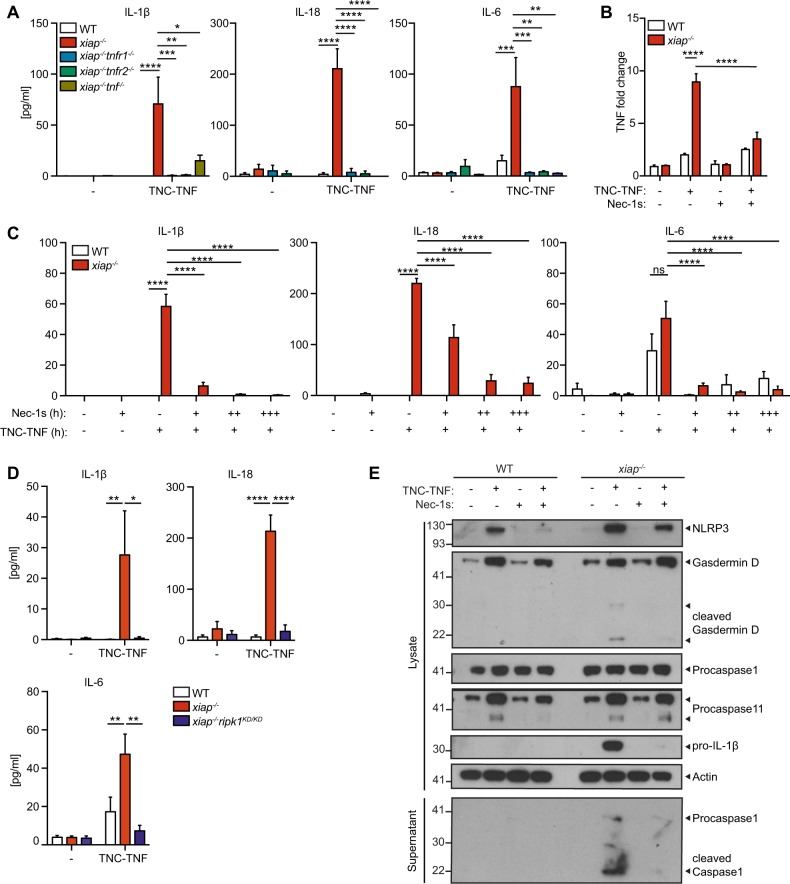
The pediatric immune deficiency X-linked proliferative disease-2 (XLP-2) is a unique disease, with patients presenting with either hemophagocytic lymphohistiocytosis (HLH) or intestinal bowel disease (IBD). Interestingly, XLP-2 patients display high levels of IL-18 in the serum even while in stable condition, presumably through spontaneous inflammasome activation. Recent data suggests that LPS stimulation can trigger inflammasome activation through a TNFR2/TNF/TNFR1 mediated loop in xiap macrophages. Yet, the direct role TNFR2-specific activation plays in the absence of XIAP is unknown. We found TNFR2-specific activation leads to cell death in xiap myeloid cells, particularly in the absence of the RING domain. RIPK1 kinase activity downstream of TNFR2 resulted in a TNF/TNFR1 cell death, independent of necroptosis. TNFR2-specific activation leads to a similar inflammatory NF-kB driven transcriptional profile as TNFR1 activation with the exception of upregulation of NLRP3 and caspase-11. Activation and upregulation of the canonical inflammasome upon loss of XIAP was mediated by RIPK1 kinase activity and ROS production. While both the inhibition of RIPK1 kinase activity and ROS production reduced cell death, as well as release of IL-1β, the release of IL-18 was not reduced to basal levels. This study supports targeting TNFR2 specifically to reduce IL-18 release in XLP-2 patients and to reduce priming of the inflammasome components.
X 连锁儿童免疫缺陷增殖性疾病-2(XLP-2)是一种独特的疾病,患者表现为噬血细胞性淋巴组织细胞增生症(HLH)或肠病(IBD)。有趣的是,XLP-2 患者即使在稳定状态下,血清中也会出现高水平的 IL-18,这可能是通过自发的炎症小体激活引起的。最近的数据表明,LPS 刺激可以通过 XIAP 巨噬细胞中的 TNFR2/TNF/TNFR1 介导的环触发炎症小体激活。然而,在没有 XIAP 的情况下,TNFR2 特异性激活所起的直接作用尚不清楚。我们发现 TNFR2 特异性激活导致 xiap 髓样细胞死亡,特别是在缺乏 RING 结构域的情况下。TNFR2 下游的 RIPK1 激酶活性导致 TNF/TNFR1 细胞死亡,与坏死性凋亡无关。TNFR2 特异性激活导致与 TNFR1 激活相似的炎症 NF-κB 驱动的转录谱,除了 NLRP3 和 caspase-11 的上调。在 XIAP 缺失的情况下,炎症小体的激活和上调是由 RIPK1 激酶活性和 ROS 产生介导的。尽管抑制 RIPK1 激酶活性和 ROS 产生均可减少细胞死亡和 IL-1β 的释放,但 IL-18 的释放并未降低到基础水平。这项研究支持靶向 TNFR2 特异性地减少 XLP-2 患者的 IL-18 释放,并减少炎症小体成分的预激活。