Section of Haematology, Department of General Surgery and Medical-Surgical Specialties, University of Catania, Catania, Italy.
Department of Biomedical and Biotechnological Sciences, University of Catania, Catania, Italy.
Cell Death Dis. 2019 Sep 20;10(10):704. doi: 10.1038/s41419-019-1959-5.
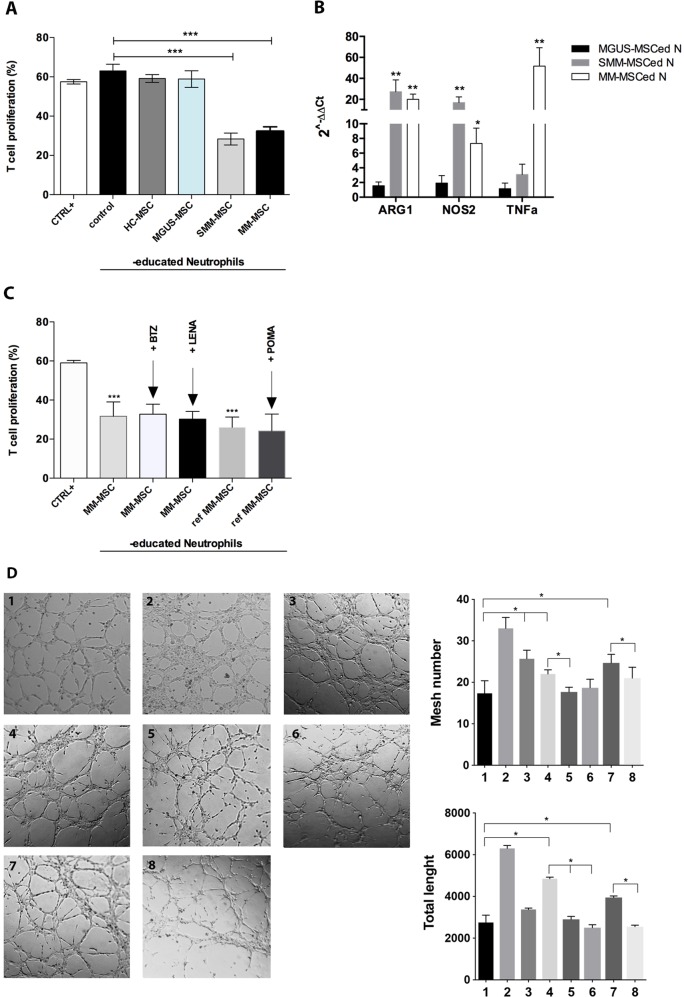
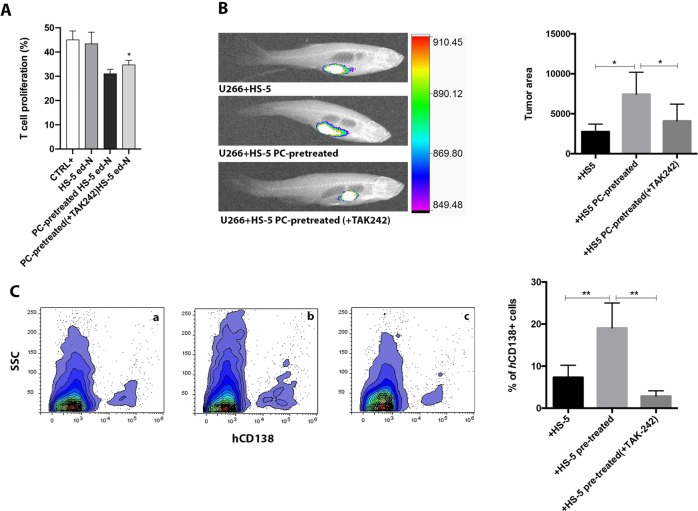
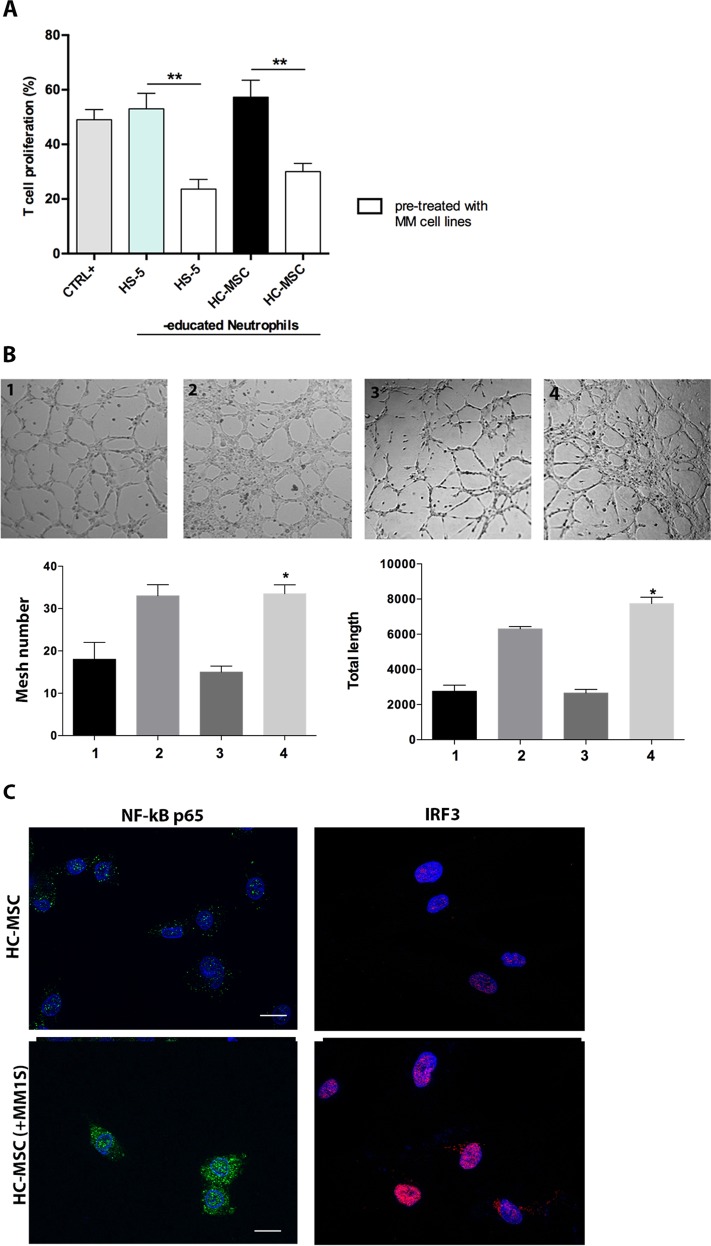
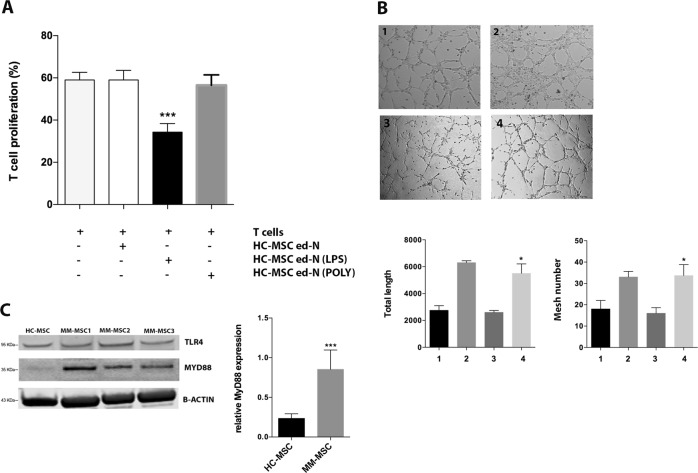
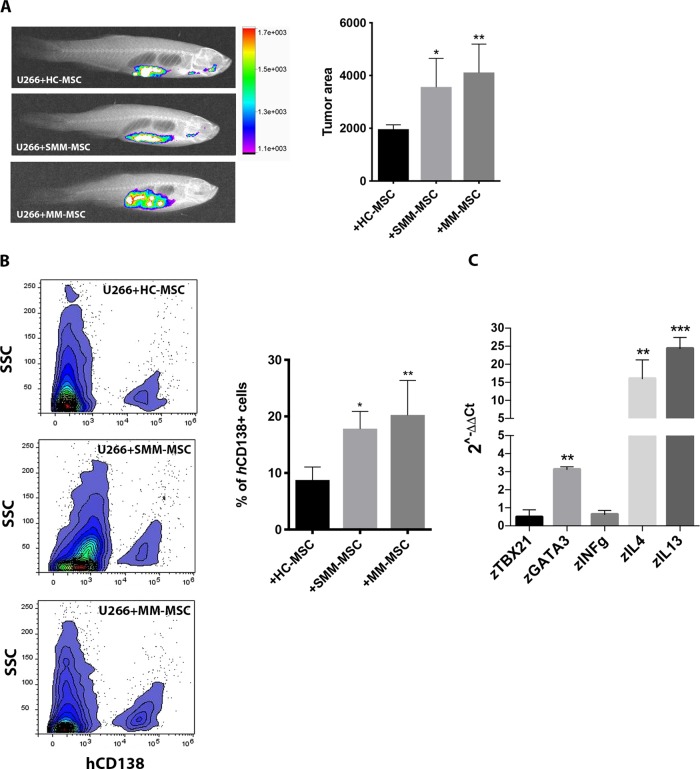
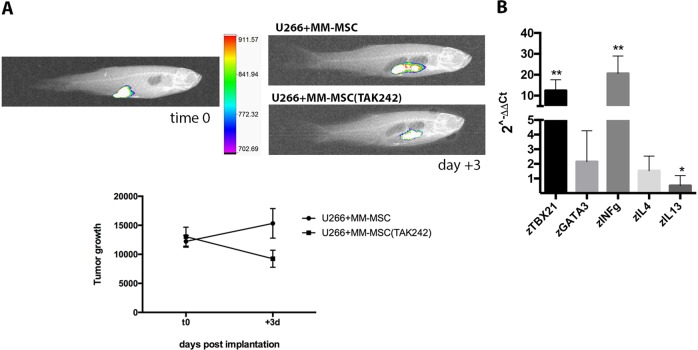
Inflammation represents a key feature and hallmark of tumor microenvironment playing a major role in the interaction with mesenchymal stromal cells (MSC) in cancer progression. The aim of the present study was to investigate the crosstalk between MSCs and myeloma cells (MM) in the pro-inflammatory microenvironment promoting immune evasion and tumor growth. MSC were collected from patients with diagnosis of MGUS (n = 10), smoldering myeloma (n = 7), multiple myeloma at diagnosis (n = 16), relapse (n = 5) or refractory (n = 3), and from age-matched healthy controls (HC, n = 10) and cultured with peripheral blood mononucleated cells (PBMC) from healthy volunteer donors. Similarly to MM, we showed that MSC from smoldering multiple myeloma (SMM) patients activated neutrophils and conferred an immunosuppressive and pro-angiogenic phenotype. Furthermore, co-cultures of plasma cells (PC) and HC-MSC suggested that such activation is driven by MM cells through the switching into a pro-inflammatory phenotype mediated by toll-like receptor 4 (TLR4). These results were further confirmed using a zebrafish as an immunocompetent in vivo model, showing the role of MM-MSC in supporting PCs engraftment and Th2 response. Such effect was abolished following inhibition of TLR4 signaling in MM-MSC before co-injection with PC. Moreover, the addition of a TLR4 inhibitor in the co-culture of HC-MSC with MM cells prevented the activation of the pro-tumor activity in PC-educated MSC. In conclusion, our study provides evidence that TLR4 signaling plays a key role in MSC transformation by inducing a pro-tumor phenotype associated with a permissive microenvironment allowing immune escape and tumor growth.
炎症代表肿瘤微环境的一个关键特征和标志,在癌症进展中与间充质基质细胞 (MSC) 的相互作用中起主要作用。本研究的目的是研究促炎微环境中 MSC 与骨髓瘤细胞 (MM) 之间的串扰,促进免疫逃逸和肿瘤生长。从诊断为 MGUS(n=10)、冒烟型骨髓瘤(n=7)、多发性骨髓瘤初诊(n=16)、复发(n=5)或难治(n=3)的患者中收集 MSC,并从年龄匹配的健康对照者(HC,n=10)中分离培养,并与健康志愿者供者的外周血单个核细胞(PBMC)共培养。与 MM 相似,我们表明来自冒烟型多发性骨髓瘤(SMM)患者的 MSC 激活了中性粒细胞,并赋予了免疫抑制和促血管生成表型。此外,浆细胞(PC)和 HC-MSC 的共培养表明,这种激活是由 MM 细胞通过 TLR4 介导的向促炎表型的转换驱动的。在使用斑马鱼作为免疫活性体内模型进行的进一步研究中证实了这一点,该模型显示了 MM-MSC 在支持 PC 植入和 Th2 反应中的作用。在与 PC 共注射之前,用 TLR4 抑制剂抑制 MM-MSC 中的 TLR4 信号可消除这种作用。此外,在 MM 细胞与 HC-MSC 的共培养物中加入 TLR4 抑制剂可防止在 PC 诱导的 MSC 中激活促肿瘤活性。总之,我们的研究提供了证据表明 TLR4 信号在 MSC 转化中起关键作用,通过诱导与允许免疫逃逸和肿瘤生长的许可微环境相关的促肿瘤表型。