Su Qiang, Lv Xiang-Wei, Sun Yu-Han, Ye Zi-Liang, Kong Bing-Hui, Qin Zhen-Bai
Department of Cardiology, Affiliated Hospital of Guilin Medical University, Guilin 541001, P.R. China.
Department of Cardiology, Affiliated Hospital of Guilin Medical University, Guilin 541001, P.R. China.
Mol Ther Nucleic Acids. 2019 Dec 6;18:110-122. doi: 10.1016/j.omtn.2019.08.007. Epub 2019 Aug 14.
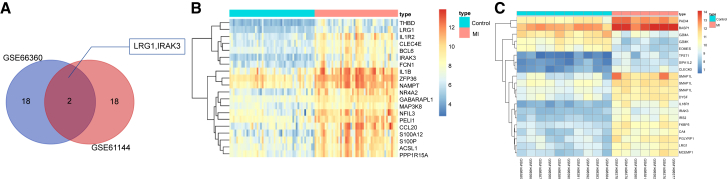
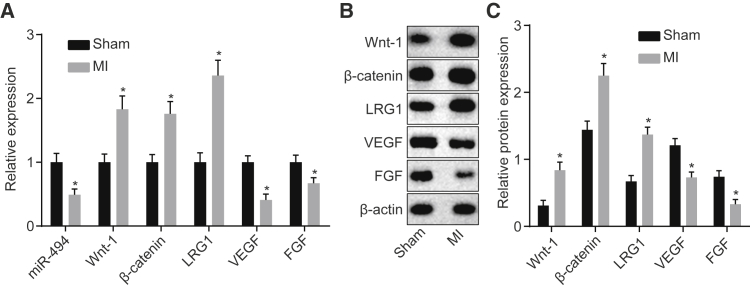
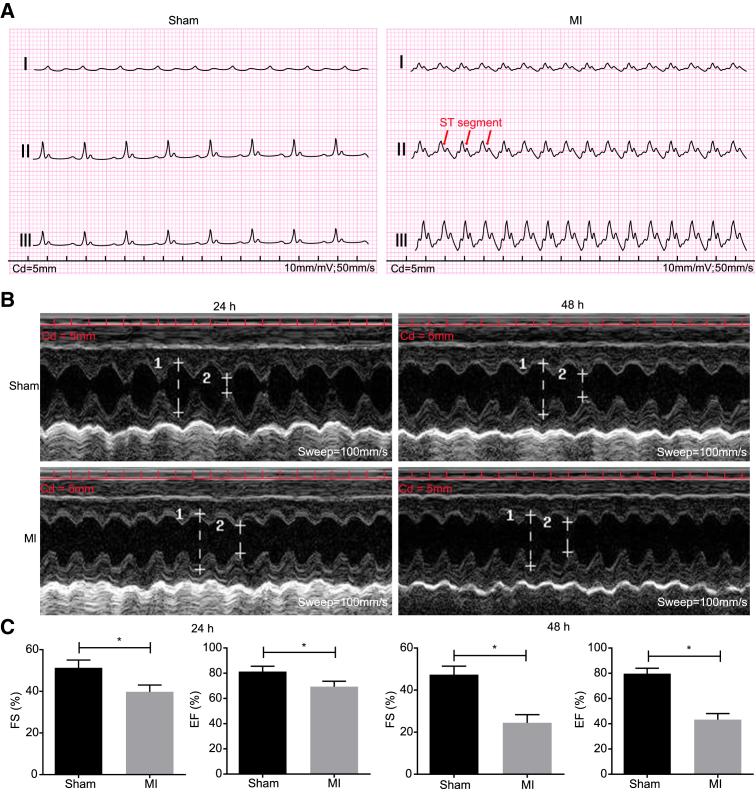
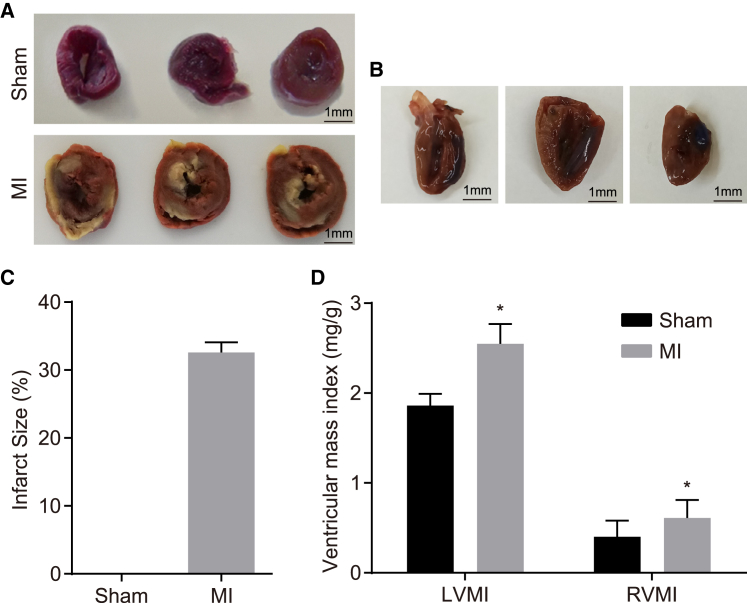
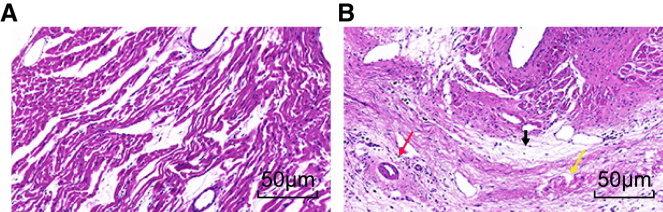
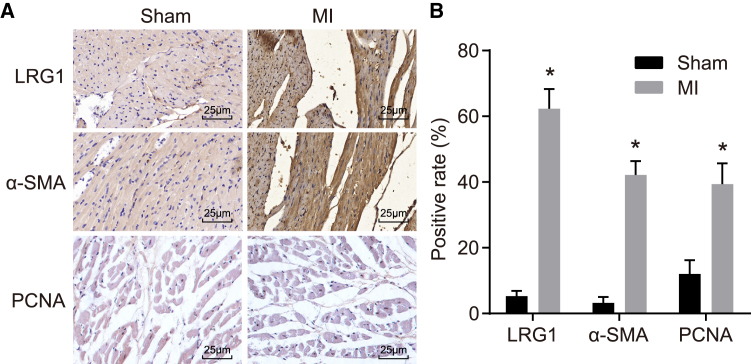
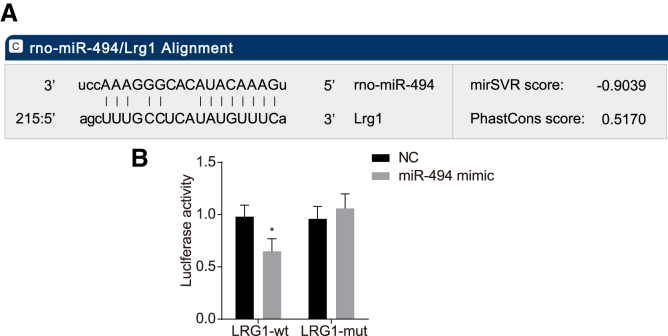
Myocardial infarction (MI) is a life-threatening cardiac event that results in extreme damage to the heart muscle. The Wnt signaling pathway has been implicated in the development of heart diseases. Hence, the current study aimed to investigate the role of microRNA (miRNA) in association with the Wnt signaling pathway to identify potential candidates for MI therapy. Differentially expressed miRNAs associated with MI occurrence were screened, and miR-494 was selected for subsequent experiments. Sprague-Dawley rats were included to establish a MI model via intraperitoneal injection of 0.1 mg/kg atropine sulfate and 40 mg/kg pentobarbital sodium. Then, the interaction between miR-494 and LRG1 was identified. The effect of miR-494 on expression of the Wnt signaling pathway-related genes, proliferation, migration, and invasion ability of fibroblasts and vascular endothelial cells (VECs) was subsequently evaluated through a series of gain- and loss-of-function experiments. The results revealed that miR-494 was poorly expressed and LRG1 was highly expressed in MI rats. miR-494 targets and downregulates LRG1, which resulted in the inactivation of the Wnt signaling pathway and promoted proliferation, migration, and invasion ability of fibroblasts and VECs. In conclusion, this study provided evidence suggesting that overexpressed miR-494 could potentially promote the proliferation, migration, and invasion of fibroblasts and VECs in MI through the inactivation of the Wnt signaling pathway by binding to LRG1.
心肌梗死(MI)是一种危及生命的心脏事件,会导致心肌严重受损。Wnt信号通路与心脏病的发展有关。因此,本研究旨在探讨微小RNA(miRNA)与Wnt信号通路相关的作用,以确定MI治疗的潜在候选物。筛选出与MI发生相关的差异表达miRNA,并选择miR-494进行后续实验。纳入Sprague-Dawley大鼠,通过腹腔注射0.1mg/kg硫酸阿托品和40mg/kg戊巴比妥钠建立MI模型。然后,确定miR-494与LRG1之间的相互作用。随后通过一系列功能获得和功能丧失实验评估miR-494对Wnt信号通路相关基因表达、成纤维细胞和血管内皮细胞(VEC)增殖、迁移和侵袭能力的影响。结果显示,miR-494在MI大鼠中表达较低,而LRG1表达较高。miR-494靶向并下调LRG1,导致Wnt信号通路失活,并促进成纤维细胞和VEC的增殖、迁移和侵袭能力。总之,本研究提供的证据表明,过表达的miR-494可能通过与LRG1结合使Wnt信号通路失活,从而促进MI中成纤维细胞和VEC的增殖、迁移和侵袭。