Breuel Saskia, Vorm Mariann, Bräuer Anja U, Owczarek-Lipska Marta, Neidhardt John
Human Genetics, Faculty of Medicine and Health Sciences, University of Oldenburg, Oldenburg, Germany.
Anatomy, Faculty of Medicine and Health Sciences, University of Oldenburg, Oldenburg, Germany; Research Center Neurosensory Science, University of Oldenburg, Germany.
Mol Ther Nucleic Acids. 2019 Dec 6;18:123-130. doi: 10.1016/j.omtn.2019.08.014. Epub 2019 Aug 16.
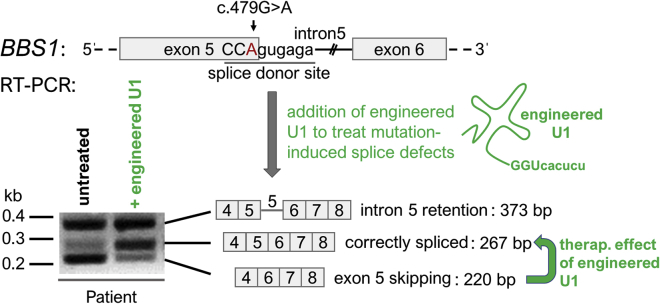
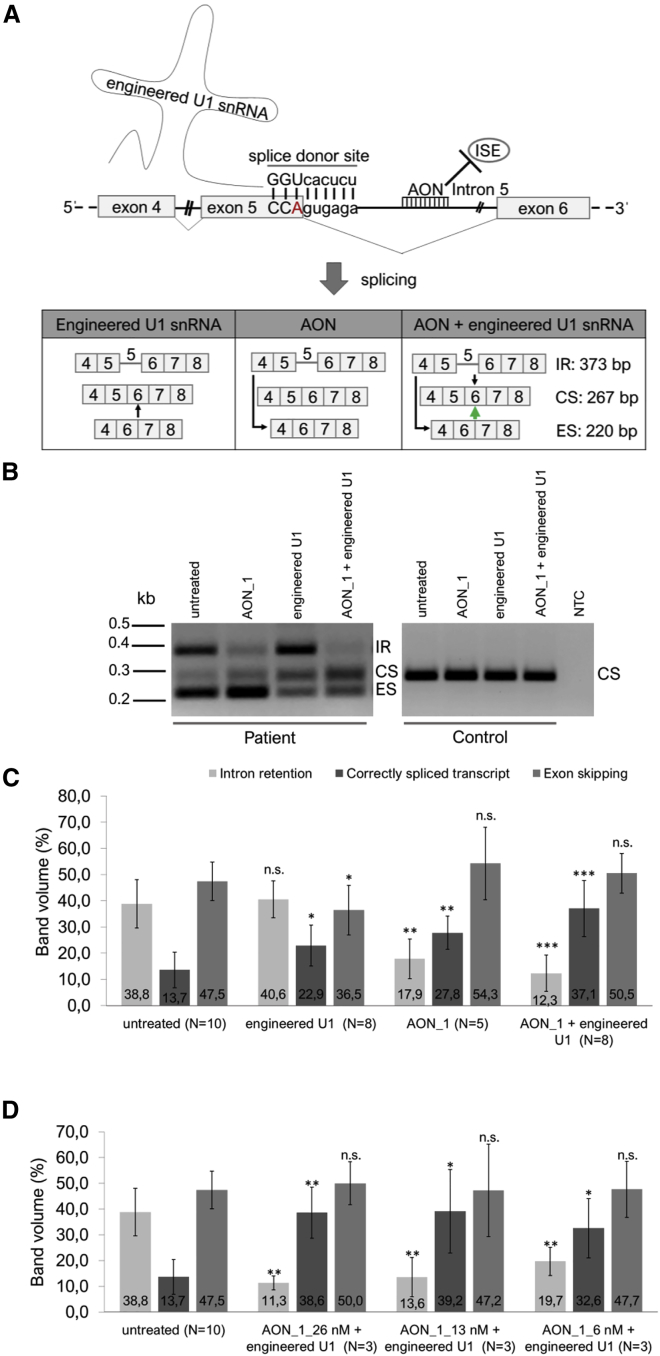
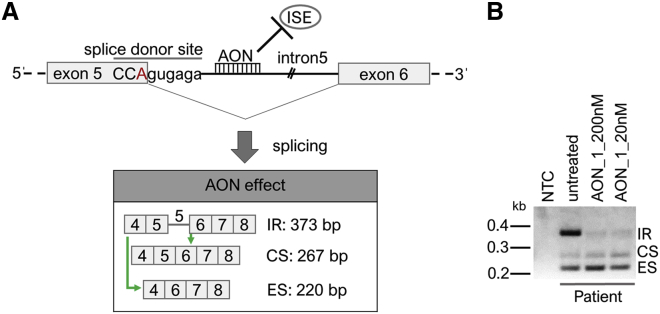
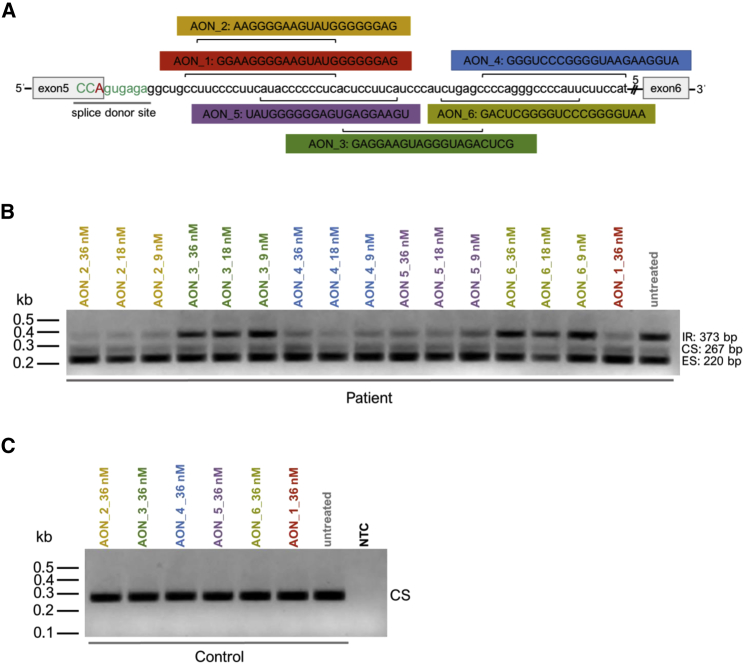
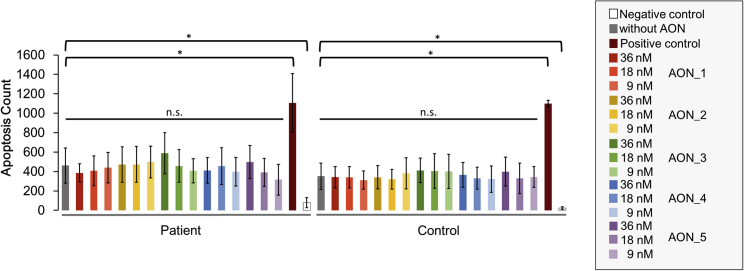
Manipulation of pre-mRNA processing is a promising approach toward overcoming disease-causing mutations and treating human diseases. We show that a combined treatment applying two splice-manipulating technologies improves therapeutic efficacies to correct mutation-induced splice defects. Previously, we identified a family affected by retinitis pigmentosa caused by the homozygous BBS1 splice donor site mutation c.479G > A. The mutation leads to both exon 5 skipping and intron 5 retention. We developed a therapeutic approach applying lentivirus-mediated gene delivery of engineered U1 small nuclear RNA (U1), which resulted in increased levels of correctly spliced BBS1. Herein, we show that the therapeutic effect of the engineered U1 efficiently reverted exon skipping but failed to reduce the intron retention. To complement the engineered U1 treatment, we identified four different antisense oligonucleotides (AONs) that block intron 5 retention in BBS1 transcripts. A treatment using engineered U1 in combination with AONs showed the highest therapeutic efficacy and increased the amount of correctly spliced BBS1 transcripts. We did not detect elevated levels of apoptotic cell death in AON-treated cell lines. In conclusion, engineered U1 or AONs provide efficient therapies with complementary effects and can be combined to increase efficacy of therapeutic approaches to correct splice defects.
对前体mRNA加工进行调控是一种很有前景的方法,有望克服致病突变并治疗人类疾病。我们发现,联合应用两种剪接调控技术可提高治疗效果,纠正突变引起的剪接缺陷。此前,我们鉴定出一个受视网膜色素变性影响的家系,该病由纯合的BBS1剪接供体位点突变c.479G>A所致。该突变导致外显子5跳跃和内含子5保留。我们开发了一种治疗方法,应用慢病毒介导的工程化U1小核RNA(U1)基因递送,从而提高了正确剪接的BBS1水平。在此,我们表明工程化U1的治疗效果有效逆转了外显子跳跃,但未能减少内含子保留。为补充工程化U1治疗,我们鉴定出四种不同的反义寡核苷酸(AON),它们可阻断BBS1转录本中的内含子5保留。使用工程化U1与AON联合治疗显示出最高的治疗效果,并增加了正确剪接的BBS1转录本数量。我们在AON处理的细胞系中未检测到凋亡细胞死亡水平升高。总之,工程化U1或AON提供了具有互补作用的有效疗法,可联合使用以提高纠正剪接缺陷的治疗方法的疗效。