Dilshara Matharage Gayani, Molagoda Ilandarage Menu Neelaka, Jayasooriya Rajapaksha Gedara Prasad Tharanga, Choi Yung Hyun, Park Cheol, Lee Kyoung Tae, Lee Seungheon, Kim Gi-Young
Department of Marine Life Science, Jeju National University, Jeju 63243, Korea.
Department of Food Technology, Faculty of Technology, Rajarata University of Sri Lanka, Mihintale 50300, Sri Lanka.
Antioxidants (Basel). 2019 Sep 22;8(10):423. doi: 10.3390/antiox8100423.
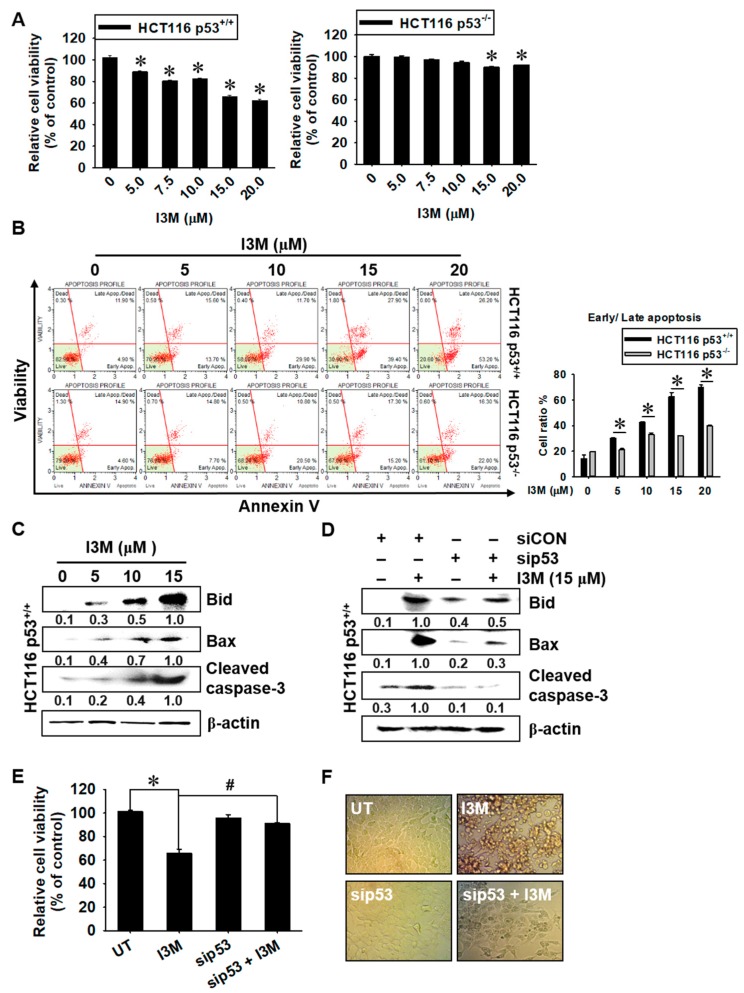
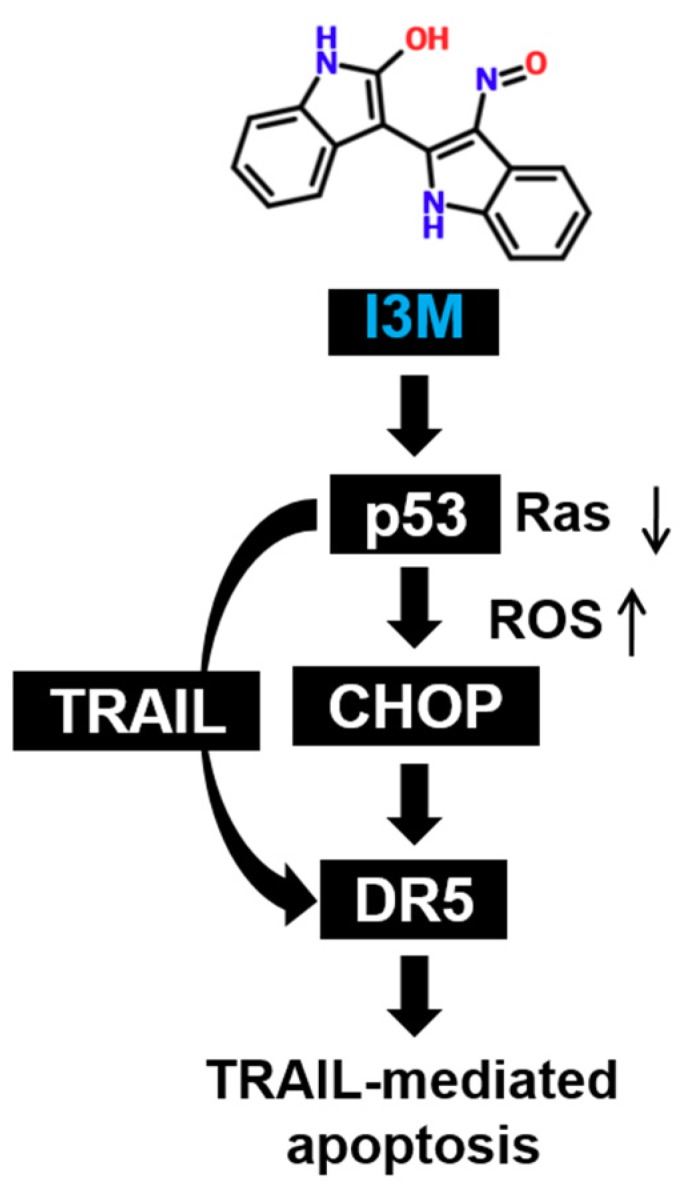
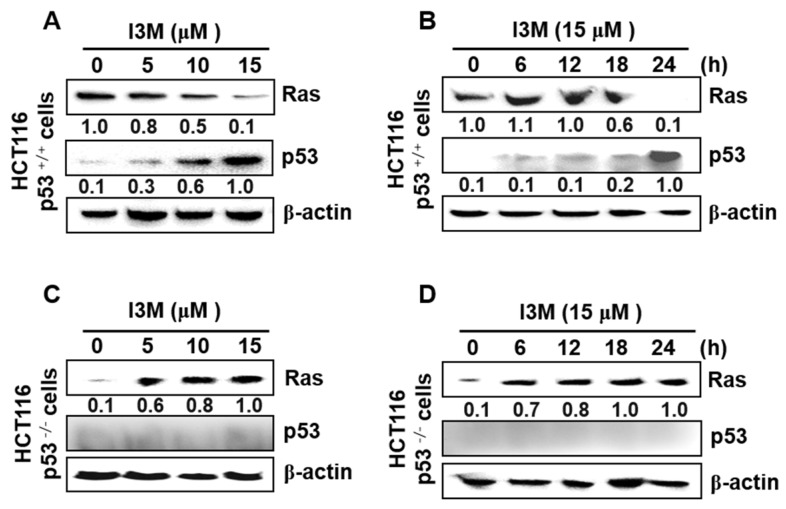
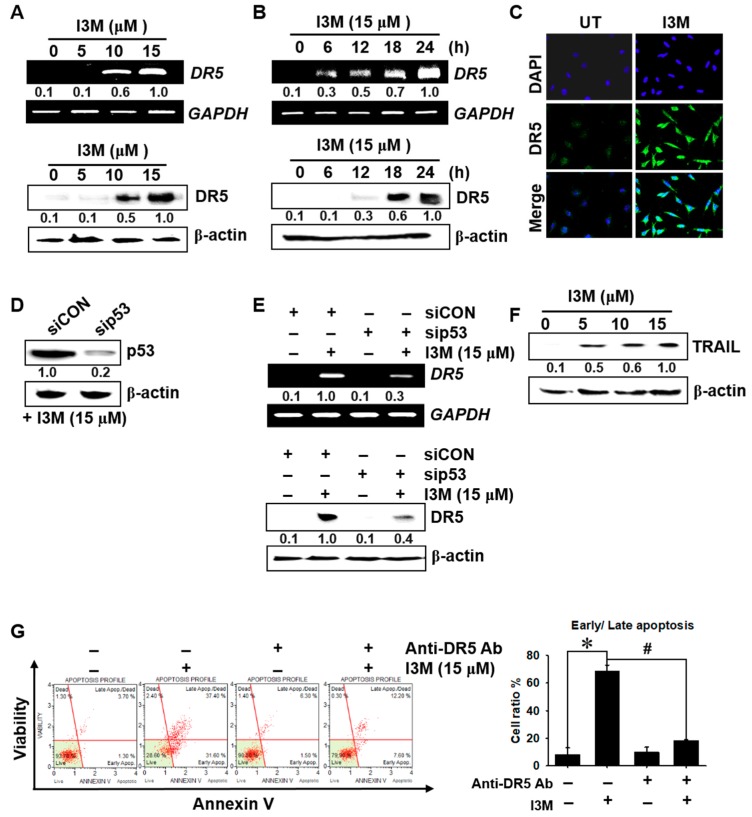
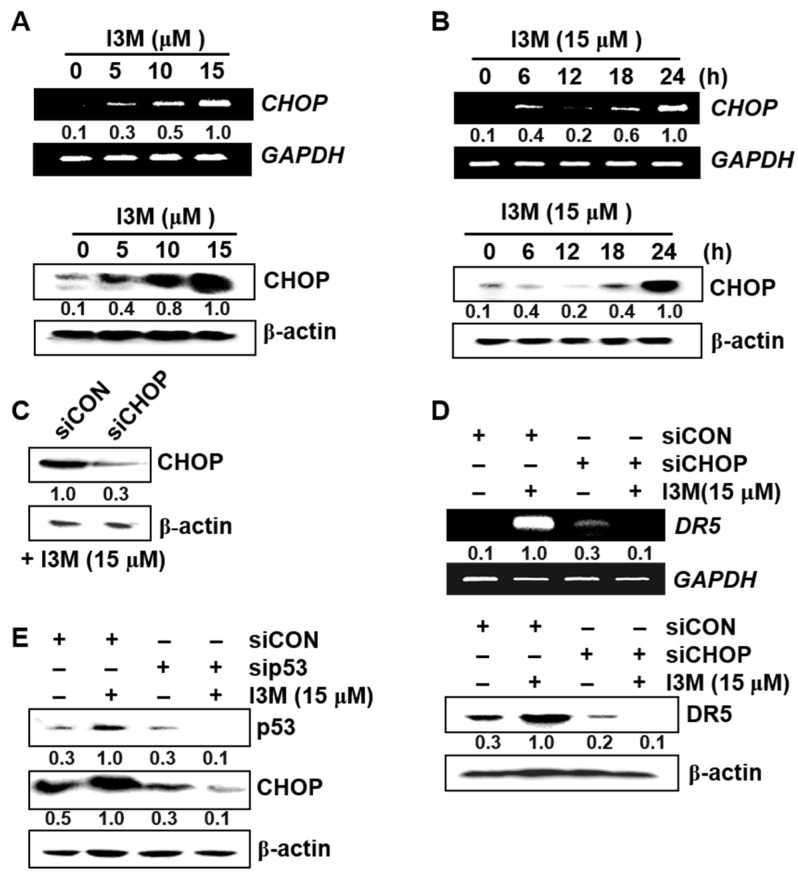
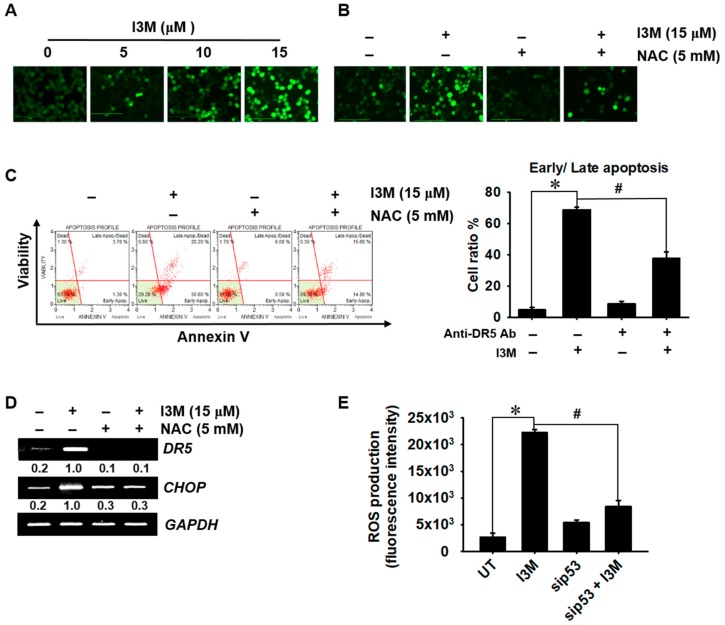
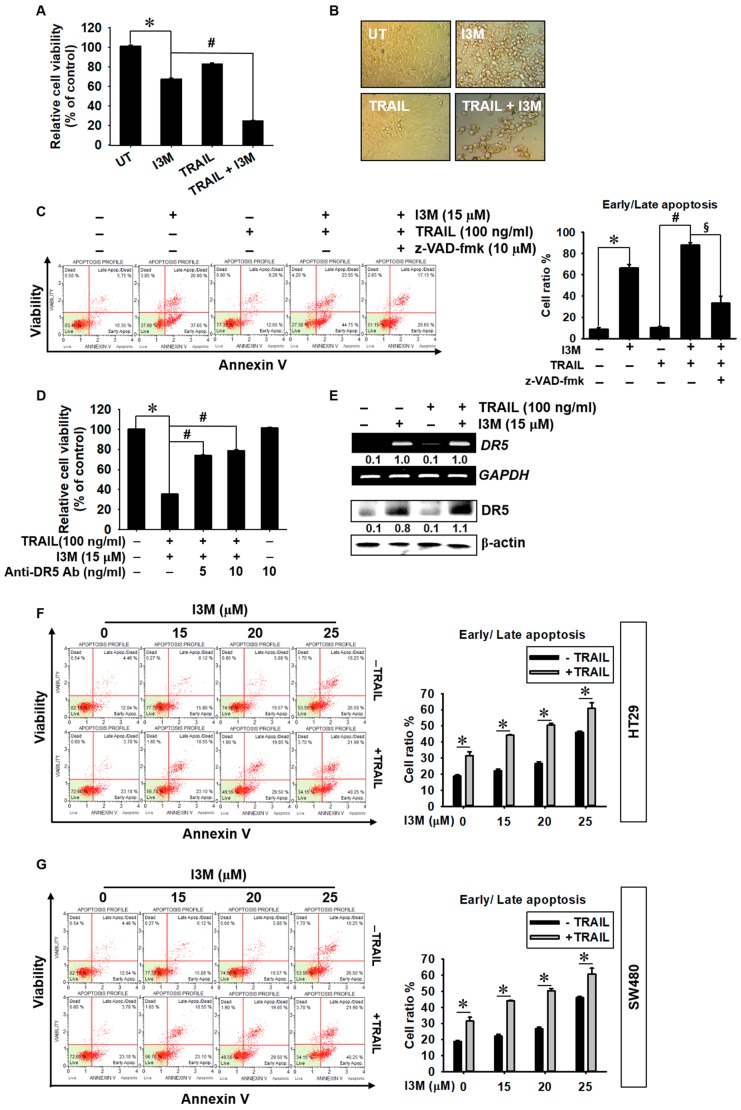
Indirubin-3'-monoxime (I3M) exhibits anti-proliferative activity in various cancer cells; however, its anti-cancer mechanism remains incompletely elucidated. This study revealed that I3M promotes the expression of death receptor 5 (DR5) and tumor necrosis factor (TNF)-related apoptosis-inducing ligand (TRAIL) in HCT116 p53 cells, resulting in caspase-mediated apoptosis. However, this study demonstrated that HCT116 p53 cells were insensitive to I3M-mediated apoptosis, indicating that I3M-induced apoptosis depends on the p53 status of HCT116 cells. Additionally, in HCT116 p53 cells, I3M significantly increased Ras expression, while in HCT116 p53 cells, it reduced Ras expression. Furthermore, I3M remarkably increased the production of reactive oxygen species (ROS), which were reduced in transient knockdown, indicating that I3M-mediated apoptosis was promoted by p53-mediated ROS production. Our results also showed that I3M enhanced transcription factor C/EBP homologous protein (CHOP) expression, resulted in endoplasmic reticulum (ER) stress-mediated DR5 expression, which was upregulated by ROS production in HCT116 p53 cells. Moreover, co-treatment with I3M and TRAIL enhanced DR5 expression, thereby triggering TRAIL-induced apoptosis of HCT116 p53 cells, which was interfered by a DR5-specific blocking chimeric antibody. In summary, I3M potently enhances TRAIL-induced apoptosis by upregulating DR5 expression via p53-mediated ROS production in HCT116 p53 cells. However, HCT116 p53 cells were less sensitive to I3M-mediated apoptosis, suggesting that I3M could be a promising anti-cancer candidate against TRAIL-resistant p53 cancer cells. Additionally, this study also revealed that I3M sensitizes colorectal cancer cells such as HT29 and SW480 to TRAIL-mediated apoptosis.
靛玉红 - 3'-单肟(I3M)在多种癌细胞中表现出抗增殖活性;然而,其抗癌机制仍未完全阐明。本研究表明,I3M可促进HCT116 p53细胞中死亡受体5(DR5)和肿瘤坏死因子(TNF)相关凋亡诱导配体(TRAIL)的表达,从而导致半胱天冬酶介导的细胞凋亡。然而,本研究证明HCT116 p53细胞对I3M介导的细胞凋亡不敏感,这表明I3M诱导的细胞凋亡取决于HCT116细胞的p53状态。此外,在HCT116 p53细胞中,I3M显著增加Ras表达,而在HCT116 p53细胞中,它降低Ras表达。此外,I3M显著增加活性氧(ROS)的产生,在瞬时敲低时ROS产生减少,这表明I3M介导的细胞凋亡是由p53介导的ROS产生所促进的。我们的结果还表明,I3M增强转录因子C/EBP同源蛋白(CHOP)的表达,导致内质网(ER)应激介导的DR5表达,这在HCT116 p53细胞中由ROS产生上调。此外,I3M与TRAIL联合处理增强了DR5表达,从而触发TRAIL诱导的HCT116 p53细胞凋亡,这被DR5特异性阻断嵌合抗体所干扰。总之,I3M通过在HCT116 p53细胞中通过p53介导的ROS产生上调DR5表达,有力地增强了TRAIL诱导的细胞凋亡。然而HCT116 p53细胞对I3M介导的细胞凋亡不太敏感,这表明I3M可能是针对TRAIL抗性p53癌细胞的有前途的抗癌候选物。此外,本研究还表明I3M使HT29和SW480等结肠癌细胞对TRAIL介导的细胞凋亡敏感。