Du Fangmin, Zhang Xiaoyong, Gu Huarong, Song Jiajia, Gao Xiangyang
Guangdong Provincial Key Laboratory of Nutraceuticals and Functional Foods, College of Food Science, South China Agricultural University, Guangzhou 510642, China.
Joint Laboratory of Guangdong Province and Hong Kong Region on Marine Bioresource Conservation and Exploitation, College of Marine Sciences, South China Agricultural University, Guangzhou 510642, China.
Microorganisms. 2019 Sep 19;7(9):371. doi: 10.3390/microorganisms7090371.
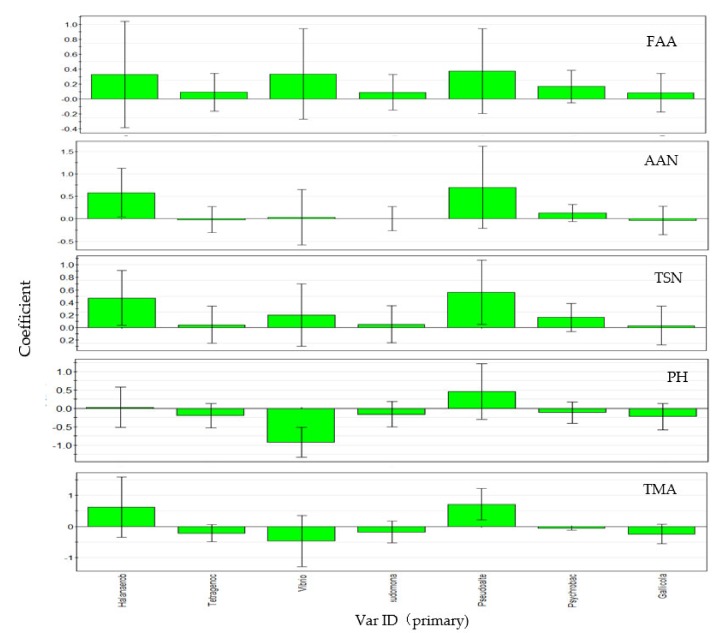
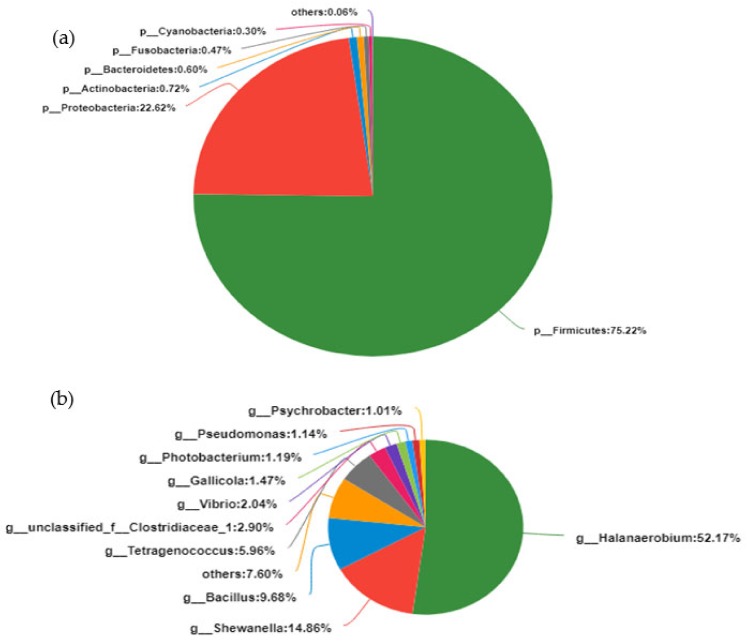
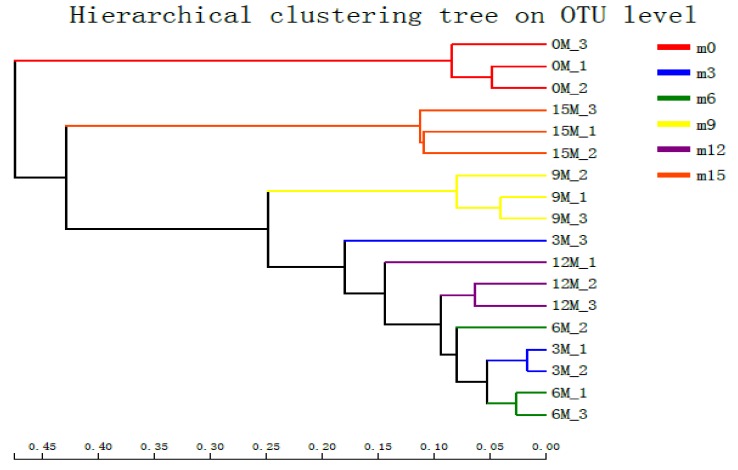
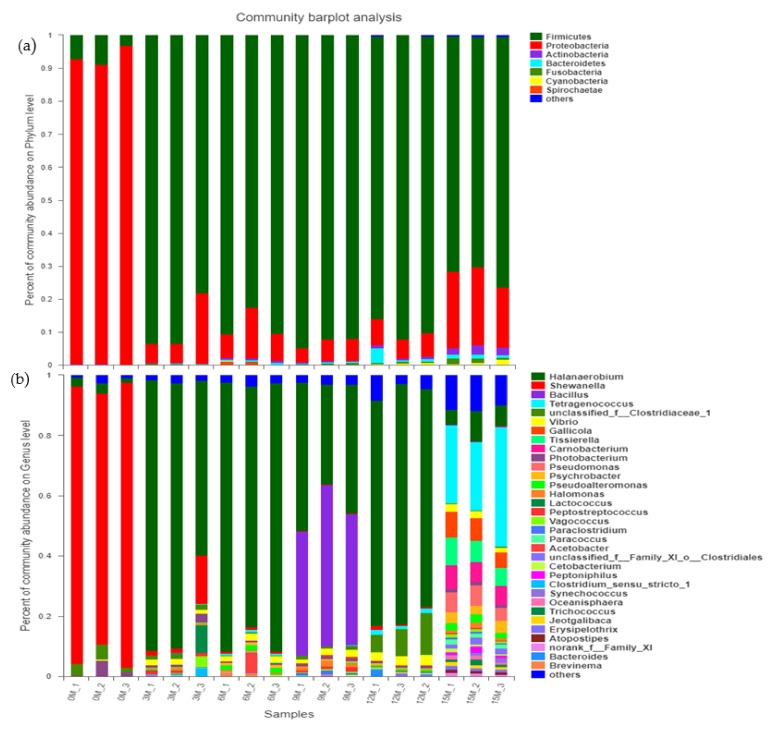
This study revealed for the first time the dynamic changes of the bacterial community during the fermentation of traditional Chinese fish sauce (TCFS) using high-throughput sequencing. In the early phase of TCFS fermentation, (approximately 90%) within was the dominant bacteria. Then, (3%-86%) within rapidly replaced as the dominant genus until the 12th month. (3.31%) and (45.56%) belonging to were detected abundantly in the 3rd and 9th months after fermentation, respectively. In the late phase (12-15 months), within replaced as the most dominant bacteria (29.54%). Many other genera including , , and were abundantly present in the 15th month after fermentation. Furthermore, the relationships between the bacterial community and major functional substances of TCFS, including amino nitrogen (AAN), free amino acids (FAAs), total soluble nitrogen (TSN), and trimethylamine (TMA), were investigated by partial least squares regression (PLSR). was positively correlated with the formation of TMA, while showed the opposite result, suggesting that might be a good starter for TCFS fermentation. These results contribute to our knowledge about bacterial participation in the process of TCFS fermentation and will help improve the quality of fermented seafood.
本研究首次利用高通量测序揭示了传统中式鱼露(TCFS)发酵过程中细菌群落的动态变化。在TCFS发酵的早期阶段,[具体细菌名称1](约90%)在[具体范围1]内是优势细菌。然后,[具体细菌名称2](3%-86%)在[具体范围2]内迅速取代[具体细菌名称1]成为优势属,直至第12个月。属于[具体细菌类别]的[具体细菌名称3](3.31%)和[具体细菌名称4](45.56%)分别在发酵后的第3个月和第9个月被大量检测到。在后期阶段(12-15个月),[具体细菌名称5]在[具体范围3]内取代[具体细菌名称2]成为最优势的细菌(29.54%)。包括[具体细菌名称6]、[具体细菌名称7]、[具体细菌名称8]和[具体细菌名称9]在内的许多其他属在发酵后的第15个月大量存在。此外,通过偏最小二乘回归(PLSR)研究了细菌群落与TCFS主要功能物质之间的关系,这些主要功能物质包括氨基氮(AAN)、游离氨基酸(FAA)、总可溶性氮(TSN)和三甲胺(TMA)。[具体细菌名称10]与TMA的形成呈正相关,而[具体细菌名称11]则呈现相反的结果,这表明[具体细菌名称11]可能是TCFS发酵的良好起始菌。这些结果有助于我们了解细菌在TCFS发酵过程中的参与情况,并将有助于提高发酵海产品的质量。