Feng Jianlin, Armillei Maria K, Yu Albert S, Liang Bruce T, Runnels Loren W, Yue Lixia
Calhoun Cardiology Center, Department of Cell Biology, University of Connecticut Health Center, Farmington, CT 06030, USA.
Department of Pharmacology, Rutgers, Robert Wood Johnson Medical School, Piscataway, NJ 08854, USA.
J Cardiovasc Dev Dis. 2019 Sep 23;6(4):34. doi: 10.3390/jcdd6040034.
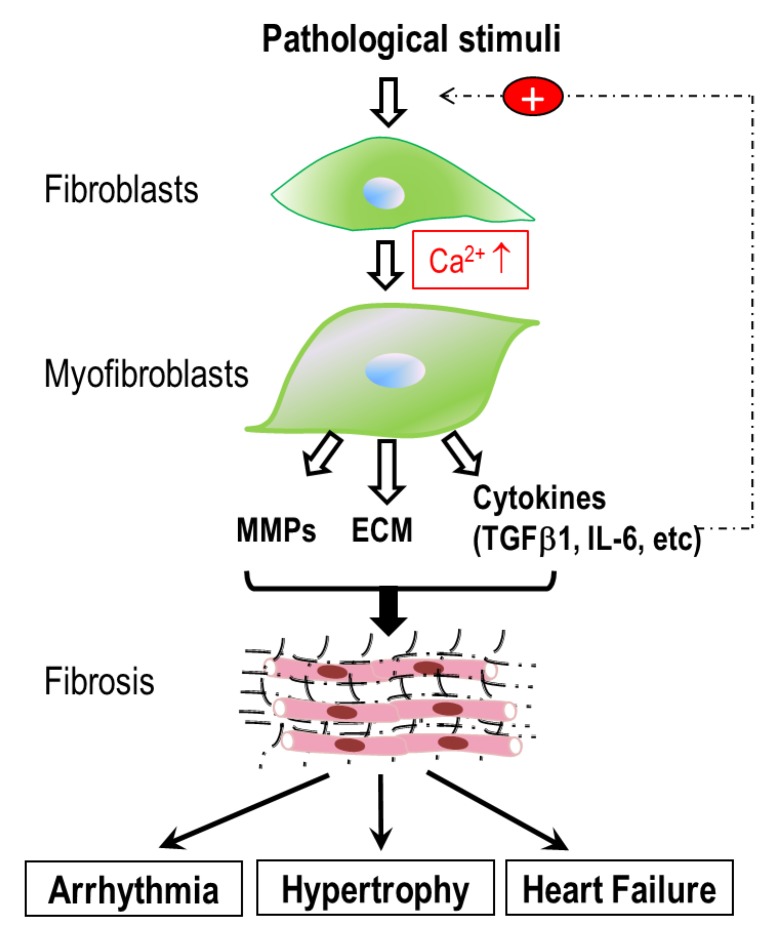
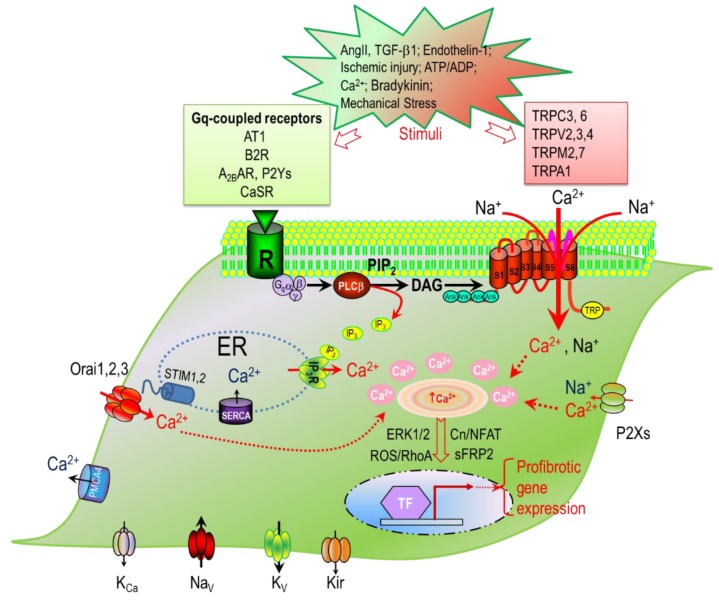
Cardiac fibrosis is the excessive deposition of extracellular matrix proteins by cardiac fibroblasts and myofibroblasts, and is a hallmark feature of most heart diseases, including arrhythmia, hypertrophy, and heart failure. This maladaptive process occurs in response to a variety of stimuli, including myocardial injury, inflammation, and mechanical overload. There are multiple signaling pathways and various cell types that influence the fibrogenesis cascade. Fibroblasts and myofibroblasts are central effectors. Although it is clear that Ca signaling plays a vital role in this pathological process, what contributes to Ca signaling in fibroblasts and myofibroblasts is still not wholly understood, chiefly because of the large and diverse number of receptors, transporters, and ion channels that influence intracellular Ca signaling. Intracellular Ca signals are generated by Ca release from intracellular Ca stores and by Ca entry through a multitude of Ca-permeable ion channels in the plasma membrane. Over the past decade, the transient receptor potential (TRP) channels have emerged as one of the most important families of ion channels mediating Ca signaling in cardiac fibroblasts. TRP channels are a superfamily of non-voltage-gated, Ca-permeable non-selective cation channels. Their ability to respond to various stimulating cues makes TRP channels effective sensors of the many different pathophysiological events that stimulate cardiac fibrogenesis. This review focuses on the mechanisms of Ca signaling in fibroblast differentiation and fibrosis-associated heart diseases and will highlight recent advances in the understanding of the roles that TRP and other Ca-permeable channels play in cardiac fibrosis.
心脏纤维化是心脏成纤维细胞和平滑肌成纤维细胞过度沉积细胞外基质蛋白的过程,是大多数心脏病的标志性特征,包括心律失常、心肌肥大和心力衰竭。这种适应性不良的过程是对多种刺激的反应,包括心肌损伤、炎症和机械负荷过重。有多种信号通路和不同类型的细胞影响纤维化级联反应。成纤维细胞和平滑肌成纤维细胞是主要效应器。虽然很明显钙信号在这个病理过程中起着至关重要的作用,但成纤维细胞和平滑肌成纤维细胞中钙信号的成因仍未完全了解,主要是因为影响细胞内钙信号的受体、转运体和离子通道数量众多且种类各异。细胞内钙信号由细胞内钙库释放钙以及通过质膜上众多钙通透离子通道进入钙而产生。在过去十年中,瞬时受体电位(TRP)通道已成为介导心脏成纤维细胞钙信号的最重要离子通道家族之一。TRP通道是一个非电压门控、钙通透的非选择性阳离子通道超家族。它们对各种刺激线索的反应能力使TRP通道成为刺激心脏纤维化的许多不同病理生理事件的有效传感器。本综述重点关注成纤维细胞分化和纤维化相关心脏病中钙信号的机制,并将突出在理解TRP和其他钙通透通道在心脏纤维化中所起作用方面的最新进展。