Division of Genetics, Department of Pediatrics, UCSD Center for AIDS Research, and Institute for Genomic Medicine, University of California San Diego, La Jolla, California, USA.
Sanford Burnham Prebys Medical Discovery Institute, La Jolla, California, USA.
mBio. 2019 Sep 24;10(5):e02016-19. doi: 10.1128/mBio.02016-19.
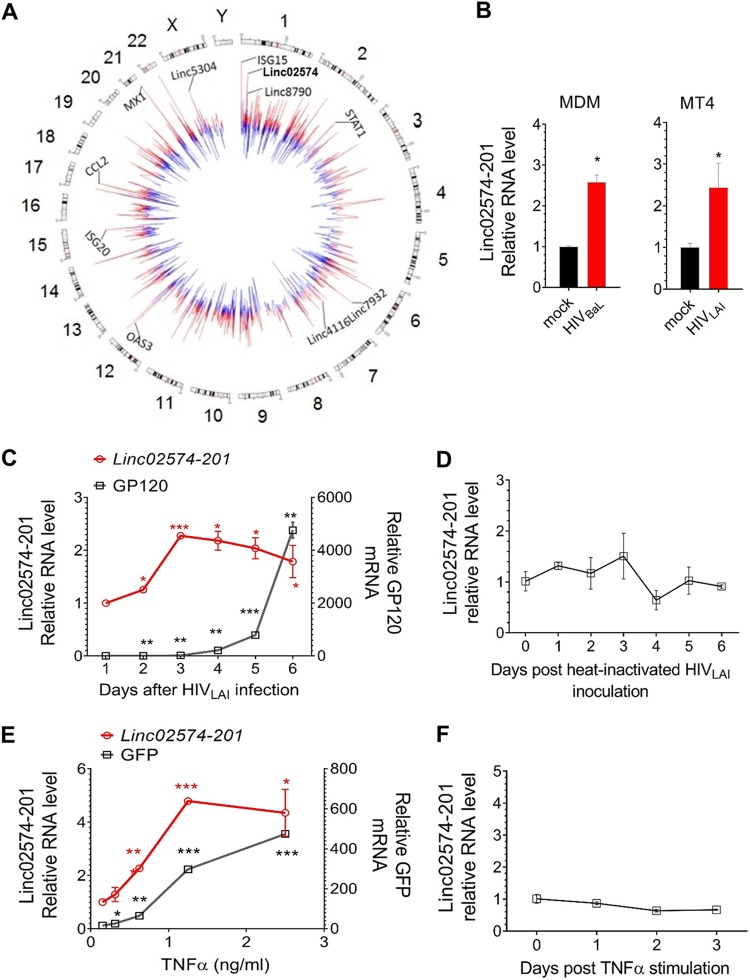
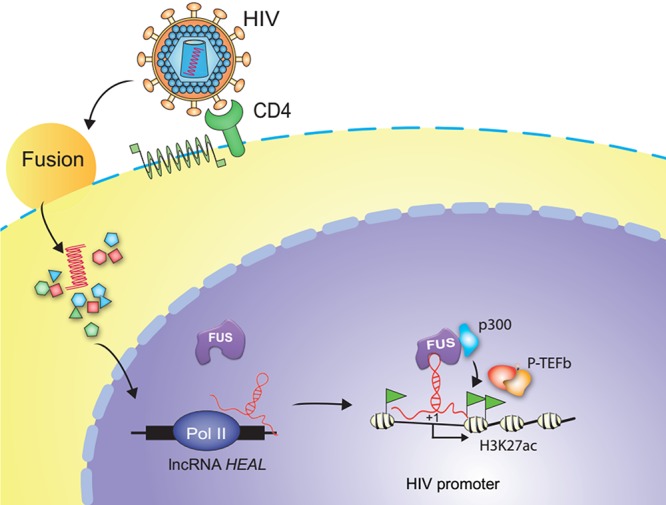
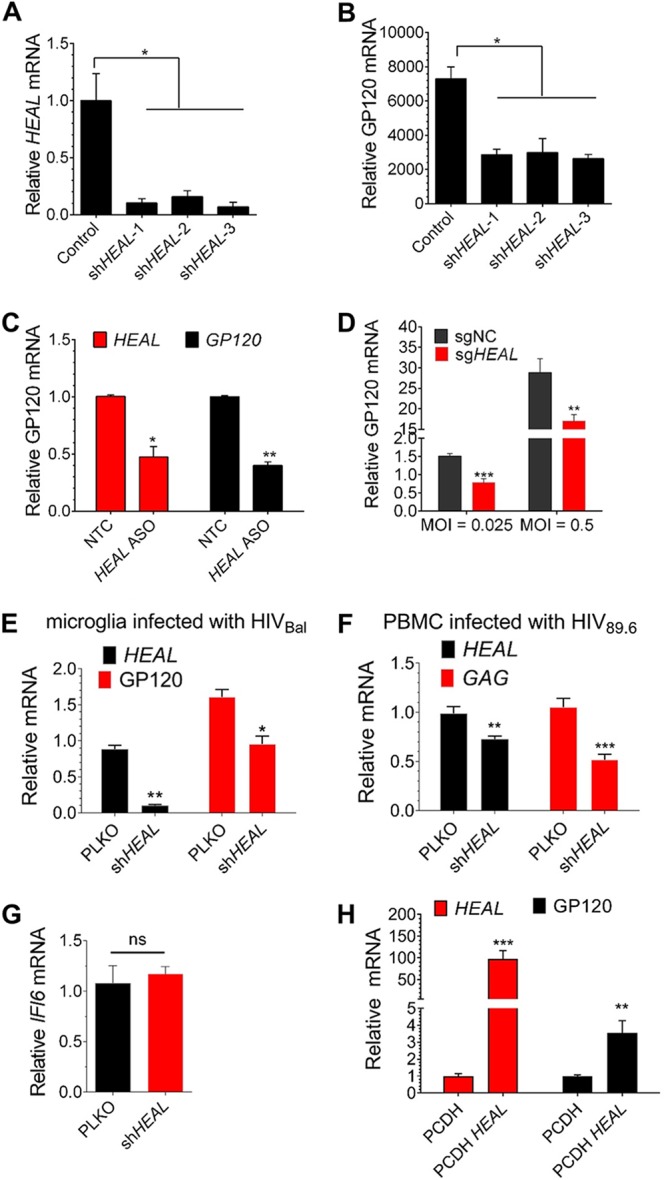
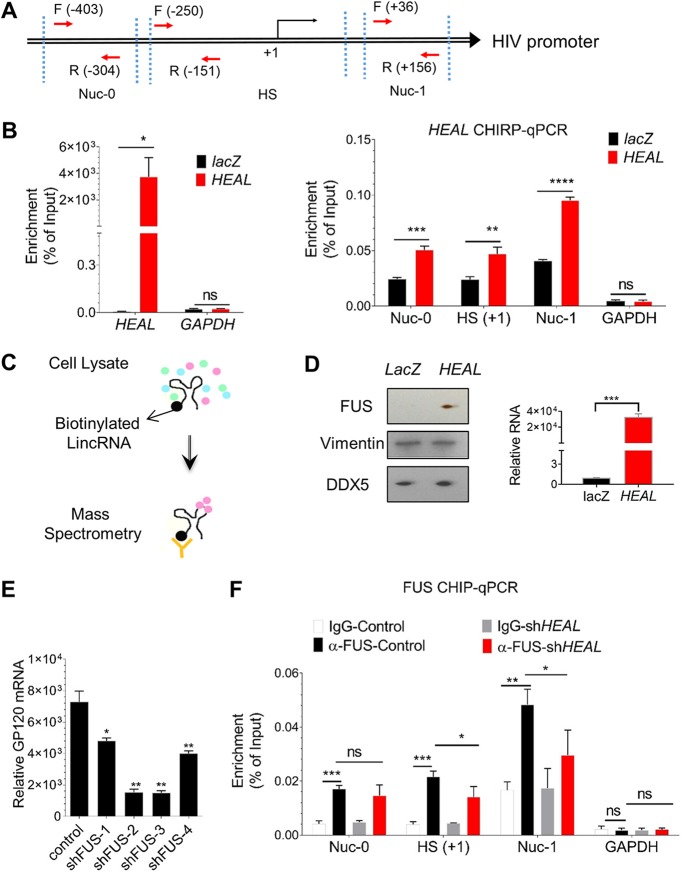
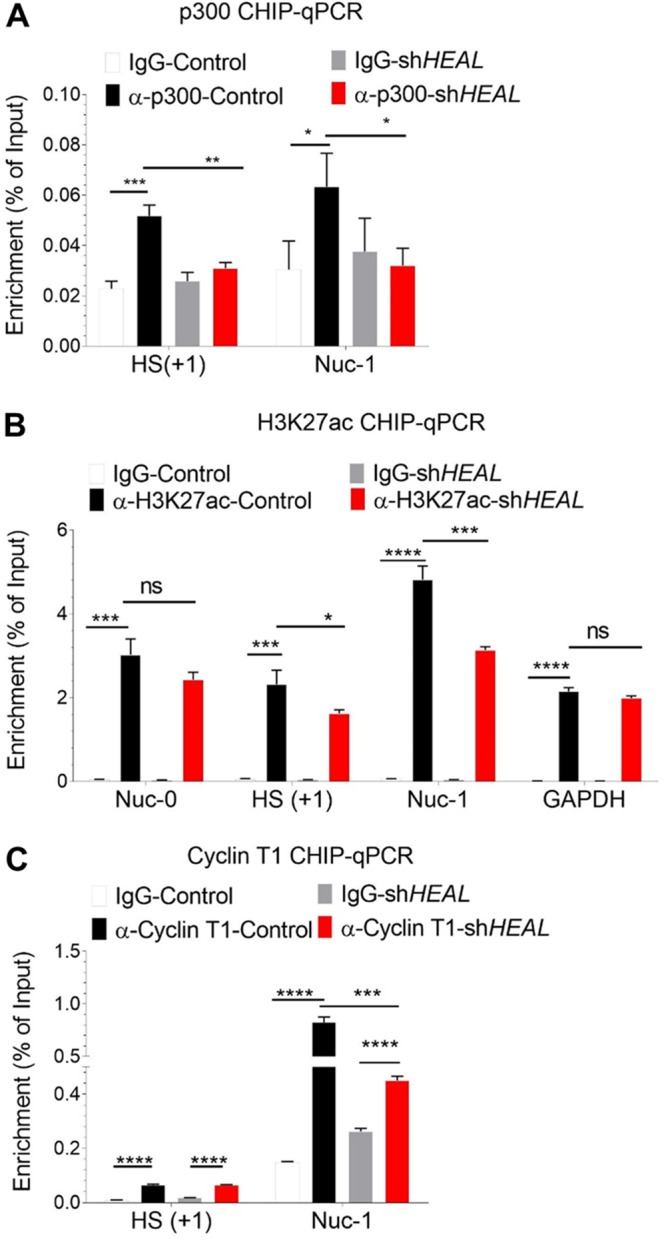
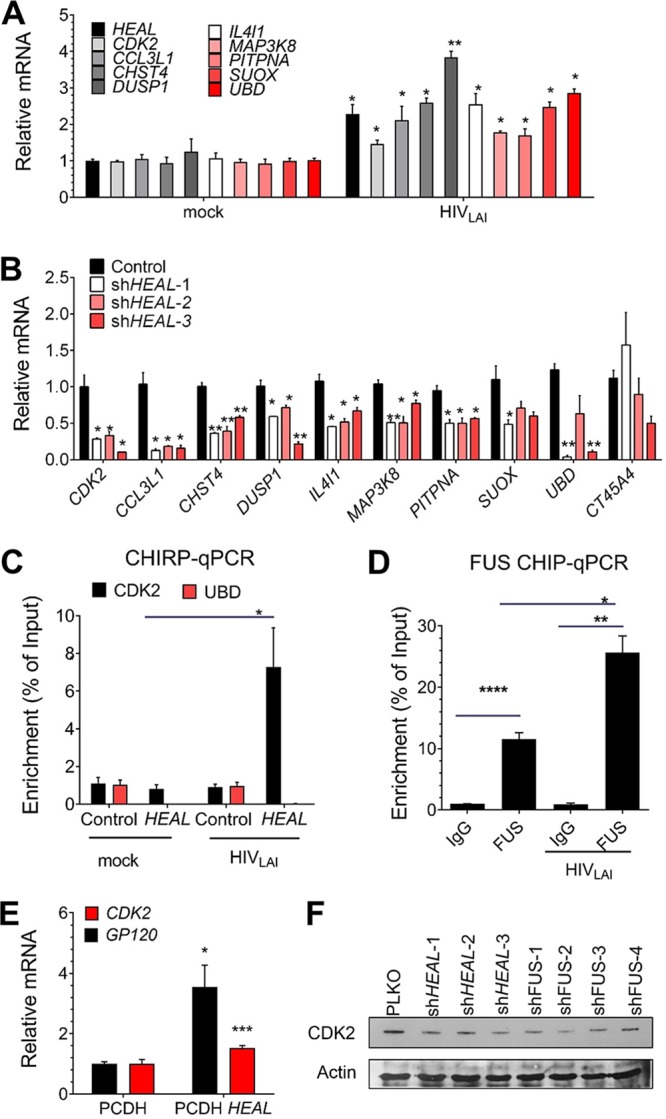
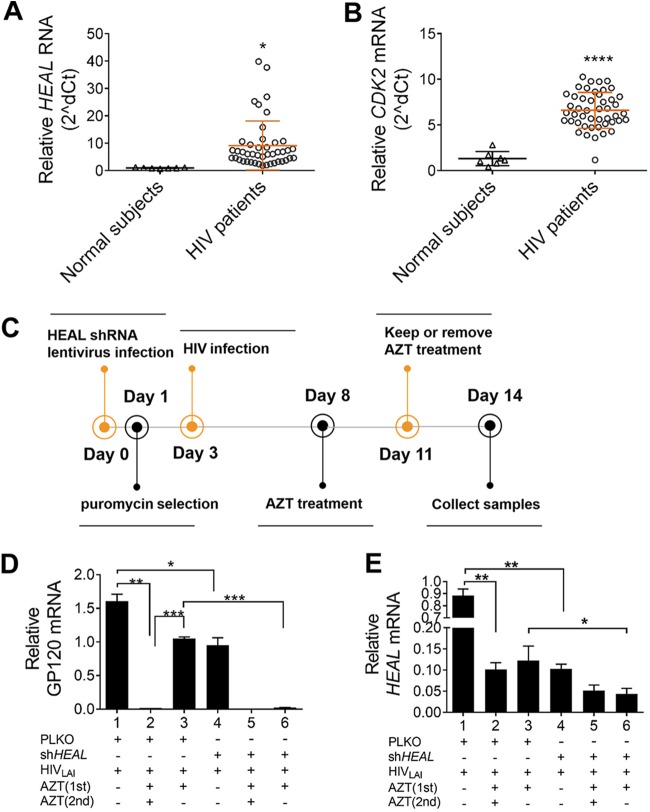
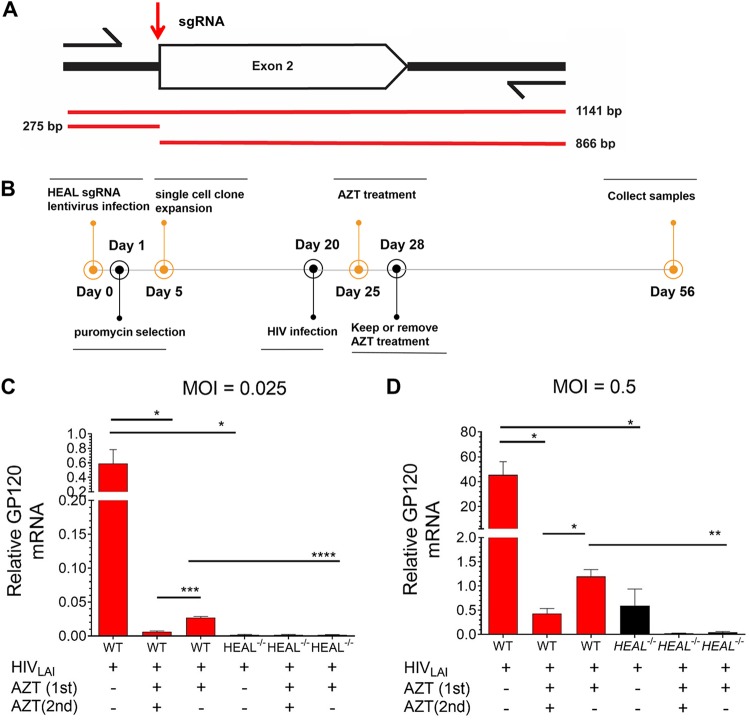
A major challenge in finding a cure for HIV-1/AIDS is the difficulty in identifying and eradicating persistent reservoirs of replication-competent provirus. Long noncoding RNAs (lncRNAs, >200 nucleotides) are increasingly recognized to play important roles in pathophysiology. Here, we report the first genome-wide expression analysis of lncRNAs in HIV-1-infected primary monocyte-derived macrophages (MDMs). We identified an lncRNA, which we named IV-1-nhnced ncRNA (), that is upregulated by HIV-1 infection of MDMs, microglia, and T lymphocytes. Peripheral blood mononuclear cells of HIV-1-infected individuals show elevated levels of Importantly, is a broad enhancer of multiple HIV-1 strains because depletion of inhibited X4, R5, and dual-tropic HIV replications and the inhibition was rescued by overexpression. forms a complex with the RNA-binding protein FUS, which facilitates HIV replication through at least two mechanisms: (i) -FUS complex binds the HIV promoter and enhances recruitment of the histone acetyltransferase p300, which positively regulates HIV transcription by increasing histone H3K27 acetylation and P-TEFb enrichment on the HIV promoter, and (ii) -FUS complex is enriched at the promoter of the cyclin-dependent kinase 2 gene, , to enhance CDK2 expression. Notably, knockdown and knockout mediated by RNA interference (RNAi) and CRISPR-Cas9, respectively, prevent HIV-1 recrudescence in T cells and microglia upon cessation of azidothymidine treatment Our results suggest that silencing of or perturbation of the -FUS ribonucleoprotein complex could provide a new epigenetic silencing strategy to eradicate viral reservoirs and effect a cure for HIV-1/AIDS. Despite our increased understanding of the functions of lncRNAs, their potential to develop HIV/AIDS cure strategies remains unexplored. A genome-wide analysis of lncRNAs in HIV-1-infected primary monocyte-derived macrophages (MDMs) was performed, and 1,145 differentially expressed lncRNAs were identified. An lncRNA named IV-1-nhnced ncRNA () is upregulated by HIV-1 infection and promotes HIV replication in T cells and macrophages. forms a complex with the RNA-binding protein FUS to enhance transcriptional coactivator p300 recruitment to the HIV promoter. Furthermore, knockdown and knockout prevent HIV-1 recrudescence in T cells and microglia upon cessation of azidothymidine treatment, suggesting as a potential therapeutic target to cure HIV-1/AIDS.
在寻找治愈 HIV-1/艾滋病的方法方面,一个主要挑战是难以识别和根除具有复制能力的前病毒的持久性储存库。长链非编码 RNA(lncRNA,大于 200 个核苷酸)在病理生理学中发挥重要作用的认识日益增强。在这里,我们报告了 HIV-1 感染的原代单核细胞衍生巨噬细胞(MDM)中 lncRNA 的全基因组表达分析的首次报告。我们鉴定了一种 lncRNA,我们将其命名为 IV-1-nhnced ncRNA(),它受 HIV-1 感染 MDM、小神经胶质细胞和 T 淋巴细胞的上调。HIV-1 感染个体的外周血单核细胞显示出水平升高的重要性。重要的是,是多种 HIV-1 株的广泛增强子,因为耗尽会抑制 X4、R5 和双嗜性 HIV 复制,而过表达可以挽救抑制。形成一个与 RNA 结合蛋白 FUS 的复合物,通过至少两种机制促进 HIV 复制:(i)-FUS 复合物结合 HIV 启动子并促进组蛋白乙酰转移酶 p300 的募集,通过增加 HIV 启动子上组蛋白 H3K27 的乙酰化和 P-TEFb 的富集,正向调节 HIV 转录,(ii)-FUS 复合物在细胞周期蛋白依赖性激酶 2 基因的启动子上富集,以增强 CDK2 的表达。值得注意的是,通过 RNA 干扰(RNAi)和 CRISPR-Cas9 分别介导的和敲除,可防止 T 细胞和小神经胶质细胞中 HIV-1 复发在停止叠氮胸苷治疗后。我们的结果表明,沉默或干扰 -FUS 核糖核蛋白复合物可能提供一种新的表观遗传沉默策略来根除病毒储存库并实现 HIV-1/AIDS 的治愈。尽管我们对 lncRNA 功能的理解有所增加,但它们在开发 HIV/AIDS 治愈策略方面的潜力仍未得到探索。对 HIV-1 感染的原代单核细胞衍生巨噬细胞(MDM)进行了全基因组 lncRNA 分析,鉴定出 1145 个差异表达的 lncRNA。一种名为 IV-1-nhnced ncRNA()的 lncRNA 被 HIV-1 感染上调,并促进 T 细胞和巨噬细胞中的 HIV 复制。形成一个与 RNA 结合蛋白 FUS 的复合物,以增强转录共激活因子 p300 募集到 HIV 启动子。此外,沉默和敲除可防止 T 细胞和小神经胶质细胞中 HIV-1 复发在停止叠氮胸苷治疗后,表明作为治疗 HIV-1/AIDS 的潜在治疗靶点。