ŁUKASIEWICZ Research Network-Institute of Biotechnology and Antibiotics, Warsaw, Poland.
Front Immunol. 2019 Sep 4;10:2006. doi: 10.3389/fimmu.2019.02006. eCollection 2019.
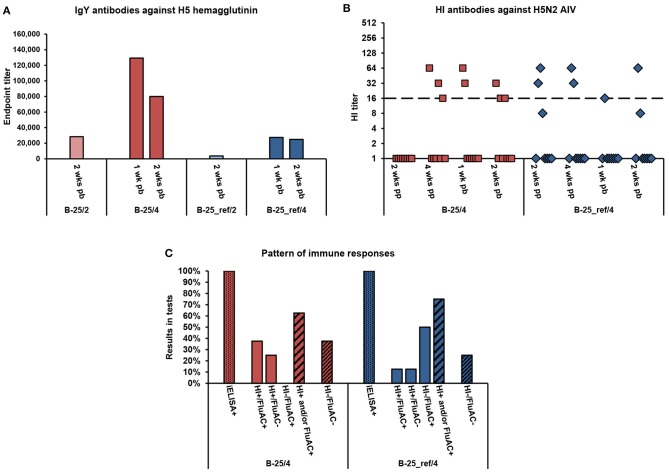
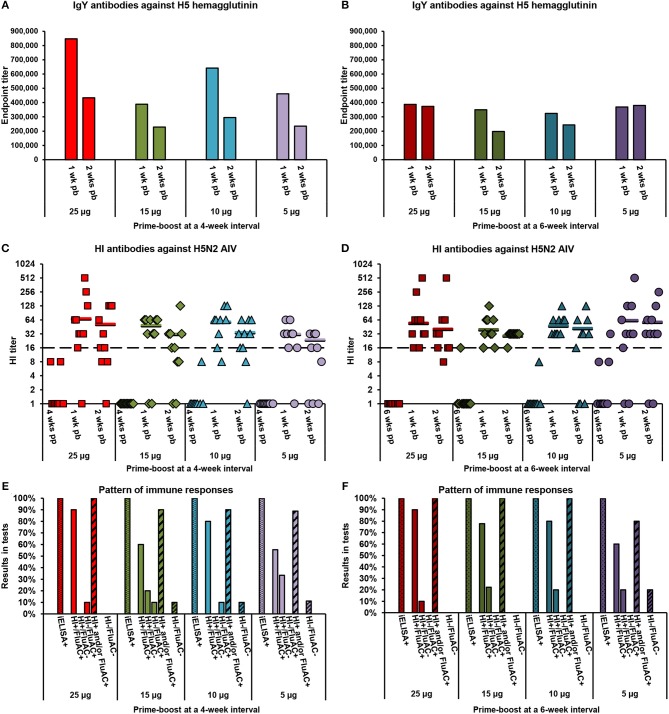
The highly pathogenic (HP) avian influenza virus (AIV), H5N1 and reassortant H5-subtype HPAIVs, H5N2, H5N6, and H5N8, cause high mortality in domestic birds, resulting in economic losses in the poultry industry. H5N1 and H5N6 also pose significant public health risks and H5N1 viruses are a permanent pandemic threat. To control HPAIVs, eukaryotic expression systems have traditionally been exploited to produce vaccines based on hemagglutinin (HA), a protective viral antigen. In contrast, we used a bacterial expression system to produce vaccine targeting the HA protein. A fragment of the HA ectodomain from H5N1, with a multibasic cleavage site deletion, was expressed in , refolded, and chromatographically purified from inclusion bodies. The resulting antigen, rH5-, was validated in terms of conformational integrity and oligomerization status. Previously, the protective efficacy of rH5- adjuvanted with aluminum hydroxide, has been positively verified by challenging the specific pathogen-free layer chickens with homologous and heterologous H5N1 HPAIVs. Protection was provided primarily by the H5 subtype-specific antibodies, as detected in the FluAC H5 test. The present studies were conducted to assess the performance of alum-adjuvanted rH5- in commercial birds. Broiler chickens were vaccinated twice with 25 μg of rH5- at 2- and 4-week intervals, while the layer chickens were vaccinated with 5- to 25-μg antigen doses at 4- and 6-week intervals. Post-vaccination sera were analyzed for anti-H5 HA antibodies, using homologous ELISA and heterologous FluAC H5 and hemagglutination inhibition (HI) tests. Prime-boost immunizations with rH5- elicited H5 HA-specific antibodies in all the chickens tested. Two antigen doses administered at 4- or 6-week intervals were sufficient to induce neutralizing antibodies against H5-subtype HAs; however, they were ineffective when applied with a 2-week delay. In the layers, 80% to 100% of individuals developed antibodies that were active in the FluAC H5 and/or HI tests. A dose-sparing effect was seen when using the longer prime-boost interval. In the broiler chickens, 62.5% positivity was achieved in the FluAC H5 and/or HI tests. The trials confirmed the vaccine potential of rH5- and provided indications for anti-influenza vaccination with respect to the chicken type and immunization scheme.
高致病性(HP)禽流感病毒(AIV)、H5N1 和重配 H5 亚型高致病性禽流感病毒 H5N2、H5N6 和 H5N8 会导致家禽高死亡率,给家禽业造成经济损失。H5N1 和 H5N6 也会对公共卫生造成重大威胁,H5N1 病毒是一种永久性的大流行威胁。为了控制高致病性禽流感病毒,传统上利用真核表达系统生产基于血凝素(HA)的疫苗,HA 是一种保护性病毒抗原。相比之下,我们使用细菌表达系统生产针对 HA 蛋白的疫苗。从包涵体中通过复性和色谱纯化,表达了具有多碱性切割位点缺失的 H5N1 血凝素外域片段。所得抗原 rH5-在构象完整性和寡聚化状态方面得到了验证。此前,铝佐剂增强的 rH5-对同源和异源 H5N1 高致病性禽流感病毒的特定无病原体层鸡的攻毒试验已经证实了其保护效力。保护作用主要是由 H5 亚型特异性抗体提供的,这是在 FluAC H5 试验中检测到的。本研究旨在评估铝佐剂增强的 rH5-在商品鸡中的性能。肉鸡在 2 周和 4 周龄时用 25 μg rH5-进行两次免疫接种,而蛋鸡在 4 周和 6 周龄时用 5-25 μg 抗原剂量进行免疫接种。用同源 ELISA 和异源 FluAC H5 和血凝抑制(HI)试验分析接种后血清中的抗 H5 HA 抗体。rH5-的初免-加强免疫在所有测试的鸡中均诱导了 H5 HA 特异性抗体。4-或 6 周龄间隔给予两次抗原剂量足以诱导针对 H5 亚型 HA 的中和抗体;然而,当间隔 2 周时,它们无效。在蛋鸡中,80%至 100%的个体产生了在 FluAC H5 和/或 HI 试验中具有活性的抗体。当使用较长的初免-加强间隔时,观察到剂量节省效应。在肉鸡中,FluAC H5 和/或 HI 试验的阳性率达到 62.5%。这些试验证实了 rH5-的疫苗潜力,并为根据鸡类型和免疫方案进行抗流感疫苗接种提供了依据。