Li Yao, Zhang Xingwang, Fang Yanming
Co-Innovation Center for Sustainable Forestry in Southern China, College of Biology and the Environment, Key Laboratory of State Forestry and Grassland Administration on Subtropical Forest Biodiversity Conservation, Nanjing Forestry University, Nanjing, China.
College of Life Sciences, Huaibei Normal University, Huaibei, China.
Front Plant Sci. 2019 Sep 3;10:1060. doi: 10.3389/fpls.2019.01060. eCollection 2019.
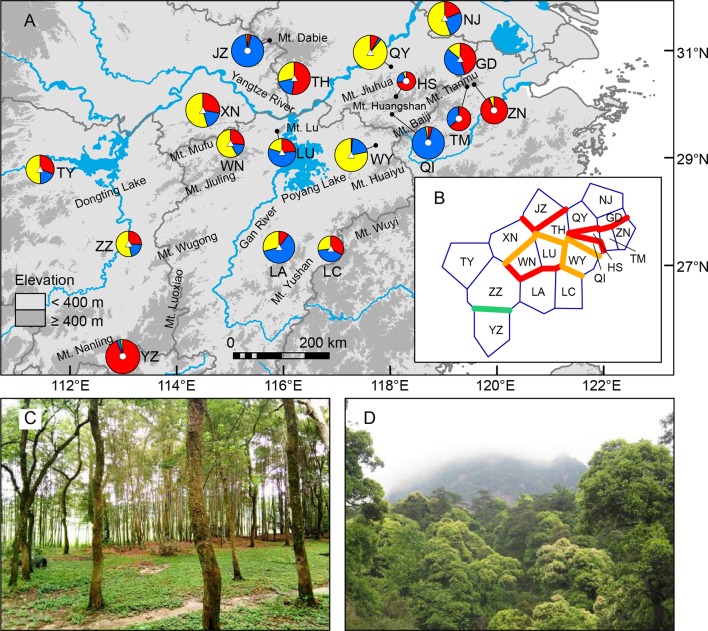
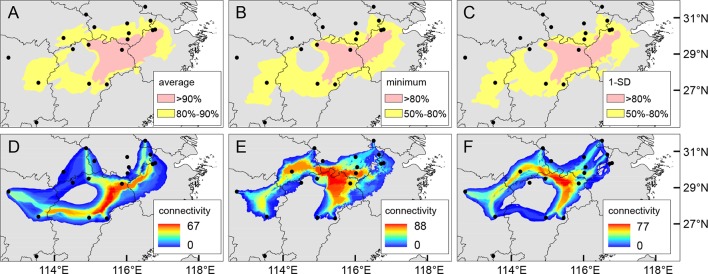
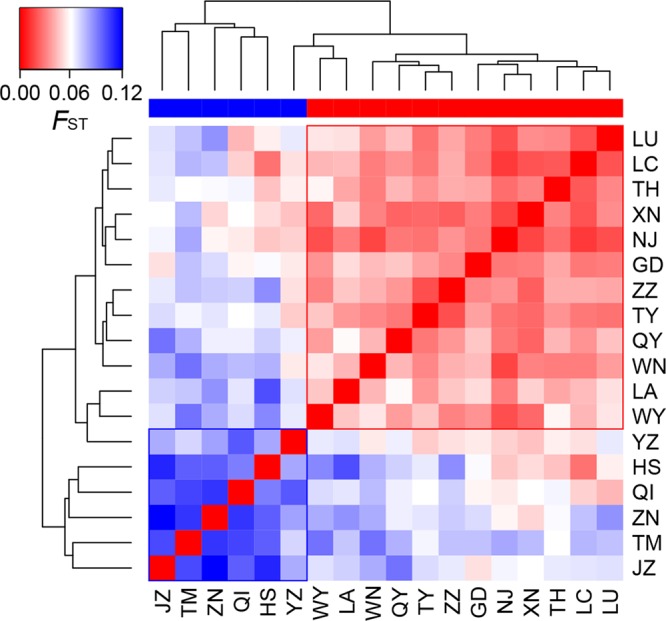
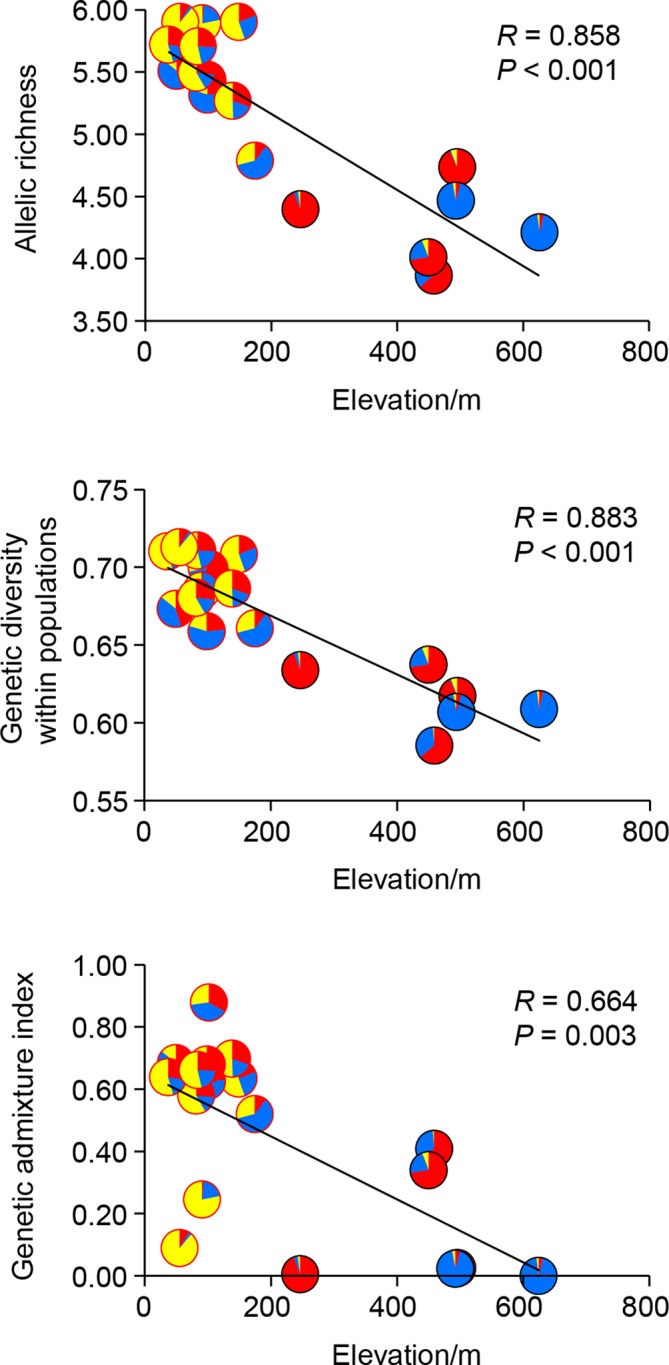
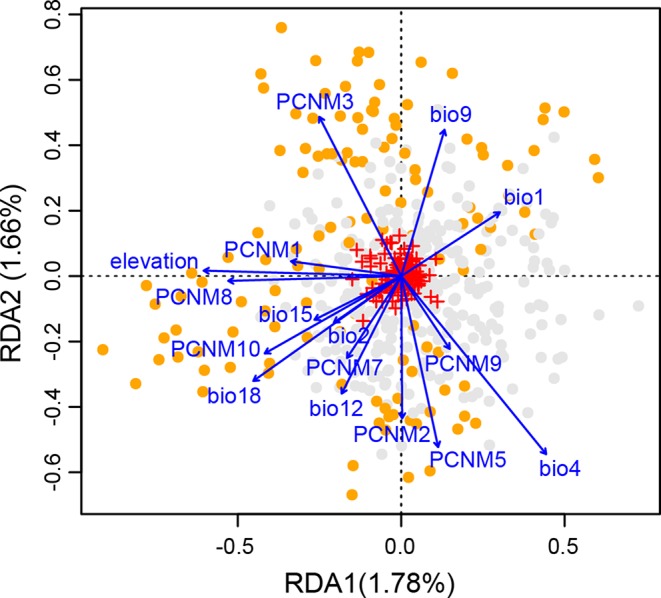
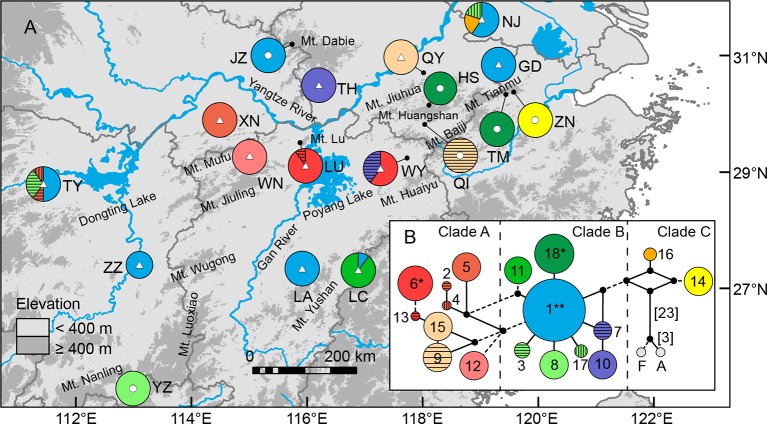
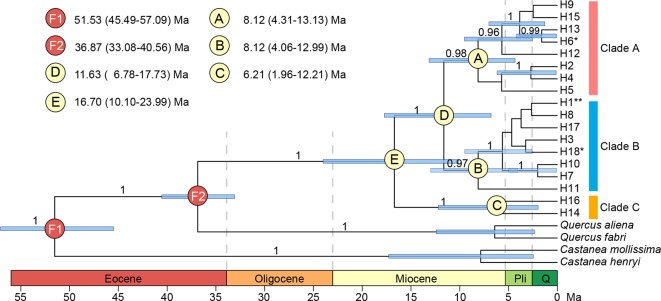
Major topographic features facilitate intraspecific divergence through geographic isolation. This process may be enhanced by environmental isolation along climatic gradients, but also may be reduced by range shifts under rapid climatic changes. In this study, we examined how topography and climate have interacted over time and space to influence the genetic structure and evolutionary history of , a deciduous oak species representative of the East China flora. Based on the nuclear microsatellite variation at 14 loci, we identified multiple genetic boundaries that were well associated with persistent landscape barriers of East China. Redundancy analysis indicated that both geography and climate explained similar amounts of intraspecific variation. Ecological differences along altitudinal gradients may have driven the divergence between highlands and lowlands. However, range expansions during the Last Interglacial as inferred from approximate Bayesian computation (ABC) may have increased the genetic diversity and eliminated the differentiation of lowland populations admixture. Chloroplast (cp) DNA analysis of four intergenic spacers (2,866 bp in length) identified a total of 18 haplotypes, 15 of which were private to a single population, probably a result of long-term isolation among multiple montane habitats. A time-calibrated phylogeny suggested that palaeoclimatic changes of the Miocene underlay the lineage divergence of three major clades. In combination with ecological niche modeling (ENM), we concluded that mountainous areas with higher climatic stability are more likely to be glacial refugia that preserved higher phylogenetic diversity, while plains and basins may have acted as dispersal corridors for the post-glacial south-to-north migration. Our findings provide compelling evidence that both topography and climate have shaped the pattern of genetic variation of . Mountains as barriers facilitated differentiation through both geographic and environmental isolation, whereas lowlands as corridors increased the population connectivity especially when the species experienced range expansions.
主要地形特征通过地理隔离促进种内分化。这一过程可能会因沿气候梯度的环境隔离而增强,但也可能因快速气候变化下的范围转移而减弱。在本研究中,我们研究了地形和气候如何随时间和空间相互作用,以影响一种代表华东植物区系的落叶栎树种的遗传结构和进化历史。基于14个位点的核微卫星变异,我们确定了多个与华东地区持续存在的景观屏障密切相关的遗传边界。冗余分析表明,地理和气候对种内变异的解释量相似。沿海拔梯度的生态差异可能推动了高地和低地之间的分化。然而,根据近似贝叶斯计算(ABC)推断,末次间冰期期间的范围扩张可能增加了遗传多样性,并消除了低地种群混合的分化。对四个基因间隔区(长度为2866 bp)的叶绿体(cp)DNA分析共鉴定出18种单倍型,其中15种是单个种群特有的,这可能是多个山地生境长期隔离的结果。一个经过时间校准的系统发育树表明,中新世的古气候变化是三个主要分支谱系分化的基础。结合生态位建模(ENM),我们得出结论,气候稳定性较高的山区更有可能是保存了较高系统发育多样性的冰期避难所,而平原和盆地可能充当了冰期后物种从南向北迁移的扩散走廊。我们的研究结果提供了令人信服的证据,表明地形和气候都塑造了该树种的遗传变异模式。山脉作为屏障通过地理隔离和环境隔离促进了分化,而低地作为走廊增加了种群连通性,尤其是当物种经历范围扩张时。