Lee Siseon, Kang Minsik, Bae Jung-Hoon, Sohn Jung-Hoon, Sung Bong Hyun
Synthetic Biology and Bioengineering Research Center, Korea Research Institute of Bioscience and Biotechnology, Daejeon, South Korea.
Department of Biosystems and Bioengineering, Korea University of Science and Technology, Daejeon, South Korea.
Front Bioeng Biotechnol. 2019 Sep 3;7:209. doi: 10.3389/fbioe.2019.00209. eCollection 2019.
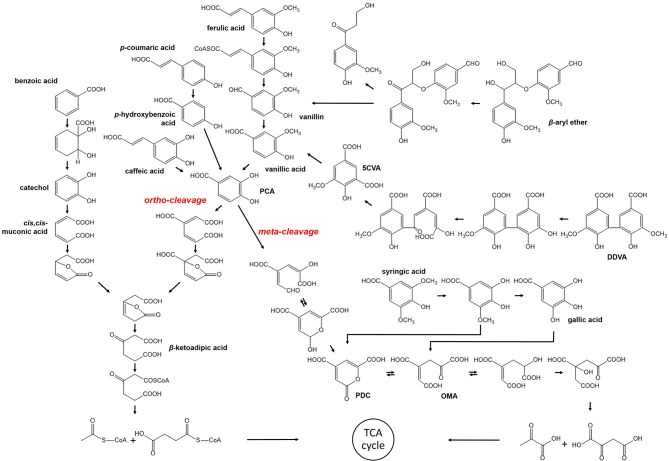
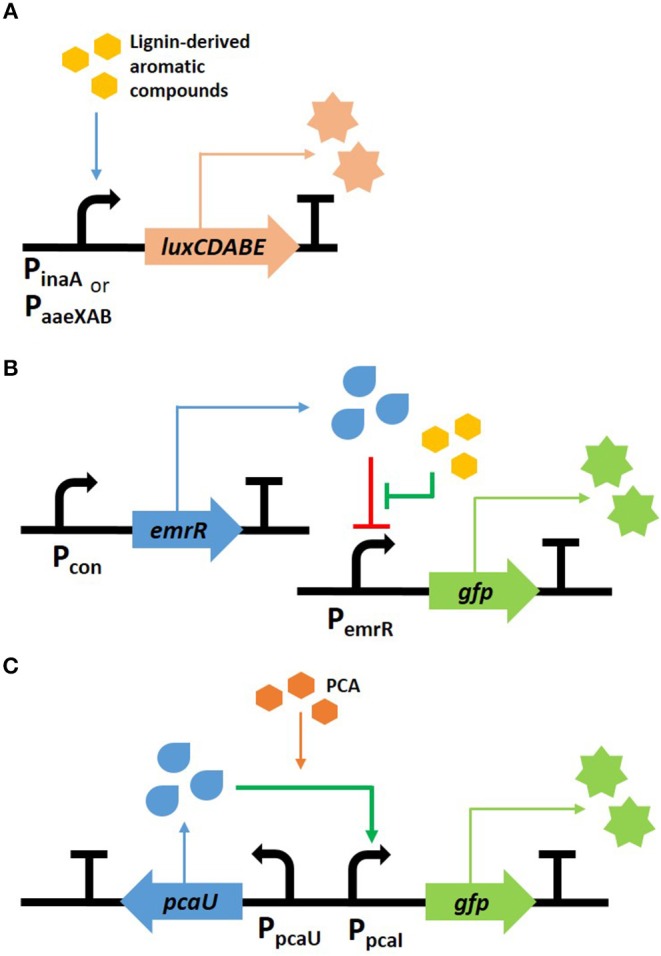
Lignin, an aromatic polymer found in plants, has been studied for years in many biological fields. Initially, when biofuel was produced from lignocellulosic biomass, lignin was regarded as waste generated by the biorefinery and had to be removed, because of its inhibitory effects on fermentative bacteria. Although it has since proven to be a natural resource for bio-products with considerable potential, its utilization is confined by its complex structure. Hence, the microbial degradation of lignin has attracted researchers' interest to overcome this problem. From this perspective, the studies have primarily focused on fungal systems, such as extracellular peroxidase and laccase from white- and brown-rot fungi. However, recent reports have suggested that bacteria play an increasing role in breaking down lignin. This paper, therefore, reviews the role of bacteria in lignin and lignin-related research. Several reports on bacterial species in soil that can degrade lignin and their enzymes are included. In addition, a cellulolytic anaerobic bacterium capable of solubilizing lignin and carbohydrate simultaneously has recently been identified, even though the enzyme involved has not been discovered yet. The assimilation of lignin-derived small molecules and their conversion to renewable chemicals by bacteria, such as muconic acid and polyhydroxyalkanoates, including genetic modification to enhance their capability was discussed. This review also covers the indirect use of bacteria for lignin degradation, which is concerned with whole-cell biosensors designed to detect the aromatic chemicals released from lignin transformation.
木质素是一种存在于植物中的芳香聚合物,多年来在许多生物学领域都有研究。最初,当利用木质纤维素生物质生产生物燃料时,木质素被视为生物炼制过程中产生的废物,由于其对发酵细菌有抑制作用,必须将其去除。尽管后来已证明它是一种具有相当潜力的生物产品天然资源,但其利用受到其复杂结构的限制。因此,木质素的微生物降解引起了研究人员的兴趣,以克服这一问题。从这个角度来看,研究主要集中在真菌系统,如白腐真菌和褐腐真菌的细胞外过氧化物酶和漆酶。然而,最近的报道表明,细菌在分解木质素方面发挥着越来越重要的作用。因此,本文综述了细菌在木质素及与木质素相关研究中的作用。其中包括一些关于土壤中能够降解木质素的细菌种类及其酶的报道。此外,最近还发现了一种能够同时溶解木质素和碳水化合物的纤维素分解厌氧细菌,尽管尚未发现其所涉及的酶。还讨论了细菌对木质素衍生小分子的同化作用及其转化为可再生化学品的过程,如粘康酸和聚羟基脂肪酸酯,包括通过基因改造来增强其能力。本综述还涵盖了细菌在木质素降解中的间接应用,这涉及到设计用于检测木质素转化释放的芳香族化学品的全细胞生物传感器。