Ghazy Nermine, Ratner Eleanor, Rosenberg-Lee Miriam
Department of Psychology, Rutgers University, Newark, NJ, United States.
Front Psychol. 2019 Sep 6;10:1941. doi: 10.3389/fpsyg.2019.01941. eCollection 2019.
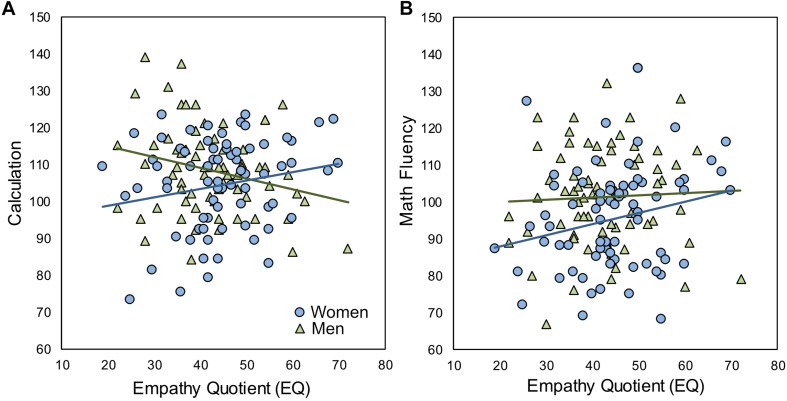
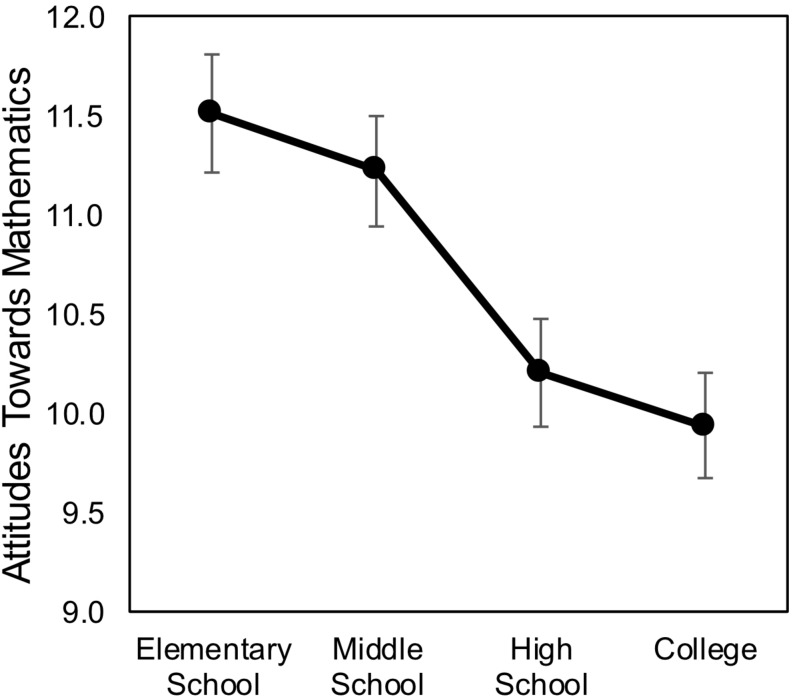
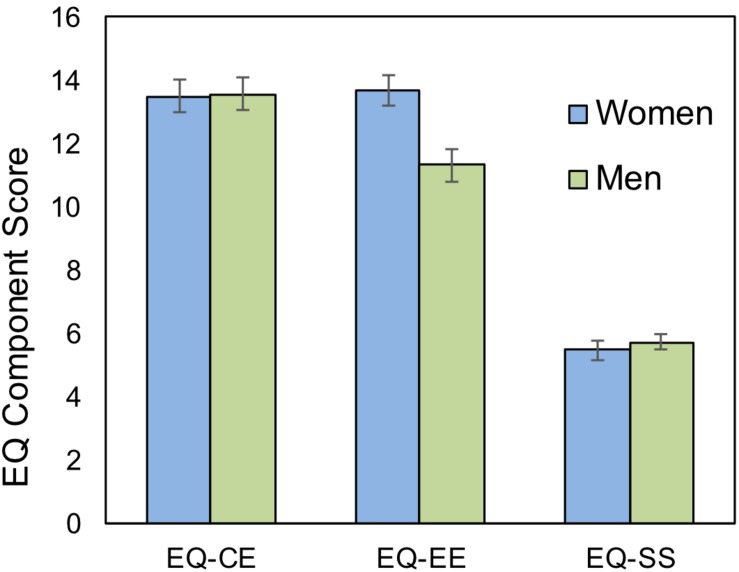
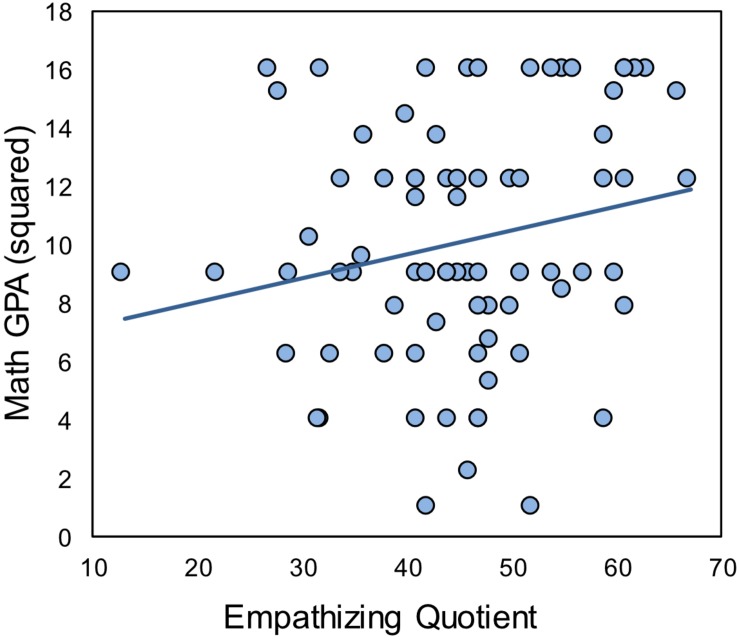
Mathematics forms a foundation for the science, technology, engineering and mathematics (STEM) fields. While considerable work has identified the individual cognitive and external systemic factors that influence math achievement, less is known about personality-like traits that might contribute to success in mathematics, especially among women. This study examines two such traits: systemizing - the tendency to analyze systems and extract underlying rules that govern their behavior - and empathizing - the ability to identify with another's emotions and respond appropriately. Recently Escovar et al. (2016) found that empathizing was a negative predictor of math skills in children, especially among girls, suggesting that women with higher empathy might be particularly disposed to lower math performance. In the first study, 142 participants (71 female) completed two standardized measures of math achievement and questionnaires to gauge the tendency to empathize and systemize. Surprisingly, higher empathy was associated with better math performance in women, while men displayed the expected pattern of lower empathy being related to higher math scores. In a second study, we extend this finding in women ( = 121) to show that individuals who report higher mathematics achievement in university level course work also have higher empathy scores. Further, while positive attitudes toward mathematics tended to decline from elementary school to college, women whose attitudes increased had higher empathy scores than those who declined. Together, these results suggest that while the tendency to empathize is associated with worse math performance in childhood, it may become a protective factor as women progress through their mathematics education.
数学是科学、技术、工程和数学(STEM)领域的基础。虽然已有大量研究确定了影响数学成绩的个体认知因素和外部系统因素,但对于可能有助于数学学习成功的类似人格特质,尤其是在女性中,我们了解得较少。本研究考察了两种此类特质:系统化——分析系统并提取支配其行为的潜在规则的倾向——和共情——识别他人情绪并做出适当反应的能力。最近,埃斯科瓦尔等人(2016年)发现,共情是儿童数学技能的负面预测因素,尤其是在女孩中,这表明共情能力较高的女性可能特别容易出现数学成绩较低的情况。在第一项研究中,142名参与者(71名女性)完成了两项标准化数学成绩测试以及用于衡量共情倾向和系统化倾向的问卷。令人惊讶的是,较高的共情能力与女性更好的数学成绩相关,而男性则呈现出预期的模式,即较低的共情能力与较高的数学分数相关。在第二项研究中,我们将这一发现扩展到女性(n = 121),以表明在大学水平课程作业中数学成绩较高的个体也有较高的共情分数。此外,虽然从小学到大学对数学的积极态度往往会下降,但态度上升的女性的共情分数高于态度下降的女性。综合来看,这些结果表明,虽然共情倾向在儿童时期与较差的数学成绩相关,但随着女性接受数学教育,它可能会成为一个保护因素。