Department of Electrical and Computer Engineering, University of Connecticut, Storrs, Connecticut, United States of America.
Department of Biomedical Engineering, University of Connecticut, Storrs, Connecticut, United States of America.
PLoS Biol. 2019 Oct 1;17(10):e3000449. doi: 10.1371/journal.pbio.3000449. eCollection 2019 Oct.
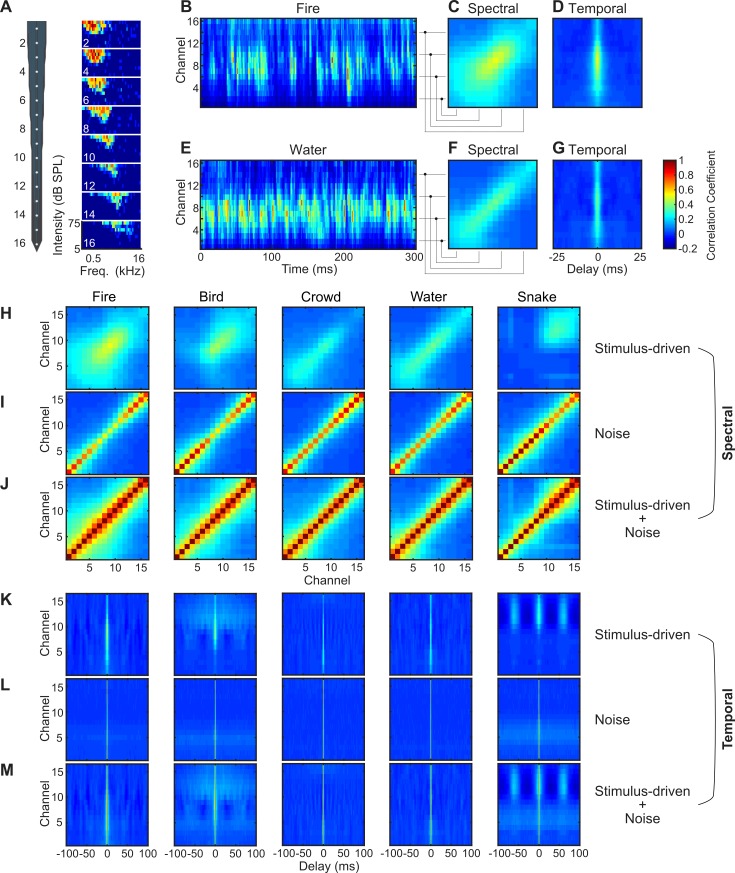
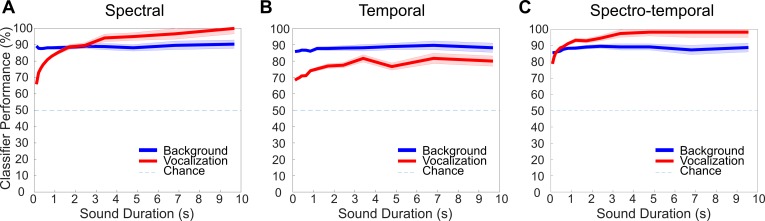
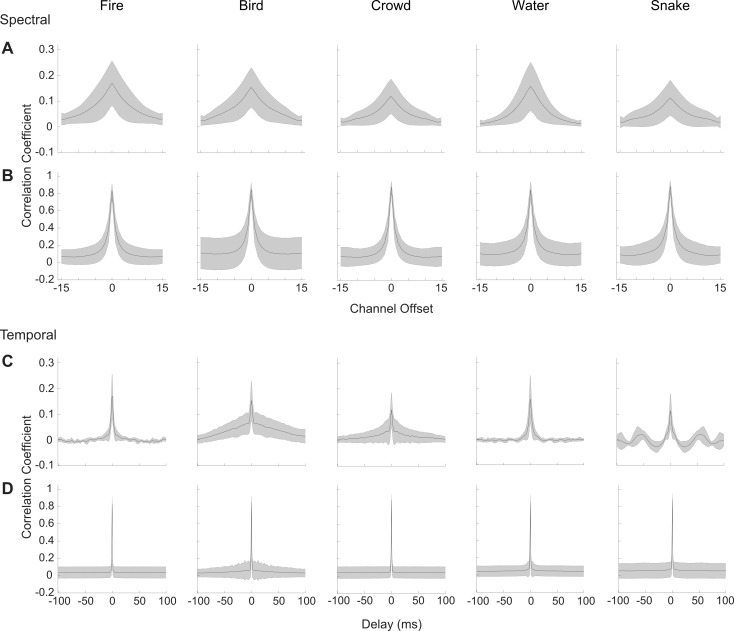
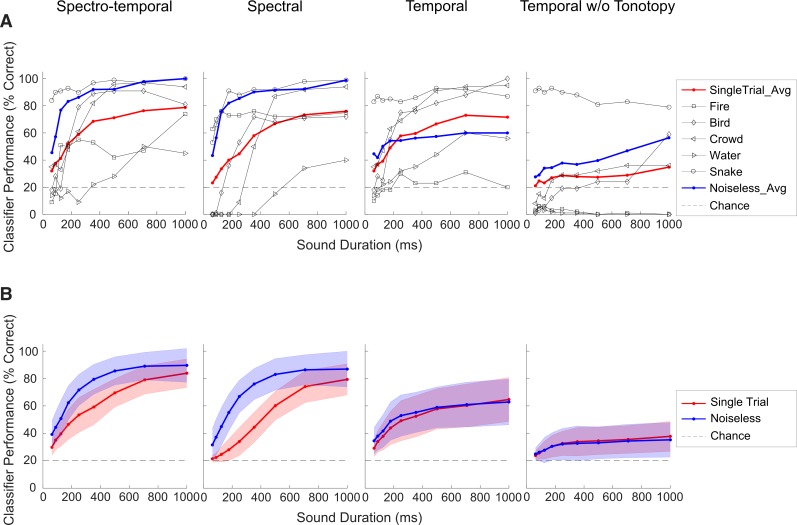
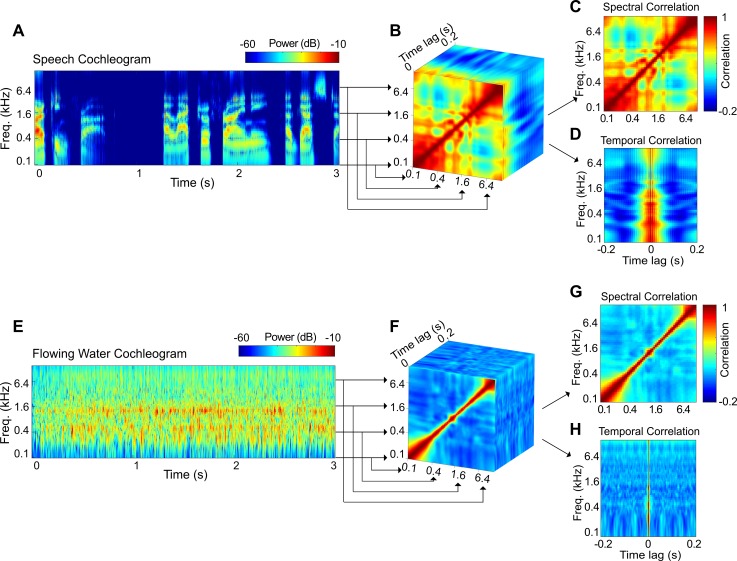
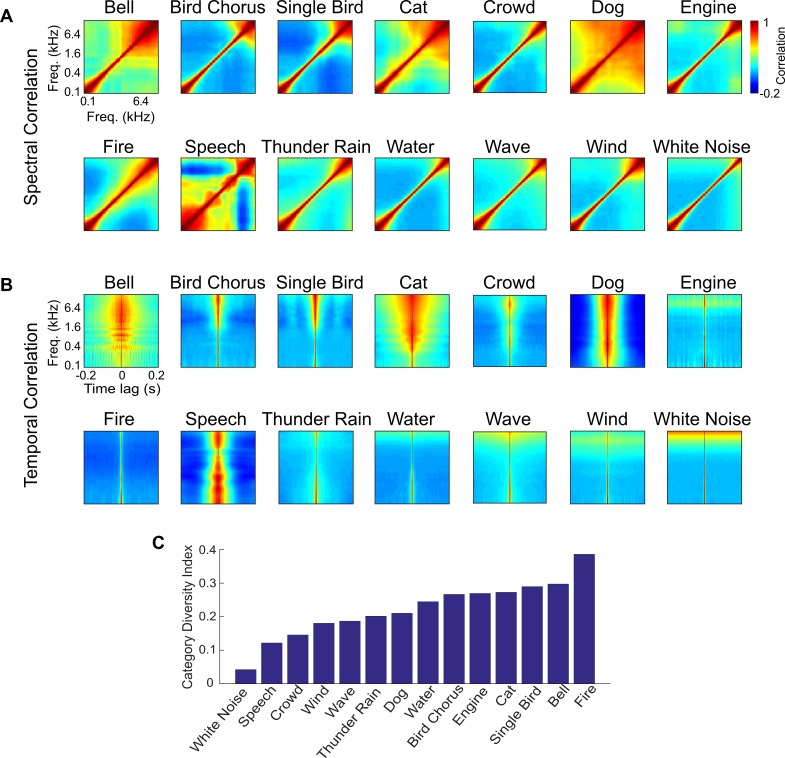
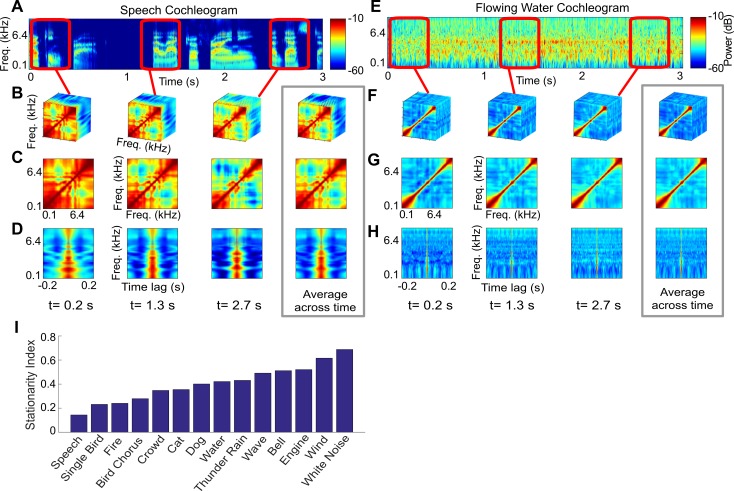
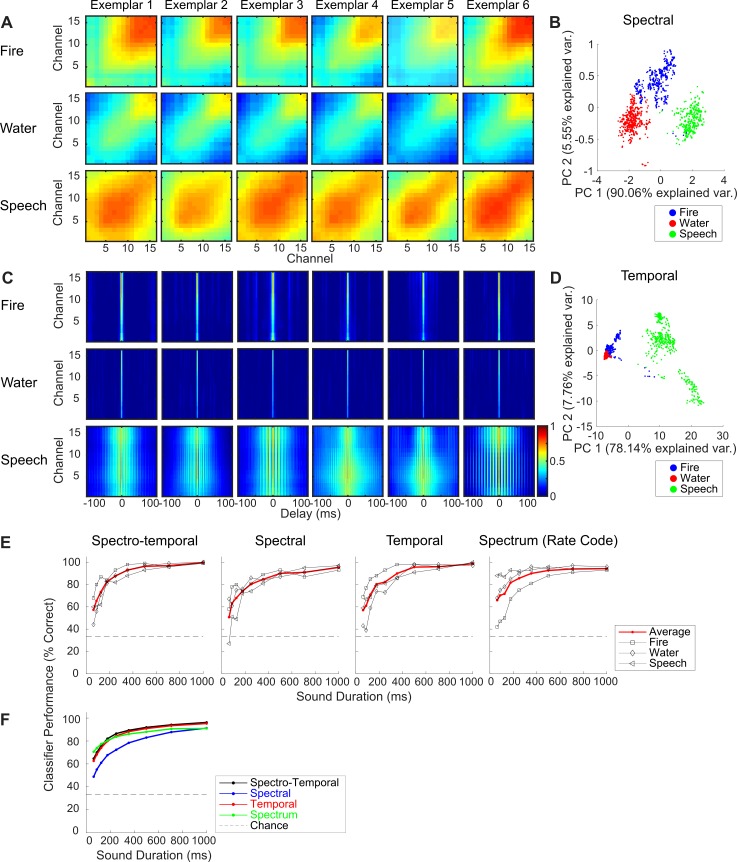
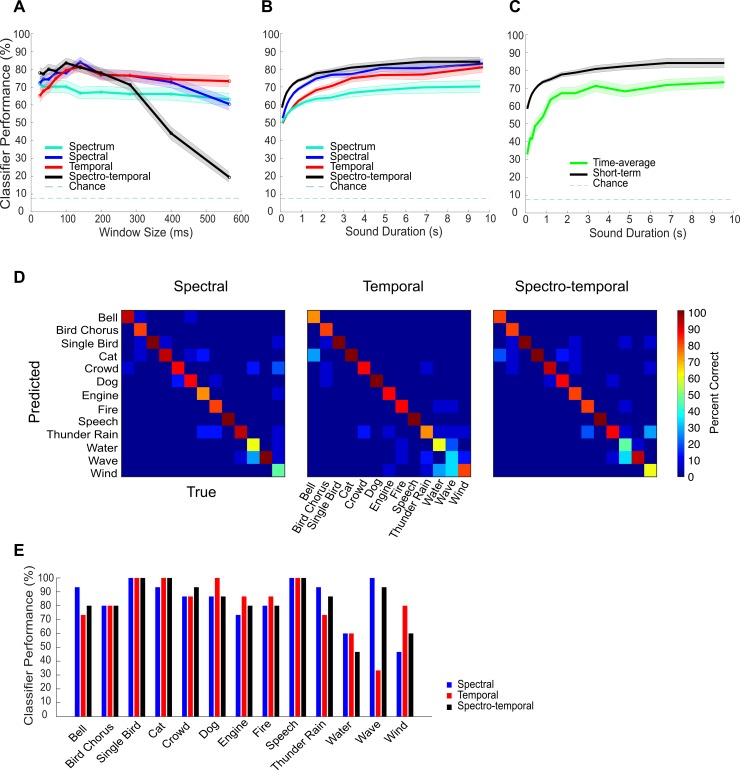
Humans and other animals effortlessly identify natural sounds and categorize them into behaviorally relevant categories. Yet, the acoustic features and neural transformations that enable sound recognition and the formation of perceptual categories are largely unknown. Here, using multichannel neural recordings in the auditory midbrain of unanesthetized female rabbits, we first demonstrate that neural ensemble activity in the auditory midbrain displays highly structured correlations that vary with distinct natural sound stimuli. These stimulus-driven correlations can be used to accurately identify individual sounds using single-response trials, even when the sounds do not differ in their spectral content. Combining neural recordings and an auditory model, we then show how correlations between frequency-organized auditory channels can contribute to discrimination of not just individual sounds but sound categories. For both the model and neural data, spectral and temporal correlations achieved similar categorization performance and appear to contribute equally. Moreover, both the neural and model classifiers achieve their best task performance when they accumulate evidence over a time frame of approximately 1-2 seconds, mirroring human perceptual trends. These results together suggest that time-frequency correlations in sounds may be reflected in the correlations between auditory midbrain ensembles and that these correlations may play an important role in the identification and categorization of natural sounds.
人类和其他动物能够轻松地识别自然声音,并将其归类为具有行为相关性的类别。然而,声音识别和知觉类别形成所依赖的声学特征和神经转换在很大程度上仍是未知的。在这里,我们使用未麻醉雌性兔子的听觉中脑的多通道神经记录,首先证明听觉中脑的神经集合活动显示出高度结构化的相关性,这些相关性随不同的自然声音刺激而变化。这些由刺激驱动的相关性可以用于使用单反应试验准确识别单个声音,即使这些声音在其光谱内容上没有差异。结合神经记录和听觉模型,我们展示了频率组织的听觉通道之间的相关性如何有助于区分单个声音和声音类别。对于模型和神经数据,频谱和时间相关性都能实现类似的分类性能,并且似乎同样重要。此外,当神经和模型分类器在大约 1-2 秒的时间框架内累积证据时,它们都能达到最佳的任务性能,反映了人类的感知趋势。这些结果共同表明,声音中的时频相关性可能反映在听觉中脑集合之间的相关性中,并且这些相关性可能在自然声音的识别和分类中发挥重要作用。