Xie Wenchao, Luo Ying, Liang Xiangwen, Lin Zhihai, Wang Zhengdong, Liu Ming
Department of Cardiology, Sixth Affiliated Hospital of Guangxi Medical University, Yulin, Guangxi 537000, People's Republic of China.
Graduate School, Guangxi Medical University, Nanning, Guangxi 530021, People's Republic of China.
Ther Clin Risk Manag. 2019 Sep 24;15:1129-1140. doi: 10.2147/TCRM.S198403. eCollection 2019.
Information regarding the use of aspirin for patients with no known cardiovascular disease remains conflicting. We performed an updated meta-analysis to evaluate the efficacy and safety of aspirin for primary prevention of cardiovascular disease.
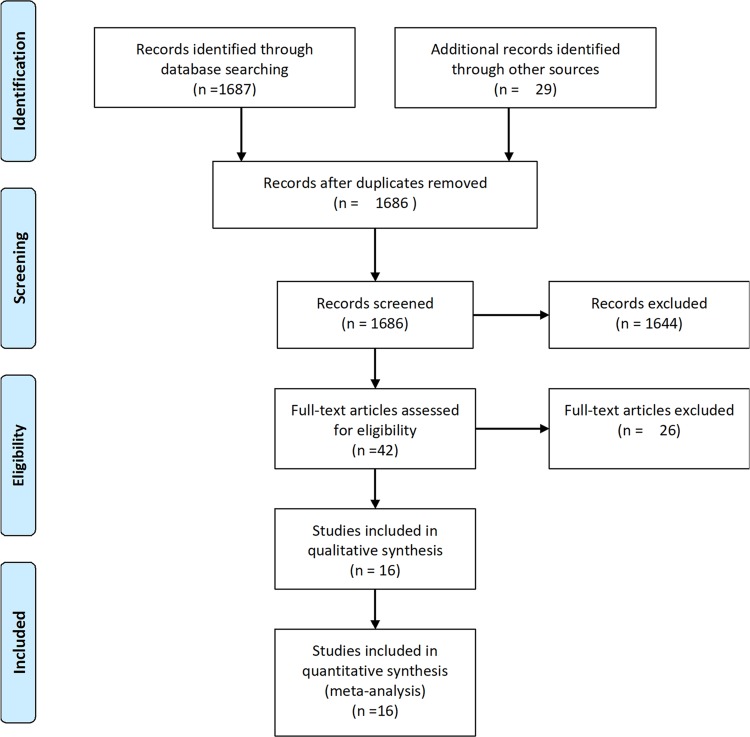
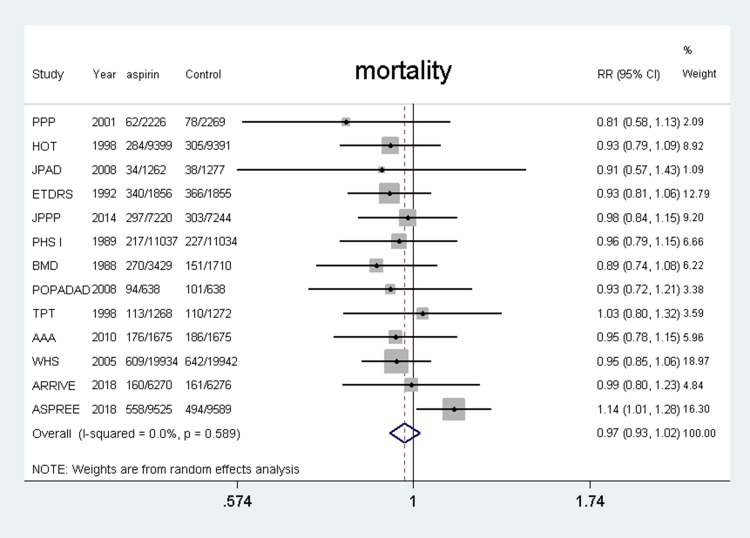
PubMed, MEDLINE, and Cochrane library databases were searched for randomized controlled trials comparing aspirin with placebos or no treatment published up until November 1, 2018. The primary efficacy endpoint was all-cause death. The secondary endpoints included cardiovascular death, myocardial infarction, and stroke. The safety endpoints included major bleeding, gastrointestinal bleeding, and hemorrhagic stroke.
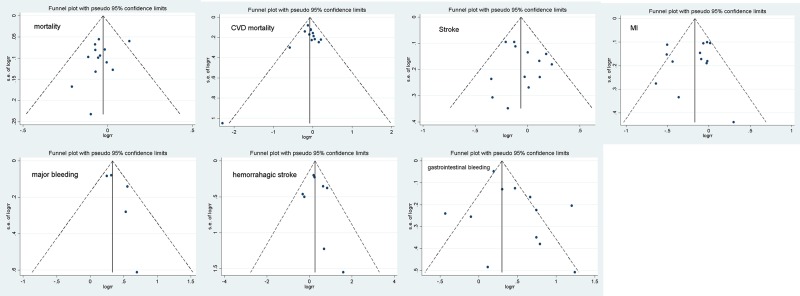
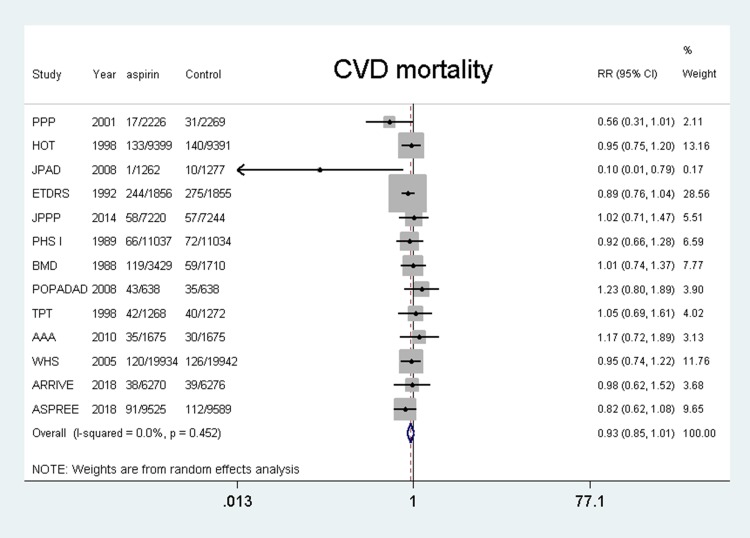
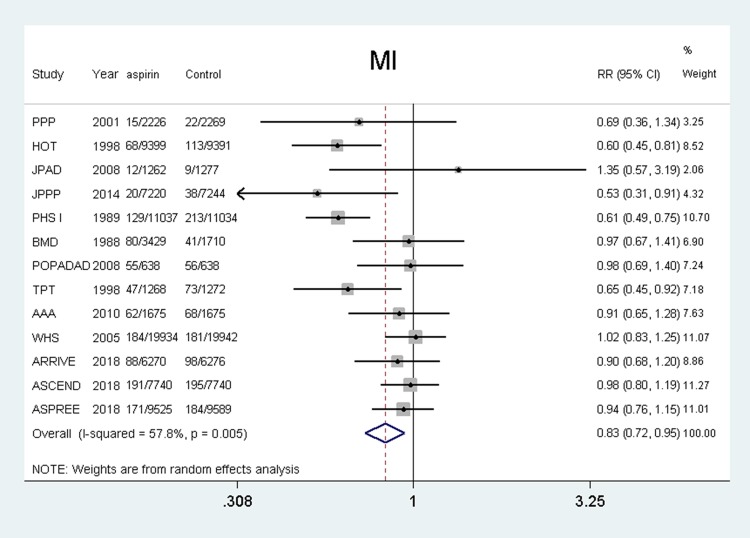
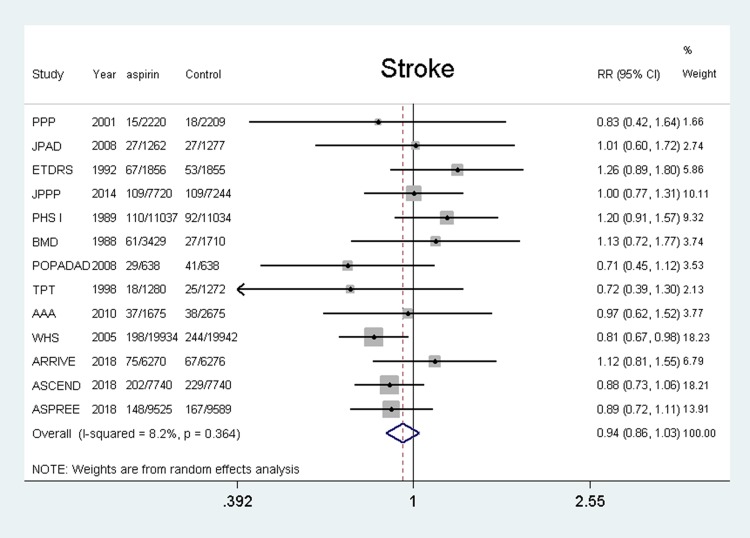
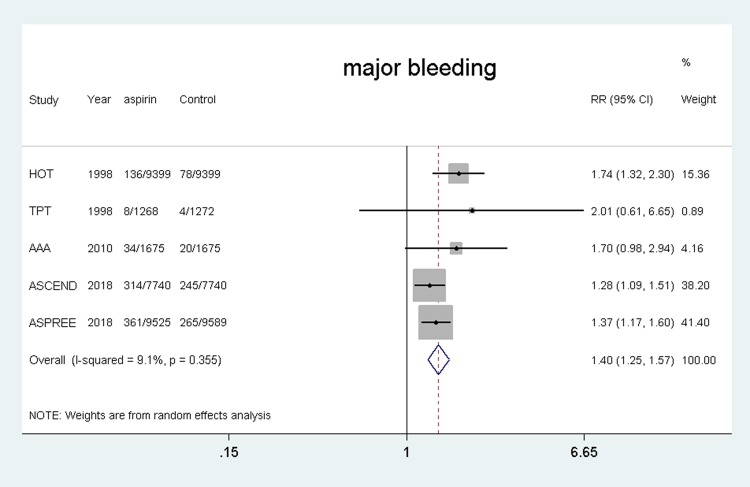
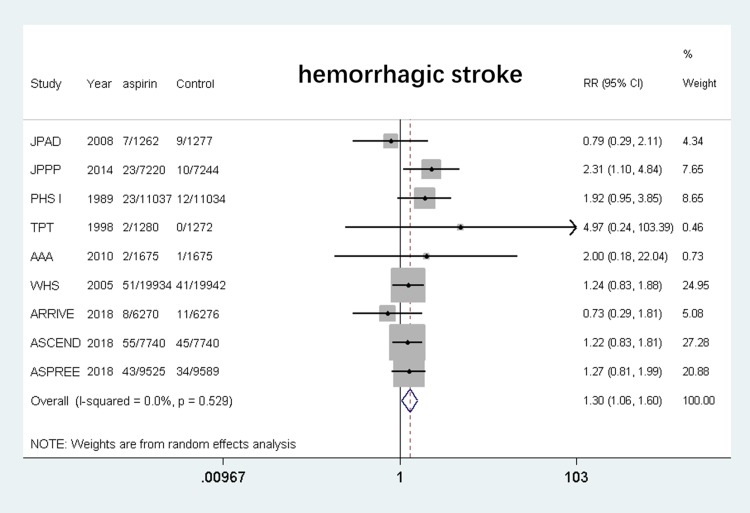
Fourteen studies were included. Aspirin use was associated with a lower risk of myocardial infarction than placebo use or no treatment (risk ratio [RR], 0.83, 95% confidence interval [CI]: 0.73-0.95, P = 0.005). Additionally, compared with the control groups, aspirin use was not associated with a lower risk of all-cause mortality or cardiovascular mortality. In terms of safety, aspirin use was associated with a higher risk of major bleeding (RR, 1.40, 95% CI: 1.25-1.57, P = 0.000), gastrointestinal bleeding (RR, 1.58, 95% CI: 1.25-1.99, P = 0.000), and hemorrhagic stroke (RR, 1.30, 95% CI: 1.06-1.60, P = 0.011). Furthermore, the treatment effect was not significantly modified by patients' clinical characteristics. No publication bias was present.
Aspirin use reduced the myocardial infarction risk in patients without known cardiovascular disease, but had no effect in terms of reducing the risk of all-cause death, cardiovascular death, and stroke, and increased the risk of major bleeding, gastrointestinal bleeding, and hemorrhagic stroke.
关于阿司匹林在无已知心血管疾病患者中的使用信息仍存在矛盾。我们进行了一项更新的荟萃分析,以评估阿司匹林用于心血管疾病一级预防的疗效和安全性。
检索了PubMed、MEDLINE和Cochrane图书馆数据库,查找截至2018年11月1日发表的比较阿司匹林与安慰剂或不治疗的随机对照试验。主要疗效终点是全因死亡。次要终点包括心血管死亡、心肌梗死和中风。安全终点包括大出血、胃肠道出血和出血性中风。
纳入了14项研究。与使用安慰剂或不治疗相比,使用阿司匹林与较低的心肌梗死风险相关(风险比[RR],0.83,95%置信区间[CI]:0.73 - 0.95,P = 0.005)。此外,与对照组相比,使用阿司匹林与较低的全因死亡率或心血管死亡率风险无关。在安全性方面,使用阿司匹林与大出血风险较高(RR,1.40,95% CI:1.25 - 1.57,P = 0.000)、胃肠道出血风险较高(RR,1.58,95% CI:1.25 - 1.99,P = 0.000)和出血性中风风险较高(RR,1.30,95% CI:1.06 - 1.60,P = 0.011)相关。此外,治疗效果未因患者的临床特征而有显著改变。不存在发表偏倚。
在无已知心血管疾病的患者中,使用阿司匹林降低了心肌梗死风险,但在降低全因死亡、心血管死亡和中风风险方面无效,且增加了大出血、胃肠道出血和出血性中风的风险。