Department of Neurological Surgery, The Miami Project to Cure Paralysis, University of Miami Miller School of Medicine, Miami, Florida, United States of America.
Department of Pharmacology, School of Medicine, University of California Irvine, Irvine, California, United States of America.
PLoS One. 2019 Oct 3;14(10):e0223180. doi: 10.1371/journal.pone.0223180. eCollection 2019.
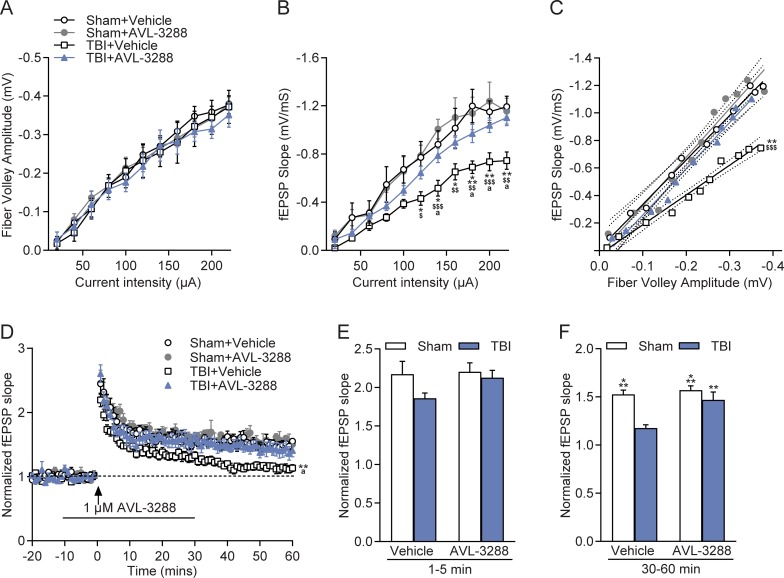
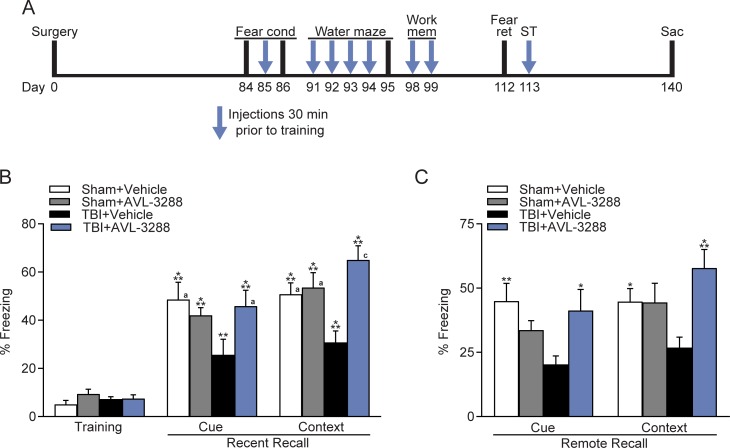
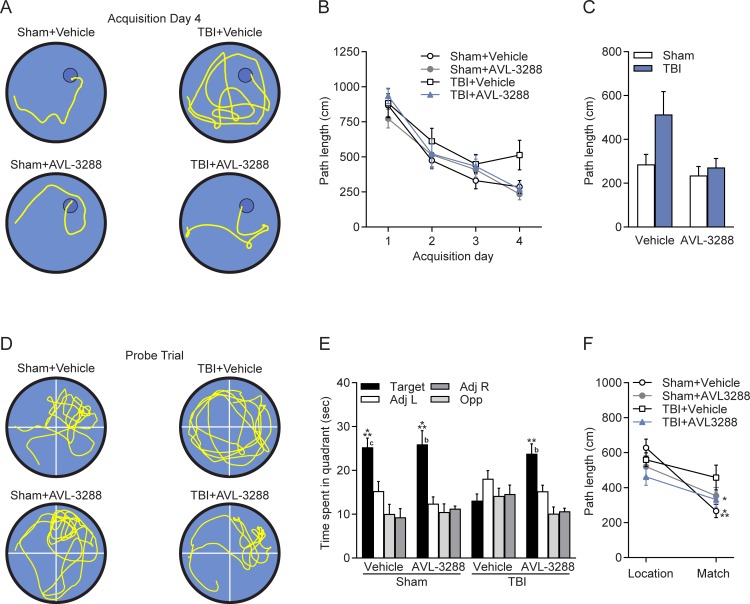
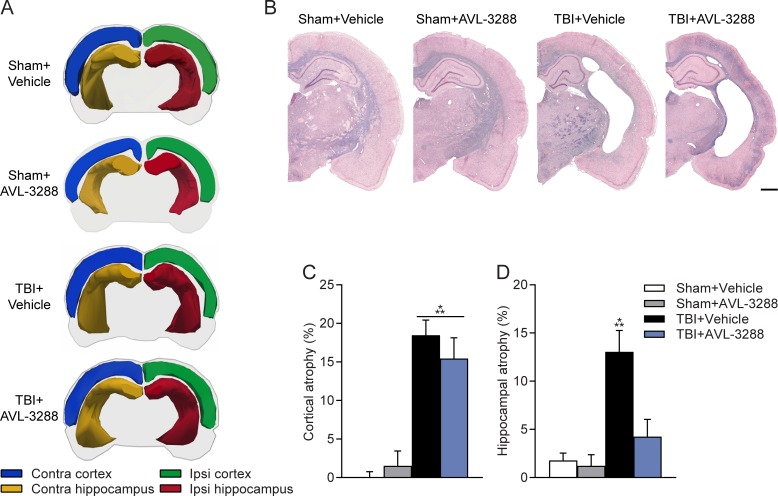
Cognitive impairments are a common consequence of traumatic brain injury (TBI). The hippocampus is a subcortical structure that plays a key role in the formation of declarative memories and is highly vulnerable to TBI. The α7 nicotinic acetylcholine receptor (nAChR) is highly expressed in the hippocampus and reduced expression and function of this receptor are linked with cognitive impairments in Alzheimer's disease and schizophrenia. Positive allosteric modulation of α7 nAChRs with AVL-3288 enhances receptor currents and improves cognitive functioning in naïve animals and healthy human subjects. Therefore, we hypothesized that targeting the α7 nAChR with the positive allosteric modulator AVL-3288 would enhance cognitive functioning in the chronic recovery period of TBI. To test this hypothesis, adult male Sprague Dawley rats received moderate parasagittal fluid-percussion brain injury or sham surgery. At 3 months after recovery, animals were treated with vehicle or AVL-3288 at 30 min prior to cue and contextual fear conditioning and the water maze task. Treatment of TBI animals with AVL-3288 rescued learning and memory deficits in water maze retention and working memory. AVL-3288 treatment also improved cue and contextual fear memory when tested at 24 hr and 1 month after training, when TBI animals were treated acutely just during fear conditioning at 3 months post-TBI. Hippocampal atrophy but not cortical atrophy was reduced with AVL-3288 treatment in the chronic recovery phase of TBI. AVL-3288 application to acute hippocampal slices from animals at 3 months after TBI rescued basal synaptic transmission deficits and long-term potentiation (LTP) in area CA1. Our results demonstrate that AVL-3288 improves hippocampal synaptic plasticity, and learning and memory performance after TBI in the chronic recovery period. Enhancing cholinergic transmission through positive allosteric modulation of the α7 nAChR may be a novel therapeutic to improve cognition after TBI.
认知障碍是创伤性脑损伤 (TBI) 的常见后果。海马体是一种皮质下结构,在陈述性记忆的形成中起着关键作用,并且极易受到 TBI 的影响。α7 烟碱型乙酰胆碱受体 (nAChR) 在海马体中高度表达,该受体的表达和功能减少与阿尔茨海默病和精神分裂症的认知障碍有关。AVL-3288 对 α7 nAChR 的正变构调节增强了受体电流,并改善了在无经验动物和健康人类受试者中的认知功能。因此,我们假设用正变构调节剂 AVL-3288 靶向 α7 nAChR 将增强 TBI 慢性恢复期的认知功能。为了验证这一假设,成年雄性 Sprague Dawley 大鼠接受中度旁矢状液冲击脑损伤或假手术。在恢复后 3 个月,动物在进行线索和情景恐惧条件反射和水迷宫任务之前 30 分钟用载体或 AVL-3288 处理。用 AVL-3288 治疗 TBI 动物可挽救水迷宫保留和工作记忆中的学习和记忆缺陷。当在训练后 24 小时和 1 个月进行测试时,AVL-3288 治疗也改善了线索和情景恐惧记忆,当在 TBI 后 3 个月急性治疗时,TBI 动物仅在恐惧条件反射期间接受治疗。在 TBI 的慢性恢复期,AVL-3288 治疗可减少海马体萎缩,但不减少皮质萎缩。在 TBI 后 3 个月,用 AVL-3288 处理急性海马切片可挽救 CA1 区的基础突触传递缺陷和长时程增强 (LTP)。我们的结果表明,AVL-3288 可改善 TBI 后慢性恢复期的海马突触可塑性以及学习和记忆表现。通过正变构调节 α7 nAChR 增强胆碱能传递可能是改善 TBI 后认知的一种新疗法。